Results by title
65 books match the query 'United States. Congress. Senate' and 2 start with j
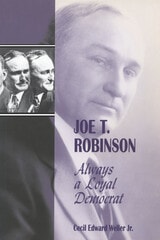
Joe T. Robinson
Always a Loyal DemocratCecil Weller
University of Arkansas Press, 1998
Senate majority leader Joseph Taylor Robinson was undoubtedly one of the most powerful U.S. senators of the early twentieth century. An important political figure in Arkansas from the time he was elected to the state legislature in 1895, Joe T., as he was popularly called became nationally prominent when he ascended to the Democratic leadership of the U.S. Senate in 1923.
Robinson’s career spanned momentous legislative debates in the chambers of the Senate, such as the League of Nations charter, the Teapot Dome Scandal, and FDR’s plan to “pack” the Supreme Court. His run for the vice-presidency in 1928, the first Southerner on a major ticket after the Civil War, and his three terms as chairman of the Democratic National Convention, in 1920, 1928, and 1936, are all covered in this perceptive study.
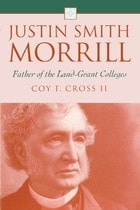
Justin Smith Morrill
Father of the Land-Grant CollegesCoy F. Cross II
Michigan State University Press, 1999
Smith Morrill: Almost every land-grant college or university in the United States has a building named for him; but are his contributions truly recognized and understood? Here is the first biography on this renowned statesman in six decades. Representative and then senator from Vermont, Morrill began his tenure in Congress in 1855 and served continuously for forty-three years. His thirty- one years in the upper chamber alone earned him the title "Father of the Senate." Coy F. Cross reveals a complex and influential political figure who, as chair of the House Ways and Means Committee, and then the Senate Finance Committee, influenced American economic policy for nearly fifty years.
Morrill's most-recognized achievements are the pieces of legislation that bear his name: the Morrill land-grant college acts of 1862 and 1890. His legacy, inspired by the Jeffersonian ideal of an educated electorate, revolutionized American higher education. Prior to this legislation, colleges and universities were open primarily to affluent white men and studies were limited largely to medicine, theology, and philosophy. Morrill's land-grant acts eventually opened American higher education to the working class, women, minorities, and immigrants. Since 1862, more than 20 million people have graduated from the 104 land-grant colleges and universities spawned by his grand vision. In this long-overdue study, Cross shows the "Father of Land-Grant Colleges" to be one of America's formative nineteenth- century political figures.