Results by title
97 books match the query 'Urbanization' and 3 start with j
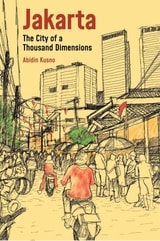
Jakarta
City of a Thousand DimensionsAbidin Kusno
National University of Singapore Press, 2023
Indonesian writer Seno Gumira Ajidarma has called Jakarta a city of a thousand dimensions. A megacity of 30 million under threat from rising sea levels and temperatures, Jakarta and its resilient residents improvise and thrive. This book teases out some of the dimensions that have given shape to contemporary Jakarta, including the city’s expanded flexibility in accommodating capital and labor, and the consistent lack of planning that can be understood as a result of both politics and the poetics of governing in the region. Jakarta is essential reading for those seeking to understand one of Asia's most dynamic cities.
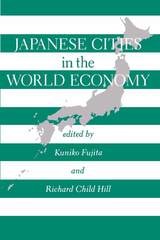
Japanese Cities
edited by Kuniko Fujita and Richard Child Hill
Temple University Press, 1993
Japan is the world's second most powerful economy and one of the most urbanized nations on earth. Yet English-language literature contains remarkable little about cities in Japan. This collection of original essays on Japanese urban and industrial development covers a broad spectrum of city experiences. Leading Japanese and Western urbanists analyze Japan's largest metropolitan areas (Tokyo, Osaka, Nagoya); proto-typical industrial cities (Kamaishi, Kitakyushu, Toyota); high technology urban satellites (Kanagawa); and smaller, more traditionally organized industrial districts (Tsubame). This book demonstrates how Japan's flexible economic growth strategies and changing relationship to the world economy have produced a uniquely Japanese pattern of urban development in this century.
Throughout the essays that describe individual cities, contributors provide commentary on each city's twentieth-century history and functional relations with other cities and focus on the dynamic linkage between global relations and local activities. They examine the role of government—central, prefectural, and local—in the restructuring of Japanese industrial and urban life. One essay is devoted to the urbanization process in pre-World War II Japan; another considers urban planning on the western Pacific Rim. This is the first book that analyzes how the economic transformation of Japan has restructured Japanese cities and how urban and regional development policies have kept pace with (and in some ways effected) changes in the economy.
This comprehensive study of Japanese cities provides interdisciplinary coverage of urban development issues of interest to the fields of economics, business, sociology, political science, history, Asian and Japanese studies, and urban planning.

Justice and the American Metropolis
Clarissa Rile Hayward
University of Minnesota Press, 2011
Today’s American cities and suburbs are the sites of “thick injustice”—unjust power relations that are deeply and densely concentrated as well as opaque and seemingly intractable. Thick injustice is hard to see, to assign responsibility for, and to change.
Identifying these often invisible and intransigent problems, this volume addresses foundational questions about what justice requires in the contemporary metropolis. Essays focus on inequality within and among cities and suburbs; articulate principles for planning, redevelopment, and urban political leadership; and analyze the connection between metropolitan justice and institutional design. In a world that is progressively more urbanized, and yet no clearer on issues of fairness and equality, this book points the way to a metropolis in which social justice figures prominently in any definition of success.
Contributors: Susan S. Fainstein, Harvard U; Richard Thompson Ford, Stanford U; Gerald Frug, Harvard U; Loren King, Wilfrid Laurier U; Margaret Kohn, U of Toronto; Stephen Macedo, Princeton U; Douglas W. Rae, Yale U; Clarence N. Stone, George Washington U; Margaret Weir, U of California, Berkeley; Thad Williamson, U of Richmond.