Results by title
2194 books match the query 'Women's Studies' and 30 start with j

Jack London's Women
Clarice Stasz
University of Massachusetts Press, 2001
Using newly available letters and diaries from private collections, Stasz brings this diverse constellation of women to life. London was the son of freethinking Flora Wellman, yet found more maternal comfort from freed slave Jennie Prentiss and his stepsister Eliza. His early loves included a British-born consumptive, a Jewish socialist, and an African American. His first wife, Bess Maddern, was a teacher and devoted mother to daughters Bess and Joan, while his second wife, Charmian Kittredge, shared his passion for adventure and served as a model for many characters in his writings. Following his death, the various women who survived him both promoted his legacy and suffered the consequences of being constantly identified with a famous man.
In recasting London's life through the eyes of three generations of women, Stasz manages to untangle his seemingly contradictory attitudes and actions. She also reveals the struggle that ensued, after his death, among family members and scholars over how he should be remembered. What emerges from this well-researched book is a new understanding of London and a compelling portrayal of the women who knew him best.
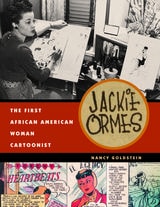
Jackie Ormes
The First African American Woman CartoonistNancy Goldstein
University of Michigan Press, 2008
At a time of few opportunities for women in general and even fewer for African American women, Jackie Ormes (1911–85) blazed a trail as a popular cartoonist with the major black newspapers of the day. Her cartoon characters (including Torchy Brown, Candy, Patty-Jo, and Ginger) delighted readers and spawned other products, including an elegant doll with a stylish wardrobe and “Torchy Togs” paper dolls. Ormes was a member of Chicago’s black elite, with a social circle that included the leading political figures and entertainers of the day. Her cartoons and comic strips provide an invaluable glimpse into American culture and history, with topics that include racial segregation, U.S. foreign policy, educational equality, the atom bomb, and environmental pollution, among other pressing issues of the times—and of today’s world as well. This celebrated biography features a large sampling of Ormes’s cartoons and comic strips, and a new preface.
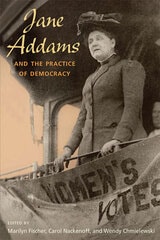
Jane Addams and the Practice of Democracy
Edited by Marilyn Fischer, Carol Nackenoff, and Wendy Chmielewski
University of Illinois Press, 2008
Using a rich array of newly available sources and contemporary methodologies from many disciplines, the ten original essays in this volume give a fresh appraisal of Addams as a theorist and practitioner of democracy. In an increasingly interdependent world, Addams's life work offers resources for activists, scholars, policy makers, and theorists alike. This volume demonstrates how scholars continue to interpret Addams as a model for transcending disciplinary boundaries, generating theory out of concrete experience, and keeping theory and practice in close and fruitful dialogue.
Contributors are Harriet Hyman Alonso, Victoria Bissell Brown, Wendy Chmielewski, Marilyn Fischer, Shannon Jackson, Louise W. Knight, Carol Nackenoff, Karen Pastorello, Wendy Sarvasay, Charlene Haddock Seigfried, and Camilla Stivers.

Jane Addams, a Writer's Life
Katherine Joslin
University of Illinois Press, 2003
Jane Addams, a Writer's Life is an expansive, revealing, and refreshing reexamination of the renowned reformer as an imaginative writer. Jane Addams is best known for her groundbreaking social work at Hull-House, the force of her efforts toward Progressive political and social reform, and the bravery of her commitment to pacifism, for which she received the Nobel Peace Prize. Katherine Joslin moves beyond this history to present Addams as a literary figure, one whose writing employed a synthesis of fictional and analytical prose that appealed to a wide audience.
Joslin traces Addams's style from her early works, Philanthropy and Social Progress and her contributions to Hull House Maps and Papers, influenced by Florence Kelley, to her modernist and experimental last books, The Second Twenty Years at Hull-House and My Friend, Julia Lathrop, placing Addams in the context of other Chicago writers including Theodore Dreiser, Upton Sinclair, Harriet Monroe, Frank Norris and James T. Farrell. Joslin's close readings showcase Addams's distinguishing literary devices, such as using stories about people rather than sociological argument to make moral points. As Joslin pursues the argument that Addams's power as a public figure stemmed from the success of her books and essays, Addams herself emerges as a literary woman.

Jane Austen's Cults and Cultures
Claudia L. Johnson
University of Chicago Press, 2012
Jane Austen completed only six novels, but enduring passion for the author and her works has driven fans to read these books repeatedly, in book clubs or solo, while also inspiring countless film adaptations, sequels, and even spoofs involving zombies and sea monsters. Austen’s lasting appeal to both popular and elite audiences has lifted her to legendary status. In Jane Austen’s Cults and Cultures, Claudia L. Johnson shows how Jane Austen became “Jane Austen,” a figure intensely—sometimes even wildly—venerated, and often for markedly different reasons.
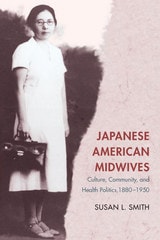
Japanese American Midwives
Culture, Community, and Health Politics, 1880-1950Susan L. Smith
University of Illinois Press, 2005
In the late nineteenth century, Japan's modernizing quest for empire transformed midwifery into a new woman's profession. With the rise of Japanese immigration to the United States, Japanese midwives (sanba) served as cultural brokers as well as birth attendants for Issei women. They actively participated in the creation of Japanese American community and culture as preservers of Japanese birthing customs and agents of cultural change.
Japanese American Midwives reveals the dynamic relationship between this welfare state and the history of women and health. Susan L. Smith blends midwives' individual stories with astute analysis to demonstrate the impossibility of clearly separating domestic policy from foreign policy, public health from racial politics, medical care from women's caregiving, and the history of women and health from national and international politics. By setting the history of Japanese American midwives in this larger context, Smith reveals little-known ethnic, racial, and regional aspects of women's history and the history of medicine.
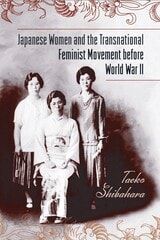
Japanese Women and the Transnational Feminist Movement before World War II
Taeko Shibahara
Temple University Press, 2014
This book traces the development of feminist consciousness in Japan from 1871 to 1941. Taeko Shibahara uncovers some fascinating histories as she examines how middle-class women navigated between domestic and international influences to form ideologies and strategies for reform. They negotiated a humanitarian space as Japan expanded its nationalist, militarist, imperialist, and patriarchal power.
Focusing on these women's political awakening and activism, Shibahara shows how Japanese feminists channeled and adapted ideas selected from international movements and from interactions with mainly American social activists.
Japanese Women and the Transnational Feminist Movement before World War II also connects the development of international contacts with the particular contributions of Ichikawa Fusae to the suffrage movement, Ishimoto Shidzue to the birth control movement, and Gauntlett Tsune to the peace movement by touching on issues of poverty, prostitution, and temperance. The result provides a window through which to view the Japanese women's rights movement with a broader perspective.
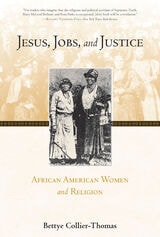
Jesus, Jobs, and Justice
African American Women and ReligionBettye Collier-Thomas
Temple University Press, 2013
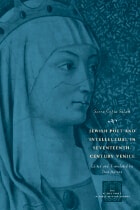
Jewish Poet and Intellectual in Seventeenth-Century Venice
The Works of Sarra Copia Sulam in Verse and Prose Along with Writings of Her Contemporaries in Her Praise, Condemnation, or DefenseSarra Copia Sulam
University of Chicago Press, 2009
The first Jewish woman to leave her mark as a writer and intellectual, Sarra Copia Sulam (1600?–41) was doubly tainted in the eyes of early modern society by her religion and her gender. This remarkable woman, who until now has been relatively neglected by modern scholarship, was a unique figure in Italian cultural life, opening her home, in the Venetian ghetto, to Jews and Christians alike as a literary salon.
For this bilingual edition, Don Harrán has collected all of Sulam’s previously scattered writings—letters, sonnets, a Manifesto—into a single volume. Harrán has also assembled all extant correspondence and poetry that was addressed to Sulam, as well as all known contemporary references to her, making them available to Anglophone readers for the first time. Featuring rich biographical and historical notes that place Sulam in her cultural context, this volume will provide readers with insight into the thought and creativity of a woman who dared to express herself in the male-dominated, overwhelmingly Catholic Venice of her time.
Jewish Portraits, Indian Frames
Women's Narratives from a Diaspora of HopeJael Silliman
Seagull Books, 2001
Jewish Women in Pre-State Israel
Life History, Politics, and CultureEdited by Ruth Kark, Margalit Shilo, and Galit Hasan-Rokem
Brandeis University Press, 2009
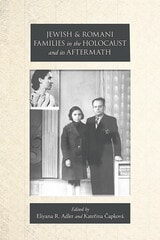
Jewish and Romani Families in the Holocaust and its Aftermath
Eliyana R. Adler
Rutgers University Press, 2021
In this work, scholars from the United States, Israel, and across Europe bring a variety of backgrounds and disciplines to their study of the Holocaust and its aftermath from the family perspective. Drawing on research from Belarus to Great Britain, and examining both Jewish and Romani families, they demonstrate the importance of recognizing how people continued to function within family units—broadly defined—throughout the war and afterward.
Job Queues, Gender Queues
Explaining Women's Inroads into Male OccupationsBarbara F. Reskin and Patricia A. Roos
Temple University Press, 1990
Since 1970, women have made widely publicized gains in several customarily male occupations. Many commentators have understood this apparent integration as an important step to sexual equality in the workplace. Barbara F. Reskin and Patricia A. Roos read a different lesson in the changing gender composition of occupations that were traditionally reserved for men. With persuasive evidence, Job Queues, Gender Queues offers a controversial interpretation of women's dramatic inroads into several male occupations based on case studies of "feminizing" male occupation.
The authors propose and develop a queuing theory of occupations' sex composition. This theory contends that the labor market comprises a "gender queue" with employers preferring male to female workers for most jobs. Workers also rank jobs into a "job queue." As a result, the highest-ranked workers monopolize the most desirable jobs. Reskin and Roos use this queuing perspective to explain why several male occupations opened their doors to women after 1970. The second part of the book provides evidence for this queuing analysis by presenting case studies of the feminization of specific occupations. These include book editor, pharmacist, public relations specialist, bank manager, systems analyst, insurance adjuster, insurance salesperson, real estate salesperson, bartender, baker, and typesetter/compositor.
Joining the Conversation
Dialogues by Renaissance WomenJanet Levarie Smarr
University of Michigan Press, 2005
Avoiding the male-authored model of competing orations, French and Italian women of the Renaissance framed their dialogues as informal conversations, as letters with friends that in turn became epistles to a wider audience, and even sometimes as dramas. No other study to date has provided thorough, comparative view of these works across French, Italian, and Latin. Smarr's comprehensive treatment relates these writings to classical, medieval, and Renaissance forms of dialogue, and to other genres including drama, lyric exchange, and humanist invective -- as well as to the real conversations in women's lives -- in order to show how women adapted existing models to their own needs and purposes.
Janet Levarie Smarr is Professor of Theatre and Italian Studies at the University of California, San Diego.
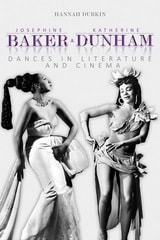
Josephine Baker and Katherine Dunham
Dances in Literature and CinemaHannah Durkin
University of Illinois Press, 2019
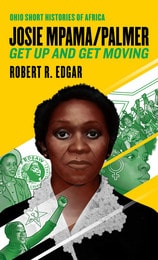
Josie Mpama/Palmer
Get Up and Get MovingRobert R. Edgar
Ohio University Press, 2020
While African National Congress narratives dominate much of the scholarship on South Africa’s freedom struggle, Josie Mpama/Palmer’s political life offers a different perspective. Highly critical of the patriarchal attitudes that hindered black women from actively participating in politics, Mpama/Palmer was an outspoken advocate for women’s social equality and encouraged black women to become more involved in national conversations. The first black woman to join the Communist Party of South Africa and an antiapartheid activist, Josie Mpama/Palmer remained involved in critical issues all her life, especially protests against Bantu Education and other forms of racial and sexist discrimination. She was an integral figure in establishing the Federation of South African Women, an organization open to women of all races. Mpama/Palmer’s activism and political legacy would become an inspiring example for women in South Africa and around the world to get up and get moving.
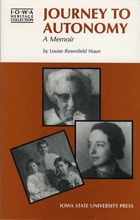
Journey to Autonomy
A MemoirLouise Rosenfield Noun
University of Iowa Press, 1996
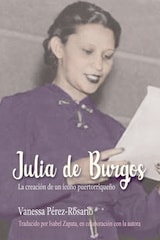
Julia de Burgos
La creación de un ícono puertorriqueñoVanessa Pérez-Rosario. Traducido por Isabel Zapata, en colaboración con la autora
University of Illinois Press, 2021
Disponible por primera vez en español, Julia de Burgos cuenta la destacada historia de la poeta y activista puertorriqueña.
Junctures in Women's Leadership
BusinessHetfield, Lisa
Rutgers University Press, 2016
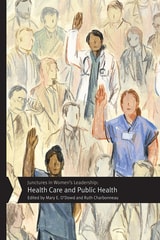
Junctures in Women's Leadership
Health Care and Public HealthMary E. O'Dowd
Rutgers University Press, 2021
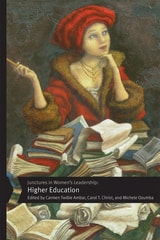
Junctures in Women's Leadership
Higher EducationCarmen Twillie Ambar
Rutgers University Press, 2020
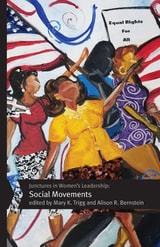
Junctures in Women's Leadership
Social MovementsTrigg, Mary K
Rutgers University Press, 2016
From Eleanor Roosevelt to feminist icon Gloria Steinem to HIV/AIDS activist Dazon Dixon Diallo, women have assumed leadership roles in struggles for social justice. How did these remarkable women ascend to positions of influence? And once in power, what leadership strategies did they use to deal with various challenges?
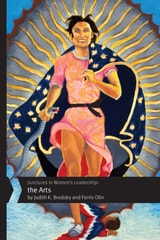
Junctures in Women's Leadership
The ArtsBrodsky, Judith K
Rutgers University Press, 2018
Amongst the women discussed are Bertha Honoré Palmer, Louise Noun, Samella Lewis, Julia Miles, Miriam Colón, Jaune Quick-To-See Smith, Bernice Steinbaum, Anne d’Harnoncourt, Martha Wilson, Jawole Willa Jo Zollar, Kim Berman, Gilane Tawadros, Joanna Smith, and Veomanee Douangdala.
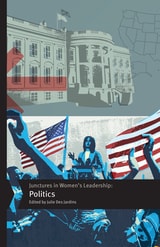
Junctures in Women’s Leadership
PoliticsJulie Des Jardins
Rutgers University Press, 2027
This collection profiles women in American politics who have demonstrated true leadership over the past 150 years—though this leadership has not always been recognized as such. These women have defied stereotypical caricatures and modeled effective ways to lead, even when they have not enjoyed formal access to voting or party politics, lost campaigns, or suffered scrutiny and harassment as public figures. Many of them have championed people and causes that their male counterparts have neglected, lending their lived experiences as women to fight for political action for underrepresented groups, and showing time and again that the personal really is political. Here we assess their political careers, not in terms of wins and losses, but rather in their ability to negotiate identity politics and shift conventional rules about how politicians lead.
This collection profiles such varied women as Jeannette Rankin, Shirley Chrisholm, Nancy Pelosi, Kamala Harris, Stacy Abrams, and Alexandria Ocasio-Cortez, among others. Whether they have recast gendered meanings around political ambition, broadened access to the political process, privileged principles over party loyalty, or prioritized issues over incumbency, each woman profiled here has wisdom to impart to new generations of American women who aspire to run for office or be involved in American politics.
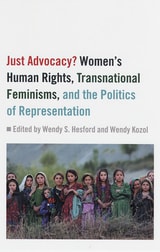
Just Advocacy?
Women's Human Rights, Transnational Feminism, and the Politics of RepresentationHesford, Wendy S
Rutgers University Press, 2005
In humanitarian and political debates about the topic, women and children are frequently considered first. Since the 1990s, human rights have become the most legitimate and legitimizing juridical and cultural claim made on a woman's behalf. But what are the consequences of equating women's rights with human rights? As the eleven essays in this volume show, the impact is often contradictory.
Bringing together some of the most respected scholars in the field, including Inderpal Grewal, Leela Fernandes, Leigh Gilmore, Susan Koshy, Patrice McDermott, and Sidonie Smith, Just Advocacy? sheds light on the often overlooked ways that women and children are further subjugated when political or humanitarian groups represent them solely as victims and portray the individuals that are helping them as paternal saviors.
Drawn from a variety of disciplinary perspectives in the humanities, arts, and social sciences, Just Advocacy? promises to advance a more nuanced and politically responsible understanding of human rights for both scholars and activists.
Just Anger
Representing Women's Anger in Early Modern EnglandGwynne Kennedy
Southern Illinois University Press, 2000
The first scholar to investigate the subject of women’s anger in early modern England, Gwynne Kennedy analyzes portrayals of and attitudes toward women’s anger in printed texts by or purporting to be written by women during the period.
Kennedy draws from recent critical work on emotions by historians, literary scholars, philosophers, and psychologists as well as comparative studies of the emotions by cultural anthropologists. Kennedy also examines a number of male-authored works, including sermons, conduct literature, philosophy, rhetoric, and medicine. The focus of her work, however, is on representations of women’s anger in printed works signed with women’s names in late sixteenth- and early seventeenth-century England. She addresses the ways these writings conform to, conflict with, or appear to reconfigure prevailing beliefs about women’s anger.
Kennedy looks at such literary texts as Mary Wroth’s romance, The Countess of Montgomery’s Urania, the first fiction by an English woman; Elizabeth Cary’s play, The Tragedy of Mariam, the earliest extant play in English by a woman; and Aemilia Lanyer’s verse collection, Salve Deus Rex Judaeorum. She also discusses religious writings by Protestant martyr Anne Askew and Elizabeth Cary’s history of Edward II. Kennedy considers as well defenses of women’s nature authored by women (Rachel Speght and Aemilia Lanyer) or published under female pseudonyms (“Jane Anger,” “Ester Sowernam,” and “Constantia Munda”).
Kennedy demonstrates the importance of class and race as factors affecting anger’s legitimacy and its forms of expression. She shows how early modern assumptions about women’s anger can help to create or exaggerate other differences among women. Her close scrutiny of anger against female inferiority emphasizes the crucial role of emotions in the construction of self-worth and identity.
Just Like Us
Digital Debates on Feminism and FameCaitlin E. Lawson
Rutgers University Press, 2023
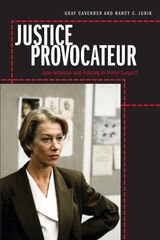
Justice Provocateur
Jane Tennison and Policing in Prime SuspectGray Cavender and Nancy C. Jurik
University of Illinois Press, 2012
Justice, Gender, and Affirmative Action
Susan D. Clayton and Faye J. Crosby
University of Michigan Press, 1992
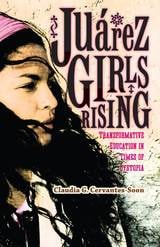
Juárez Girls Rising
Transformative Education in Times of DystopiaClaudia G. Cervantes-Soon
University of Minnesota Press, 2017
Working-class girls in Ciudad Juárez grow up in a context marked by violence against women, the devastating effects of drug cartel wars, unresponsive and abusive authorities, and predatory U.S. capitalism: under constantly precarious conditions, these girls are often struggling to shape their lives and realize their aspirations. Juárez native Claudia G. Cervantes-Soon explores the vital role that transformative secondary education can play in promoting self-empowerment and a spirit of resistance to the violence and social injustice these girls encounter.
Bringing together the voices of ten female students at Preparatoria Altavista, an innovative urban high school founded in 1968 on social justice principles, Cervantes-Soon offers a nuanced analysis of how students and their teachers together enact a transformative educational philosophy that promotes learning, self-authorship, and hope. Altavista’s curriculum is guided by the concept of autogestión, a holistic and dialectical approach to individual and collective identity formation rooted in the students’ experiences and a critical understanding of their social realities. Through its sensitive ethnography, this book shows how female students actively construct their own meaning of autogestión by making choices that they consider liberating and empowering.
Juárez Girls Rising provides an alternative narrative to popular and often simplistic, sensationalizing, and stigmatizing discourses about those living in this urban borderland. By merging the story of Preparatoria Altavista with the voices of its students, this singular book provides a window into the possibilities and complexities of coming of age during a dystopic era in which youth hold on to their critical hope and cultivate their wisdom even as the options for the future appear to crumble before their eyes.