Results by title
275 books match the query 'memoir' and 5 start with j
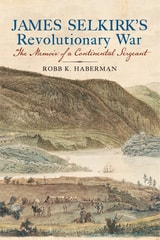
James Selkirk's Revolutionary War
The Memoir of a Continental SergeantRobb K. Haberman
Westholme Publishing, 2027
A Significant Personal Account by a Continental Soldier, in Print for the First Time
In the twilight years of his life, James Selkirk (1757–1820), a modest tailor and Revolutionary War veteran residing in Bethlehem, New York, composed a memoir about his wartime experiences in the Continental Army. Selkirk’s memoir tells the story of a young Scottish immigrant who served well and faithfully as a non-commissioned officer in three different corps from April 1776 through June 1783. During this period, Selkirk fought in several engagementsthat ranged from the wilderness of northern New York to the waters of Chesapeake Bay. In addition to chronicling his participation in these campaigns, the memoir contains Selkirk’s personal observations and anecdotes about the daily rigors and duties common to an enlisted soldier in Continental service. James Selkirk’s Revolutionary War, edited by historian Robb K. Haberman, discusses how Selkirk endured over seven years of soldiering with the Continental Army. It also explores how Selkirk’s decision to write his memoir occurred as politicians and citizens debated whether the federal government should enact a pension program in support of the nation’s aged and mostly impoverished community of Revolutionary-era veterans. Through his writing, Selkirk weighed in on this issue, drawing attention to the deserved rights and recognition due to his surviving brothers in arms. Just as he had taken up a musket in earlier decades in the struggle for national independence, Selkirk now wielded a pen on behalf of the aging cohort of American veterans who were experiencing hardship in the era of the early republic. Selkirk planned to share his recollections of the war with a broader audience, but his death in December 1820 precluded the publication of the manuscript memoir as a printed book until now. James Selkirk’s memoir ranks among the earliest known writings that reveal unique and personal assessments of a common soldier’s existence during the American Revolution, from slogging on the march and performing duties in camp to facing the terrors of the battlefield.

John Berryman and the Thirties
A MemoirE. M. Halliday
University of Massachusetts Press, 0
E. M. Halliday's "John Berryman and the Thirties: A Memoir" presents an intimate portrait of the celebrated poet during his formative years. Written by Berryman's Columbia College classmate and lifelong friend, the memoir traces Berryman's intellectual and personal development throughout the 1930s—a transformative decade that shaped his later career as one of America's most innovative poets.
Halliday offers rare firsthand insight into Berryman's early struggles, influences, and relationships during a period preceding his major publications and institutional recognition. The memoir explores the Depression-era intellectual landscape that molded Berryman's consciousness, his engagement with modernist poetry and criticism, and his complex personality navigating academic and artistic ambitions. Through personal anecdotes and literary analysis, Halliday documents Berryman's evolution from promising young poet to serious artist grappling with existential and aesthetic questions.
This work fills a crucial gap in Berryman scholarship, providing contextual understanding of the poet's formative years before his landmark works like "Homage to Mistress Bradstreet" and the Dream Songs. Essential for scholars of twentieth-century American poetry and biography, the memoir preserves irreplaceable memories of a major literary figure.
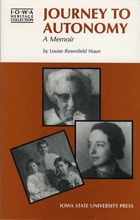
Journey to Autonomy
A MemoirLouise Rosenfield Noun
University of Iowa Press, 1996
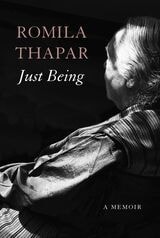
Just Being
A MemoirRomila Thapar
Seagull Books, 2026
In Just Being, historian Romila Thapar invites us into her illustrious world—a rich, extensive memoir from a scholar who has profoundly shaped our understanding of India’s past and present.
From her childhood growing up in British India, through her years of education in London, her extensive travels to archaeological sites across Asia and beyond, and her trailblazing role in shaping the Centre for Historical Studies at Jawaharlal Nehru University, Thapar reflects on a life lived in the service of inquiry and education. Composed over the past few years, Just Being is a testimony to Thapar’s ability to view herself within the larger flow of history, and to illumine it with a scholar’s depth and a storyteller’s sensitivity. It reveals not only an extraordinary, boundary-defying life but a profound conviction that understanding our past in the light of irrefutable evidence is essential to an insight into the present and to shaping a more thoughtful future.
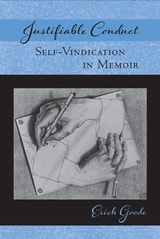
Justifiable Conduct
Self-Vindication in MemoirErich Goode
Temple University Press, 2013
Using a theory of deviance neutralization, Goode assesses the types of behavior exhibited by these memoirists to draw out generic narratives that are most effective in attempting to absolve the actor-author. Despite the highly individualistic and variable lives of these writers, Goode demonstrates that memoirists use a conventional vocabulary for their unconventional behavior.