Results by title
4917 books match the query 'Philosophy' and 70 start with j

Journal of Practical Ethics, Vol. 10, No. 2
Liz Sanders
Michigan Publishing Services, 2023
Journal of Practical Ethics, Vol. 11, No. 2
Liz Sanders
Michigan Publishing Services, 2024
Longevity - Douglas MacLean
Lying To Our Children" - Joseph Millum
Why We Should Negatively Discount the Well-Being of Future Generations - Matthew Price
Why Me? - Sarah Buss
The Ethics of Social Media: Why Content Moderation is a Moral Duty - Jeffrey Howard
Journal of Practical Ethics, Vol. 12, No. 1
Liz Sanders
Michigan Publishing Services, 2024
Past emissions and distributive climate duties: A reply to my critics - Axel Gosseries
On Axel Gosseries' "What is Intergenerational Justice?" - Charlotte Franziska Unruh
Climate Justice and the Moral Relevance of the Past - Simon Caney
Climate Change, Historical Emissions, and Unjust Benefits: A Comment on Axel Gosseries' Account for Climate Justice - Gordan Duus-Otterstrom
What is Intergenerational Justice? A Precis - Axel Gosseries
Journal of Practical Ethics, Vol. 13, No. 1
Rachel Gaminiratne
Michigan Publishing Services, 2025
In This Issue:
Together again: The value of our encounters, offline - Emily McTernan
The Moral Importance of Low-Welfare Species - Jakob Lohmar
Promises and Consent - Arjan S. Heir
Journal of Practical Ethics, Vol. 9, No. 1
Liz Sanders
Michigan Publishing Services, 2021
Reciprocity and Resources - Elizabeth Fenton
Prioritizing Parents - Moti Gorin
How AI Can Aid Bioethics - Walter Sinnott-Armstrong and Joshua August Skorburg
Journal of Practical Ethics, Vol. 9, No. 2
Liz Sanders
Michigan Publishing Services, 2022
Précis of Evil Online - Dean Cocking and Jeroen van den Hoven
Moral Intensifiers and the Efficiency of Communication - Dale Dorsey
Losing Your Way in the Fog - Philip Kitcher
Self-Presentation and Privacy Online - Carissa Véliz
Moral Fog and the Appreciation of Value - Dean Cocking and Jeroen van den Hoven

Journeys with Flies
Edwin N. Wilmsen
University of Chicago Press, 1999
Combining biography, poetry, and anthropology, Wilmsen vividly portrays the intense realities of life in the Kalahari and carries the reader across space and time as events in the present trigger emotions and memories. Images of apartheid, for example, evoke memories of Wilmsen's childhood in the segregated South. Poems, journal entries, and moving accounts of deepening personal relationships all intertwine as Wilmsen conveys the experiences he shares with his "subjects" in spite of vast differences in their backgrounds—extreme thirst under the desert sun, grief over the death of a child, and the constant irritation of ubiquitous flies.
"Our understanding of other peoples," he writes, "lies not in themselves or in anything that they do but in our experience of them. Experience that is lived partly in their world and partly in a shell of our world that we wear when we meet them."
Sophisticated, lyrical, and passionately written, Journeys with Flies will inspire all those who travel to places far from home.
Julie, or the New Heloise
Letters of Two Lovers Who Live in a Small Town at the Foot of the AlpsJean-Jacques Rousseau
Dartmouth College Press, 1997

Junkware
Thierry Bardini
University of Minnesota Press, 2011
At the same time, Junkware examines the cultural history that led to the encoding and decoding of life itself and the contemporary turning of these codes into a commodity. But he also contends that, beyond good and evil, the essential "junkiness" of this new subject is both the symptom and the potential cure.

Just Gaming
Jean-Francois Lyotard
University of Minnesota Press, 1985
Just Hear Me Out
How to Change Minds Without Lies, Bullshit, or Moral CompromiseColin Marshall
University of Chicago Press, 2026
A guide to persuasion for people who want to change minds without manipulation or coercion.
Most of us have given up on persuasion. We say our problems are too pressing, people are too polarized, and success is too dubious—and it’s true! After all, when was the last time you heard someone actually change their mind? To improve our persuasive powers, self-help books often ask us to stoop to dishonest, manipulative tricks that rarely achieve lasting results. But perhaps there is a way to persuade people that is neither hopelessly misguided nor morally suspect.
In Just Hear Me Out, philosopher Colin Marshall describes a persuasive method that is both effective and ethical. Rather than share a flurry of tips for how to win friends and influence people, Marshall invites us to take up persuasion as fundamentally civil work, good both for our conscience and our communities. Real-world persuaders such as Jane Addams, Daryl Davis, and Fred Rogers show us an ethical route, he argues, to changing hearts through patience, respect, and compassion.
Accessible, practical, and buoyed by hope, Just Hear Me Out offers a powerful method for all who want to persuade others but aren’t interested in winning at any cost. When it works, people don’t just change their minds; they discover anew how to value our common humanity.
Just Hear Me Out
How to Change Minds Without Lies, Bullshit, or Moral CompromiseColin Marshall
University of Chicago Press, 2026
A guide to persuasion for people who want to change minds without manipulation or coercion.
Most of us have given up on persuasion. We say our problems are too pressing, people are too polarized, and success is too dubious—and it’s true! After all, when was the last time you heard someone actually change their mind? To improve our persuasive powers, self-help books often ask us to stoop to dishonest, manipulative tricks that rarely achieve lasting results. But perhaps there is a way to persuade people that is neither hopelessly misguided nor morally suspect.
In Just Hear Me Out, philosopher Colin Marshall describes a persuasive method that is both effective and ethical. Rather than share a flurry of tips for how to win friends and influence people, Marshall invites us to take up persuasion as fundamentally civil work, good both for our conscience and our communities. Real-world persuaders such as Jane Addams, Daryl Davis, and Fred Rogers show us an ethical route, he argues, to changing hearts through patience, respect, and compassion.
Accessible, practical, and buoyed by hope, Just Hear Me Out offers a powerful method for all who want to persuade others but aren’t interested in winning at any cost. When it works, people don’t just change their minds; they discover anew how to value our common humanity.
Just Three Minutes, Please
Thinking Out Loud on Public RadioMichael Blumenthal
West Virginia University Press, 2014
What’s wrong with the contemporary American medical system? What does it mean when a state’s democratic presidential primary casts 40% of its votes for a felon incarcerated in another state? What’s so bad about teaching by PowerPoint? What is truly the dirtiest word in America?
These are just a few of the engaging and controversial issues that Michael Blumenthal, poet, novelist, essayist, and law professor, tackles in this collection of poignant essays commissioned by West Virginia Public Radio.
In these brief essays, Blumenthal provides unconventional insights into our contemporary political, educational, and social systems, challenging us to look beyond the headlines to the psychological and sociological realities that underlie our conventional thinking.
As a widely published poet and novelist, Blumenthal brings along a lawyer’s analytical ability with his literary sensibility, effortlessly facilitating a distinction between the clichés of today’s pallid political discourse and the deeper realities that lie beneath. This collection will captivate and provoke those with an interest in literature, politics, law, and the unwritten rules of our social and political engagements.
Just War, Second Edition
Richard J. Regan
Catholic University of America Press, 2013
Justice Is an Option
A Democratic Theory of Finance for the Twenty-First CenturyRobert Meister
University of Chicago Press, 2021
Justice Is an Option uses those problems—and the framework of finance that created them—to reimagine historical justice. Robert Meister returns to the spirit of Marx to diagnose our current age of finance. Instead of closing our eyes to the political and economic realities of our era, we need to grapple with them head-on. Meister does just that, asking whether the very tools of finance that have created our vastly unequal world could instead be made to serve justice and equality. Meister here formulates nothing less than a democratic financial theory for the twenty-first century—one that is equally conversant in political philosophy, Marxism, and contemporary politics. Justice Is an Option is a radical, invigorating first page of a new—and sorely needed—leftist playbook.
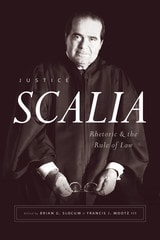
Justice Scalia
Rhetoric and the Rule of LawEdited by Brian G. Slocum and Francis J. Mootz III
University of Chicago Press, 2019
In this edited collection, leading scholars from law, political science, philosophy, rhetoric, and linguistics look at the ways Scalia framed and stated his arguments. Focusing on rhetorical strategies rather than the logic or validity of Scalia’s legal arguments, the contributors collectively reveal that Scalia enacted his rigidly conservative vision of the law through his rhetorical framing.
Justice and Injustice in Law and Legal Theory
Austin Sarat and Thomas R. Kearns, Editors
University of Michigan Press, 1998
Justice by Lottery
Barbara Goodwin
University of Chicago Press, 1992
She begins with the utopian fable of Aleatoria, a country not unlike our own in the not-too-distant-future, where most goods are distributed by lottery—even the right to have children. She then analyzes the philosophical arguments for and against lottery distribution and a comparison of "justice by lottery" with other contemporary theories of justice.
Goodwin also applies her theory to practical problems in the real world which could be—or have been—justly resolved by the use of lotteries, such as military drafts, jury duty, and immigration eligibility. She demonstrates that in many areas, including that of political power, a regular and random reallocation of goods would be a fairer and more democratic method than the distributive systems found in liberal democracies today.
Justifying Law
The Debate over Foundations, Goals, and MethodsRaymond Belliotti
Temple University Press, 1994
Juvenescence
A Cultural History of Our AgeRobert Pogue Harrison
University of Chicago Press, 2014
Like all of Robert Pogue Harrison's books, Juvenescence ranges brilliantly across cultures and history, tracing the ways that the spirits of youth and age have inflected each other from antiquity to the present. Drawing on the scientific concept of neotony, or the retention of juvenile characteristics through adulthood, and extending it into the cultural realm, Harrison argues that youth is essential for culture’s innovative drive and flashes of genius. At the same time, however, youth—which Harrison sees as more protracted than ever—is a luxury that requires the stability and wisdom of our elders and the institutions. “While genius liberates the novelties of the future,” Harrison writes, “wisdom inherits the legacies of the past, renewing them in the process of handing them down.”
A heady, deeply learned excursion, rich with ideas and insights, Juvenescence could only have been written by Robert Pogue Harrison. No reader who has wondered at our culture's obsession with youth should miss it.