Results by title
3071 books match the query 'Business & Economics' and 108 start with j

Junctures in Women's Leadership
Higher EducationCarmen Twillie Ambar
Rutgers University Press, 2020
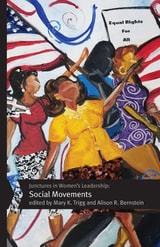
Junctures in Women's Leadership
Social MovementsTrigg, Mary K
Rutgers University Press, 2016
From Eleanor Roosevelt to feminist icon Gloria Steinem to HIV/AIDS activist Dazon Dixon Diallo, women have assumed leadership roles in struggles for social justice. How did these remarkable women ascend to positions of influence? And once in power, what leadership strategies did they use to deal with various challenges?

Junctures in Women's Leadership
The ArtsBrodsky, Judith K
Rutgers University Press, 2018
Amongst the women discussed are Bertha Honoré Palmer, Louise Noun, Samella Lewis, Julia Miles, Miriam Colón, Jaune Quick-To-See Smith, Bernice Steinbaum, Anne d’Harnoncourt, Martha Wilson, Jawole Willa Jo Zollar, Kim Berman, Gilane Tawadros, Joanna Smith, and Veomanee Douangdala.

Junctures in Women’s Leadership
Media and JournalismLinda Steiner
Rutgers University Press, 2025
This book offers profiles of inspiring women in prominent media positions from the nineteenth century to today, beginning with trailblazers like abolitionist publisher Mary Ann Shadd and Memphis Free Speech anti-lynching editor Ida B. Wells. The book takes an in-depth look at the leadership styles of well-known media moguls like Oprah Winfrey and Washington Post publisher Katharine Graham. Other chapters highlight women now emerging as media leaders, such as digital media executive S. Mitra Kalita and Iman Zawahry, a Muslim hijabi filmmaker. Bringing together cases from print, broadcast, public relations, film, and digital media, this book offers useful insights into how to be an effective leader in an ever-changing industry.
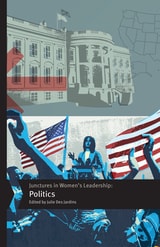
Junctures in Women’s Leadership
PoliticsJulie Des Jardins
Rutgers University Press, 2027
This collection profiles women in American politics who have demonstrated true leadership over the past 150 years—though this leadership has not always been recognized as such. These women have defied stereotypical caricatures and modeled effective ways to lead, even when they have not enjoyed formal access to voting or party politics, lost campaigns, or suffered scrutiny and harassment as public figures. Many of them have championed people and causes that their male counterparts have neglected, lending their lived experiences as women to fight for political action for underrepresented groups, and showing time and again that the personal really is political. Here we assess their political careers, not in terms of wins and losses, but rather in their ability to negotiate identity politics and shift conventional rules about how politicians lead.
This collection profiles such varied women as Jeannette Rankin, Shirley Chrisholm, Nancy Pelosi, Kamala Harris, Stacy Abrams, and Alexandria Ocasio-Cortez, among others. Whether they have recast gendered meanings around political ambition, broadened access to the political process, privileged principles over party loyalty, or prioritized issues over incumbency, each woman profiled here has wisdom to impart to new generations of American women who aspire to run for office or be involved in American politics.
Just Transitions
Social Justice in the Shift Towards a Low-Carbon WorldEdouard Morena
Pluto Press, 2019
Just Transition emerged as a framework developed within the trade union movement to encompass a range of social interventions needed to secure workers' and frontline communities' jobs and livelihoods as economies shift to sustainable production. Just Transitions draws on a range of perspectives from the global North and South to interrogate the overlaps, synergies and tensions between various understandings of the Just Transition approach. As the concept is entering the mainstream, has it lost its radical edge, and if so, can it be recovered?
Written by academics and activists from around the globe, this unique edited collection is the first book entirely devoted to Just Transition.

Just Transitions
Social Justice in the Shift Towards a Low-Carbon WorldEdouard Morena
Pluto Press, 2022
Just Transition emerged as a framework developed within the trade union movement to encompass a range of social interventions needed to secure workers' and frontline communities' jobs and livelihoods as economies shift to sustainable production. Just Transitions draws on a range of perspectives from the global North and South to interrogate the overlaps, synergies and tensions between various understandings of the Just Transition approach. As the concept is entering the mainstream, has it lost its radical edge, and if so, can it be recovered?
Written by academics and activists from around the globe, this unique edited collection is the first book entirely devoted to Just Transition.
Justice Is an Option
A Democratic Theory of Finance for the Twenty-First CenturyRobert Meister
University of Chicago Press, 2021
Justice Is an Option uses those problems—and the framework of finance that created them—to reimagine historical justice. Robert Meister returns to the spirit of Marx to diagnose our current age of finance. Instead of closing our eyes to the political and economic realities of our era, we need to grapple with them head-on. Meister does just that, asking whether the very tools of finance that have created our vastly unequal world could instead be made to serve justice and equality. Meister here formulates nothing less than a democratic financial theory for the twenty-first century—one that is equally conversant in political philosophy, Marxism, and contemporary politics. Justice Is an Option is a radical, invigorating first page of a new—and sorely needed—leftist playbook.