28164 books match the query 'History' and 406 start with j
cover of Jerome and Rohwer: Memories of Japanese American Internment in World War II Arkansas

Jerome and Rohwer

Memories of Japanese American Internment in World War II Arkansas

Walter M. Imahara

University of Arkansas Press, 2022

Not long after the attack on Pearl Harbor that drew the United States into World War II, the federal government rounded up more than a hundred thousand people of Japanese descent—both immigrants and native-born citizens—and began one of the most horrific mass-incarceration events in US history. The program tore apart Asian American communities, extracted families from their homes, and destroyed livelihoods as it forced Japanese Americans to various “relocation centers” around the country. Two of these concentration camps—the Jerome and Rohwer War Relocation Centers—operated in Arkansas.

This book is a collection of brief memoirs written by former internees of Jerome and Rohwer and their close family members. Here dozens of individuals, almost all of whom are now in their eighties or nineties, share their personal accounts as well as photographs and other illustrations related to their life-changing experiences. The collection, likely to be one of the last of its kind, is the only work composed solely of autobiographical remembrances of life in Jerome and Rohwer, and one of the very few that gathers in a single volume the experiences of internees in their own words.

What emerges is a vivid portrait of lives lived behind barbed wire, where inalienable rights were flouted and American values suspended to bring a misguided sense of security to a race-obsessed nation at war. However, in the barracks and the fields, the mess halls and the makeshift gathering places, values of perseverance, tolerance, and dignity—the gaman the internees shared—gave significance to a transformative experience that changed forever what it means to call oneself an American.
[more]
cover of Jerome, Epistle 106 (On the Psalms)

Jerome, Epistle 106 (On the Psalms)

Michael Graves

SBL Press, 2022

A fresh interpretation of the nature, purpose, and date of Jerome’s Epistle 106

In this volume of the Writings from the Greco-Roman World series, Michael Graves offers the first accessible English translation and commentary on Jerome’s Epistle 106, an important work of patristic biblical interpretation. In his treatise Jerome discusses different textual and exegetical options according to various Greek and Latin copies of the Psalms with input from the Hebrew. Epistle 106 provides insightful commentary on the Gallican Psalter, Jerome’s translation of Origen’s hexaplaric edition. Jerome’s work offers a unique window into the complex textual state of the Psalter in the late fourth century and serves as an outstanding example of ancient philological scholarship on the Bible. Graves’s translation and commentary is an essential resource for scholars and students of patristic exegesis, biblical textual criticism, and late antique Christianity.
[more]
cover of Jersey Blue: Civil War Politics in New Jersey, 1854–1865

Jersey Blue

Civil War Politics in New Jersey, 1854–1865

Gillette, William

Rutgers University Press, 1994

This political history of New Jersey during the Civil War and the years immediately before and after invites us to rethink New Jersey's role and in particular its relationship to the border states. William Gillette argues that there is little evidence supporting the idea that New Jersey's residents were pro-southern before the war, or even antiwar during it, although attitudes toward the abolition of slavery were more ambivalent. The perspectives Gillette offers in Jersey Blue, from the recruiting ground, the battlefield, and the home front, cast new light on New Jersey's wartime activities, state identity, and our understanding of the interrelationships between New Jersey's national, regional, and state developments.

Gillette takes a broader view of the politics of the Civil War as he touches on the economy, geography, demography, immigration, nativism, conscription, and law. The result is a pioneering history of New Jersey that deepens our understanding of the Civil War.
[more]
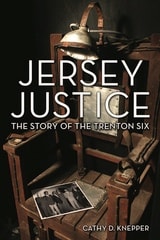
cover of Jersey Justice: The Story of the Trenton Six

Jersey Justice

The Story of the Trenton Six

Cathy D. Knepper

Rutgers University Press, 2011

The case of the Trenton Six attracted international attention in its time (1948–1952) and was once known as the “northern Scottsboro Boys case.” Yet, there is no memory of it. The shame of racism evident in the case has been nearly erased from the public record. Now, historian Cathy D. Knepper takes us back to the courtroom to make us aware of this shocking chapter in American history.

Jersey Justice: The Story of the Trenton Six begins in 1948 when William Horner, an elderly junk dealer, was murdered in his downtown Trenton shop. Over a two-week period, six local African American men were arrested and charged with collectively killing Horner. Violating every rule in the book, the Trenton police held the six men in incommunicado detention, without warrants, and threatened them until they confessed. At the end of the trial the all-white jury sentenced the six men to die in the electric chair.

That might have been the end of the story were it not for the tireless efforts of Bessie Mitchell, the sister of one of the accused men. Undaunted by the refusal of the NAACP and the ACLU to help appeal the conviction of the Trenton Six, Mitchell enlisted the aid of the Civil Rights Congress, ultimately taking the case as far as the New Jersey Supreme Court. Along the way, the Trenton Six garnered the attention and involvement of many prominent activists, politicians, and artists, including Paul Robeson, Thurgood Marshall, Eleanor Roosevelt, Pete Seeger, Arthur Miller, and Albert Einstein. Jersey Justice brings to light a shameful moment in our nation’s history, but it also tells the story of a personal battle for social justice that changed America.

[more]
cover of Jersey Troopers: A Fifty Year History of the New Jersey State Police

Jersey Troopers

A Fifty Year History of the New Jersey State Police

Leo J. Coakley

Rutgers University Press, 1971
The stories told reflect greatly upon the storied past of the New Jersey State Police and the sacrifices that have been made from the beginning up to the date of publication
[more]
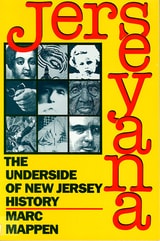
cover of Jerseyana: The Underside of New Jersey History

Jerseyana

The Underside of New Jersey History

Mappen, Marc

Rutgers University Press, 1992

Readers of the New Jersey section of the Sunday New York Times eagerly look forward to Marc Mappen's astonishing tales of New Jersey history. Jerseyana is his first collection of these popular monthly columns. Here you will meet villains like Dutch Schultz, the mobster gunned down in a Newark gangland rubout, and heroes like Minerva Miller, a black woman who fought segregation at the turn of the century. There are famous events, like the explosion of Hindenburg, and obscure ones, like the assassination of the king of Italy by an anarchist from Paterson. There are amusing stories, like a buried treasure hoax in Morristown after the Revolutionary War, bizarre stories like the fact that the discoverer of New Jersey was allegedly devoured by cannibals, and dramatic stories, like the Jersey woman who survived Indian captivity. 

Arranged chronologically, these columns constitute a lively New Jersey perspective on American history. Individual essays deal with major themes in American history and how they affected New Jersey:  the colonial era, the Revolution, Civil War and Reconstruction, the Gilded Age, the Progressive Era, World War I, the '20s and '30s, World War II, McCarthyism, women's history, and black history.

Each of the fifty-four columns in this book stands as a colorful exploration in history. Together they constitute a sweeping survey of our state's rich heritage.
[more]
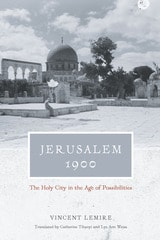
cover of Jerusalem 1900: The Holy City in the Age of Possibilities

Jerusalem 1900

The Holy City in the Age of Possibilities

Vincent Lemire

University of Chicago Press, 2017

Perhaps the most contested patch of earth in the world, Jerusalem’s Old City experiences consistent violent unrest between Israeli and Palestinian residents, with seemingly no end in sight. Today, Jerusalem’s endless cycle of riots and arrests appears intractable—even unavoidable—and it looks unlikely that harmony will ever be achieved in the city. But with Jerusalem 1900, historian Vincent Lemire shows us that it wasn’t always that way, undoing the familiar notion of Jerusalem as a lost cause and revealing a unique moment in history when a more peaceful future seemed possible.
 
In this masterly history, Lemire uses newly opened archives to explore how Jerusalem’s elite residents of differing faiths cooperated through an intercommunity municipal council they created in the mid-1860s to administer the affairs of all inhabitants and improve their shared city. These residents embraced a spirit of modern urbanism and cultivated a civic identity that transcended religion and reflected the relatively secular and cosmopolitan way of life of Jerusalem at the time. These few years would turn out to be a tipping point in the city’s history—a pivotal moment when the horizon of possibility was still open, before the council broke up in 1934, under British rule, into separate Jewish and Arab factions. Uncovering this often overlooked diplomatic period, Lemire reveals that the struggle over Jerusalem was not historically inevitable—and therefore is not necessarily intractable. Jerusalem 1900 sheds light on how the Holy City once functioned peacefully and illustrates how it might one day do so again.
[more]
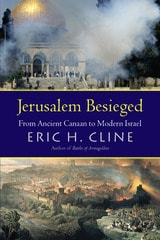
cover of Jerusalem Besieged: From Ancient Canaan to Modern Israel

Jerusalem Besieged

From Ancient Canaan to Modern Israel

Eric H. Cline

University of Michigan Press, 2005

"Jerusalem Besieged is a fascinating account of how and why a baffling array of peoples, ideologies, and religions have fought for some four thousand years over a city without either great wealth, size, or strategic importance. Cline guides us through the baffling, but always bloody, array of Jewish, Roman, Moslem, Crusader, Ottoman, Western, Arab, and Israeli fights for possession of such a symbolic prize in a manner that is both scholarly and engaging."
-Victor Davis Hanson, Stanford University; author of The Other Greeks and Carnage and Culture
"A beautifully lucid presentation of four thousand years of history in a single volume. Cline writes primarily as an archaeologist-avoiding polemic and offering evidence for any religious claims-yet he has also incorporated much journalistic material into this study. Jerusalem Besieged will enlighten anyone interested in the history of military conflict in and around Jerusalem."
-Col. Rose Mary Sheldon, Virginia Military Institute

"This groundbreaking study offers a fascinating synthesis of Jerusalem's military history from its first occupation into the modern era. Cline amply deploys primary source material to investigate assaults on Jerusalem of every sort, starting at the dawn of recorded history. Jerusalem Besieged is invaluable for framing the contemporary situation in the Middle East in the context of a very long and pertinent history."
-Baruch Halpern, Pennsylvania State University


A sweeping history of four thousand years of struggle for control of one city

"[An] absorbing account of archaeological history, from the ancient Israelites' first conquest to today's second intifada. Cline clearly lays out the fascinating history behind the conflicts."
-USA Today

"A pleasure to read, this work makes this important but complicated subject fascinating."
-Jewish Book World

"Jerusalem Besieged is a fascinating account of how and why a baffling array of peoples, ideologies, and religions have fought for some four thousand years over a city without either great wealth, size, or strategic importance. Cline guides us through the baffling, but always bloody, array of Jewish, Roman, Moslem, Crusader, Ottoman, Western, Arab, and Israeli fights for possession of such a symbolic prize in a manner that is both scholarly and engaging."
-Victor Davis Hanson, Stanford University; author of The Other Greeks and Carnage and Culture
[more]
cover of Jerusalem of Lithuania: A Reader in Yiddish Cultural History

Jerusalem of Lithuania

A Reader in Yiddish Cultural History

Jerold C. Frakes

The Ohio State University Press, 2011

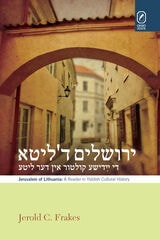
Yerusholayim d’lite: di yidishe kultur in der lite (Jerusalem of Lithuania: A Reader in Yiddish Cultural History) by Jerold C. Frakes contains cultural, literary, and historical readings in Yiddish that vividly chronicle the central role Vilnius (Lithuania) played in Jewish culture throughout the past five centuries. It includes many examples of Yiddish literature, historiography, sociology, and linguistics written by and about Litvaks and includes work by prominent Yiddish poets, novelists, raconteurs, journalists, and scholars. In addition, Frakes has supplemented the primary texts with many short essays that contextualize Yiddish cultural figures, movements, and historical events.
 
Designed especially for intermediate and advanced readers of Yiddish (from the second-year of instruction), each text is individually glossed, including not only English definitions, but also basic grammatical information that will enable intermediate readers to progress to an advanced reading ability.
 
Because of its unique content, Yerusholayim d’lite will be of interest not only to university students of Yiddish language, literature, and culture, but it will be an invaluable resource for scholars and Yiddish reading groups and clubs worldwide, as well as for all general readers interested in Yiddish-language culture.
 
[more]
cover of Jerusalem the Center of the Universe: Its Archaeology and History (1800–100 BCE)

Jerusalem the Center of the Universe

Its Archaeology and History (1800–100 BCE)

Israel Finkelstein

SBL Press, 2024

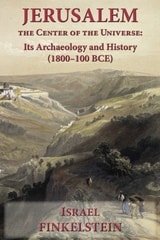
Jerusalem is the center of the universe, the hub of the three great monotheistic religions, yet how did a city located on the desert fringe, in the semi-arid southern highlands of Israel with little tillable land achieve such dominance? To provide answers to this enduring riddle, Israel Finkelstein has collected twenty-four of his best articles and essays covering the Middle Bronze Age to the late Hellenistic period. With critical and well-informed care, he analyzes archaeological evidence that often stands in tension with the biblical text. Topics of particular interest include the archaeology of the tenth century BCE; Saul, David, and Solomon in the Bible and archaeology; the first expansion of the city in the ninth century; its full growth in the late eighth to seventh centuries; Jerusalem and Judah under the Assyrian Empire; the days of King Josiah; and transformations in the Persian-Hellenistic era. Short addenda update the reader on recent developments.
[more]
cover of Jesse James Was His Name

Jesse James Was His Name

William A. Settle, Jr.

University of Missouri Press, 1966

William A. Settle, Jr. has, for a number of years, trailed the James brothers through the columns of old newspapers and the records of county courts. In his search for the facts concerning these men--heroes to some, criminals to others--he has critically examined the contemporary accounts of their activities and has interviewed men and women who could give eyewitness or close hearsay evidence of them. Employing the techniques of scholarly research, Professor Settle has winnowed the fact from the fiction to produce this study of these most notorious American bandits.
[more]
cover of Jesse James and the Civil War in Missouri

Jesse James and the Civil War in Missouri

Robert L. Dyer

University of Missouri Press, 1994

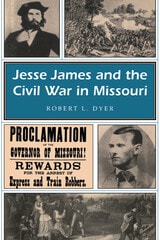
The Civil War in Missouri was a time of great confusion, violence, and destruction. Although several major battles were fought in the state between Confederate and Union forces, much of the fighting in Missouri was an ugly form of terrorism carried out by loose bands of Missouri guerrillas, by Kansas "Jayhawkers," or by marauding patrols of Union soldiers. This irregular warfare provided a training ground for people like Jesse and Frank James who, after the war, used their newly learned skills to form an outlaw band that ultimately became known all over the world.

Jesse James and the Civil War in Missouri discusses the underlying causes of the Civil War as they relate to Missouri and reveals how the war helped create both the legend and the reality of Jesse James and his gang. Written in an accessible style, this valuable little book will be welcomed by anyone with an interest in the Civil War, the legend of Jesse James, or Missouri history.
[more]
cover of Jessie Benton Frémont: Missouri's Trailblazer

Jessie Benton Frémont

Missouri's Trailblazer

Ilene Stone & Suzanna M. Grenz

University of Missouri Press, 2005
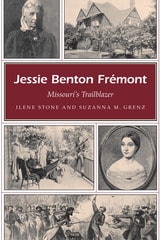
When Sen. Thomas Hart Benton, one of Missouri’s first two senators and the great-uncle of the famous regionalist painter of the same name, was expecting his second child in 1824, he hoped it would be a boy. Although he was graced instead with a second girl, he named her Jessie (in honor of his father, Jesse) and raised her more like a son than a nineteenth-century daughter, introducing her to the leading politicians of the day and making sure she received an education that emphasized history, literature, and languages. Jessie and her father were close; Senator Benton was the main influence in her life until 1841, when, at the age of seventeen, she married army explorer John Charles Frémont against her parents’ wishes.
            Some degree of reconciliation occurred when Benton promoted Frémont’s famous explorations of the Great West. Jessie remained in Missouri with the couple’s young daughter, Lily, but she later helped to write and edit reports of her husband’s adventures, and these narratives spread the lure of the West to nineteenth-century America.
            In 1849 Jessie and Lily made a harrowing and treacherous journey across the Isthmus of Panama to rendezvous with Frémont in San Francisco. With income from their gold mines, the Frémonts established a home in California. In 1856, with the country on the brink of civil war, Frémont’s antislavery position was instrumental in his being chosen as the Republican Party’s first presidential nominee. Jessie was a staunch campaigner for her husband’s unsuccessful presidential bid, which her father, a lifelong Democrat, refused to endorse.
            When President Lincoln appointed Frémont as the commander of the Department of the West in 1861, Jessie served as his unofficial aide and closest adviser. In a particularly dramatic incident, she rushed to Washington, D.C., for a meeting with Lincoln in which she argued passionately for her husband’s proposal to emancipate the slaves in Missouri.
            After the Civil War, the Frémonts’ financial situation took a downturn. Undaunted, Jessie supported the family by writing about her adventures in the American West in such works as A Year of American Travel and Souvenirs of My Time. Like many women of her era, Jessie lived her ambitions largely through her husband’s career, but she also made a name for herself as a writer and a firm opponent of slavery.
[more]
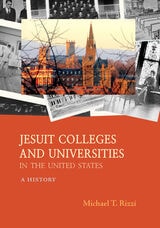
cover of Jesuit Colleges and Universities in the United States: A History

Jesuit Colleges and Universities in the United States

A History

Michael T. Rizzi

Catholic University of America Press, 2022

Jesuit Colleges and Universities in the United States provides a comprehensive history of Jesuit higher education in the United States, weaving together the stories of the fifty-four colleges and universities that the Jesuits have operated (successfully and unsuccessfully) since 1789. It emphasizes the connections among the institutions, exploring how certain Jesuit schools like Georgetown University gave birth to others like Boston College by sharing faculty, financial resources, accreditation, and even presidents throughout their history. The book also explores how the colleges responded to common challenges – including anti-Catholic prejudice in the United States, the push from government authorities to modernize their shared curriculum, and the pull from Roman authorities to remain loyal to Catholic tradition. The story is comprehensive, covering the colonial era to the present, and takes a fresh look at themes like the rise of the research university in the 1880s and the administrative reforms of the 1960s. It also provides a modern and timely perspective on the role of Jesuit colleges in racial justice, women’s education, and other civil rights issues, drawing attention to underappreciated Jesuit contributions in these areas. It draws from both published and archival sources on the history of each institution to construct a single narrative, identifying common themes, challenges, and trends. Through the eyes of Jesuit colleges, it traces the evolution of American higher education and the role of Catholics in the United States over more than two centuries.
[more]
cover of Jesuit Letters From China, 1583-84

Jesuit Letters From China, 1583-84

M. Howard Rienstra, EditorTranslated by M. Howard Rienstra

University of Minnesota Press, 1986

Jesuit Letters From China, 1583–84 was first published in 1986. Minnesota Archive Editions uses digital technology to make long-unavailable books once again accessible, and are published unaltered from the original University of Minnesota Press editions.

The first eight letters from Jesuit missionaries on mainland China were written in 1583–84 and published in Europe in 1586. M Howard Rienstra's translated marks their first appearance in English. The letters chronicle the patient efforts of Michele Ruggieri and the famed Matteo Ricci to learn Chinese, to gain acceptance in Chinese society, and to explain Christianity to a highly sophisticated non-Christian culture. They also described the China of the late Ming dynasty (1368–1644), a country whose immense size and population had excited the imagination of Europeans for generations.

It was Francis Xavier's dream that this mighty kingdom and civilization be opened to the Christian gospel. His dream was at least tentatively fulfilled when Michele Ruggieri was granted residence first in Canton and then in Chao-ch'ing in 1583. Accompanied first by Francesco Pasio and later by Matteo Ricci, Ruggieri initiated the Christian mission in China. Their letters, published initially as an appendix to a volume of Jesuit letters from Japan, were abbreviated and censored by their European editor. In edited form, the letters appeared in 1586 in one French, on German, and three Italian editions.

The China of Ruggieri and Matteo Ricci had remained, however, both suspicious of, and closed to, foreigners - a fact which the original letters do not gloss over. Rienstra was carefully compared the abbreviated and censored versions of these letters in their originals, still preserved in the Jesuit archives in Rome. The letters in general indicate how tenuous the Jesuits' situation was and note candidly that only two baptisms had been performed on the mainland during their stay. These results stand in marked contracts to the reports from Japan of tens of thousands of baptisms and to the reports from Portuguese Macao, where Chinese converts were compelled to wear European cloths and to take European names.

Such Europeanization was thought to be inappropriate to a successful Christian mission in China. Though criticized at the time by their colleagues in Macao, Ruggieri, Pasio, and Ricci committed themselves to a program of cultural respect and accommodation. They learned both written and spoken Chinese, ingratiated themselves with the ruling classes by exhibiting their learning and courtesy, and appeared to have become Chinese themselves. When Matteo Ricci became Ruggieri's successor and his name became synonymous with the success of the Jesuit mission in China, it was to these methods that its success was owed. Unfortunately, the prevailing European ethnocentrism could not accept the concept of cultural accommodation. The editors thus censored the letters to convey the impression of a triumphant and culturally superior Christian mission in China.

Jesuit Letters From China is a publication of the James Ford Bell Library at the University of Minnesota.

[more]
cover of Jesuit Relations and Other Americana in the Library of James F. Bell

Jesuit Relations and Other Americana in the Library of James F. Bell

Frank Walter

University of Minnesota Press, 1950
Jesuit Relations and Other Americana in the Library of James F. Bell was first published in 1950. Minnesota Archive Editions uses digital technology to make long-unavailable books once again accessible, and are published unaltered from the original University of Minnesota Press editions.Librarians, scholars, and collectors of rare books will delight in this meticulously prepared catalogue of the James F. Bell collection of Americana. This collection of approximately 325 items was built around the early accounts of basic discoveries of America and particularly the French explorations into Canada and the Great Lakes and Mississippi Valley regions, the search for a Northwest Passage, the activities of the Hudson’s Bay Company, the ill-fated Selkirk colony, and Minnesota history.Part I of the Catalogue is devoted to the Jesuit Relations collections, which includes 77 variants. This section was prepared by the late Mr. Walter, librarian emeritus of the University of Minnesota. Part II of the Catalogue, completed by Miss Doneghy, former cataloguer at the University of Minnesota library, after Mr. Walter’s death, describes the remainder of the collection. Extensive bibliographical and historical notes are given in both sections.The book is beautifully illustrated with plates showing title pages and other examples of typography and illustrations from the books described. There is a foreword by Mr. Walter and a brief preface in which Mr. Bell expresses his philosophy on the collecting of rare editions.The arrangement of items in both sections of the catalogue is chronological by date of publication.
[more]
cover of Jesus and Mary Reimagined in Early Christian Literature

Jesus and Mary Reimagined in Early Christian Literature

Vernon K. Robbins

SBL Press, 2015

Explore the diverse character of emerging Christian narratives

This book presents essays that show how prophetic and priestly emphases in Luke and Acts, and emphasis on Jesus’s existence prior to creation in the Gospel of John, are reworked in some second- and third-century Christian literature. Early Christians interpreted and expressed the storylines of Jesus, Mary, and other important figures in ways that created new images and stories. Contributors show the effect of including rhetography, the rhetoric of a text that prompts images and pictures in the mind of a hearer or reader, in interpretation of texts.

Features:

  • Readings that attempt to account for the development of richly creative and complicated early Christian traditions
  • Essays bridging New Testament studies and interpretation of Early Christian literature
  • Interpretations that integrate social and rhetorical interpretations
[more]
cover of Jesus and the Gospel Movement: Not Afraid to Be Partners

Jesus and the Gospel Movement

Not Afraid to Be Partners

William Thompson-Uberuaga

University of Missouri Press, 2006
The disciples. Mary Magdalene. Lazarus. The New Testament tells of Jesus, to be sure, but it is a Jesus depicted in interaction with many other people. Far too often, Jesus has been studied in isolation rather than as a person sharing relationships. This book seeks to rediscover Jesus in relation to the movement beginning to form around him.
            One of the few books to explore fully the political dimensions of the emerging church, Jesus and the Gospel Movement brings studies of Jesus and Christology into dialogue with today’s social and political sciences. William Thompson-Uberuaga seeks to penetrate the mist surrounding the historical Jesus by inviting readers to imagine him through the perspective of his relationships and to consider how those relationships helped shape his personality and commitments—not just the intellectual aspects but also his feelings, his affectionate bonds, and the reciprocal bonds he stimulated in others.
            This extended meditation represents the first book-length engagement with Voegelin scholarship on these issues, and scholars in Voegelin studies will find a challenging appropriation of that thinker’s political philosophy. It also draws on insights of other philosophers ranging from Nietzsche to Derrida, with a particular emphasis on Gadamer’s hermeneutical thought. Useful for courses in Jesus studies, Christology, and Christianity and politics, the text also features an Internet link to supplements accompanying each chapter, which have been written by the author especially for this book to enable students and readers to delve deeper into the thicket of scholarly debates concerning these issues.
            Thompson-Uberuaga asks readers to imagine the various beliefs about Jesus as the result of forms of participation, helping us make sense of how they emerged and offering a way of evaluating their validity—and arguing that we will form only a narrow, even lopsided view of Jesus if we consider him apart from his relationships. By daring a personal interpretation of Jesus and the Gospel movement that he and his companions originated, this book boldly challenges readers to risk their own interpretations and arrive at their own understanding of the Messiah.
[more]
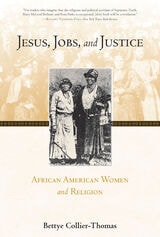
cover of Jesus, Jobs, and Justice: African American Women and Religion

Jesus, Jobs, and Justice

African American Women and Religion

Bettye Collier-Thomas

Temple University Press, 2013
Bettye Collier-Thomas’s groundbreaking book, Jesus, Jobs, and Justice—now available for the first time in paperback—provides a remarkable account of the religious faith, social and political activism, and extraordinary resilience of black women during the centuries of American growth and change. As co-creators of churches, women were a central factor in their development. However, women often had to cope with sexism in black churches, as well as racism in mostly white denominations.
 
Collier-Thomas skillfully shows how black church women created national organizations such as the National Association of Colored Women, the National League of Colored Republican Women, and the National Council of Negro Women to fight for civil rights and combat discrimination. She also examines how black women missionaries sacrificed their lives in service to their African sisters whose destiny they believed was tied to theirs.
 
While religion has been a guiding force in the lives of most African Americans, for black women it has been essential. Jesus, Jobs, and Justice restores black women to their rightful place in American and black history and demonstrates their faith in themselves, their race, and their God.
[more]
cover of Jew

Jew

Baker, Cynthia M

Rutgers University Press, 2017
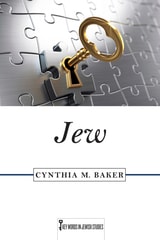
Jew.  The word possesses an uncanny power to provoke and unsettle. For millennia, Jew has signified the consummate Other, a persistent fly in the ointment of Western civilization’s grand narratives and cultural projects. Only very recently, however, has Jew been reclaimed as a term of self-identification and pride.  
 
With these insights as a point of departure, this book offers a wide-ranging exploration of the key word Jew—a term that lies not only at the heart of Jewish experience, but indeed at the core of Western civilization. Examining scholarly debates about the origins and early meanings of Jew, Cynthia M. Baker interrogates categories like “ethnicity,” “race,” and “religion” that inevitably feature in attempts to define the word. Tracing the term’s evolution, she also illuminates its many contradictions, revealing how Jew has served as a marker of materialism and intellectualism, socialism and capitalism, worldly cosmopolitanism and clannish parochialism, chosen status, and accursed stigma.
 
Baker proceeds to explore the complex challenges that attend the modern appropriation of Jew as a term of self-identification, with forays into Yiddish language and culture, as well as meditations on Jew-as-identity by contemporary public intellectuals. Finally, by tracing the phrase new Jews through a range of contexts—including the early Zionist movement, current debates about Muslim immigration to Europe, and recent sociological studies in the United States—the book provides a glimpse of what the word Jew is coming to mean in an era of Internet cultures, genetic sequencing, precarious nationalisms, and proliferating identities.
 
[more]
cover of Jewhooing the Sixties: American Celebrity and Jewish Identity—Sandy Koufax, Lenny Bruce, Bob Dylan, and Barbra Streisand

Jewhooing the Sixties

American Celebrity and Jewish Identity—Sandy Koufax, Lenny Bruce, Bob Dylan, and Barbra Streisand

David E. Kaufman

Brandeis University Press, 2012
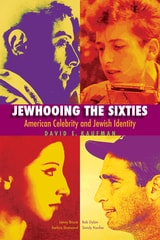
Sandy Koufax, Lenny Bruce, Bob Dylan, and Barbra Streisand first came to public attention in the early 1960s, a period Kaufman identifies as historically ripe for American Jews to reexamine their (Jewish) identities. All four achieved extraordinary success in their respective fields and became celebrities within an American context, while at the same time they were clearly identifiable as Jews—although they were perceived to be Jewish in very different ways. Kaufman investigates these celebrities’ rise to fame, the specific brand of Jewishness each one represented, and how their fans and the public at large perceived their ethnic identity as Jews. Situating Koufax, Bruce, Dylan, and Streisand within the larger history of American Jewish celebrity, Kaufman argues that the four early 1960s figures represent a turning point between celebrity Jews of the past—such as Hank Greenberg, Groucho Marx, Irving Berlin, and Fanny Brice—and those of the present, such as Jon Stewart, Matisyahu, and Natalie Portman. Providing an entry into Jewish celebrity studies, this lively narrative explores the intersection between popular celebrity and Jewish identity and thereby examines the cultural construction of Jewishness in the latter half of the twentieth century.
[more]
cover of Jewish Allegory in Eighteenth-Century Christian Imagination

Jewish Allegory in Eighteenth-Century Christian Imagination

Rebecca K. Esterson

SBL Press, 2023

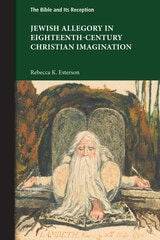
Rebecca K. Esterson explores how Christian methods of biblical interpretation shifted during the eighteenth century, producing a rhetorical rejection of allegory while embracing literalism. Under the influence of Enlightenment concepts of human reason and advances in the experimental sciences, Christian interpreters began casting Jewish biblical interpretation as allegorical, while presenting Christian interpretation as literal. This shift in self-understanding allowed Christians to portray their own interpretations as scientifically, philosophically, and historically superior, resulting in a new way of othering the Jewish people. This study of biblical exegesis, theology, philosophy, and the arts in English, Swedish, and German contexts is an essential resource for scholars interested in biblical reception history and the history of Jewish-Christian relations.
[more]
cover of Jewish Biblical Exegesis from Islamic Lands: The Medieval Period

Jewish Biblical Exegesis from Islamic Lands

The Medieval Period

Meira Polliack

SBL Press, 2019

An accessible point of entry into the rich medieval religious landscape of Jewish biblical exegesis s

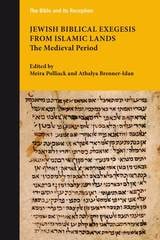
Medieval Judeo-Arabic translations of the Hebrew Bible and their commentaries provide a rich source for understanding a formative period in the intellectual, literary, and cultural history and heritage of Jews in Islamic lands. The carefully selected texts in this volume offer intriguing insight into Arabic translations and commentaries by Rabbanite and Karaite Jewish exegetes from the tenth to the twelfth centuries CE, arranged according to the three divisions of the Torah, the Former and Latter Prophets, and the Writings. Each text is embedded within an essay discussing its exegetical context, reception, and contribution.

Features:

  • Focus on underrepresented medieval Jewish commentators of the Eastern world
  • A list of additional resources, including major Judeo-Arabic commentators in the medieval period
  • Previously unpublished texts from the Cairo Geniza
[more]
cover of Jewish Budapest: Monuments, Rites, History

Jewish Budapest

Monuments, Rites, History

Géza Komoróczy

Central European University Press, 1999
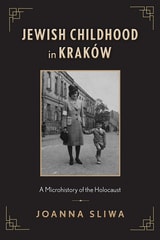
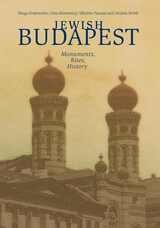
As a painting by Chagall unfolds layer upon layer when viewed carefully, so does the city in Jewish Budapest. Neither a guidebook or a history in the traditional sense, this book is about the Jewish face of Budapest from medieval times to the present. To get the broadest possible perspective, this book is not only about the Hungarian capital as a Jewish city but, as befits a cosmopolitan metropolis, delves into its myriad elements. There was and is, as Jewish Budapest strikingly reveals, a Roman and a Greek – Catholic Budapest, a Lutheran and a Calvinist Budapest, a German, a Serbian and a Gypsy Budapest. All these are brought into play as backdrop to the main narrative about the history of Jews in Buda, Obuda, and Pest. Past and present Jewish life as an organic part of the life of the Hungarian capital Budapest – be it memory or living reality. Richly illustrated with wonderfully evocative literary line drawings and photos, the book includes a lavish, full-colour section of artwork that enhances the text. Here is a book at once personal and universal. It is about everyday Jewish life, the humor, the pathos, the human condition, which is the same or very similar anywhere in the Diaspora. Every image and incident, every happening is filtered through the strong sensibilities of the key citizens of the city throughout the past few centuries. Remarkable citizens personified by the likes of Theodor Herzl and Joseph Pulitzer. The city is itself the central character of this book. The authors write only about those parts where there is a story to tell. They talk about places where history is still visible, where it can be located, where its traces still exist, where it can be tasted, savoured, and where it surrounds us as part of life in Budapest today. Jewish Budapest amasses huge amounts of lore about the city, its monuments and relics, its language and scholarship, its cultural heart, and its intellectual core. Jewish Budapest proceeds according to the chronological sequence of the birth of the Jewish quarters in the city, focusing on patterns of settlement and occupation, and demography, and unfolds finally into a vision of the future of Jewish life in this remarkably vibrant, venerable city. The book includes a section of detailed comments on the illustrations with an explanation of the abbreviations throughout as well as a bibliography, an index of personal names, an index of cities and towns, and an index of Budapest street addresses.
[more]
cover of Jewish Childhood in Kraków: A Microhistory of the Holocaust

Jewish Childhood in Kraków

A Microhistory of the Holocaust

Joanna Sliwa

Rutgers University Press, 2021

Winner of the 2020 Ernst Fraenkel Prize from the Wiener Holocaust Library​

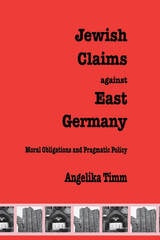
Jewish Childhood in Kraków is the first book to tell the history of Kraków in the second World War through the lens of Jewish children’s experiences. Here, children assume center stage as historical actors whose recollections and experiences deserve to be told, analyzed, and treated seriously.

Sliwa scours archives to tell their story, gleaning evidence from the records of the German authorities, Polish neighbors, Jewish community and family, and the children themselves to explore the Holocaust in German-occupied Poland and in Kraków in particular. A microhistory of a place, a people, and daily life, this book plumbs the decisions and behaviors of ordinary people in extraordinary times.

Offering a window onto human relations and ethnic tensions in times of rampant violence, Jewish Childhood in Kraków is an effort both to understand the past and to reflect on the position of young people during humanitarian crises.
[more]
cover of Jewish Claims Against East Germany

Jewish Claims Against East Germany

Angelika Timm

Central European University Press, 1998

This is the first comprehensive history of Jewish negotiations with East Germany regarding restitution and reparations for Nazi war crimes. Angelika Timm analyzes the politics of old and new anti-Semitism and the context in which they grew under the officially propagated ideology of antifascism.


Investigating the mass of unpublished, newly available archival data from the United States, Israel, and the former German Democratic Republic, and more than forty personal interviews, Timm fills a critical gap in the scholarship on postwar Germany. She analyzes the role of the Holocaust and the image of Jews in the historical consciousness and political culture of East Germany and chronicles the efforts of Jewish organizations, especially the Conference on Jewish Material Claims Against Germany, to negotiate reparations with the East German state. The unique relationship between ideology and Realpolitik defined the manner in which East Germany confronted the crimes of its past and allowed anti-Semitism to reemerge.
[more]
cover of Jewish Continuity in America: Creative Survival in a Free Society

Jewish Continuity in America

Creative Survival in a Free Society

Abraham J. Karp

University of Alabama Press, 1998

Presents an overview of a life's work by a preeminent scholar and brings new insight to the challenge of American Jewish continuity

Jews have historically lived within a paradox of faith and fear: faith that they are an eternal people and fear that their generation may be the last. In the United States, the Jewish community has faced to a heightened degree the enduring question of identity and assimilation: How does the Jewish community in this free, open, pluralistic society discover or create factors-both ideological and existential-that make group survival beneficial to the larger society and rewarding to the individual Jew?

Abraham J. Karp's Jewish Continuity in America focuses on the three major sources of American Judaism's continuing vitality: the synagogue, the rabbinate, and Jewish religious pluralism. Particularly illuminating is Karp's examination of the coexistence and unity-in-diversity of American religious Jewry's three divisions-Orthodox, Reform, and Conservative-and of how this Jewish religious pluralism fits into the larger picture of American religious pluralism.

Informing the larger enterprise through sharp and full delineation of discrete endeavors, the essays collected in Jewish Continuity in America-some already acknowledged as classics, some appearing here for the first time-describe creative individual and communal responses to the challenge of Jewish survival. As the title suggests, this book argues that continuity in a free and open society demands a high order of creativity, a creativity that, to be viable, must be anchored in institutions wholly pledged to continuity.


[more]
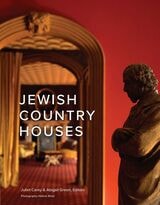
cover of Jewish Country Houses

Jewish Country Houses

Edited by Juliet Carey and Abigail Green

Brandeis University Press, 2024

An exploration of the world of Jewish country houses, their architecture and collections, and the lives of the extraordinary men and women who created, transformed, and shaped them.
 
Country houses are powerful symbols of national identity, evoking the glamorous world of the landowning aristocracy. Jewish country houses—properties that were owned, built, or renewed by Jews—tell a more complex story of prejudice and integration, difference and connection. Many had spectacular art collections and gardens. Some were stages for lavish entertaining, while others inspired the European avant-garde. A few are now museums of international importance, many more are hidden treasures, and all were beloved homes that bear witness to the remarkable achievements of newly emancipated Jews across Europe—and to a dream of belonging that mostly came to a brutal end with the Holocaust.
 
Lavishly illustrated with historical images and a new body of work by the celebrated photographer Hélène Binet, this book is the first to tell the story of Jewish country houses, from the playful historicism of the National Trust’s Waddesdon Manor in Buckinghamshire to the modernist masterpiece that is the Villa Tugendhat in the Czech city of Brno—and across the pond to the United States, where American Jews infused the European country house tradition with their own distinctive concerns and experiences. This book emerges from a four-year research project funded by the UK Arts and Humanities Research Council that aims to establish Jewish country houses as a focus for research, a site of European memory, and a significant aspect of European Jewish heritage and material culture.
[more]
cover of Jewish Education

Jewish Education

Ari Y Kelman

Rutgers University Press, 2024

Most writing about Jewish education has been preoccupied with two questions: What ought to be taught? And what is the best way to teach it? Ari Y Kelman upends these conventional approaches by asking a different question: How do people learn to engage in Jewish life? This book, by centering learning, provides an innovative way of approaching the questions that are central to Jewish education specifically and to religious education more generally.

At the heart of Jewish Education is an innovative alphabetical primer of Jewish educational values, qualities, frameworks, catalysts, and technologies which explore the historical ways in which Jewish communities have produced and transmitted knowledge. The book examines the tension between Jewish education and Jewish Studies to argue that shifting the locus of inquiry from “what people ought to know” to “how do people learn” can provide an understanding of Jewish education that both draws on historical precedent and points to the future of Jewish knowledge.
[more]
cover of Jewish Families

Jewish Families

Boyarin, Jonathan

Rutgers University Press, 2013

From stories of biblical patriarchs and matriarchs and their children, through the Gospel’s Holy Family of Jesus, Mary, and Joseph, and to modern Jewish families in fiction, film, and everyday life, the family has been considered key to transmitting Jewish identity. Current discussions about the Jewish family’s supposed traditional character and its alleged contemporary crisis tend to assume that the dynamics of Jewish family life have remained constant from the days of Abraham and Sarah to those of Tevye and Golde in Fiddler on the Roof and on to Philip Roth’s Portnoy’s Complaint.

Jonathan Boyarin explores a wide range of scholarship in Jewish studies to argue instead that Jewish family forms and ideologies have varied greatly throughout the times and places where Jewish families have found themselves. He considers a range of family configurations from biblical times to the twenty-first century, including strictly Orthodox communities and new forms of family, including same-sex parents. The book shows the vast canvas of history and culture as well as the social pressures and strategies that have helped shape Jewish families, and suggests productive ways to think about possible futures for Jewish family forms.
[more]
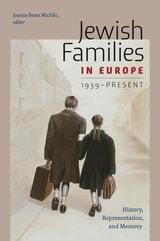
cover of Jewish Families in Europe, 1939-Present: History, Representation, and Memory

Jewish Families in Europe, 1939-Present

History, Representation, and Memory

Edited by Joanna Beata Michlic

Brandeis University Press, 2017
This book offers an extensive introduction and 13 diverse essays on how World War II, the Holocaust, and their aftermath affected Jewish families and Jewish communities, with an especially close look at the roles played by women, youth, and children. Focusing on Eastern and Central Europe, themes explored include: how Jewish parents handled the Nazi threat; rescue and resistance within the Jewish family unit; the transformation of gender roles under duress; youth’s wartime and early postwar experiences; postwar reconstruction of the Jewish family; rehabilitation of Jewish children and youth; and the role of Zionism in shaping the present and future of young survivors. Relying on newly available archival material and novel research in the areas of families, youth, rescue, resistance, gender, and memory, this volume will be an indispensable guide to current work on the familial and social history of the Holocaust.
[more]
cover of Jewish Fictional Letters from Hellenistic Egypt: The Epistle of Aristeas and Related Literature

Jewish Fictional Letters from Hellenistic Egypt

The Epistle of Aristeas and Related Literature

L. Michael White

SBL Press, 2017

The first Greek text of the Epistle of Aristeas published in more than a century

The Greek text Epistle of Aristeas is a Jewish work of the late Hellenistic period that recounts the origins of the Septuagint. Long recognized as a literary fiction, the Epistle of Aristeas has been variously dated from the third century BCE to the first century CE. As a result, its epistolary features, and especially those in which the putative author, Aristeas, addresses his brother and correspondent, Philocrates, have largely been ignored. In light of more recent scholarship on epistolary literature in the Greco-Roman world, however, this volume presents for the first time a complete Greek text and English Translation with introduction, notes, and commentary of the Epistle of Aristeas with key testimonia from Philo, Josephus, and Eusebius, as well as other related examples of Jewish fictional letters from the Apocrypha and Pseudepigrapha.

Features

  • Relevant excerpts from Eupolemus, 2 Maccabees, 3 Maccabees, and the Greek Additions to Esther with translations and introductions
  • A critical introduction to ancient Greek letter-writing
  • An outline of epistolary features in the text
[more]
cover of Jewish Gangsters of Modern Literature

Jewish Gangsters of Modern Literature

Rachel Rubin

University of Illinois Press, 2000
[more]
cover of Jewish Identities in the American West: Relational Perspectives

Jewish Identities in the American West

Relational Perspectives

Edited by Ellen Eisenberg

Brandeis University Press, 2022

Jewish Identities in the American West fills a significant gap in racial identity scholarship.
 
Since the onset of New Western History in the 1980s, the complexity of race and ethnicity as it developed in the American West has increasingly been recognized by scholars and the wider public alike. Ethnic studies scholars have developed new perspectives on racial formation in the West that complicate older notions that often relied on binary descriptions, such as Black/white racialization. In the past few decades, these studies have relied on relational approaches that focus on how race is constructed, by both examining interactions with the white dominant group, and by exploring the multiple connections with other racial/ethnic groups in society. Historians are discovering new stories of racial construction, and revising older accounts, to integrate these new perspectives into the formation of racial and ethnic identities. This collection of essays on Jews in the American West advances this field in multiple ways. With essays that cover the period from the mid-nineteenth century to the present, these authors present a collective portrait of change over time that allows us to view the shifting nature of Jewish identity in the West, as well as the evolving frameworks for racial construction. Thorough and thought-provoking, Jewish Identities in the American West takes readers on a journey of racial and ethnic identity in the American West.
[more]
cover of Jewish Life in Austria and Germany Since 1945: Identity and Communal Reconstruction

Jewish Life in Austria and Germany Since 1945

Identity and Communal Reconstruction

Susanne Cohen-Weisz

Central European University Press, 2016
Based on published primary and secondary materials and oral interviews with some eighty communal and organizational leaders, experts and scholars, this book provides a comparative account of the reconstruction of Jewish communal life in both Germany and in Austria (where 98% live in the capital, Vienna) after 1945. The author explains the process of reconstruction over the next six decades, and its results in each country. The monograph focuses on the variety of prevailing perceptions about topics such as: the state of Israel, one’s relationship to the country of residence, the Jewish religion, the aftermath of the Holocaust, and the influx of post-soviet immigrants. Cohen-Weisz examines the changes in Jewish group identity and its impact on the development of communities. The study analyzes the similarities and differences in regard to the political, social, institutional and identity developments within the two countries, and their changing attitudes and relationships with surrounding societies; it seeks to show the evolution of these two country’s Jewish communities in diverse national political circumstances and varying post-war governmental policies.
[more]
cover of Jewish Life in Belarus: The Final Decade of the Stalin Regime, 1944-1953

Jewish Life in Belarus

The Final Decade of the Stalin Regime, 1944-1953

Leonid Smilovitsky

Central European University Press, 2014
Jewish life in Belarus in the years after World War II was long an enigma. Officially it was held to be as being non-existent, and in the ideological atmosphere of the time research on the matter was impossible. Jewish community life had been wiped out by the Nazis, and information on its revival was suppressed by the communists. For more than half a century the truth about Jewish life during this period was sealed in inaccessible archives. The Jews of Belarus preferred to keep silent rather than expose themselves to the animosity of the authorities. Although the fate of Belarusian Jews before and during the war has now been amply studied, this book is one of the first attempts to study Jewish life in Belarus during the last decade of Stalin's rule. In addition to archival materials, the present research is based on a questionnaire submitted to former residents of Belarus in Israel, as well as information from periodicals, collections of documents, statistical reports and monographs.
[more]
cover of Jewish Life in Muslim Libya: Rivals and Relatives

Jewish Life in Muslim Libya

Rivals and Relatives

Harvey E. Goldberg

University of Chicago Press, 1990

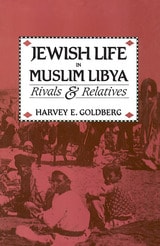
In 1949 more than 35,000 Jews lived in Libya, but close to ninety percent had left before Libya attained its independence in 1952. Jewish Life in Muslim Libya combines historical and anthropological perspectives in depicting the changing relations between Muslims and Jews in Libya from the early nineteenth century up to the middle of the twentieth century.

Harvey E. Goldberg shows that the cultural and religious worlds of the Jewish and Muslim communities in Libya were deeply intertwined in daily life and largely remained so despite political and social changes under successive Ottoman and Italian rule. He documents the intricate symbolic linkages of Jews and Muslims in different periods and in a variety of settings. His accounts of traditional Jewish weddings, of mock fights between Jewish teams that took place in early nineteenth-century Tripoli, and of the profession of street peddling demonstrate that, despite age-old images of Jews as outsiders or infidels, Jews were also an essential and familiar part of the local Islamic society.

Goldberg's narrative continues through the British Military Administration in Libya, a period which saw growing Libyan nationalism and, in 1945, three days of riots in which more than 130 Jews were killed. Goldberg reflects on how these events both expressed and exacerbated a rupture in the social fabric linking Muslims and Jews, setting the scene for the mass emigration of Libyan Jews from their homeland.
[more]
cover of Jewish Lives under Communism: New Perspectives

Jewish Lives under Communism

New Perspectives

Katerina Capková

Rutgers University Press, 2022
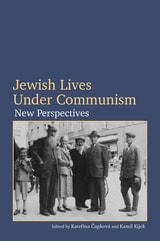
This volume provides new, groundbreaking views of Jewish life in various countries of the pro-Soviet bloc from the end of the Second World War until the collapse of Communism in late 1989. The authors, twelve leading historians and anthropologists from Europe, Israel and the United States, look at the experience of Jews under Communism  by digging beyond formal state policy and instead examining the ways in which Jews creatively seized opportunities to develop and express their identities, religious and secular, even under great duress. The volume shifts the focus from Jews being objects of Communist state policy (and from anti-Jewish prejudices in Communist societies) to the agency of Jews and their creativity in Communist Europe after the Holocaust. The examination of Jewish history from a transnational vantage point challenges a dominant strand in history writing today, by showing instead the wide variety of Jewish experiences in law, traditions and institutional frameworks as conceived from one Communist country to another and even within a single country, such as Poland, Czechoslovakia, Hungary, East Germany, and the Soviet Union. By focusing on networks across east-central Europe and beyond and on the forms of identity open to Jews in this important period, the volume begins a crucial rethinking of social and cultural life under Communist regimes.
 
[more]
cover of Jewish Mad Men: Advertising and the Design of the American Jewish Experience

Jewish Mad Men

Advertising and the Design of the American Jewish Experience

Steinberg, Kerri P

Rutgers University Press, 2015
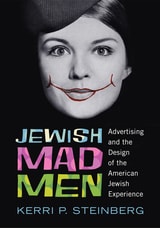
It is easy to dismiss advertising as simply the background chatter of modern life, often annoying, sometimes hilarious, and ultimately meaningless. But Kerri P. Steinberg argues that a careful study of the history of advertising can reveal a wealth of insight into a culture. In Jewish Mad Men, Steinberg looks specifically at how advertising helped shape the evolution of American Jewish life and culture over the past one hundred years.  

Drawing on case studies of famous advertising campaigns—from Levy’s Rye Bread (“You don’t have to be Jewish to love Levy’s”) to Hebrew National hot dogs (“We answer to a higher authority”)—Steinberg examines advertisements from the late nineteenth-century in New York, the center of advertising in the United States, to trace changes in Jewish life there and across the entire country. She looks at ads aimed at the immigrant population, at suburbanites in midcentury, and at hipster and post-denominational Jews today. 

In addition to discussing campaigns for everything from Manischewitz wine to matzoh, Jewish Mad Men also portrays the legendary Jewish figures in advertising—like Albert Lasker and Bill Bernbach—and lesser known “Mad Men” like Joseph Jacobs, whose pioneering agency created the brilliantly successful Maxwell House Coffee Haggadah. Throughout, Steinberg uses the lens of advertising to illuminate the Jewish trajectory from outsider to insider, and the related arc of immigration, acculturation, upward mobility, and suburbanization.

Anchored in the illustrations, photographs, jingles, and taglines of advertising, Jewish Mad Men features a dozen color advertisements and many black-and-white images. Lively and insightful, this book offers a unique look at both advertising and Jewish life in the United States.
[more]
cover of Jewish Marriage and Divorce in Imperial Russia

Jewish Marriage and Divorce in Imperial Russia

ChaeRan Y. Freeze

Brandeis University Press, 2001
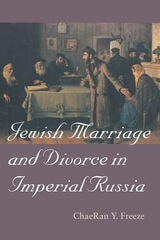
ChaeRan Freeze explores the impact of various forces on marriage and divorce among Jews in 19th-century Russia. Challenging romantic views of the Jewish family in the shtetl, she shows that divorce rates among Russian Jews in the first half of the century were astronomical compared to the non-Jewish population. Even more surprising is her conclusion that these divorce rates tended to drop later in the century, in contrast to the rising pattern among populations undergoing modernization. Freeze also studies the growing involvement of the Tsarist state. This occurred partly at the behest of Jewish women contesting patriarchy and parental power and partly because the government felt that Jewish families were in complete anarchy and in need of order and regulation. Extensive research in newly-declassified collections from twelve archives in Russia, Ukraine, and Lithuania enables Freeze to reconstruct Jewish patterns of marriage and divorce and to analyze the often conflicting interests of Jewish husbands and wives, rabbinic authorities, and the Russian state. Balancing archival resources with memoirs and printed sources in Hebrew, Yiddish, and Russian, she offers a tantalizing glimpse of the desires and travails of Jewish spouses, showing how individual life histories reflect the impact of modernization on Jewish matchmaking, gender relations, the "emancipation" of Jewish women, and the incursion of the Tsarist state into the lives of ordinary Jews.
[more]
cover of Jewish Musical Modernism, Old and New

Jewish Musical Modernism, Old and New

Edited by Philip V. Bohlman

University of Chicago Press, 2009

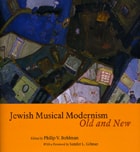
Tackling the myriad issues raised by Sander Gilman’s provocative opening salvo—”Are Jews Musical?”—this volume’s distinguished contributors present a series of essays that trace the intersections of Jewish history and music from the late nineteenth century to the present.

Covering the sacred and the secular, the European and the non-European, and all the arenas where these realms converge, these essays recast the established history of Jewish culture and its influences on modernity. Mitchell Ash explores the relationship of Jewish scientists to modernist artists and musicians, while Edwin Seroussi looks at the creation of Jewish sacred music in nineteenth-century Vienna. Discussing Jewish musicologists in Austria and Germany, Pamela Potter details their contributions to the “science of music” as a modern phenomenon. Kay Kaufman Shelemay investigates European influence in the music of an Ethiopian Jewish community, and Michael P. Steinberg traces the life and works of Charlotte Salomon, whose paintings staged the destruction of the Holocaust. Bolstered by Philip V. Bohlman’s wide-ranging introduction and epilogue, and featuring lush color illustrations and a complementary CD of the period’s music, this volume is a lavish tribute to Jewish contributions to modernity.
[more]
cover of Jewish Origins of the Psychoanalytic Movement

Jewish Origins of the Psychoanalytic Movement

Dennis B. Klein

University of Chicago Press, 1985
Dennis B. Klein explores the Jewish consciousness of Freud and his followers and the impact of their Jewish self-conceptions on the early psychoanalytic movement. Using little-known sources such as the diaries and papers of Freud's protégé Otto Rank and records of the Vienna B'nai B'rith that document Freud's active participation in that Jewish fraternal society, Klein argues that the feeling of Jewish ethical responsibility, aimed at renewing ties with Germans and with all humanity, stimulated the work of Freud, Rank, and other analysts and constituted the driving force of the psychoanalytic movement.
[more]
cover of Jewish Peoplehood: An American Innovation

Jewish Peoplehood

An American Innovation

Pianko, Noam

Rutgers University Press, 2015

Winner of the 2017 Saul Viener Book Prize from the American Jewish Historical Society​

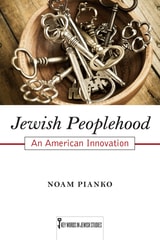
Although fewer American Jews today describe themselves as religious, they overwhelmingly report a strong sense of belonging to the Jewish people. Indeed, Jewish peoplehood has eclipsed religion—as well as ethnicity and nationality—as the essence of what binds Jews around the globe to one another. In Jewish Peoplehood, Noam Pianko highlights the current significance and future relevance of “peoplehood” by tracing the rise, transformation, and return of this novel term. 
 
The book tells the surprising story of peoplehood. Though it evokes a sense of timelessness, the term actually emerged in the United States in the 1930s, where it was introduced by American Jewish leaders, most notably Rabbi Stephen Wise and Rabbi Mordecai Kaplan, with close ties to the Zionist movement. It engendered a sense of unity that transcended religious differences, cultural practices, geographic distance, economic disparity, and political divides, fostering solidarity with other Jews facing common existential threats, including the Holocaust, and establishing a closer connection to the Jewish homeland. But today, Pianko points out, as globalization erodes the dominance of nationalism in shaping collective identity, Jewish peoplehood risks becoming an outdated paradigm. He explains why popular models of peoplehood fail to address emerging conceptions of ethnicity, nationalism, and race, and he concludes with a much-needed roadmap for a radical reconfiguration of Jewish collectivity in an increasingly global era.
 
Innovative and provocative, Jewish Peoplehood provides fascinating insight into a term that assumes an increasingly important position at the heart of American Jewish and Israeli life.
 
[more]
cover of Jewish Philosophical Politics in Germany, 1789–1848

Jewish Philosophical Politics in Germany, 1789–1848

Sven-Erik Rose

Brandeis University Press, 2014
In this book Rose illuminates the extraordinary creativity of Jewish intellectuals as they reevaluated Judaism with the tools of a German philosophical tradition fast emerging as central to modern intellectual life. While previous work emphasizes the “subversive” dimensions of German-Jewish thought or the “inner antisemitism” of the German philosophical tradition, Rose shows convincingly the tremendous resources German philosophy offered contemporary Jews for thinking about the place of Jews in the wider polity. Offering a fundamental reevaluation of seminal figures and key texts, Rose emphasizes the productive encounter between Jewish intellectuals and German philosophy. He brings to light both the complexity and the ambivalence of reflecting on Jewish identity and politics from within a German tradition that invested tremendous faith in the political efficacy of philosophical thought itself.
[more]
cover of Jewish Poet and Intellectual in Seventeenth-Century Venice: The Works of Sarra Copia Sulam in Verse and Prose Along with Writings of Her Contemporaries in Her Praise, Condemnation, or Defense

Jewish Poet and Intellectual in Seventeenth-Century Venice

The Works of Sarra Copia Sulam in Verse and Prose Along with Writings of Her Contemporaries in Her Praise, Condemnation, or Defense

Sarra Copia Sulam

University of Chicago Press, 2009

The first Jewish woman to leave her mark as a writer and intellectual, Sarra Copia Sulam (1600?–41) was doubly tainted in the eyes of early modern society by her religion and her gender. This remarkable woman, who until now has been relatively neglected by modern scholarship, was a unique figure in Italian cultural life, opening her home, in the Venetian ghetto, to Jews and Christians alike as a literary salon.

For this bilingual edition, Don Harrán has collected all of Sulam’s previously scattered writings—letters, sonnets, a Manifesto—into a single volume. Harrán has also assembled all extant correspondence and poetry that was addressed to Sulam, as well as all known contemporary references to her, making them available to Anglophone readers for the first time. Featuring rich biographical and historical notes that place Sulam in her cultural context, this volume will provide readers with insight into the thought and creativity of a woman who dared to express herself in the male-dominated, overwhelmingly Catholic Venice of her time.
[more]
cover of Jewish Renaissance and Revival in America

Jewish Renaissance and Revival in America

Edited by Eitan P. Fishbane and Jonathan D. Sarna

Brandeis University Press, 2011
In the late 1870s, shaken by rapid socioeconomic change, internal crises, and the rise of antisemitism, young Jews assumed leadership, created dozens of organizations, and inspired masses of followers. These organizations helped define the nineteenth-century Jewish awakening: cultural and religious renewal, and the promotion of Jewish education. Expanding upon the unfinished work of Leah Levitz Fishbane, this volume seeks to broaden our understanding of this period, which paved the way for new developments in American Jewish communal, cultural, and religious life.
[more]
cover of Jewish Resistance Against the Nazis

Jewish Resistance Against the Nazis

Patrick Henry

Catholic University of America Press, 2014
This volume puts to rest the myth that the Jews went passively to the slaughter like sheep. Indeed Jews resisted in every Nazi-occupied country - in the forests, the ghettos, and the concentration camps.The essays presented here consider Jewish resistance to be resistance by Jewish persons in specifically Jewish groups, or by Jewish persons working within non-Jewish organizations. Resistance could be armed revolt; flight; the rescue of targeted individuals by concealment in non-Jewish homes, farms, and institutions; or by the smuggling of Jews into countries where Jews were not objects of Nazi persecution. Other forms of resistance include every act that Jewish people carried out to fight against the dehumanizing agenda of the Nazis - acts such as smuggling food, clothing, and medicine into the ghettos, putting on plays, reading poetry, organizing orchestras and art exhibits, forming schools, leaving diaries, and praying. These attempts to remain physically, intellectually, culturally, morally, and theologically alive constituted resistance to Nazi oppression, which was designed to demolish individuals, destroy their soul, and obliterate their desire to live.
[more]
cover of Jewish Rhetorics: History, Theory, Practice

Jewish Rhetorics

History, Theory, Practice

Edited by Michael Bernard-Donals and Janice W. Fernheimer

Brandeis University Press, 2014
This volume, the first of its kind, establishes and clarifies the significance of Jewish rhetorics as its own field and as a field within rhetoric studies. Diverse essays illuminate and complicate the editors’ definition of a Jewish rhetorical stance as allowing speakers to maintain a “resolute sense of engagement” with their fellows and their community, while also remaining aware of the dislocation from the members of those communities. Topics include the historical and theoretical foundations of Jewish rhetorics; cultural variants and modes of cultural expression; and intersections with Greco-Roman, Christian, Islamic, and contemporary rhetorical theory and practice. In addition, the contributors examine gender and Yiddish, and evaluate the actual and potential effect of Jewish rhetorics on contemporary scholarship and on the ways we understand and teach language and writing. The contributors include some of the world’s leading scholars of rhetoric, writing, and Jewish studies.
[more]
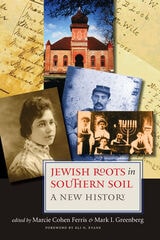
cover of Jewish Roots in Southern Soil: A New History

Jewish Roots in Southern Soil

A New History

Edited by Marcie Ferris and Mark I. Greenberg

Brandeis University Press, 2006
Jews have long been a presence in the American South, first arriving in the late seventeenth century as part of exploratory voyages from Europe to the New World. Two of the nation’s earliest Jewish communities were founded in Savannah in 1733 and Charleston in 1749. By 1800, more Jews lived in Charleston than in New York City. Today, Jews comprise less than one half of one percent of the southern population but provide critical sustenance and support for their communities. Nonetheless, southern Jews have perplexed scholars. For more than a century, historians have wrestled with various questions. Why study southern Jewish history? What is the southern Jewish experience? Is southern Jewish culture distinctive from that of other regions of the country, and if so, why? Jewish Roots in Southern Soil: A New History addresses these questions through the voices of a new generation of scholars of the Jewish South. Each of this book’s thirteen chapters reflects a response with particular attention paid to new studies on women and gender; black/Jewish relations and the role of race, politics, and economic life; popular and material culture; and the changes wrought by industrialization and urbanization in the twentieth century. Essays address historical issues from the colonial era to the present and in every region of the South. Topics include assimilation and American Jewish identity, southern Jewish women writers, the Jewish Confederacy, Jewish peddlers, southern Jewish racial identity, black/Jewish relations, demographic change, the rise of American Reform Judaism, and Jews in southern literature.
[more]
cover of Jewish Scholarship and Culture in Nineteenth-Century Germany: Between History and Faith

Jewish Scholarship and Culture in Nineteenth-Century Germany

Between History and Faith

Nils Roemer

University of Wisconsin Press, 2005

    German Jews were fully assimilated and secularized in the nineteenth century—or so it is commonly assumed. In Jewish Scholarship and Culture in the Nineteenth Century, Nils Roemer challenges this assumption, finding that religious sentiments, concepts, and rhetoric found expression through a newly emerging theological historicism at the center of modern German Jewish culture.
    Modern German Jewish identity developed during the struggle for emancipation, debates about religious and cultural renewal, and battles against anti-Semitism. A key component of this identity was historical memory, which Jewish scholars had begun to infuse with theological perspectives beginning in the 1850s. After German reunification in the early 1870s, Jewish intellectuals reevaluated their enthusiastic embrace of liberalism and secularism. Without abandoning the ideal of tolerance, they asserted a right to cultural religious difference for themselves--an ideal they held to even more tightly in the face of growing anti-Semitism. This newly re-theologized Jewish history, Roemer argues, helped German Jews fend off anti-Semitic attacks by strengthening their own sense of their culture and tradition.

[more]