Results by title
22279 books match the query 'Social Science' and 299 start with j
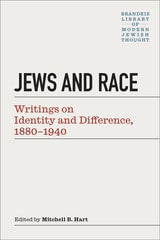
Jews and Race
Writings on Identity and Difference, 1880–1940Edited by Mitchell B. Hart
Brandeis University Press, 2011
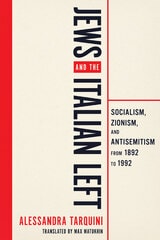
Jews and the Italian Left
Socialism, Zionism, and Antisemitism from 1892 to 1992Alessandra Tarquini, Translated by Max Matukhin
University of Wisconsin Press, 2026
Tarquini’s research fills an important lacuna by analyzing the antisemitism of twentieth-century socialist movements. Crucially, however, Tarquini makes important distinctions between antisemitism on the Italian left and right, and identifies the relationship between leftism and antisemitism as a distinct formation.
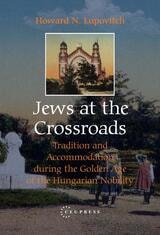
Jews at the Crossroads
Tradition and Accomodation during the Golden Age of the Hungarian NobilityHoward N. Lupovitch
Central European University Press, 2007
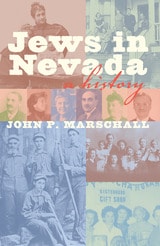
Jews in Nevada
A HistoryJohn P. Marschall
University of Nevada Press, 2011
Jews have always been one of Nevada’s most active and influential ethnic minorities. They were among the state’s earliest Euro-American settlers, and from the beginning they have been involved in every area of the state’s life as businessmen, agrarians, scholars, educators, artists, politicians, and civic, professional, and religious leaders. Jews in Nevada is an engaging, multilayered chronicle of their lives and contributions to the state. Here are absorbing accounts of individuals and families who helped to settle and develop the state, as well as thoughtful analyses of larger issues, such as the reasons Jews came to Nevada in the first place, how they created homes and interacted with non-Jews, and how they preserved their religious and cultural traditions as a small minority in a sparsely populated region.

Jews in the Center
Conservative Synagogues and Their MembersWertheimer, Jack
Rutgers University Press, 2002
Why do well-educated, highly Americanized, and financially secure Jews join a synagogue and participate in its religious life? This study of Conservative Jews examines the largest movement of synagogue-affiliated Jews in the United States, a group that outnumbers the combined membership of Reform and Orthodox congregations and a population that adheres to a centrist version of Judaism. The scholars who contribute to this study ask a series of provocative questions: How do these Jews negotiate the tensions between the traditional values of their religion and modern sensibilities? What meaning do they find in synagogue participation? How crucial are rabbis in the "success" of congregations?
Written by a team of scholars employing the tools of demography, ethnography, sociology, history, and comparative religious studies, Jews in the Center offers the most comprehensive view of any religious movement within American Judaism----and indeed, one of the most detailed studies of any denomination in American religious life.
Jews in the Center seeks to understand how synagogues function as congregations and to what extent they allow for individual self-expression. By focusing on a mainstream population, this book sheds light on religious people who generally receive the least attention----the broad center who neither retreat from society nor blur all boundaries between their religion and modern American culture.
Jews in the Center
Conservative Synagogues and Their MembersWertheimer, Jack
Rutgers University Press, 2000
Why do well-educated, highly Americanized, and financially secure Jews join a synagogue and participate in its religious life? This study of Conservative Jews examines the largest movement of synagogue-affiliated Jews in the United States, a group that outnumbers the combined membership of Reform and Orthodox congregations and a population that adheres to a centrist version of Judaism. The scholars who contribute to this study ask a series of provocative questions: How do these Jews negotiate the tensions between the traditional values of their religion and modern sensibilities? What meaning do they find in synagogue participation? How crucial are rabbis in the "success" of congregations?
Written by a team of scholars employing the tools of demography, ethnography, sociology, history, and comparative religious studies, Jews in the Center offers the most comprehensive view of any religious movement within American Judaism----and indeed, one of the most detailed studies of any denomination in American religious life.
Jews in the Center seeks to understand how synagogues function as congregations and to what extent they allow for individual self-expression. By focusing on a mainstream population, this book sheds light on religious people who generally receive the least attention----the broad center who neither retreat from society nor blur all boundaries between their religion and modern American culture.
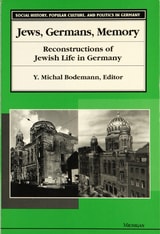
Jews, Germans, Memory
Reconstructions of Jewish Life in GermanyY. Michal Bodemann, Editor
University of Michigan Press, 1996

Jews, Sports, and the Rites of Citizenship
Edited by Jack Kugelmass
University of Illinois Press, 2006
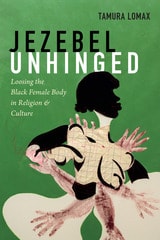
Jezebel Unhinged
Loosing the Black Female Body in Religion and CultureTamura Lomax
Duke University Press, 2018

Jihad in West Africa during the Age of Revolutions
Paul E. Lovejoy
Ohio University Press, 2016
In Jihād in West Africa during the Age of Revolutions, a preeminent historian of Africa argues that scholars of the Americas and the Atlantic world have not given Africa its due consideration as part of either the Atlantic world or the age of revolutions. The book examines the jihād movement in the context of the age of revolutions—commonly associated with the American and French revolutions and the erosion of European imperialist powers—and shows how West Africa, too, experienced a period of profound political change in the late eighteenth through the mid-nineteenth centuries. Paul E. Lovejoy argues that West Africa was a vital actor in the Atlantic world and has wrongly been excluded from analyses of the period.
Among its chief contributions, the book reconceptualizes slavery. Lovejoy shows that during the decades in question, slavery expanded extensively not only in the southern United States, Cuba, and Brazil but also in the jihād states of West Africa. In particular, this expansion occurred in the Muslim states of the Sokoto Caliphate, Fuuta Jalon, and Fuuta Toro. At the same time, he offers new information on the role antislavery activity in West Africa played in the Atlantic slave trade and the African diaspora.
Finally, Jihād in West Africa during the Age of Revolutions provides unprecedented context for the political and cultural role of Islam in Africa—and of the concept of jihād in particular—from the eighteenth century into the present. Understanding that there is a long tradition of jihād in West Africa, Lovejoy argues, helps correct the current distortion in understanding the contemporary jihād movement in the Middle East, Afghanistan, Pakistan, and Africa.
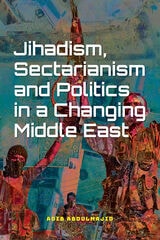
Jihadism, Sectarianism and Politics in a Changing Middle East
Adib Abdulmajid
Eburon Academic Publishers, 2021
The emergence and growth of sectarian Islamist militant organizations, whether Sunni or Shia, is deemed to be the fruit of the emerging radical interpretations of the concept of jihad, and the evolution of Islamism in general. The main objective of this book is to help the reader understand the complex religio-political scene in today’s Middle East and the ideological principles and agendas of influential movements, whose beliefs and actions constitute a serious threat to cultural diversity in the region. It addresses the doctrinal tenets associated with the emergence of influential Islamist organizations and the challenges encountered by the culturally diverse populations that surround them. This book also delves into the historical events that have shaped the Middle East as we know it today. It further examines the key factors behind the rise of the most influential sectarian-guided, jihadi-based extremist groups in the recent years
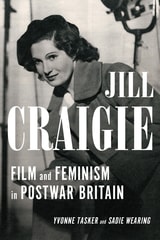
Jill Craigie
Film and Feminism in Postwar BritainYvonne Tasker and Sadie Wearing
University of Illinois Press, 2026
Tasker and Wearing reconsider Craigie’s place and reputation in the history of British Cinema. Craigie created work that showed a strong critical voice and at the same time challenged contemporary modes of filmmaking with both documentary and drama. Tasker and Wearing examine her feminist and working-class influences and also emphasize the democratic impulse that drove Craigie to include her subjects’ participation, and her commitment to representing them on screen. Throughout, Tasker and Wearing analyze Craigie’s work against the backdrop of postwar concerns and preoccupations.
Distinctive and nuanced, Jill Craigie reconsiders the career of a groundbreaking woman director.
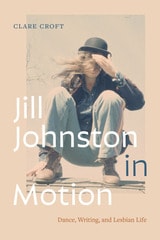
Jill Johnston in Motion
Dance, Writing, and Lesbian LifeClare Croft
Duke University Press, 2024
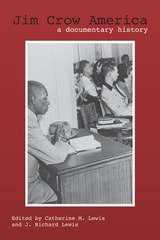
Jim Crow America
A Documentary HistoryCatherine M. Lewis
University of Arkansas Press, 2009
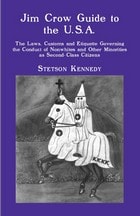
Jim Crow Guide to the U.S.A.
The Laws, Customs and Etiquette Governing the Conduct of Nonwhites and Other Minorities as Second-Class CitizensStetson Kennedy
University of Alabama Press, 2011
“A history of the United States that is almost incredible.” —Jean-Paul Sartre, Les Temps Modernes
Jim Crow Guide to the U.S.A. by Stetson Kennedy is a bold exposé of America’s institutionalized racism, originally published in 1959 and hailed as a landmark in civil rights literature. With unflinching clarity, Kennedy documents the laws, customs, and social codes that relegated nonwhite citizens to second-class status under the Jim Crow system. From the mistreatment of Native Americans to the exclusionary immigration policies targeting Asians and Africans, the book maps the presence of race-based politics across every facet of American life—housing, education, employment, and even burial.
What makes this work especially influential is its international resonance. The famed French existentialist Jean-Paul Sartre championed the book’s publication in Europe, recognizing its power to illuminate the contradictions between American democratic ideals and racial realities. Sartre’s endorsement helped position the book as a global indictment of racial injustice, aligning it with anti-colonial and human rights movements worldwide. Provocative, meticulously researched, and deeply human, Jim Crow Guide to the U.S.A. remains a vital historical document and a call to conscience. It is not merely a guide—it is a mirror held up to a nation, reflecting truths that later generations were called on to address.
Jim Crow Networks
African American Periodical CulturesEurie Dahn
University of Massachusetts Press, 2021
As Eurie Dahn demonstrates, authors like James Weldon Johnson, Nella Larsen, William Faulkner, and Jean Toomer wrote in the context of interracial and black periodical networks, which shaped the literature they produced and their concerns about racial violence. This original study also explores the overlooked intersections between the black press and modernist and Harlem Renaissance texts, and highlights key sites where readers and writers worked toward bottom-up sociopolitical changes during a period of legalized segregation.
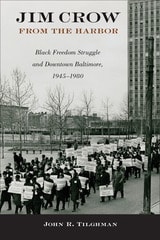
Jim Crow from the Harbor
Black Freedom Struggle and Downtown Baltimore, 1945–1980John R. Tilghman
Temple University Press, 2026
How do poor Black communities co-exist with downtown revitalization? How do Black social movements respond to urban renewal to ensure access to better housing and city spaces? John Tilghman investigates these interlocking questions in Jim Crow from the Harbor. Looking at Baltimore, Maryland’s redevelopment in the post-war era of deindustrialization and population decline through white flight, Tilghman tells the story of how Black activists clashed with urban regimes.
Tilghman follows the money—redevelopment profits—which created tensions that prompted anti-freeway campaigns and affirmative action efforts. Through grassroots activism, protests, and community building, participants in the Black Freedom Struggle undermined downtown interests’ efforts to reinforce racial segregation as well as other civil, political, and economic inequalities.
While their efforts met with both success and limitations, Tilghman emphasizes the strengths of this minority majority population as they strove for urban equality. Jim Crow from the Harbor provides a new perspective that helps explain what has provoked today’s struggles in Baltimore for Black Americans.

Joaquim Nabuco, British Abolitionists, and the End of Slavery in Brazil
Correspondence 1880-1905Edited by Leslie Bethell and Murilo De Carvalho
University of London Press, 2009

Job Loss, Identity, and Mental Health
Norris, Dawn R
Rutgers University Press, 2016
Job Queues, Gender Queues
Explaining Women's Inroads into Male OccupationsBarbara F. Reskin and Patricia A. Roos
Temple University Press, 1990
Since 1970, women have made widely publicized gains in several customarily male occupations. Many commentators have understood this apparent integration as an important step to sexual equality in the workplace. Barbara F. Reskin and Patricia A. Roos read a different lesson in the changing gender composition of occupations that were traditionally reserved for men. With persuasive evidence, Job Queues, Gender Queues offers a controversial interpretation of women's dramatic inroads into several male occupations based on case studies of "feminizing" male occupation.
The authors propose and develop a queuing theory of occupations' sex composition. This theory contends that the labor market comprises a "gender queue" with employers preferring male to female workers for most jobs. Workers also rank jobs into a "job queue." As a result, the highest-ranked workers monopolize the most desirable jobs. Reskin and Roos use this queuing perspective to explain why several male occupations opened their doors to women after 1970. The second part of the book provides evidence for this queuing analysis by presenting case studies of the feminization of specific occupations. These include book editor, pharmacist, public relations specialist, bank manager, systems analyst, insurance adjuster, insurance salesperson, real estate salesperson, bartender, baker, and typesetter/compositor.
Jobless Future
Sci-Tech and the Dogma of WorkStanley Aronowitz
University of Minnesota Press, 1995
Jobs Aren't Enough
Toward a New Economic Mobility for Low-Income FamiliesRoberta Rehner Iversen and Annie Laurie Armstrong
Temple University Press, 2006
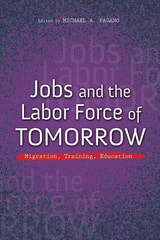
Jobs and the Labor Force of Tomorrow
Migration, Training, EducationMichael Pagano
University of Illinois Press, 2017
Contributors: Xochitl Bada, John Bragelman, Laura Dresser, Rudy Faust, Beth Gutelius, Brad Harrington, Gregory V. Larnell, Twyla T. Blackmond Larnell, and Nik Theodore.
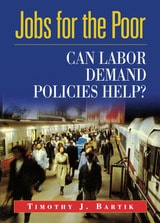
Jobs for the Poor
Can Labor Demand Policies Help?Timothy J. Bartik
Russell Sage Foundation, 2001
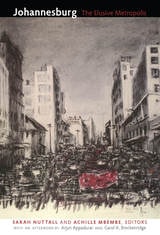
Johannesburg
The Elusive MetropolisSarah Nuttall and Achille Mbembe, eds.
Duke University Press, 2008
The volume’s essays include an investigation of representation and self-stylization in the city, an ethnographic examination of friction zones and practices of social reproduction in inner-city Johannesburg, and a discussion of the economic and literary relationship between Johannesburg and Maputo, Mozambique’s capital. One contributor considers how Johannesburg’s cosmopolitan sociability enabled the anticolonial projects of Mohandas Ghandi and Nelson Mandela. Journalists, artists, architects, writers, and scholars bring contemporary Johannesburg to life in ten short pieces, including reflections on music and megamalls, nightlife, built spaces, and life for foreigners in the city.
Contributors: Arjun Appadurai, Carol A. Breckenridge, Lindsay Bremner, David Bunn, Fred de Vries, Nsizwa Dlamini, Mark Gevisser, Stefan Helgesson, Julia Hornberger, Jonathan Hyslop, Grace Khunou, Frédéric Le Marcis, Xavier Livermon, John Matshikiza, Achille Mbembe, Robert Muponde, Sarah Nuttall, Tom Odhiambo, Achal Prabhala, AbdouMaliq Simone
Johannesburg
The Elusive Metropolis, Volume 16Sarah Nuttall and Achille Mbembe, eds.
Duke University Press, 0
Contributors to this issue—a mix of scholars, urban planners, and artists, many of whom hail from South Africa—reveal Johannesburg to be a polycentric and international city that has developed its own cosmopolitan culture. In a detailed study of three streets in the modern precinct of Melrose Arch, one essay shows how the thoroughly commodified and marketed Johannesburg cityscape has shaped the cultural sensitivities, aesthetics, and urban subjectivities of its inhabitants, at times even overriding the historical memory of apartheid. Another essay, focusing on the emergence of a new urban culture, examines how the city itself becomes a crucial site for the remixing and reassembling of racial identities. By tracking the movement of people with AIDS to various locations in the city to seek relief and treatment, another essay reveals an urban geography very different from what is seen from the highways. Finally, through interviews and commentaries, journalists, artists, and architects of Johannesburg offer reflections on the geography and shifting culture of the city and its townships, on the complicated relationship between Johannesburg and other African cities, and on the search for an architectural style that adequately expresses the complexity of this cosmopolitan city.
Contributors. Lindsay Bremner, Nsizwa Dlamini, Mark Gevisser, Grace Khunou, Frédéric Le Marcis, John Matshikiza, Achille Mbembe, Sarah Nuttall, Rodney Place, AbdouMaliq Simone, Michael Watts
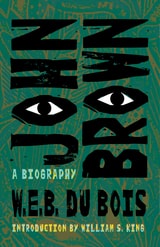
John Brown
A BiographyW. E. B. Du Bois
Westholme Publishing, 2024
This edition is introduced by John Brown scholar William S. King, who provides the background to the writing of the biography which took place during a turbulent time of race relations and competing visions from Booker T. Washington and Du Bois for the future of Black Americans. “Du Bois,” King reminds us, “remains one of the best writers on this phase of American history, which is still at our core.”
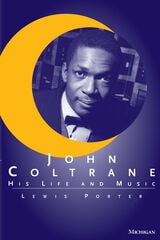
John Coltrane
His Life and MusicLewis Porter
University of Michigan Press, 1998
“One of the great biographies of anyone ever written.”—Steve O’Keefe, Counterpunch.org
Coltrane’s saxophonist son Ravi writes: “…[T]he most compelling and meticulously documented history of John Coltrane…This is a beautiful book.”
In honor of John Coltrane's Centennial, 1926-2026: Lewis Porter's Classic Biography Is Available for the First Time in Digital Format!
John Coltrane was a key figure in jazz, a pioneer in world music, and an intensely emotional force whose following continues to grow. This biography, the first by a professional jazz scholar and performer, presents a huge amount of never-before-published material, including interviews with Coltrane, photos, genealogical documents, and innovative musical analysis that offers a fresh view of Coltrane's genius. Compiled from scratch with the assistance of dozens of Coltrane's colleagues, friends, and family, John Coltrane: His Life and Music corrects numerous errors from previous biographies. The significant people in Coltrane's life were reinterviewed, yielding new insights; some were interviewed for the first time ever. The musical analysis, which is accessible to the nonspecialist, makes its own revelations--for example, that some of Coltrane's well-known pieces are based on previously unrecognized sources. The Appendix is the most detailed chronology of Coltrane's performing career ever compiled, listing scores of previously unknown performances from the 1940s and early 1950s. Coltrane has become a musical inspiration for thousands of fans and musicians and a personal inspiration to as many more. For all of these, Porter's book will become the definitive resource--a reliable guide to the events of Coltrane's life and an insightful look into his musical practices. With illustrations and previously unseen photographs!

John Dickson Carr
A Critical StudyS. T. Joshi
University of Wisconsin Press, 1990
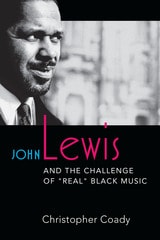
John Lewis and the Challenge of "Real" Black Music
Christopher Coady
University of Michigan Press, 2016
For critics and listeners, the reception of the 1950s jazz-classical hybrid Third Stream music has long been fraught. In John Lewis and the Challenge of “Real” Black Music, Christopher Coady explores the work of one of the form’s most vital practitioners, following Lewis from his role as an arranger for Miles Davis’s Birth of the Cool sessions to his leadership of the Modern Jazz Quartet, his tours of Europe, and his stewardship of the Lenox School of Jazz.
Along the way Coady shows how Lewis’s fusion works helped shore up a failing jazz industry in the wake of the 1940s big band decline, forging a new sound grounded in middle-class African American musical traditions. By taking into account the sociocultural milieu of the 1950s, Coady provides a wider context for understanding the music Lewis wrote for the Modern Jazz Quartet and sets up new ways of thinking about Cool Jazz and Third Stream music more broadly.
John Locke
Economist and Social ScientistKaren Iversen Vaughn
University of Chicago Press, 1980

John Mercer Langston and the Fight for Black Freedom, 1829-65
William and Aimee Lee Cheek
University of Illinois Press, 1989
Privileged beyond other members of his race, yet sharing their disadvantages, the young John Mercer Langston stood in an uncertain position in the years before the Civil War. His confrontation with a critical personal question was tempered by a crucial national reality: from what sources could he derive his model of manhood and human dignity? This book explores John Mercer Langston's decisions to work out his destiny through the resources and fortunes of the northern black community.
Although Langston, who died in 1897, was a black Politician, orator, lawyer, intellectual, diplomat, and congressman, he has never before been accorded fullscale biographical treatment. Born free on a Virginia plantation, Langston graduated from Oberlin College in 1849, gained admission to the Ohio bar, and by the age of twenty-five, became the first black American to hold elective office. Still in the years of his political apprenticeship, he promoted black civil rights, helped shape the nascent Republican party, aided in the Oberlin-Wellington Rescue and John Brown's raid, and recruited black soldier for the Union cause. In 1864 he became the first president of the National Equal Rights League.
From an extensive search of primary sources, the authors construct a richly textured picture of the beginnings of Langston's career as a national black leader. More than a biography, the work also incorporates social and political history. Embedded firmly in a study of northern black community life and activism, it reveals the degree to which Langston and his cohorts set the terms of the fight for freedom and citizenship.
John Robert Shaw
An Autobiography of Thirty Years, 1777–1807Oressa M. Teagarden
Ohio University Press, 1992
In the summer of 1807 more than a thousand subscribers from New England to Tennessee paid for the initial printing of The Life and Travels of John Robert Shaw: A Narrative of the Life and Travels of the Well-Digger, now resident of Lexington, Kentucky, Written by Himself. Shaw had come to Rhode Island as a British redcoat to put down the colonial rebellion. Through various quirks of fate, including being taken a prisoner of war, he ended up fighting with the Americans. Shaw was an exuberant spirit whose rowdy drinking bouts and related predicaments alternated with periods of wholehearted efforts at reform. His autobiography, written while he recuperated from injuries from one of several explosions (an occupational hazard for the frontier well-digger), is an articulate and entertaining record of the Revolutionary War era.
A 1930 printing of Shaw’s autobiography was rescued from the trash by an alert librarian in Kentucky in 1950. She passed the tattered copy on to journalist Oressa M. Teagarden, who became intrigued with Shaw’s story and spent much of her free time over the next two decades finding out more about the ebullient American. On Teagarden’s death, co-editor Jeanne Crabtree assumed the task of making Shaw’s authentic and colorful view of early America available to a new generation of readers.
John Steinbeck Goes to War
The Moon is Down as PropagandaDonald V. Coers
University of Alabama Press, 2005
WINNER OF THE ELIZABETH AGEE PRIZE IN AMERICAN LITERATURE
When words became weapons—Steinbeck’s novel and the underground war for freedom.
In March 1942, a desperate period for the allies in World War II, John Steinbeck published his propaganda novel The Moon is Down—the story of ruthless invaders who overrun a militarily helpless country. Throughout the novel, Steinbeck underscored both the fatal weakness of the “invincible” unnamed aggressors and the inherent power of the human values shard by the “conquered” people.
The Moon is Down created an immediate sensation among American literary critics; fierce debate erupted over Steinbeck’s uncommonly sympathetic portrayal of the enemy and the novel’s power as a vehicle for propaganda. Fifty years later, Coers continues the debate, relying heavily on unpublished letters and personal interviews with the lawyers, book dealers, actors, publishers, and housewives associated with the resistance movements in Western Europe. Clandestine translations of The Moon Is Down quickly appeared and were widely circulated under the noses of the Gestapo. Coers documents the fate of Steinbeck’s novel in the hands of World War II resistance fighters and deepens our appreciation of Steinbeck’s unique ability to express the feelings of oppressed peoples.

John Williams's Film Music
<i>Jaws</i>, <i>Star Wars</i>, <i>Raiders of the Lost Ark</i>, and the Return of the Classical Hollywood Music StyleEmilio Audissino
University of Wisconsin Press, 2014
Combining accessible writing with thorough scholarship, and rigorous historical accounts with insightful readings, John Williams’s Film Music explores why Williams is so important to the history of film music. Beginning with an overview of music from Hollywood’s Golden Age (1933–58), Emilio Audissino traces the turning points of Williams’s career and articulates how he revived the classical Hollywood musical style. This book charts each landmark of this musical restoration, with special attention to the scores for Jaws and Star Wars, Williams’s work as conductor of the Boston Pops Orchestra, and a full film/music analysis of Raiders of the Lost Ark. The result is a precise, enlightening definition of Williams’s “neoclassicism” and a grounded demonstration of his lasting importance, for both his compositions and his historical role in restoring part of the Hollywood tradition.
Best Special Interest Books, selected by the American Association of School Librarians
Best Books for General Audiences, selected by the Public Library Reviewers
Johnny Cash International
How and Why Fans Love the Man in BlackMichael Hinds and Jonathan Silverman
University of Iowa Press, 2020
2023 Peggy O'Brien Book Prize, winner
Across all imaginable borders, Johnny Cash fans show the appeal of a thoroughly American performer who simultaneously inspires people worldwide. A young Norwegian shows off his Johnny Cash tattoo. A Canadian vlogger sings “I Walk the Line” to camel herders in Egypt’s White Desert. A shopkeeper in Northern Ireland plays Cash as his constant soundtrack. A Dutchwoman coordinates the activities of Cash fans worldwide and is subsequently offered the privilege of sleeping in Johnny’s bedroom. And on a more global scale, millions of people watch Cash’s videos online, then express themselves through commentary and debate.
In Johnny Cash International, Hinds and Silverman examine digital and real-world fan communities and the individuals who comprise them, profiling their relationships to Cash and each other. Studying Johnny Cash’s international fans and their love for the man reveals new insights about music, fandom, and the United States.
Joining Africa
From Anthills to AsmaraCharles Cantalupo
Michigan State University Press, 2012
This eye-opening personal history tells the story of an American college professor’s twenty-year engagement with a thriving Africa rarely encountered by Western visitors, including an extraordinary connection to poets across the continent. At once adventurous, spiritual, political, dreamlike, and humorous, Joining Africa is a unique documentary of a journey through the continent, including an intense five-year encounter with economically struggling but culturally fertile Eritrea. The Africa presented here is neither a postcolonial study nor an exotic tourist destination. It is rich with the voices of its people, whose languages, Cantalupo argues, have greater potential to effect change than any NGO or high-profile celebrity. In vibrant prose, Cantalupo’s book extends a stirring invitation to reevaluate how we engage—both individually and collectively—with this remarkable part of the world.
Joining the Conversation
Dialogues by Renaissance WomenJanet Levarie Smarr
University of Michigan Press, 2005
Avoiding the male-authored model of competing orations, French and Italian women of the Renaissance framed their dialogues as informal conversations, as letters with friends that in turn became epistles to a wider audience, and even sometimes as dramas. No other study to date has provided thorough, comparative view of these works across French, Italian, and Latin. Smarr's comprehensive treatment relates these writings to classical, medieval, and Renaissance forms of dialogue, and to other genres including drama, lyric exchange, and humanist invective -- as well as to the real conversations in women's lives -- in order to show how women adapted existing models to their own needs and purposes.
Janet Levarie Smarr is Professor of Theatre and Italian Studies at the University of California, San Diego.
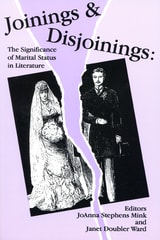
Joinings and Disjoinings
The Significance of Marital Status in LiteratureJoAnna Stephens Mink
University of Wisconsin Press, 1991
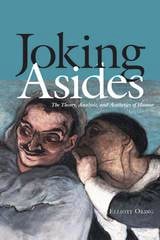
Joking Asides
The Theory, Analysis, and Aesthetics of HumorElliott Oring
Utah State University Press, 2016
A folklorist drawn to the study of humor, Oring developed his formulation of “appropriate incongruity” as a frame to understand what jokes must do to produce humor. He tests appropriate incongruity against other major positions in the field, including the general theory of verbal humor, conceptual integration theory, benign violation theory, and false-belief theory. Oring draws on the work of scholars from several disciplines—anthropology, folklore, philosophy, psychology, linguistics, and literature—to ask basic questions about the construction and evolution of jokes, untangle the matter of who the actual targets of a joke might be, and characterize the artistic qualities of jokes and joke performances.
Although Oring guides the reader through a forest of jokes and joke genres, this is not a joke book. A major work from a major scholar, Joking Asides is a rigorous exploration of theoretical approaches to jokes and their functions and is filled with disquieting questions, penetrating criticisms, and original observations. Written in a clear and accessible style, this book will prove valuable to any scholar or student who takes matters of jokes and joking seriously.
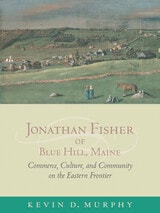
Jonathan Fisher of Blue Hill, Maine
Commerce, Culture, and Community on the Eastern FrontierKevin D. Murphy
University of Massachusetts Press, 2010
Murphy shows how Fisher, as pastor of the Congregational church in Blue Hill from 1796 to 1837, helped spearhead the transformation of a frontier settlement on the eastern shores of the Penobscot Bay into a thriving port community; how he used his skills as an architect, decorative painter, surveyor, and furniture maker not only to support himself and his family, but to promote the economic growth of his village; and how the fluid professional identity that enabled Fisher to prosper on the eastern frontier could only have existed in early America where economic relations were far less rigidly defined than in Europe.
Among the most important artifacts of Jonathan Fisher's life is the house he designed and built in Blue Hill. The Jonathan Fisher Memorial, as it is now known, serves as a point of departure for an examination of social, religious, and cultural life in a newly established village at the turn of the nineteenth century. Fisher's house provided a variety of spaces for agricultural and domestic work, teaching, socializing, artmaking, and more.
Through the eyes of Jonathan Fisher, we see his family grow and face the challenges of the new century, responding to religious, social, and economic change—sometimes succeeding and sometimes failing. We appreciate how an extraordinarily energetic man was able to capitalize on the wide array of opportunities offered by the frontier to give shape to his personal vision of community.
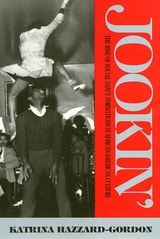
Jookin'
The Rise of Social Dance Formations in African-American CultureKatrina Hazzard-Gordon
Temple University Press, 1992
Katrina Hazzard-Gordon offers the first analysis of the development of the jook—an underground cultural institution created by the black working class—together with other dance arenas in African-American culture. Beginning with the effects of African slaves’ middle passage experience on their traditional dances, she traces the unique and virtually autonomous dance culture that developed in the rural South. Like the blues, these secular dance forms and institutions were brought north and urbanized by migrating blacks. In northern cities, some aspects of black dance became integrated into white culture and commercialized. Focusing on ten African-American dance arenas from the period of enslavement to the mid-twentieth century, this book explores the jooks, honky-tonks, rent parties, and after-hours joints as well as the licensed membership clubs, dance halls, cabarets, and the dances of the black elite.
Jook houses emerged during the Reconstruction era and can be viewed as a cultural response to freedom. In the jook, Hazzard-Gordon explains, an immeasurable amount of core black culture including food, language, community fellowship, mate selection, music, and dance found a sanctuary of expression when no other secular institution flourished among the folk. The jook and its various derivative forms have provided both entertainment and an economic alternative (such as illegal lotteries and numbers) to people excluded from the dominant economy. Dances like the Charleston, shimmy, snake hips, funky butt, twist, and slow drag originated in the jooks; some can be traced back to Africa.
Social dancing links black Americans to their African past more strongly than any other aspect of their culture. Citing the significance of dance in the African-American psyche, this study explores the establishments that nurtured ancestral as well as communal links for African-Americans, vividly describing black dances, formal rituals, such as debutante balls, and the influence of black dance on white culture.
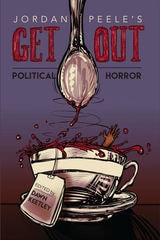
Jordan Peele's Get Out
Political HorrorEdited by Dawn Keetley
The Ohio State University Press, 2020
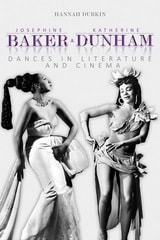
Josephine Baker and Katherine Dunham
Dances in Literature and CinemaHannah Durkin
University of Illinois Press, 2019
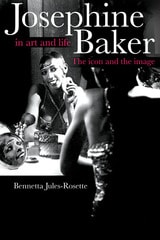
Josephine Baker in Art and Life
THE ICON AND THE IMAGEBennetta Jules-Rosette
University of Illinois Press, 2006
Josephine Baker (1906-1975) was a dancer, singer, actress, author, politician, militant, and philanthropist, whose images and cultural legacy have survived beyond the hundredth anniversary of her birth. Neither an exercise in postmodern deconstruction nor simple biography, Josephine Baker in Art and Life presents a critical cultural study of the life and art of the Franco-American performer whose appearances as the savage dancer Fatou shocked the world.
Although the study remains firmly anchored in Josephine Baker’s life and times, presenting and challenging carefully researched biographical facts, it also offers in-depth analyses of the images that she constructed and advanced. Bennetta Jules-Rosette explores Baker’s far-ranging and dynamic career from a sociological and cultural perspective, using the tools of sociosemiotics to excavate the narratives, images, and representations that trace the story of her life and fit together as a cultural production.
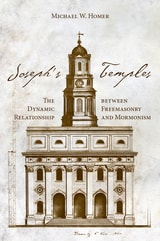
Joseph’s Temples
The Dynamic Relationship between Freemasonry and MormonismMichael W. Homer
University of Utah Press, 2014
There are indications that Freemasonry was a pervasive foundational element in Mormonism and that its rituals and origin legends influenced not just the secret ceremonies of the LDS temples but also such important matters as the organization of the Mormon priesthood, the foundation of the women’s Relief Society, the introduction and concealment of polygamy, and the church’s position on African Americans’ full membership. Freemasonry was also an important facet of Mormons’ relations with broader American society.
The two movements intertwined within a historical context of early American intellectual, social, and religious ferment, which influenced each of them and in varying times and situations placed them either in the current or against the flow of mainstream American culture and politics. Joseph’s Temples provides a comprehensive examination of a dynamic relationship and makes a significant contribution to the history of Mormonism, Freemasonry, and their places in American history.
Recipient of the Meritorious Book Award from the Utah Division of State History
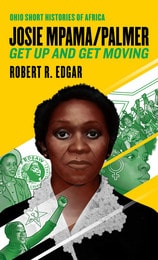
Josie Mpama/Palmer
Get Up and Get MovingRobert R. Edgar
Ohio University Press, 2020
While African National Congress narratives dominate much of the scholarship on South Africa’s freedom struggle, Josie Mpama/Palmer’s political life offers a different perspective. Highly critical of the patriarchal attitudes that hindered black women from actively participating in politics, Mpama/Palmer was an outspoken advocate for women’s social equality and encouraged black women to become more involved in national conversations. The first black woman to join the Communist Party of South Africa and an antiapartheid activist, Josie Mpama/Palmer remained involved in critical issues all her life, especially protests against Bantu Education and other forms of racial and sexist discrimination. She was an integral figure in establishing the Federation of South African Women, an organization open to women of all races. Mpama/Palmer’s activism and political legacy would become an inspiring example for women in South Africa and around the world to get up and get moving.

José María Arguedas
Reconsiderations for Latin American StudiesCiro A. Sandoval
Ohio University Press, 1997
José María Arguedas (1911–1969) is one of the most important authors to speak to issues of the survival of native cultures. José María Arguedas: Reconsiderations for Latin American Cultural Studies presents his views from multiple perspectives for English-speaking audiences for the first time.
The life and works of José María Arguedas reflect in a seminal way the drama of acculturation and transculturation suffered not only by what we think of as the indigenous and mestizo cultures of Peru, but by other Latin American societies as well. Intricately reflecting his pluricultural and bilingual life experience, Arguedas’s illuminating poetic visions of Andean culture cross multidisciplinary borders to transfigure pedagogical and social practices.
Few texts convey the complexity and contradictions of an Andean cosmopolitanism with the intense accuracy of Arguedas’s anthropological, ethnographic essays and literary writings. The ramifications of Arguedas’s cultural critiques have yet to be assessed, particularly as a response to the disruptive forces of modernity, acculturation, and essential identity.
José María Arguedas was a Peruvian ethnographer, anthropologist, folklorist, poet, and novelist. He based his novels and stories on the life and outlook of the Quechua-speaking Indians and was a pioneer of modern Quechua poetry.
The present anthology brings his work to the attention of broader audiences by pulling together diverse scholarly views on Arguedas’s aesthetic and multicultural contributions to the contemporary and political archipelago. It is a synthesis of his views on cultural change as it impinges upon considerations and theories of Latin American cultural studies.
José Vasconcelos
The Prophet of RaceStavans, Ilan
Rutgers University Press, 2011
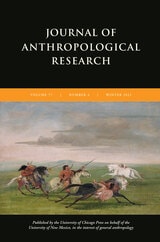
Journal of Anthropological Research, volume 77 number 4 (Winter 2021)
The University of Chicago Press
University of Chicago Press Journals, 2021