Results by title
28164 books match the query 'History' and 406 start with j
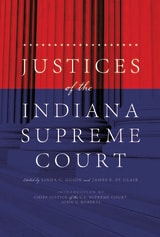
Justices of the Indiana Supreme Court
Linda C. Gugin and James E. St. Clair
Indiana Historical Society Press, 2010
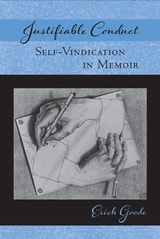
Justifiable Conduct
Self-Vindication in MemoirErich Goode
Temple University Press, 2013
Using a theory of deviance neutralization, Goode assesses the types of behavior exhibited by these memoirists to draw out generic narratives that are most effective in attempting to absolve the actor-author. Despite the highly individualistic and variable lives of these writers, Goode demonstrates that memoirists use a conventional vocabulary for their unconventional behavior.
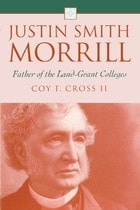
Justin Smith Morrill
Father of the Land-Grant CollegesCoy F. Cross II
Michigan State University Press, 1999
Smith Morrill: Almost every land-grant college or university in the United States has a building named for him; but are his contributions truly recognized and understood? Here is the first biography on this renowned statesman in six decades. Representative and then senator from Vermont, Morrill began his tenure in Congress in 1855 and served continuously for forty-three years. His thirty- one years in the upper chamber alone earned him the title "Father of the Senate." Coy F. Cross reveals a complex and influential political figure who, as chair of the House Ways and Means Committee, and then the Senate Finance Committee, influenced American economic policy for nearly fifty years.
Morrill's most-recognized achievements are the pieces of legislation that bear his name: the Morrill land-grant college acts of 1862 and 1890. His legacy, inspired by the Jeffersonian ideal of an educated electorate, revolutionized American higher education. Prior to this legislation, colleges and universities were open primarily to affluent white men and studies were limited largely to medicine, theology, and philosophy. Morrill's land-grant acts eventually opened American higher education to the working class, women, minorities, and immigrants. Since 1862, more than 20 million people have graduated from the 104 land-grant colleges and universities spawned by his grand vision. In this long-overdue study, Cross shows the "Father of Land-Grant Colleges" to be one of America's formative nineteenth- century political figures.
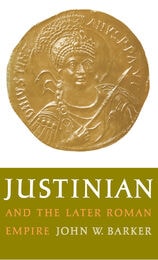
Justinian and the Later Roman Empire
John W. Barker, Jr.
University of Wisconsin Press, 1975

Justyna's Narrative
Gusta Davidson Draenger
University of Massachusetts Press, 1996
Written during World War II, Justyna's Narrative is a compelling account of the Krakow Jewish resistance. From February through April 1943, Gusta Davidson Draenger (aka “Justyna”) composed the narrative on scraps of paper smuggled into her prison cell. Between sessions of torture and interrogation at the hands of the Gestapo, she recorded the activities and spiritual aspirations of the clandestine group of young Jewish idealists who forged documents, acquired weapons, and committed acts of defiance against the Nazis.
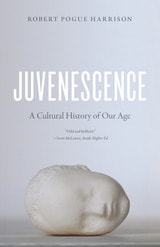
Juvenescence
A Cultural History of Our AgeRobert Pogue Harrison
University of Chicago Press, 2014
Like all of Robert Pogue Harrison's books, Juvenescence ranges brilliantly across cultures and history, tracing the ways that the spirits of youth and age have inflected each other from antiquity to the present. Drawing on the scientific concept of neotony, or the retention of juvenile characteristics through adulthood, and extending it into the cultural realm, Harrison argues that youth is essential for culture’s innovative drive and flashes of genius. At the same time, however, youth—which Harrison sees as more protracted than ever—is a luxury that requires the stability and wisdom of our elders and the institutions. “While genius liberates the novelties of the future,” Harrison writes, “wisdom inherits the legacies of the past, renewing them in the process of handing them down.”
A heady, deeply learned excursion, rich with ideas and insights, Juvenescence could only have been written by Robert Pogue Harrison. No reader who has wondered at our culture's obsession with youth should miss it.