Results by title
1713 books match the query '21st century' and 10 start with k

Kaija Saariaho
Pirkko Moisala
University of Illinois Press, 2008

Katrina's Imprint
Race and Vulnerability in AmericaWailoo, Keith
Rutgers University Press, 2010
Kept Secret
The Half-Truth in NonfictionJen Hirt
Michigan State University Press, 2017
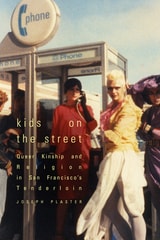
Kids on the Street
Queer Kinship and Religion in San Francisco's TenderloinJoseph Plaster
Duke University Press, 2023
Killing Poetry
Blackness and the Making of Slam and Spoken Word CommunitiesJohnson, Javon
Rutgers University Press, 2017
Co-winner of the 2018 Ethnography Division’s Best Book from the NCA
In recent decades, poetry slams and the spoken word artists who compete in them have sparked a resurgent fascination with the world of poetry. However, there is little critical dialogue that fully engages with the cultural complexities present in slam and spoken word poetry communities, as well as their ramifications.
In Killing Poetry, renowned slam poet, Javon Johnson unpacks some of the complicated issues that comprise performance poetry spaces. He argues that the truly radical potential in slam and spoken word communities lies not just in proving literary worth, speaking back to power, or even in altering power structures, but instead in imagining and working towards altogether different social relationships. His illuminating ethnography provides a critical history of the slam, contextualizes contemporary black poets in larger black literary traditions, and does away with the notion that poetry slams are inherently radically democratic and utopic.
Killing Poetry—at times autobiographical, poetic, and journalistic—analyzes the masculine posturing in the Southern California community in particular, the sexual assault in the national community, and the ways in which related social media inadvertently replicate many of the same white supremacist, patriarchal, and mainstream logics so many spoken word poets seem to be working against. Throughout, Johnson examines the promises and problems within slam and spoken word, while illustrating how community is made and remade in hopes of eventually creating the radical spaces so many of these poets strive to achieve.

Kinflix
Adoption and Assisted Reproductive Technologies in FilmMarina Fedosik
The Ohio State University Press, 2025
Resisting simple ideological readings of film genres, Fedosik unsettles cultural scripts around adoption and reproduction and scrutinizes moments where formulaic genre logic may be troubled by representations of lived experience that transcend common tropes of family formation. She argues that adoption as a reproductive technology is uniquely situated to expose cultural tensions around nontraditional methods of reproduction that are rapidly developing in the post-IVF biocultural landscape. Rapidly changing reproductive technologies, Fedosik asserts, demand a cultural response—and require more expansive reflection on reproductive futurities.

Kingdom at Any Cost
Right-Wing Visions of Apocalypse in AmericaJohnnie Chamberlin
Parkhurst Brothers, Inc., 2009

Kree
A Post-Exotic Noveldraeger
University of Minnesota Press, 2024
A warrior struggles through an apocalyptic landscape and the world after death
Kree Toronto has been raised as a warrior in a ravaged world: postapocalyptic, posthuman, the population decimated by wars and civilization long since collapsed. After her attempt to avenge the death of her dog, Loka, goes horribly wrong, Kree finds herself lost in a world after death and wanders into the city of the terrible mendicants.
Under the Brothers’ totalitarian rule, Kree can lead a quiet life and forget her violent past, even if needles grow in her skull and hallucinatory blood rains pour down now and then to remind her. She can make friends: a shamanic healer with a shaking tent, a mysterious stranger hatched from an egg, and a gruff Tibetan electrician in a world without electricity. And she can have her Loka as long as she toes the Party line and does as she’s told. When she can’t—when her friends start to disappear and the Brothers turn against her—Kree sets out on a quest, searching for a new way forward.
Multiply reincarnated and unstuck in time, Kree is the characteristically marvelous creation of Manuela Draeger, whose extraordinary stories, in the words of author China Miéville, “are as close to dreams as fiction can be.”
Kurdish Awakening
Nation Building in a Fragmented HomelandEdited by Ofra Bengio
University of Texas Press, 2014
Kurdish Awakening examines key questions related to Kurdish nationalism and identity formation in Syria, Iraq, Iran, and Turkey. The world’s largest stateless ethnic group, Kurds have steadily grown in importance as a political power in the Middle East, particularly in light of the “Arab Spring.” As a result, Kurdish issues—political, cultural, and historical alike—have emerged as the subject of intense scholarly interest. This book provides fresh ways of understanding the historical and sociopolitical underpinnings of the ongoing Kurdish awakening and its already significant impact on the region.
Rather than focusing on one state or angle, this anthology fills a gap in the literature on the Kurds by providing a panoramic view of the Kurdish homeland’s various parts. The volume focuses on aspects of Kurdish nationalism and identity formation not addressed elsewhere, including perspectives on literature, gender, and constitution making. Further, broad thematic essays include a discussion of the historical experiences of the Kurds from the time of their Islamization more than a millennium ago up until the modern era, a comparison of the Kurdish experience with other ethno-national movements, and a treatment of the role of tribalism in modern nation building. This collection is unique in its use of original sources in various languages. The result is an analytically rich portrayal that sheds light on the Kurds’ prospects and the challenges they confront in a region undergoing sweeping upheavals.
Kuxlejal Politics
Indigenous Autonomy, Race, and Decolonizing Research in Zapatista CommunitiesBy Mariana Mora
University of Texas Press, 2017
Over the past two decades, Zapatista indigenous community members have asserted their autonomy and self-determination by using everyday practices as part of their struggle for lekil kuxlejal, a dignified collective life connected to a specific territory. This in-depth ethnography summarizes Mariana Mora’s more than ten years of extended research and solidarity work in Chiapas, with Tseltal and Tojolabal community members helping to design and evaluate her fieldwork. The result of that collaboration—a work of activist anthropology—reveals how Zapatista kuxlejal (or life) politics unsettle key racialized effects of the Mexican neoliberal state.
Through detailed narratives, thick descriptions, and testimonies, Kuxlejal Politics focuses on central spheres of Zapatista indigenous autonomy, particularly governing practices, agrarian reform, women’s collective work, and the implementation of justice, as well as health and education projects. Mora situates the proposals, possibilities, and challenges associated with these decolonializing cultural politics in relation to the racialized restructuring that has characterized the Mexican state over the past twenty years. She demonstrates how, despite official multicultural policies designed to offset the historical exclusion of indigenous people, the Mexican state actually refueled racialized subordination through ostensibly color-blind policies, including neoliberal land reform and poverty alleviation programs. Mora’s findings allow her to critically analyze the deeply complex and often contradictory ways in which the Zapatistas have reconceptualized the political and contested the ordering of Mexican society along lines of gender, race, ethnicity, and class.