Results by title
1677 books match the query 'Archaeology' and 11 start with k
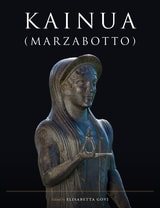
Kainua (Marzabotto)
Edited by Elisabetta Govi
University of Texas Press, 2023
This volume brings together leading scholars of Etruria to provide up-to-date findings from the key archaeological site of Kainua. Located in what is now the Italian town of Marzabotto, Kainua is the only Etruscan site whose complete urban layout has been preserved, making it possible to trace houses, roads, drainage systems, cemeteries, craft workshops, and an acropolis.
Under excavation since the 1850s, Kainua offers a trove of insights into Etruscan culture and society. The volume’s editor, Elisabetta Govi, and her fellow experts examine the material evidence underlying our understanding of the history, economy, religion, and social structures of Kainua, including trade routes that linked the city with the wider Mediterranean. Particularly exciting are recent discoveries of sanctuaries dedicated to Tinia and Uni, analogous to the Greek Zeus and Hera, which provide new information about Etruscan cults. Kainua (Marzabotto) also draws on the latest research to reconstruct the city’s foundation rites, a sacred charter, and urban plan. Finally, the authors explore the site’s archaeological history, discussing new knowledge made possible since the introduction of modern techniques of remote sensing and 3D modeling.
Kaiparowits Plateau and Glen Canyon Prehistory
An Interpretation Based on Ceramics UUAP 71Florence C. Lister
University of Utah Press, 1964
Kaqchikel Chronicles
The Definitive EditionWith translation and exegesis by Judith M. Maxwell and Robert M. Hill II
University of Texas Press, 2006
The collection of documents known as the Kaqchikel Chronicles consists of rare highland Maya texts, which trace Kaqchikel Maya history from their legendary departure from Tollan/Tula through their migrations, wars, the Spanish invasion, and the first century of Spanish colonial rule. The texts represent a variety of genres, including formal narrative, continuous year-count annals, contribution records, genealogies, and land disputes.
While the Kaqchikel Chronicles have been known to scholars for many years, this volume is the first and only translation of the texts in their entirety. The book includes two collections of documents, one known as the Annals of the Kaqchikels and the other as the Xpantzay Cartulary. The translation has been prepared by leading Mesoamericanists in collaboration with Kaqchikel-speaking linguistic scholars. It features interlinear glossing, which allows readers to follow the translators in the process of rendering colonial Kaqchikel into modern English. Extensive footnoting within the text restores the depth and texture of cultural context to the Chronicles. To put the translations in context, Judith Maxwell and Robert Hill have written a full scholarly introduction that provides the first modern linguistic discussion of the phonological, morphological, syntactic, and pragmatic structure of sixteenth-century Kaqchikel. The translators also tell a lively story of how these texts, which derive from pre-contact indigenous pictographic and cartographic histories, came to be converted into their present form.
Key Concepts in Public Archaeology
Edited by Gabriel Moshenska
University College London, 2017
Killarney Bay
The Archaeology of an Early Middle Woodland Aggregation Site in the Northern Great LakesDavid Brose, Patrick Julig, and John O’Shea
University of Michigan Press, 2021
King
The Social Archaeology of a Late Mississippian Town in Northwestern GeorgiaDavid Hally
University of Alabama Press, 2008
At the time of Spanish contact in A.D. 1540, the Mississippian inhabitants of the great valley in northwestern Georgia and adjacent portions of Alabama and Tennessee were organized into a number of chiefdoms distributed along the Coosa and Tennessee rivers and their major tributaries. The administrative centers of these polities were large settlements with one or more platforms mounds and a plaza. Each had a large resident population, but most polity members lived in a half dozen or so towns located within a day’s walk of the center. This book is about one such town, located on the Coosa River in Georgia and known to archaeologists as the King site.
Excavations of two-thirds of the 5.1 acre King site reveal a detailed picture of the town’s domestic and public architecture and overall settlement plan. Intensive analysis of architectural features, especially of domestic structures, enables a better understanding of the variation in structure size, compass orientation, construction stages, and symbolic cosmological associations; the identification of multi-family households; and the position of individual structures within the town’s occupation sequence or life history. Comparison of domestic architecture and burials reveals considerable variation between households in house size, shell bead wealth, and prominence of adult members. One household is preeminent in all these characteristics and may represent the household of the town chief or his matrilineal extended family. Analysis of public architectural features has revealed the existence of a large meeting house with likely historical connections to 18th-century Creek town houses; a probable cosmological basis for the town’s physical layout; and an impressive stockade-and-ditch defensive perimeter.
The King site represents a nearly ideal opportunity to identify the kinds of status positions that were held by individual inhabitants; analyze individual households and investigate the roles they played in King site society; reconstruct the community that existed at King, including size, life history, symbolic associations, and integrative mechanisms; and place King in the larger regional political system. With excavations dating back to 1973, and supported in part by the National Endowment for the Humanities and the National Geographic Society, this is social archaeology at its best.
Kingship and the Gods
A Study of Ancient Near Eastern Religion as the Integration of Society and NatureHenri Frankfort
University of Chicago Press, 1948
Frank's superb work, first published in 1948 and now supplemented with a preface by Samuel Noah Kramer, demonstrates how the Egyptian and Mesopotamian attitudes toward nature related to their concept of kingship. In both countries the people regarded the king as their mediator with the gods, but in Mesopotamia the king was only the foremost citizen, while in Egypt the ruler was a divine descendant of the gods and the earthly representative of the God Horus.
Knossos and the Prophets of Modernism
Cathy Gere
University of Chicago Press, 2009
In the spring of 1900, British archaeologist Arthur Evans began to excavate the palace of Knossos on Crete, bringing ancient Greek legends to life just as a new century dawned amid far-reaching questions about human history, art, and culture. With Knossos and the Prophets of Modernism, Cathy Gere relates the fascinating story of Evans’s excavation and its long-term effects on Western culture. After the World War I left the Enlightenment dream in tatters, the lost paradise that Evans offered in the concrete labyrinth—pacifist and matriarchal, pagan and cosmic—seemed to offer a new way forward for writers, artists, and thinkers such as Sigmund Freud, James Joyce, Giorgio de Chirico, Robert Graves, and Hilda Doolittle.
Assembling a brilliant, talented, and eccentric cast at a moment of tremendous intellectual vitality and wrenching change, Cathy Gere paints an unforgettable portrait of the age of concrete and the birth of modernism.
Knowing the Day, Knowing the World
Engaging Amerindian Thought in Public ArchaeologyLesley Green and David R. Green
University of Arizona Press, 2013
The structure of the book reflects a gradual comprehension of Palikur ways of knowing during the course of field research. The text enters into the ethnographic material from the perspective of familiar disciplines—history, geography, astronomy, geometry, and philosophy—and explores the junctures in which conventional disciplinary frameworks cannot adequately convey Palikur understandings. Beginning with reflections on questions of personhood, ethics, and ethnicity, the authors rethink assumptions about history and geography. They learn and recount an alternative way of thinking about astronomy from the Palikur astronomical narratives, and they show how topological concepts embedded in everyday Palikur speech extend to different ways of conceptualizing landscape. In conclusion, they reflect on the challenges of comprehending alternative cosmologies and consider the insights that come from allowing ethnographic material to pose questions of modernist frameworks.
Knowledge in Motion
Constellations of Learning Across Time and PlaceEdited by Andrew P. Roddick and Ann B. Stahl
University of Arizona Press, 2019
In the last twenty-five years, scholars from a number of disciplines have explored “situated learning,” specifically investigating how learning relates to social reproduction and daily life. In Knowledge in Motion, contributors focus on learning through time and at a variety of scales, particularly as they relate to power and politics, with implications for emergent communities and constellations of practice.
This volume brings together archaeologists, historians, and cultural anthropologists to examine communities engaged in a range of learning practices around the globe, from Africa to the Americas. Contributors draw on the growing interdisciplinary scholarship on situated learning to explore those processes in relation to power and broader forces that shape knowledge during times of turbulent change.
Enriching the diversity of regions and disciplines, Knowledge in Motion focuses on how learning, knowledge transmission, and the emergent qualities of communities and constellations of practice are shaped by changing spheres of interaction or other unstable events and influences. The contributions forge productive theories and methodologies for exploring situated learning and its broad-ranging outcomes.
Kukulcan's Realm
Urban Life at Ancient MayapánMarilyn Masson
University Press of Colorado, 2014
Masson and Peraza Lope's detailed overview provides evidence of a vibrant market economy that played a critical role in the city's political and economic success. They offer new perspectives from the homes of governing elites, secondary administrators, affluent artisans, and poorer members of the service industries. Household occupational specialists depended on regional trade for basic provisions that were essential to crafting industries, sustenance, and quality of life. Settlement patterns reveal intricate relationships of households with neighbors, garden plots, cultivable fields, thoroughfares, and resources. Urban planning endeavored to unite the cityscape and to integrate a pluralistic populace that derived from hometowns across the Yucatán peninsula.
New data from Mayapán, the pinnacle of Postclassic Maya society, contribute to a paradigm change regarding the evolution and organization of Maya society in general and make Kukulcan's Realm a must-read for students and scholars of the ancient Maya and Mesoamerica.