Results by title
69 books match the query 'Art, American' and 3 start with k
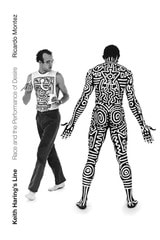
Keith Haring's Line
Race and the Performance of DesireRicardo Montez
Duke University Press, 2020

Kill for Peace
American Artists Against the Vietnam WarBy Matthew Israel
University of Texas Press, 2013
The Vietnam War (1964–1975) divided American society like no other war of the twentieth century, and some of the most memorable American art and art-related activism of the last fifty years protested U.S. involvement. At a time when Pop Art, Minimalism, and Conceptual Art dominated the American art world, individual artists and art collectives played a significant role in antiwar protest and inspired subsequent generations of artists. This significant story of engagement, which has never been covered in a book-length survey before, is the subject of Kill for Peace.
Writing for both general and academic audiences, Matthew Israel recounts the major moments in the Vietnam War and the antiwar movement and describes artists’ individual and collective responses to them. He discusses major artists such as Leon Golub, Edward Kienholz, Martha Rosler, Peter Saul, Nancy Spero, and Robert Morris; artists’ groups including the Art Workers’ Coalition (AWC) and the Artists Protest Committee (APC); and iconic works of collective protest art such as AWC’s Q. And Babies? A. And Babies and APC’s The Artists Tower of Protest. Israel also formulates a typology of antiwar engagement, identifying and naming artists’ approaches to protest. These approaches range from extra-aesthetic actions—advertisements, strikes, walk-outs, and petitions without a visual aspect—to advance memorials, which were war memorials purposefully created before the war’s end that criticized both the war and the form and content of traditional war memorials.
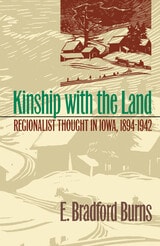
Kinship with the Land
Regionalist Thought In Iowa, 1894-1942E. Bradford Burns
University of Iowa Press, 1996
Pioneers moving into Iowa in the nineteenth century created a distinctly rural culture: family, farm, church, and school were its dominant institutions. After decades of settlement, however, several lively and perceptive generations interpreted their political, economic, and cultural environment—their Iowa—much more imaginatively; they offered such abundant insight, understanding, meaning, and mission that they mentally and spiritually recreates Iowa. In Kinship with the Land historian Brad Burns celebrates this intense period of intellectual and cultural development.
Through their novels, short stories, poems, essays, drawings, and paintings, Iowa's regionalists expressed a rich abstraction of people and place. They conferred meaning, imparted understanding, defined the soil and the folk, conveyed a sense of place. Grant Wood in his overalls—the quintessential symbol of sophisticated talent and rural values—clearly represented regionalism's spiritual solidarity with the land and the people who worked it. Burns lets these Iowans speak for themselves, then interprets their distinctive voices to present a cogent case for and an understanding of the rural in an overwhelming urban America.
Kinship with the Land emphasizes the importance of Iowa's intellectual and cultural history and reaffirms the state's identity at the very moment that standardization threatened to eradicate it. By endowing Iowa with vibrant, independent art and literature, regionalists made refreshing sense of their environment. Readers from every state will appreciate their generous legacy.