Results by title
167 books match the query 'Artists, Architects, Photographers' and 2 start with k
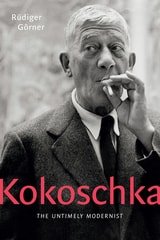
Kokoschka
The Untimely ModernistRüdiger Görner
Haus Publishing, 2024
The Austrian artist Oskar Kokoschka (1886–1980) achieved global fame with his intense expressionistic portraits and landscapes. In this first English-language biography, Rüdiger Görner depicts the artist in all his fascinating and contradictory complexity. He traces Kokoschka’s path from bête noire of the bourgeoisie and “hunger artist” who had to flee the Nazis to a wealthy and cosmopolitan political and critical artist who played a significant role in shaping the European art scene of the twentieth century and whose relevance is undiminished to this day.
In Kokoschka: A Life in Art, Görner emphasizes the artist’s versatility. Kokoschka, although best known for his expressionistic portraits and landscapes, was more than a mere visual artist: his achievements as a playwright, essayist, and poet bear witness to a remarkable literary talent. Music, too, played a central role in his work, and a passion for teaching led him to establish in 1953 the School of Seeing, an unconventional art school intended to revive humanist ideals in the horrific aftermath of war. This biography shows brilliantly how all the pieces of Kokoschka’s disparate interests and achievements cohered in the richly creative life of a singular artist.

Kurt Kren
Structural FilmsEdited by Nicky Hamlyn, Simon Payne, and A. L. Rees
Intellect Books, 2016