Results by title
289 books match the query 'Dance' and 4 start with k
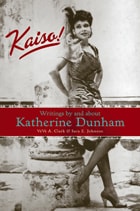
Kaiso!
Writings by and about Katherine DunhamEdited by VeVe A. Clark and Sara E. Johnson
University of Wisconsin Press, 2006
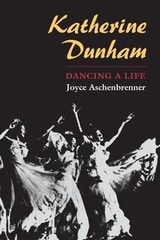
Katherine Dunham
DANCING A LIFEJoyce Aschenbrenner
University of Illinois Press, 2002
Founder of the first self-supporting African American dance company, Dunham relied on her fieldwork as an anthropologist to fundamentally change modern dance. She shaped new dance techniques and introduced other cultures to U.S. and European audiences by fusing Caribbean and African-based movement with ballet and modern dance. Her revolutionary approaches to dance and its greater connection to the world have influenced a generation of dancers, theatrical performers, and scholars. She believes that dance involves the development of an entire person and the rituals and traditions of dance are integral to the study of culture. Throughout her career she has been a living model of the socially responsible artist working to whet cultural appetites and combat social injustice.
Joyce Aschenbrenner's multifaceted portrait blends personal observations based on her own interactions with Dunham, archival documents, and interviews with Dunham's colleagues, students, and members of the Katherine Dunham Dance Company.
Integrating these sources, Aschenbrenner characterizes the social, familial, and cultural environment of Dunham's upbringing and the intellectual and artistic community she embraced at the University of Chicago that laid the groundwork for her development as a dancer, anthropologist, and humanitarian. The book vividly depicts Dunham's and her dancers' touring experiences and includes detailed descriptions of her community cultural and educational programs in East St. Louis.
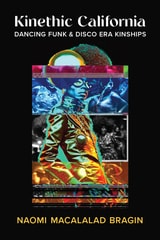
Kinethic California
Dancing Funk and Disco Era KinshipsNaomi Macalalad Bragin
University of Michigan Press, 2024
2025 American Society for Theatre Research Errol Hill Award Winner
- 2026 Dance Studies Association Oscar G. Brockett Award Shortlist Finalist
- 2025 Association for Theatre in Higher Education Outstanding Book Award for Scholarly Achievement Shortlist Finalist
Kinethic California: Dancing Funk and Disco Era Kinships documents the emergence of new forms of black social and vernacular dance invented by youth living in 1970s California, who helped build the foundations of contemporary hip hop/streetdance culture. Naomi Macalalad Bragin weaves interviews and ethnographies of first-generation (1960s-70s) dancers of strutting, boogaloo, robotting, popping, locking, waacking, and punking styles, as it advances a theory of dance as kinetic kinship formation through a focus on techniques and practices of the dancers themselves. She offers that the term given to these collective movement practices is kinethic to bring attention to motion at the core of black aesthetics that generate dances as forms of kinship beyond blood relation. Kinethics reorient dancers toward kinetic kinship in ways that give continuity to black dance lineages under persistent conditions of disappearance and loss. As dancers engage kinethics, they reinvent gestural vocabularies that describe worlds they imagine into knowing-being.
The stories in Kinethic California attend to the aesthetics of everyday movement, seen through the lens of young artists who, from childhood, listened to their family’s soul and funk records, observed the bent-leg strolls and rhythmic handshakes of people moving through their neighborhoods, and watched each other move at house parties, school gyms, and around-the-way social clubs. Their aesthetic sociality and geographic movement provided materials for collective study and creative play. Bragin attends to such multidirectional conversations between dancer, community, and tradition, by which California dance lineages emerge and take flight.
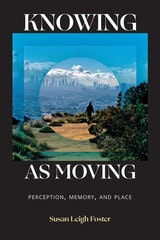
Knowing as Moving
Perception, Memory, and PlaceSusan Leigh Foster
Duke University Press, 2025