Results by title
75 books match the query 'Derrida, Jacques' and 2 start with k
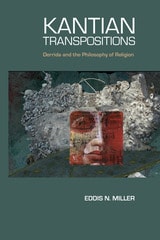
Kantian Transpositions
Derrida and the Philosophy of ReligionEddis N. Miller
Northwestern University Press, 2019
Kantian Transpositions presents an important new reading of Jacques Derrida’s writings on religion and ethics. Eddis Miller argues that Derrida’s late texts on religion constitute an interrogation of the meaning and possibility of a “philosophy of religion.” It is the first book to fully engage Derrida’s claim, in “Faith and Knowledge: The Two Sources of ‘Religion’ at the Limits of Reason Alone” to be transposing the Kantian gesture of thinking religion “within the limits of reason alone.”
Miller outlines the terms of this “transposition” and reads Derrida’s work as an attempt to enact such a transposition. Along the way, he stakes out new ground in the debate over deconstruction and ethics, showing—against recent interpretations of Derrida’s work—that there is an ethical moment in Derrida’s writings that cannot be understood properly without accounting for the decisive role played by Kant’s ethics. The result is the most sustained demonstration yet offered of Kant’s indispensible contribution to Derrida’s thought.
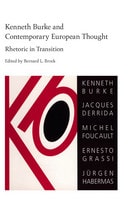
Kenneth Burke and Contemporary European Thought
Rhetoric in TransitionBernard L. Brock
University of Alabama Press, 1995
Kenneth Burke and Contemporary European Thought: A Rhetoric in Transition reflects the present transitional nature of rhetoric and society. Its purpose is to relate the rhetorical theory of Burke to the theories of four major European philosophers—Jürgen Habermas, Ernesto Grassi, Foucault, and Jacques Derrida—as they discuss the nature of language and its central role in society.
This book describes a rhetorical world in transition but not a world in chaos. It points to the centrality of symbolism in theories of language and rhetoric and illustrates Burke’s influence as a pivotal things and theorist in the communication arts and sciences, suggesting that the observations regarding shifting paradigms and perspectives made by other scholars are indeed emergent in the realm of rhetoric. It also regards the powerful impact of language and symbolic action in both the critique and construction of human knowledge and augurs a central role for rhetoric in the intellectual and social transformations of this and the next century.