Results by title
603 books match the query 'Description and travel' and 3 start with k
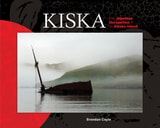
Kiska
The Japanese Occupation of an Alaska IslandBrendan Coyle
University of Alaska Press, 2014
Alaska’s windswept Aleutian Island chain arcs for over a thousand miles toward Asia from the Alaska Peninsula. In this remote and hostile archipelago is Kiska Island, an uninhabited sub-arctic speck in the tempestuous Bering Sea. Few have the opportunity even to visit this island, but in June of 1942 Japanese troops seized Kiska and neighboring Attu in the only occupation of North American territory since the War of 1812.
The bastion of Japan’s possessions in Alaska, Kiska was soon fortified with 7,500 enemy troops, their equipment, and a labyrinth of tunnels. For thirteen months Japanese troops withstood constant bombardment from American forces while retaining a tenuous hold on the island. Finally forced to abandon their position, the Japanese occupiers evacuated without their equipment and personal effects, leaving behind a trail of artifacts.
Brendan Coyle spent fifty-one days on the island searching out the tunnels, the equipment, and the objects, all frozen in time. Kiska brings together the images Coyle amassed during his exploration and his archival research. Accompanying explanations put the images in historical perspective, opening a window on a little-known battlefield and shining a rare light on a shadowy occupation.
[more]
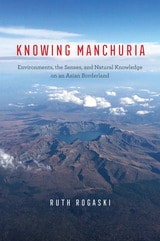
Knowing Manchuria
Environments, the Senses, and Natural Knowledge on an Asian BorderlandRuth Rogaski
University of Chicago Press, 2022
Making sense of nature in one of the world’s most contested borderlands.
According to Chinese government reports, hundreds of plague-infected rodents fell from the skies over Gannan county on an April night in 1952. Chinese scientists determined that these flying voles were not native to the region, but were vectors of germ warfare, dispatched over the border by agents of imperialism. Mastery of biology had become a way to claim political mastery over a remote frontier. Beginning with this bizarre incident from the Korean War, Knowing Manchuria places the creation of knowledge about nature at the center of our understanding of a little-known but historically important Asian landscape.
At the intersection of China, Russia, Korea, and Mongolia, Manchuria is known as a site of war and environmental extremes, where projects of political control intersected with projects designed to make sense of Manchuria’s multiple environments. Covering more than 500,000 square miles, Manchuria’s landscapes include temperate rainforests, deserts, prairies, cultivated plains, wetlands, and Siberian taiga. With analysis spanning the seventeenth century to the present day, Ruth Rogaski reveals how an array of historical actors—Chinese poets, Manchu shamans, Russian botanists, Korean mathematicians, Japanese bacteriologists, American paleontologists, and indigenous hunters—made sense of the Manchurian frontier. She uncovers how natural knowledge, and thus the nature of Manchuria itself, changed over time, from a sacred “land where the dragon arose” to a global epicenter of contagious disease; from a tragic “wasteland” to an abundant granary that nurtured the hope of a nation.
[more]

Korea Letters in the William Elliot Griffis Collection
An Annotated SelectionYoung-mee Yu Cho
Rutgers University Press, 2024
William Elliot Griffis (1843 – 1928) graduated from Rutgers College in 1869 and taught four years in Fukui and Tokyo. After his return to the United States, he devoted himself to his research and writing on East Asia throughout his life. He authored 20 books about Japan and five books about Korea including, Corea: The Hermit Nation (1882), Corea, Without and Within: Chapters on Corean History, Manners and Religion (1885), The Unmannerly Tiger, and Other Korean Tales (1911), A Modern Pioneer in Korea: The Life Story of Henry G. Appenzeller (1912), and Korean Fairy Tales (1922). In particular, his bestseller, Corea: The Hermit Nation (1882) was reprinted numerous times through nine editions over thirty years. He was not only known as "the foremost interpreter of Japan to the West before World War I but also the American expert on Korea. After his death, his collection of books, documents, photographs and ephemera was donated to Rutgers.
The Korean materials in the Griffis Collection at Rutgers University consist of journals, correspondence, articles, maps, prints, photos, postcards, manuscripts, scrapbooks, and ephemera. These papers reflect Griffis's interests and activities in relation to Korea as a historian, scholar, and theologian. They provide a rare window into the turbulent period of late nineteenth- and twentieth-century Korea, witnessed and evaluated by Griffis and early American missionaries in East Asia. The Korea Letters in the William Elliot Griffis Collection are divided into two parts: letters from missionaries and letters from Japanese and Korean political figures. Newly available and accessible through this collection, these letters develop a multifaceted history of early American missionaries in Korea, the Korean independence movement, and Griffis's views on Korean culture.
The Korean materials in the Griffis Collection at Rutgers University consist of journals, correspondence, articles, maps, prints, photos, postcards, manuscripts, scrapbooks, and ephemera. These papers reflect Griffis's interests and activities in relation to Korea as a historian, scholar, and theologian. They provide a rare window into the turbulent period of late nineteenth- and twentieth-century Korea, witnessed and evaluated by Griffis and early American missionaries in East Asia. The Korea Letters in the William Elliot Griffis Collection are divided into two parts: letters from missionaries and letters from Japanese and Korean political figures. Newly available and accessible through this collection, these letters develop a multifaceted history of early American missionaries in Korea, the Korean independence movement, and Griffis's views on Korean culture.
[more]