Results by title
425 books match the query 'Ethics' and 2 start with k
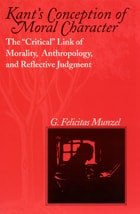
Kant's Conception of Moral Character
The "Critical" Link of Morality, Anthropology, and Reflective JudgmentG. Felicitas Munzel
University of Chicago Press, 1999
The first book to focus on character formation in Kant's moral philosophy, it builds on important recent work on Kant's aesthetics and anthropology, and brings these to bear on moral issues. Munzel traces Kant's multifaceted definition of character through the broad range of his writings, and then explores the structure of character, its actual exercise in the world, and its cultivation.
An outstanding work of original textual analysis and interpretation, Kant's Conception of Moral Character is a major contribution to Kant studies and moral philosophy in general.
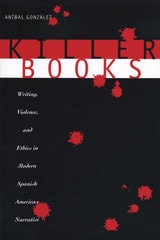
Killer Books
Writing, Violence, and Ethics in Modern Spanish American NarrativeBy Aníbal González
University of Texas Press, 2002
Writing and violence have been inextricably linked in Spanish America from the Conquest onward. Spanish authorities used written edicts, laws, permits, regulations, logbooks, and account books to control indigenous peoples whose cultures were predominantly oral, giving rise to a mingled awe and mistrust of the power of the written word that persists in Spanish American culture to the present day.
In this masterful study, Aníbal González traces and describes how Spanish American writers have reflected ethically in their works about writing's relation to violence and about their own relation to writing. Using an approach that owes much to the recent "turn to ethics" in deconstruction and to the works of Jacques Derrida and Emmanuel Levinas, he examines selected short stories and novels by major Spanish American authors from the late nineteenth through the twentieth centuries: Manuel Gutiérrez Nájera, Manuel Zeno Gandía, Teresa de la Parra, Jorge Luis Borges, Alejo Carpentier, Gabriel García Márquez, and Julio Cortázar. He shows how these authors frequently display an attitude he calls "graphophobia," an intense awareness of the potential dangers of the written word.