Results by title
3388 books match the query 'Fiction' and 23 start with k

Kafka Goes to the Movies
Hanns Zischler
University of Chicago Press, 2002
Since many of Kafka's visits to the cinema occurred during bachelor trips with Max Brod, Zischler's research took him not only to Kafka's native Prague but to film archives in Munich, Milan, and Paris. Matching Kafka's cinematic references to reviews and stills from daily papers, Zischler hunted down rare films in collections all across Europe. A labor of love, then, by a true man of the cinema, Kafka Goes to the Movies brims with discoveries about the pioneering years of European film. With a wealth of illustrations, including reproductions of movie posters and other rare materials, Zischler opens a fascinating window onto movies that have been long forgotten or assumed lost.
But the real highlights of the book are those about Kafka himself. Long considered one of the most enigmatic figures in literature, the Kafka that emerges in this work is strikingly human. Kafka Goes to the Movies offers an absorbing look at a witty, passionate, and indulgently curious writer, one who discovered and used the cinema as a place of enjoyment and escape, as a medium for the ambivalent encounter with modern life, and as a filter for the changing world around him.
Kafka in a Skirt
Stories from the WallDaniel Chacón
University of Arizona Press, 2019
Set in El Paso and other Latinx-dominant urban spaces, Kafka in a Skirt is an immersive look into the myriad lives of the characters who inhabit these culturally diverse areas. Chacón masterfully weaves elements of the surreal and fantastic through a shining tapestry of fiction, creating moments of touching realism in contrast with scenes that are fascinatingly unfamiliar. Occasionally teasing the ghosts of Jorge Luis Borges and the Argentine poet Alejandra Pizarnik, this collection disregards boundaries and transports readers into a world merely parallel to our own. Kafka in a Skirt unravels the intricacies of culture, sexuality, love, and loneliness in a collection that shows the personal implications of barriers while remaining hopeful and bright.
Kafka’s Son
Szilárd Borbély
Seagull Books, 2023
Born in 1963, Szilárd Borbély emerged as one of the most important poets of post-communist Europe, exploring the themes of grief, memory, and trauma in his critically acclaimed work. Following the murder of his mother during a burglary in 2000, and the subsequent breakdown and death of his father, Borbély suffered from post-traumatic depression and tragically ended his own life in 2014.
Among the manuscripts that Borbély left behind was Kafka’s Son, a fragmentary work, rendered still more fragmented through the author’s death. Through a series of haunting passages that explore early twentieth-century Prague, including the ruins of the ancient Jewish ghetto during the time of its demolition, Borbély inscribes the story of Franz Kafka and his father onto the city. We are used to hearing from Franz; here Hermann Kafka is also given a voice. “The son,” he tells us, “is the life of the father. The father is the death of the son.” By extension, then, this book is also an indirect telling of the story of Borbély and his father, and about sons and fathers in the Habsburg empire and the culture of brutality that defined Eastern Europe.
A posthumously published Hungarian masterpiece, Kafka’s Son now appears in English in award-winning translator Ottilie Mulzet’s sensitive translation, a fragmentary yet iridescent work inviting us to reflect on our fragmented lives.
Kallocain
Karin Boye
University of Wisconsin Press, 2002
Kannani and Document of Flames
Two Japanese Colonial NovelsKatsuei Yuasa
Duke University Press, 2005
In his introduction, Mark Driscoll provides a nuanced and engaging discussion of Yuasa’s life and work and of the cultural politics of Japanese colonialism. He describes Yuasa’s sharp turn, in the years following the publication of Kannani and Document of Flames, toward support for Japanese nationalism and the assimilation of Koreans into Japanese culture. This abrupt ideological reversal has made Yuasa’s early writing—initially censored for its anticolonialism—all the more controversial. In a masterful concluding essay, Driscoll connects these novels to larger theoretical issues, demonstrating how a deep understanding of Japanese imperialism challenges prevailing accounts of postcolonialism.
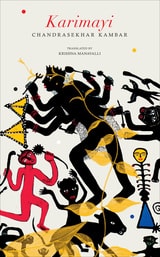
Karimayi
Chandrasekhar Kambar
Seagull Books, 2017
Karimayi breaks the familiar narrative of an idyllic and traditional village community being destroyed by the incursion of modernity. Instead, the multilayered narrative of Karimayi weaves everything into itself—the story of the village’s past, the myth of Karimayi, the disorder that sets in with the invasion of colonial modernity and the lure of the city, and, most importantly, of the disruption of another form of “native” modernity that the village community has already begun to incorporate into its rhythms of life. Cleverly challenging colonial cartography, Kambar’s book plays with the idea of an eternal India that exists between myth and reality.

Kazimira
Svenja Leiber
Seagull Books, 2024
Towards the end of the nineteenth century in East Prussia, a woman named Kazimira strolls the remote shores of the Baltic Sea, bringing home bits of amber that wash up on the beach. Her husband Antas is the region’s best carver, and he catches the attention of Moritz Hirschberg, owner of a nearby amber factory. Antas rises through the ranks, but Kazimira has the best ideas for processing and cutting the stones. Although establishing a new mine on such shifting terrain is hazardous, the venture finally pays off. It brings success, but envy and resentment swiftly follow, as antisemitism and nationalism sweep across the German Empire. Kazimira soon learns she must go her own way, as the Hirshbergs are expelled and World War I shatters her son. Three decades later, at the end of World War II, she becomes the last witness of German war crimes committed on West Beach, formerly a place of prosperity and progress.
At the dawn of the twenty-first century in Russia, a woman named Nadia operates an excavator in a massive open-pit amber mine until she is told to go sell trinkets alongside all the other shopgirls. In alternating passages weaving together vastly different eras across the span of a century and a half, Svenja Leiber’s Kazimira tells the story of the largest amber-mining operation in history, and its lasting effects expose pressing questions: Where do hatred and violence come from? What happens when life is declared worthless? Beginning with Kazimira and her bold struggle for self-determination, this saga follows five generations of women who envision an alternative world.
Kazimira
Svenja Leiber
Seagull Books, 2026
A family drama, a portrait of a community devastated by ideology, a fascinating history of amber—but, above all, a tale of remarkable women fighting for their rights.
Towards the end of the nineteenth century in East Prussia, a woman named Kazimira strolls the remote shores of the Baltic Sea, bringing home bits of amber that wash up on the beach. Her husband Antas is the region’s best carver, and he catches the attention of Moritz Hirschberg, the owner of a nearby amber factory. Antas rises through the ranks, but Kazimira has the best ideas for processing and cutting the stones. Although establishing a new mine on such shifting terrain is hazardous, the venture finally pays off. It brings success, but envy and resentment swiftly follow, as antisemitism and nationalism sweep across the German Empire. Kazimira soon learns she must go her own way, as the Hirshbergs are expelled and World War I shatters her son. Three decades later, at the end of World War II, she becomes the last witness of German war crimes committed on West Beach, formerly a place of prosperity and progress.
At the dawn of the twenty-first century in Russia, a woman named Nadia operates an excavator in a massive open-pit amber mine until she is told to go sell trinkets alongside all the other shopgirls.
In alternating passages weaving together vastly different eras across the span of a century and a half, Svenja Leiber’s Kazimira tells the story of the largest amber-mining operation in history. The lasting effects of this operation expose pressing questions: Where do hatred and violence come from? What happens when life is declared worthless? Beginning with Kazimira and her bold struggle for self-determination, this saga follows five generations of women who envision an alternative world.
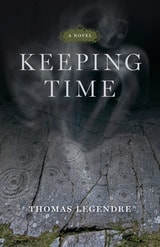
Keeping Time
A NovelThomas Legendre
Acre Books, 2020
When archaeologist Aaron Keeler finds himself transported eighteen years backward in time, he becomes swept up in a strangely illicit liaison with his younger wife. A brilliant musician, Violet is captivated by the attentive, “weathered” version of her husband. The Aaron she recently married—an American expat—has become distant, absorbed by his excavation of a prehistoric site at Kilmartin Glen on Scotland’s west coast, where he will soon make the discovery that launches his career. As Aaron travels back and forth across the span of nearly two decades, with time passing in both worlds, he faces a threat to his revelatory dig, a crisis with the older Violet—mother of his two young children—and a sudden deterioration of his health. Meanwhile, Violet’s musical performances take on a resonance related to the secrets the two are uncovering in both time frames. With their children and Aaron’s lives at risk, he and Violet try to repair the damage before it’s too late.
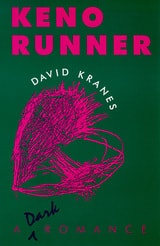
Keno Runner
A Dark RomanceDavid Kranes
University of Nevada Press, 1995
Mysteriously treated like a high-roller in the casinos, Kohlman is beaten, stabbed, and shot. His wounds are salved by a doctor and his wife who offer a kinky interpretation of the Hippocratic oath. A black messianic boxer known as Challenger teaches Kohlman the meditative art of psychokinesis, and together they perform amazing feats. Angel, who introduces the resistant Kohlman as her husband, loves him with an unconditional devotion he has never known.
But after all his trials, Kohlman may be redeemed through shedding his own blood and through his growing love for Angel. Western Literature Series.
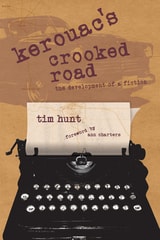
Kerouac's Crooked Road
The Development of a FictionTim Hunt
Southern Illinois University Press, 1996
Now a classic, Kerouac’s Crooked Road was one of the first critical works on the legendary Beat writer to analyze his work as serious literary art, placing it in the broader American literary tradition with canonical writers like Herman Melville and Mark Twain. Author Tim Hunt explores Kerouac’s creative process and puts his work in conversation with classic American literature and with critical theory.
This edition includes a new preface by the author, which takes a discerning look at the implications of the 2007 publication of the original typewriter scroll version of On the Road for the understanding of Kerouac and his novel. Although some critics see the scroll version of the novel as embodying Kerouac’s true artistic vision and the 1957 Viking edition as a commercialized compromise of that vision, Hunt argues that the two versions should not be viewed as antithetical but rather as discrete perspectives of a writer deeply immersed in writing as both performance and evolving process.
Hunt moves beyond the mythos surrounding the “spontaneous creation” of On the Road, which upholds Kerouac’s reputation as a cultural icon, to look more closely at an innovative writer who wanted to bridge the gap between the luscious, talk-filled world of real life and the sterilized version of that world circumscribed by overly intellectualized, literary texts, through the use of written language driven by effusive passion rather than sober reflection. With close, erudite readings of Kerouac’s major and minor works, from On the Road to Visions of Cody,Hunt draws on Kerouac’s letters, novels, poetry, and experimental drafts to position Kerouac in both historical and literary contexts, emphasizing the influence of writers such as Emerson, Melville, Wolfe, and Hemingway on his provocative work.
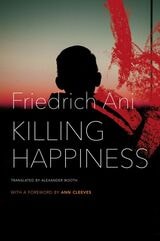
Killing Happiness
Friedrich Ani
Seagull Books, 2021
Happiness is extinguished completely one cold November night when eleven-year-old Lennard Grabbe fails to return home. Thirty-four days later, he is found to have been murdered, and former inspector Jakob Franck, the protagonist of Friedrich Ani’s previous novel The Nameless Day, is entrusted with delivering the most horrible news any parent could ever dream of, setting off a chain reaction of grief among family and friends.
As the special task force is unable to make any progress in the case and the family is unable to deal with the loss, Franck—driven by the need to bring them clarity but also by the painful memories of all the unsolved murder cases from when he was still on active duty—buries himself in witness statements and reports up to the point of exhaustion. He spends hours at the crime scene and employs his special technique of “thought sensitivity,” an abstract, intuitive process that may very well lead him to the “fossil”—that crucial piece of information he needs to solve the case.
Once again, Ani combines deep sorrow, human darkness, and breath-taking tension in a novel whose melancholy can hardly be surpassed.
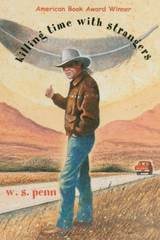
Killing Time with Strangers
W. S. Penn
University of Arizona Press, 2000
Young Pal needs help with his dreaming.
Palimony Blue Larue, a mixblood growing up in a small California town, suffers from a painful shyness and wants more than anything to be liked. That's why Mary Blue, his Nez Perce mother, has dreamed the weyekin, the spirit guide, to help her bring into the world the one lasting love her son needs to overcome the diffidence that runs so deep in his blood. The magical (and not totally competent) weyekin pops in and out of Pal's life at the most unexpected times—and in the most unlikely guises—but seems to have difficulty setting him on the right path. Is there any hope for Palimony Blue?
Don't ask his father, La Vent Larue; La Vent is past hope, past help, a city zoning planner and a pawn in the mayor's development plans who ends up crazy and in jail after he shoots the mayor in the—well, never mind. Better to ask Pal's mother, who summons the weyekin when she isn't working on a cradle board for Pal and his inevitable bride. And while you're at it, ask the women in Pal's life: Sally the preacher's daughter, Brandy the waitressing flautist, Tara the spoiled socialite. And be sure to ask Amanda, if you can catch her. If you can dream her.
Using comic vision to address serious concerns of living, Penn has written a freewheeling novel that will surpass most readers' expectations of "ethnic fiction." Instead of the usual polemics, it's marked by a sense of humor and a playfulness of language that springs directly from Native American oral tradition.
What more can be said about a book that has to be read to the end in order to get to the beginning? That Killing Time with Strangers is unlike any novel you have read before? Or perhaps that it is agonizingly familiar, giving us glimpses of a young man finding his precarious way in life? But when the power of dreaming is unleashed, time becomes negotiable and life's joys and sorrows go up for grabs. And as sure as yellow butterflies will morph into Post-It notes, you will know you have experienced a new and utterly captivating way of looking at the world.
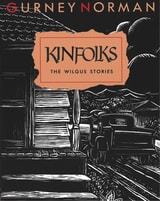
Kinfolks
The Wilgus StoriesGurney Norman
Ohio University Press, 2024
Published in 1977 by Gnomon Press.Kinfolks is a novelistic collection of short stories centered around Wilgus Collier, a young boy growing up in rural Kentucky during the 1940s and 1950s. The stories follow Wilgus from childhood into his early adulthood, exploring his relationships with his extended family and his Appalachian community. Gurney Norman introduces readers to Wilgus’s world through a series of vignettes that depict experiences with his family, particularly his parents and grandparents. These stories highlight the challenges and joys of rural life, offering a poignant look at complex family dynamics and the deep-rooted traditions of Appalachia. Throughout the book, Norman’s writing is characterized by its rich, evocative descriptions of the Appalachian landscape and its authentic portrayal of the region’s culture and people. Kinfolks—adapted for the screen as The Wilgus Stories—is celebrated for vivid storytelling that captures the essence of life in Kentucky coal country.
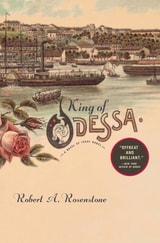
King of Odessa
A Novel of Isaac BabelRobert A. Rosenstone
Northwestern University Press, 2007
A celebrated writer returns to his hometown of Odessa, pondering a deal with the secret police, pining for a daughter living abroad, and hoping to pen one last homage to his own past. Isaac Babel, the world famous spinner of tales about Cossacks and gangsters, arrives in Odessa to be treated for asthma-and perhaps help a condemned prisoner to escape. Or is it Babel who intends to escape?
For six decades our only record of Babel's visit has been the contents of letters and postcards sent abroad to his mother and sister. In King of Odessa, Robert A. Rosenstone imagines a version of this visit and the novel Babel wrote during those weeks. Babel himself is concerned with more than literary plots as he considers an escape just as he starts an affair with an actress who may be a police spy. He also ruminates on his past-his childhood as a sickly Jewish boy, the horrifying 1905 pogrom, the famous rides with the Cossacks that inspired Red Calvary, and above all his complicated relationships with women. Throughout the novel Rosenstone captures Babel's lively wit, his exhaustion with fame and the Soviet system, and his infectious charm.
This would prove to be Babel's last visit to Odessa. Three years later, he was arrested as a spy and executed. Rosenstone, the acclaimed biographer of writer and activist John Reed, mixes historical facts and fiction with the talent of a gifted storyteller. The result is a captivating exploration of a great writer surrounded by history and on the brink of falling out of it forever.
Kingdoms of the Night Sky
Burgess, G. Thomas
Signature Books, 2026
It is 2026, and millions of Americans are getting ready to form separate communities so they may live by the principles taught in The Book of Shem. Calling themselves “Fellows,” they revere Isaac Snow, the deceased author of The Book of Shem, as their prophet. To settle the question of whether he’s a prophet, a fraud, or something else, Snow’s son sets out to tell his father’s story. Inspired by the 1960s folk music revival and his experiences with the beatniks, hippies, and Mormons, Isaac has crafted a unique message that millions of Americans find irresistible, but only after his many years of feeling cursed and forsaken. Set in New York City, San Francisco, and Provo, Utah, the story blends tragedy, humor, and redemption. Kingdoms of the Night Sky is a rollicking journey of discovery that reminds us of the fractured nature of reality itself.
Kissed By
Alexandra Chasin
University of Alabama Press, 2007
"Alexandra Chasin is a hugely brave writer. She dares to push the extremes of style, while daring to push the extremes of emotion" —Jonathan Safran Foer
Alexandra Chasin’s remarkable stories employ forms as diverse as cryptograms (in "ELENA=AGAIN") and sentence diagrams (in "Toward a Grammar of Guilt") to display her interest in fiction as a form constituted by print on the page, every bit as much as poetry.
In "They Come From Mars," the words are arrayed on the page like troops, embodying the xenophobic image of invading armies of immigrant and illegal aliens that animates the narrative. One story incorporates personal ads ("Lynette, Your Uniqueness"), another is organized alphabetically ("2 Alphabets"), while another leaves sentences unfinished ("Composer and I"). A number of stories take metafictional turns, calling attention to the process of writing itself. The last piece in the collection plays with genre distinctions, including an index of first lines and a general index. Set in New York, New England, Paris, and Morocco, these tales are narrated by men and women, old and young, gay, straight, and bisexual; one narrator is not a person at all, but a work of art. Each of these deft, playful, and sometimes anarchic fictions is different from the others, yet all are the unmistakable offspring of the same wildly inventive imagination.
Kissssss
A MiscellanySteve Katz
University of Alabama Press, 2007
Know It by Heart
Karl Luntta
Northwestern University Press, 2003
When a racially mixed family moves into an all-white neighborhood in East Hartford, Connecticut, in 1961, lives are altered forever. Karl Luntta's Know It by Heart follows the adventures of young Dub Teed, his sister Susan and neighbor Doug Hammer, who befriend newly arrived Ricky Dubois, the daughter of an African-American woman and her white husband. When a burning cross flares in the night—and worse—the young adolescents set out to find justice and discover themselves in the process.
Despite the book's serious anti-racist theme, Know It by Heart is filled with humor reminiscent of Mark Twain. In this suspenseful novel, Karl Luntta brilliantly captures the world of the young adolescent in his characters and dialogue and in the innate comedy and awkwardness of that age. This is a book that will appeal to parents and teenagers alike.
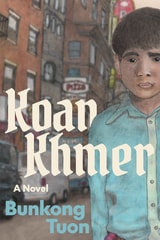
Koan Khmer
A NovelBunkong Tuon
Northwestern University Press, 2024
Celebrating the power of literature to rescue a life from despair, Koan Khmer is the story of Samnang Sok, an orphaned child survivor of the Cambodian genocide who sets out to make a new life in America alongside his extended family. Struggling to cope with the traumas of his past, Samnang feels alienated from his American peers at school and disconnected from his aunts, uncles, and cousins at home. Inspired by the books he discovers along the way, Samnang begins piecing together information about the past through stories told by elders, family photographs, and his own memories and dreams. Based loosely on Tuon’s life, the novel traces Samnang’s difficult journey toward an answer to the question, How does one rebuild a life after genocide and displacement and create a home?
Koan Khmer gives an unflinching voice to a distinctly Cambodian American sensibility. Tuon creates a refugee space that all Americans can visit in this bildungsroman that breathes life into cultural knowledge disrupted by loss and grief.
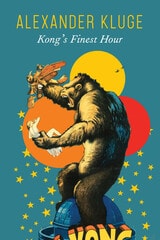
Kong's Finest Hour
A Chronicle of ConnectionsAlexander Kluge
Seagull Books, 2021
In Kong’s Finest Hour, Alexander Kluge explores anew the accessible spaces where Kong dwells within us and in our million-year-old past. The more than two hundred stories contained in this volume form a chronicle of connections that together survey these spaces using diverse perspectives. These include stories about the folds of Kong’s nose, the voice of the author’s mother, the poet Heinrich von Kleist and Jack the Ripper, the indestructability of the political, and the supercontinent Pangaea that once unified the earth. Dissolving theory into storytelling has been Kluge’s lifelong pursuit, and this magnificent collection tells stories of people as well of things.
First in a series of Kluge’s Chronicles forthcoming from Seagull Books, Kong’s Finest Hour will delight those familiar with his writing as well as introduce readers to the brilliance of one of Germany’s greatest living writers.
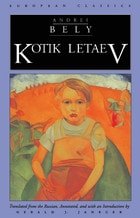
Kotik Letaev
Andrei Bely
Northwestern University Press, 1999
Kotik's experience is based on elements from Bely's own early childhood, but on a larger level his experience represents the stages of human history, the history of philosophy, and childhood language development. The story, seen through the eyes of a child from the age of three to five years, is told in complex, poetically developed adult language, rich in imagery and musical sound effects.
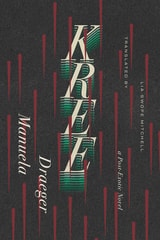
Kree
A Post-Exotic Noveldraeger
University of Minnesota Press, 2024
A warrior struggles through an apocalyptic landscape and the world after death
Kree Toronto has been raised as a warrior in a ravaged world: postapocalyptic, posthuman, the population decimated by wars and civilization long since collapsed. After her attempt to avenge the death of her dog, Loka, goes horribly wrong, Kree finds herself lost in a world after death and wanders into the city of the terrible mendicants.
Under the Brothers’ totalitarian rule, Kree can lead a quiet life and forget her violent past, even if needles grow in her skull and hallucinatory blood rains pour down now and then to remind her. She can make friends: a shamanic healer with a shaking tent, a mysterious stranger hatched from an egg, and a gruff Tibetan electrician in a world without electricity. And she can have her Loka as long as she toes the Party line and does as she’s told. When she can’t—when her friends start to disappear and the Brothers turn against her—Kree sets out on a quest, searching for a new way forward.
Multiply reincarnated and unstuck in time, Kree is the characteristically marvelous creation of Manuela Draeger, whose extraordinary stories, in the words of author China Miéville, “are as close to dreams as fiction can be.”