Results by title
1726 books match the query 'Film' and 9 start with k
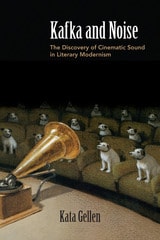
Kafka and Noise
The Discovery of Cinematic Sound in Literary ModernismKata Gellen
Northwestern University Press, 2019
Kafka and Noise offers a method for pursuing intermedial research in the humanities—namely, via the productive "misapplication" of theoretical tools, which exposes the contours, conditions, and expressive possibilities of the media in question. This book will be of interest to scholars of modernism, literature, cinema, and sound, as well as to anyone wishing to explore how artistic and technological media shape our experience of the world and the possibilities for representing it.
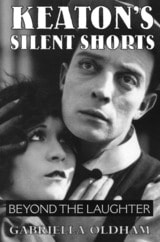
Keaton's Silent Shorts
Beyond the LaughterGabriella Oldham
Southern Illinois University Press, 1996
Filling a major gap in the critical canon, Keaton’s Classic Shorts: Beyond the Laughter chronicles the rapid growth in the filmmaker’s understanding of what makes both comedy and film successful. Keaton developed his major themes in these nineteen silent short films shot between 1920 and 1923, creating his persona “Buster” with his trademark stone face. These short films clearly indicate Keaton’s love of the camera and his concern for composition, symmetry, and images that delight the eye and startle the mind.
Oldham reconstructs each of these rarely seen films to enable the reader to “watch” Keaton’s performance, devoting a separate chapter to each. She analyzes each film’s strengths, weaknesses, and prevalent themes and threads. She also enables readers to plumb the depths of what seems to be surface comedy through philosophical, biographical, historical, and critical commentary, thus linking the shorts together into a cohesive study of Buster Keaton’s growth through his three-year independent venture as a filmmaker. Beyond the laughter and beyond the great stone face, Oldham presents a treasure of cinema comedy and a unique philosophy of life as captured by a great filmmaker.
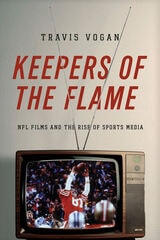
Keepers of the Flame
NFL Films and the Rise of Sports MediaTravis Vogan
University of Illinois Press, 2014
Drawing on research at the NFL Films Archive and the Pro Football Hall of Fame and interviews with media pioneer Steve Sabol and others, Travis Vogan shows how NFL Films has constructed a consistent, romanticized, and remarkably visible mythology for the National Football League. The company packages football as a visceral and dramatic sequence of violent, beautiful, graceful, and heroic gridiron battles. Historically proven formulas for presentation--such as the dramatic voiceovers once provided by John Facenda's baritone, the soaring scores of Sam Spence's rousing background music, and the epic poetry found in Steve Sabol's scripts--are still used today.
From the Vincent Price-narrated Strange but True Football Stories to the currently running series Hard Knocks, NFL Films distinguishes the NFL from other sports organizations and from other media and entertainment. Vogan tells the larger story of the company's relationship with and vast influence on our culture's representations of sport, the expansion of sports television beyond live game broadcasts, and the emergence of cable television and Internet sports media.
Keepers of the Flame: NFL Films and the Rise of Sports Media presents sports media as an integral facet of American popular culture and NFL Films as key to the transformation of professional football into the national obsession commonly known as America's Game.
Kelly Reichardt
Katherine Fusco, Nicole Seymour
University of Illinois Press, 2017
Kim Ki-duk
Hye Seung Chung
University of Illinois Press, 2012
Kinflix
Adoption and Assisted Reproductive Technologies in FilmMarina Fedosik
The Ohio State University Press, 2025
Resisting simple ideological readings of film genres, Fedosik unsettles cultural scripts around adoption and reproduction and scrutinizes moments where formulaic genre logic may be troubled by representations of lived experience that transcend common tropes of family formation. She argues that adoption as a reproductive technology is uniquely situated to expose cultural tensions around nontraditional methods of reproduction that are rapidly developing in the post-IVF biocultural landscape. Rapidly changing reproductive technologies, Fedosik asserts, demand a cultural response—and require more expansive reflection on reproductive futurities.
Kiss the Blood Off My Hands
On Classic Film NoirEdited by Robert Miklitsch
University of Illinois Press, 2014
But a new generation of writers is pushing aside the fog of cigarette smoke surrounding classic noir scholarship. In Kiss the Blood Off My Hands: On Classic Film Noir, Robert Miklitsch curates a bold collection of essays that reassesses the genre's iconic style, history, and themes. Contributors analyze the oft-overlooked female detective and little-examined aspects of filmmaking like love songs and radio aesthetics, discuss the significance of the producer and women's pulp fiction, and investigate topics as disparate as Disney noir and the Fifties heist film, B-movie back projection and blacklisted British directors. At the same time the writers' collective reconsideration shows the impact of race and gender, history and sexuality, technology and transnationality on the genre.
As bracing as a stiff drink, Kiss the Blood Off My Hands writes the future of noir scholarship in lipstick and chalk lines for film fans and scholars alike.
Contributors: Krin Gabbard, Philippa Gates, Julie Grossman, Robert Miklitsch, Robert Murphy, Mark Osteen, Vivian Sobchack, Andrew Spicer, J. P. Telotte, and Neil Verma.
Kore-eda Hirokazu
Marc Yamada
University of Illinois Press, 2023
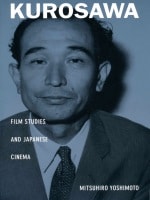
Kurosawa
Film Studies and Japanese CinemaMitsuhiro Yoshimoto
Duke University Press, 2000
Arguing that Kurosawa’s films arouse anxiety in Japanese and Western critics because the films problematize Japan’s self-image and the West’s image of Japan, Yoshimoto challenges widely circulating clichés about the films and shows how these works constitute narrative answers to sociocultural contradictions and institutional dilemmas. While fully acknowledging the achievement of Kurosawa as a filmmaker, Yoshimoto uses the director’s work to reflect on and rethink a variety of larger issues, from Japanese film history, modern Japanese history, and cultural production to national identity and the global circulation of cultural capital. He examines how Japanese cinema has been “invented” in the discipline of film studies for specific ideological purposes and analyzes Kurosawa’s role in that process of invention. Demonstrating the richness of both this director’s work and Japanese cinema in general, Yoshimoto’s nuanced study illuminates an array of thematic and stylistic aspects of the films in addition to their social and historical contexts.
Beyond aficionados of Kurosawa and Japanese film, this book will interest those engaged with cultural studies, postcolonial studies, cultural globalization, film studies, Asian studies, and the formation of academic disciplines.