Results by title
69 books match the query 'Korea' and 8 start with k
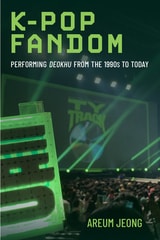
K-Pop Fandom
Performing Deokhu from the 1990s to TodayAreum Jeong
University of Michigan Press, 2026
Through an autoethnography of becoming a K-pop deokhu, Jeong connects their experiences to generations of K-pop fans, showing simultaneously how fandom practices have shifted over time and the intricacies of fan labor participation. This personal connection paved the way for participant-observation and co-performer witnessing methodologies in the study, which crucially allowed for collaborating with fans whose communal pursuits have been stigmatized by dominant discourses that denigrate their activities as solely addictive, uncritical, and wasteful. Jeong’s genre-spanning corpus of fan activities and analyzing its contexts and contents represents an important contribution to the making of a fan archive that is also an archive of affective labor.
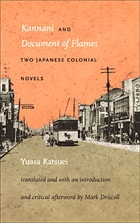
Kannani and Document of Flames
Two Japanese Colonial NovelsKatsuei Yuasa
Duke University Press, 2005
In his introduction, Mark Driscoll provides a nuanced and engaging discussion of Yuasa’s life and work and of the cultural politics of Japanese colonialism. He describes Yuasa’s sharp turn, in the years following the publication of Kannani and Document of Flames, toward support for Japanese nationalism and the assimilation of Koreans into Japanese culture. This abrupt ideological reversal has made Yuasa’s early writing—initially censored for its anticolonialism—all the more controversial. In a masterful concluding essay, Driscoll connects these novels to larger theoretical issues, demonstrating how a deep understanding of Japanese imperialism challenges prevailing accounts of postcolonialism.
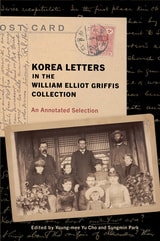
Korea Letters in the William Elliot Griffis Collection
An Annotated SelectionYoung-mee Yu Cho
Rutgers University Press, 2024
The Korean materials in the Griffis Collection at Rutgers University consist of journals, correspondence, articles, maps, prints, photos, postcards, manuscripts, scrapbooks, and ephemera. These papers reflect Griffis's interests and activities in relation to Korea as a historian, scholar, and theologian. They provide a rare window into the turbulent period of late nineteenth- and twentieth-century Korea, witnessed and evaluated by Griffis and early American missionaries in East Asia. The Korea Letters in the William Elliot Griffis Collection are divided into two parts: letters from missionaries and letters from Japanese and Korean political figures. Newly available and accessible through this collection, these letters develop a multifaceted history of early American missionaries in Korea, the Korean independence movement, and Griffis's views on Korean culture.
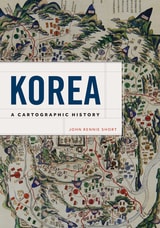
Korea
A Cartographic HistoryJohn Rennie Short
University of Chicago Press, 2012
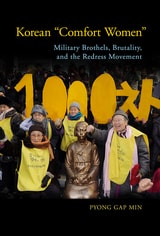
Korean "Comfort Women"
Military Brothels, Brutality, and the Redress MovementPyong Gap Min
Rutgers University Press, 2021
Korean “Comfort Women” synthesizes the previous major findings about Japanese military sexual slavery and legal recommendations, and provides new findings about the issues “comfort women” faced for an English-language audience. It also examines the transnational redress movement, revealing that the Japanese government has tried to conceal the crime of sexual slavery and to resolve the women’s human rights issue with diplomacy and economic power.
Korean Families Yesterday and Today
Hyunjoon Park and Hyeyoung Woo, Editors
University of Michigan Press, 2020
Korean families have changed significantly during the last few decades in their composition, structure, attitudes, and function. Delayed and forgone marriage, fertility decline, and rising divorce rates are just a few examples of changes that Korean families have experienced at a rapid pace, more dramatic than in many other contemporary societies. Moreover, the increase of marriages between Korean men and foreign women has further diversified Korean families. Yet traditional norms and attitudes toward gender and family continue to shape Korean men and women’s family behaviors.
Korean Families Yesterday and Today portrays diverse aspects of the contemporary Korean families and, by explicitly or implicitly situating contemporary families within a comparative historical perspective, reveal how the past of Korean families evolved into their current shapes. While the study of families can be approached in many different angles, our lens focuses on families with children or young adults who are about to forge family through marriage and other means. This focus reflects that delayed marriage and declined fertility are two sweeping demographic trends in Korea, affecting family formation. Moreover, “intensive” parenting has characterized Korean young parents and therefore, examining change and persistence in parenting provides important clues for family change in Korea.
This volume should be of interest not only to readers who are interested in Korea but also to those who want to understand broad family changes in East Asia in comparative perspective.
Korean Treasures
Rare Books, Manuscripts and Artefacts in the Bodleian Libraries and Museums of Oxford UniversityMinh Chung
Bodleian Library Publishing, 2011
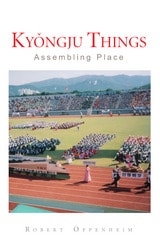
Kyongju Things
Assembling PlaceRobert Oppenheim
University of Michigan Press, 2008
Kyongju is South Korea's preeminent "culture city," an urban site rich with archaeological wonders that residents compare to those of Nara, Xian, and Rome. By examining these ancient objects in relation to the controversies that engulfed South Korea's high-speed railway line when it was first proposed in the 1990s, Kyongju Things offers a grounded and theoretically sophisticated account of South Korean development and citizenship in the last quarter of the twentieth century. Its sensitivity to issues of place, knowledge, and cultural heritage and its innovative use of network theory will be of interest to a wide range of scholars in anthropology, Asian studies, the history of science and technology, cultural geography, urban planning, and political science.
Robert Oppenheim is Assistant Professor of Asian Studies at the University of Texas at Austin.
"A tale of South Korea's new politics involving antiquarians, weekend hikers, activists, and entrepreneurs, told with wit and theoretical sophistication."
---Laurel Kendall, Curator, Division of Anthropology, American Museum of Natural History
"In Kyongju Things, Robert Oppenheim employs an innovative theoretical blend to insightfully illuminate the interactions of agency and objects in the making of a 'place.'"
---Roger L. Janelli, Professor Emeritus, Department of East Asian Languages and Cultures and Department of Folklore and Ethnomusicology, Indiana University
"Kyongju Things is responsible, pathbreaking, and ambitious, with a stunning and welcoming introduction . . . Oppenheim calls upon a theoretical tool kit that allows him to productively re-think place, locality, technology, things, and subjectivity in ways that really do challenge the existing scholarship on South Korea. Kyongju Things will make a splash in Korean studies."
---Nancy Abelmann, Associate Professor of Anthropology, University of Illinois at Urbana-Champaign, and author of Echoes of the Past, Epics of Dissent: A South Korean Social Movement