Results by title
1106 books match the query 'Memoirs' and 8 start with k
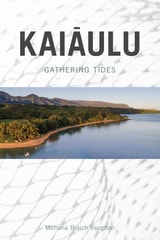
Kaiaulu
Gathering TidesMehana Blaich Vaughan
Oregon State University Press, 2018
This coast is known as a playground for tourists and backdrop for Hollywood movies, but catch from small local reefs, and the sharing of this abundance, has sustained area families for centuries, helping them to thrive through tidal waves, hurricanes, an influx of new residents, and economic recessions. Yet fishing families are increasingly invisible and many have moved away, threatened by global commodification and loss of access to coastal lands that are now private retreats for star entertainers, investors, and dot-com millionaires.
Building on two decades of interviews with more than sixty Hawaiian elders, leaders, and fishermen and women, Kaiāulu shares their stories of enduring community efforts to perpetuate kuleana, often translated to mean “rights and responsibilities.” Community actions extend kuleana to include nurturing respectful relationships with resources, guarding and cultivating fishing spots, perpetuating collective harvests and sharing, maintaining connection to family lands, reasserting local governance rooted in ancestral values, and preparing future generations to carry on.
An important contribution to scholarship in the fields of natural resource management, geography, Indigenous Studies, and Hawaiian Studies, Kaiāulu is also a skillfully written and deeply personal tribute to a community based not on ownership, but reciprocity, responsibility, and caring for the places that shape and sustain us all.
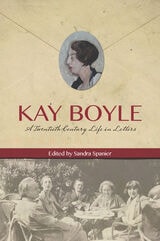
Kay Boyle
A Twentieth-Century Life in LettersEdited and with an Introduction by Sandra Spanier
University of Illinois Press, 2015
<p>Kay Boyle shared the first issue of <i>This Quarter</i> with Gertrude Stein and Ernest Hemingway, expressed her struggles with poetry to William Carlos Williams and voiced warm admiration to Katherine Anne Porter, fled WWII France with Max Ernst and Peggy Guggenheim, socialized with the likes of James Joyce, Marcel Duchamp, and Samuel Beckett, and went to jail with Joan Baez. The letters in this first-of-its-kind collection, authorized by Boyle herself, bear witness to a transformative era illuminated by genius and darkened by Nazism and the Red Scare. Yet they also serve as milestones on the journey of a woman who possessed a gift for intense and enduring friendship, a passion for social justice, and an artistic brilliance that earned her inclusion among the celebrated figures in her ever-expanding orbit.

Keeping Faith
Memoirs of a PresidentJimmy Carter
University of Arkansas Press, 1995
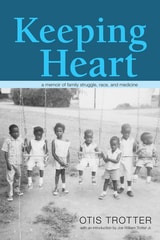
Keeping Heart
A Memoir of Family Struggle, Race, and MedicineOtis Trotter
Ohio University Press, 2015
“After saying our good-byes to friends and neighbors, we all got in the cars and headed up the hill and down the road toward a future in Ohio that we hoped would be brighter,” Otis Trotter writes in his affecting memoir, Keeping Heart: A Memoir of Family Struggle, Race, and Medicine.
Organized around the life histories, medical struggles, and recollections of Trotter and his thirteen siblings, the story begins in 1914 with his parents, Joe William Trotter Sr. and Thelma Odell Foster Trotter, in rural Alabama. By telling his story alongside the experiences of his parents as well as his siblings, Otis reveals cohesion and tensions in twentieth-century African American family and community life in Alabama, West Virginia, and Ohio.
This engaging chronicle illuminates the journeys not only of a black man born with heart disease in the southern Appalachian coalfields, but of his family and community. It fills an important gap in the literature on an underexamined aspect of American experience: the lives of blacks in rural Appalachia and in the nonurban endpoints of the Great Migration. Its emotional power is a testament to the importance of ordinary lives.

Keeping the Faith
Ordinary People, Extraordinary LivesWayne Flynt
University of Alabama Press, 2011
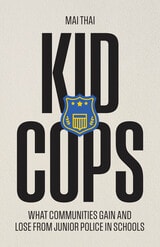
Kid Cops
What Communities Gain and Lose from Junior Police in SchoolsMai Thai
University of Chicago Press, 2026
Some might see police officers as benevolent sources of protection, but in many communities, they are often perceived as a threat due to a legacy of violent interactions and arrests for arbitrary offenses. How, then, do police sustain their presence in places where people might distrust them? In Kid Cops, sociologist Mai Thai offers one answer: junior police academies, high school programs in which police officers provide courses, mentorship, and job training to students in communities with high rates of juvenile delinquency and poverty. These school-police partnerships have expanded rapidly in the United States over the last few decades, largely in response to political unrest and police violence in the 1990s. Programs vary in their offerings, but they generally aim to ease tensions between communities and law enforcement, while also providing needed resources in neighborhoods where education and job opportunities are scarce.
Kid Cops draws on years of observations and interviews with educators, police officers, and, of course, kids. The junior police programs at each high school may have different emphases, but their common goal is for students to graduate from high school and enter college or the workforce. A second goal of the program is to cultivate a positive image of the police. Ultimately, however, Thai finds that these programs tighten the relationship between marginalized youth, schools, and the criminal justice system and strain the students’ relationships with their peers, families, and each other. These programs also distract residents from systemic issues of policing and suppress opportunities for meaningful change.
Written in an accessible tone that balances the seriousness of inequality with the playfulness of the study’s youth, Kid Cops moves beyond the narrative of detentions, suspensions, and arrests to tell a less conventional story about police in schools. It asks, does good, friendly policing exist—especially if it continues to tether low-income communities of color to the criminal justice system?
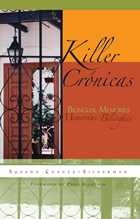
Killer Crónicas
Bilingual MemoriesSusana Chavez-Silverman
University of Wisconsin Press, 2004
Includes a chapter that was awarded first prize in El Andar magazine’s Chicano Literary Excellence Contest in the category of personal memoir.
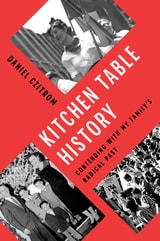
Kitchen Table History
Contending with My Family’s Radical PastDaniel Czitrom
University of Illinois Press, 2027
Czitrom follows three generations of his family as they fled violence in Eastern Europe, built new lives in America, and committed themselves to radical political movements. Their works and trials included union organizing, volunteering to fight fascism in Spain and elsewhere, harassment by the FBI, and everyday acts of survival. Czitrom describes what he discovered in his years of historical detective work while pondering the still-unanswered questions wrapped in silence and pain. He also recounts his years-long journey to balance loyalty to his family’s values with a desire to succeed, question authority, and become his own person.
An engaging blend of memoir and history, Kitchen Table History is the chronicle of a family and a personal search for the meaning of the past.