Results by title
308 books match the query 'Memory' and 2 start with k
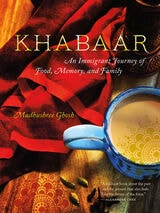
Khabaar
An Immigrant Journey of Food, Memory, and FamilyMadhushree Ghosh
University of Iowa Press, 2022
Independent Publishers Book Awards (IPPY Awards) gold medalist
Khabaar is a food memoir and personal narrative that braids the global journeys of South Asian food through immigration, migration, and indenture. Focusing on chefs, home cooks, and food stall owners, the book questions what it means to belong and what does belonging in a new place look like in the foods carried over from the old country? These questions are integral to the author’s own immigrant journey to America as a daughter of Indian refugees (from what’s now Bangladesh to India during the 1947 Partition of India); as a woman of color in science; as a woman who left an abusive marriage; and as a woman who keeps her parents’ memory alive through her Bengali food.
Khabaar is a food memoir and personal narrative that braids the global journeys of South Asian food through immigration, migration, and indenture. Focusing on chefs, home cooks, and food stall owners, the book questions what it means to belong and what does belonging in a new place look like in the foods carried over from the old country? These questions are integral to the author’s own immigrant journey to America as a daughter of Indian refugees (from what’s now Bangladesh to India during the 1947 Partition of India); as a woman of color in science; as a woman who left an abusive marriage; and as a woman who keeps her parents’ memory alive through her Bengali food.
[more]
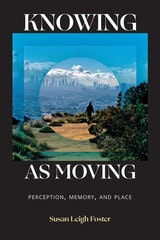
Knowing as Moving
Perception, Memory, and PlaceSusan Leigh Foster
Duke University Press, 2025
In Knowing as Moving, Susan Leigh Foster theorizes how the act of moving in and through the world creates the potential for individual and collective bodies to connect. Starting from the assertion that knowing takes place through bodily movement, Foster moves away from the Western philosophical traditions of dance, critiquing the Cartesian mind-body duality and its colonizing politics. She draws on Native and Indigenous studies, ecological cognitive science, disability studies, phenomenology, and new materialism to explore how knowledge is neither static nor storable. Thinking is a physical action and the product of an entire neuromuscular system with its mobile postural and gestural configurations, perceptual systems, and brain activity. Foster outlines how reading, examining, talking, and remembering are all forms of moving and contends that any process of knowing establishes one’s identity and relationality. By focusing on the centrality of bodily movement to thought and self, she contributes a decolonial critique of the study of knowledge and being. In so doing, Foster replaces the Cartesian-colonial “I think, therefore I am” with a decolonial “I move, and therefore I know.”
[more]