Results by title
941 books match the query 'Military' and 11 start with k

Kamikaze Diaries
Reflections of Japanese Student SoldiersEmiko Ohnuki-Tierney
University of Chicago Press, 2006
This moving history presents diaries and correspondence left by members of the tokkotai and other Japanese student soldiers who perished during the war. Outside of Japan, these kamikaze pilots were considered unbridled fanatics and chauvinists who willingly sacrificed their lives for the emperor. But the writings explored here by Emiko Ohnuki-Tierney clearly and eloquently speak otherwise. A significant number of the kamikaze were university students who were drafted and forced to volunteer for this desperate military operation. Such young men were the intellectual elite of modern Japan: steeped in the classics and major works of philosophy, they took Descartes’ “I think, therefore I am” as their motto. And in their diaries and correspondence, as Ohnuki-Tierney shows, these student soldiers wrote long and often heartbreaking soliloquies in which they poured out their anguish and fear, expressed profound ambivalence toward the war, and articulated thoughtful opposition to their nation’s imperialism.
A salutary correction to the many caricatures of the kamikaze, this poignant work will be essential to anyone interested in the history of Japan and World War II.

Kearney's Own
The History of the First New Jersey Brigade in the Civil WarGottfried, Bradley M
Rutgers University Press, 2005
From the first battle at Bull Run to the surrender of Lee's army at Appomattox four years later, only one federal infantry brigade experienced the entire Civil War as a cohesive unit. While most units were composed of regiments from different states that were disbanded after three years, the First New Jersey Brigade was the enduring exception.
Despite the group's remarkable coherency, it started as many military units did during the early stages of the war-a disorganized ragtag outfit that was poorly trained and ill-prepared for battle. This quickly changed, however, with the appointment of General Philip Kearny in the fall of 1861. Kearny transformed the troops, making them among the most disciplined and effective commands in the Army of the Potomac. A series of notable victories earned the soldiers an impressive reputation and, with it, thousands of others voluntarily came forward to enlist. Even when they suffered heavy losses, the New Jersey regiments fought exceptionally well and served key roles in dozens of battles, including the Peninsula, Seven Days, Second Bull Run, Antietam, Chancellorsville, Wilderness, Spotsylvania, Cold Harbor, Early's Valley, and the Petersburg Campaigns.
In Kearny's Own, Bradley M. Gottfried weaves together compelling accounts of battles fought with a wealth of letters and diaries to tell the story of this famous brigade from a uniquely personal perspective. The hopes, fears, and sorrows of the men come through vividly as accounts reveal how civilians were physically and emotionally transformed into soldiers. Primary sources also provide insight to what the war meant to the men who fought for the Union.
Fourteen maps illustrate the battles and marches, while detailed appendices include statistical breakdowns of losses and outline the fates of the men whose letters and diaries are used as sources. In this first book published on the subject, Gottfried not only provides a long-overdue history of the First New Jersey Brigade, he offers a human window into the turbulent and trying experiences of war.
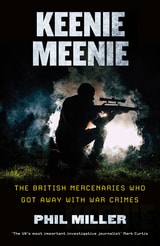
Keenie Meenie
The British Mercenaries Who Got Away with War CrimesPhil Miller
Pluto Press, 2020
Like its mysterious name, Keenie Meenie Services escaped definition and to this day has evaded sanctions. Now explosive new evidence - only recently declassified - exposes the extent of these war crimes, and the British government's tacit support for the company's operations. Including testimonies from SAS veterans, spy chiefs and diplomats, we hear from key figures battle-hardened by the Troubles in Northern Ireland and the Iranian Embassy siege. Investigative journalist Phil Miller asks, who were these mercenaries: heroes, terrorists, freedom fighters or war criminals?
This book presents the first ever comprehensive case against Keenie Meenie Services, providing long overdue evidence on the crimes of the people who make a killing from killing.
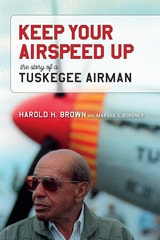
Keep Your Airspeed Up
The Story of a Tuskegee AirmanHarold H. Brown and Marsha S. Bordner
University of Alabama Press, 2017
Inspiring memoir of Colonel Harold H. Brown, one of the 930 original Tuskegee pilots, whose dramatic wartime exploits and postwar professional successes contribute to this extraordinary account.
Keep Your Airspeed Up: The Story of a Tuskegee Airman is the memoir of an African American man who, through dedication to his goals and vision, overcame the despair of racial segregation to great heights, not only as a military aviator, but also as an educator and as an American citizen.
Unlike other historical and autobiographical portrayals of Tuskegee airmen, Harold H. Brown’s memoir is told from its beginnings: not on the first day of combat, not on the first day of training, but at the very moment Brown realized he was meant to be a pilot. He revisits his childhood in Minneapolis where his fascination with planes pushed him to save up enough of his own money to take flying lessons. Brown also details his first trip to the South, where he was met with a level of segregation he had never before experienced and had never imagined possible.
During the 1930s and 1940s, longstanding policies of racial discrimination were called into question as it became clear that America would likely be drawn into World War II. The military reluctantly allowed for the development of a flight-training program for a limited number of African Americans on a segregated base in Tuskegee, Alabama. The Tuskegee Airmen, as well as other African Americans in the armed forces, had the unique experience of fighting two wars at once: one against Hitler’s fascist regime overseas and one against racial segregation at home.
Colonel Brown fought as a combat pilot with the 332nd Fighter Group during World War II, and was captured and imprisoned in Stalag VII A in Moosburg, Germany, where he was liberated by General George S. Patton on April 29, 1945. Upon returning home, Brown noted with acute disappointment that race relations in the United States hadn’t changed. It wasn’t until 1948 that the military desegregated, which many scholars argue would not have been possible without the exemplary performance of the Tuskegee Airmen.

Key Command
Ulysses S. Grant's District of CairoT. K. Kionka
University of Missouri Press, 2006
Khaki and Blue
Military and Police in British Colonial AfricaAnthony Clayton
Ohio University Press, 1989
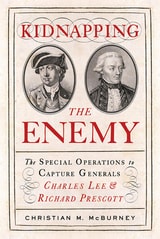
Kidnapping the Enemy
The Special Operations to Capture Generals Charles Lee and Richard PrescottChristian M. McBurney
Westholme Publishing, 2024
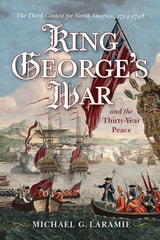
King George's War and the Thirty Year Peace
The Third Contest for North AmericaMichael G. Laramie
Westholme Publishing, 2027
King George’s War and the Thirty-Year Peace continues the contest for North America from the end of Queen Anne’s War in 1713, marking the beginning of the Thirty-Year Peace, through the start of King George’s War in 1744, to its conclusion with the signing of Treaty of Aix-la-Chapelle four years later. While there would be little fighting between the French, Spanish, and British colonies in North America during the Thirty-Year Peace—the Franco-Spanish conflict of 1719 being an exception—for the French and British internally it did not prove to be peaceful. Conflicts with former Indigenous allies erupted, including with the Three Years War, the Yamassee War, and the Natchez and Chickasaw Wars. In the south the peace was ruptured by the opening of the War of Jenkin’s Ear in 1739, which led to an attempt by South Carolina and the new colony of Georgia to seize Spanish St. Augustine, and a counter-attack by St. Augustine and Cuba aimed at the destruction of the two British colonies. While this Anglo-Spanish conflict would shift farther south into the Caribbean, to the north, news of another war between France and Britain would arrive in 1744. King George’s War, the North American component of Europe’s War of Austrian Succession, would start in Nova Scotia with French attacks on the weakly held British colony. This provocation inspired a response in the form of one of the boldest expeditions of the colonial period—Massachusetts Governor William Shirley’s successful campaign against Louisbourg on Cape Breton Island. With the French fortress in British hands and the cry of delenda est Canadaechoing through the American colonial assemblies, Shirley turned to the conquest of French Canada and convinced London to dispatch a fleet to assist in the capture of Montreal and Quebec. In Paris, news of Louisbourg’s surrender elicited an unexpected reaction in the form of one of the largest French naval expeditions ever sent to North America, with explicit orders to retake Cape Breton and expel the British from Nova Scotia. Thus, by the summer of 1746, both British and French sentries scanned the eastern horizon daily for a fleet that would determine the destiny of the conflict, but neither would be happy with what they found.
The final volume in Michael G. Laramie’s acclaimed histories of the European struggle for North America that set the stage for the French and Indian War, King George’s War and the Thirty-Year Peace: The Third Contest for North America, 1714–1748, takes the reader along with the combatants into the field and waterways, including Native American, French, Spanish, Provincial, and British. Based on a rich variety of primary sources and fully illustrated with original maps, this volume joins the author’s King William’s War and Queen Anne’s War as the modern history of these lesser-known—but enormously important—conflicts that shaped the political story of North America.
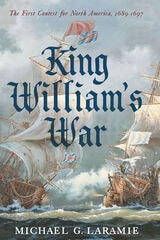
King William's War
The First Contest for North America, 1689–1697Michael Laramie
Westholme Publishing, 2027
Fought in New York, New England, and Canada, the Conflict that Began the Long French and English Struggle for the New World
While much has been written on the French and Indian War of 1754–1763, the colonial conflicts that preceded it have received comparatively little attention. Yet in King William’s War, the first clash between England and France for control of North America, the patterns of conflict for the next seventy years were laid, as were the goals and objectives of both sides, as well as the realization that the colonies of the two nations could not coexist.
King William’s War actually encompassed several proxy wars being fought by the English and the French through their native allies. The Beaver Wars was a long running feud between the Iroquois Confederacy, New France, and New France’s native allies over control of the lucrative fur trade. Fueled by English guns and money, the Iroquois attempted to divert the French fur trade towards their English trading partners in Albany, and in the process gain control over other Indian tribes. To the east the pro-French Wabanaki of Maine, Nova Scotia, and New Brunswick had earlier fought a war with New England, but English expansion and French urgings, aided by foolish moves and political blunders on the part of New England, erupted into a second Wabanaki War on the eve of King William’s War. Thus, these two conflicts officially became one with the arrival of news of a declaration of war between France and England in 1689. The next nine years saw coordinated attacks, including French assaults on Schenectady, New York, and Massachusetts, and English attacks around Montreal and on Nova Scotia. The war ended diplomatically, but started again five years later in Queen Anne’s War.
A riveting history full of memorable characters and events, and supported by extensive primary source material, King William’s War: The First Contest for North America, 1689–1697 by Michael G. Laramie is the first book-length treatment of a war that proved crucial to the future of North America.

Kirby Smith's Confederacy
The TransMississippi South, 1863-1865Robert L. Kerby
University of Alabama Press, 1991
Cut off, but not surrendered—one region’s desperate stand in the twilight of the Confederacy.
With the surrender of Vicksburg in July 1863, the Confederacy’s TransMississippi Department, which included Texas, Arkansas, Missouri, western Louisiana, and Indian Territory, was cut off from the remainder of the South. Robert Kerby’s insightful volume, originally published in 1972, “has gone far toward filling one of the most conspicuous gaps in the literature on the Confederacy,” according to The Journal of Southern History.
Kerby investigates the many factors that led to the Department’s disintegrating and offers a case study of a segment of American society that consumed itself by surrendering everything, including its principles and ideals, in pursuit of an unattainable military victory.
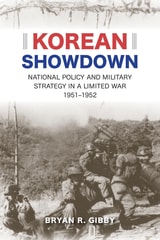
Korean Showdown
National Policy and Military Strategy in a Limited War, 1951–1952Bryan R. Gibby
University of Alabama Press, 2021
WINNER OF THE 2023 ANDREW F. KREPINEVICH JR. WRITING AWARD
A historical analysis of the policies and military strategies applied during the Korean War stalemate period.
Korean Showdown: National Policy and Military Strategy in a Limited War, 1951–1952 takes a holistic and integrative approach to strategy, operations, and tactics during the Korean War’s stalemate period and demonstrates how these matters shaped each other and influenced, or were influenced by, political and strategic policy decision-making. Bryan R. Gibby offers an analysis of the major political and military decisions affecting how the war was conducted operationally and diplomatically by examining American, Chinese, North Korean, and South Korean operations in the context of fighting a limited war with limited means, but for objectives that were not always limited in scope or ambition. The foundational political decision was Harry Truman’s voluntary repatriation policy, which extended the war by up to eighteen months. Its military counterpart was the American-led Operation Showdown, the last deliberate military offensive to coerce concessions at the negotiation table. Showdown’s failure (and the Communists’ own equally disappointing military efforts) opened up new avenues for solving the war short of a militarily imposed solution.
Gibby’s research draws on primary sources from American, Korean, and Chinese archives and publications. Many of these sources have not yet been mined in diplomatic and military histories of the Korean War. This innovative book also addresses a significant gap in the study of Korean military operations—the linkage between ground and air pressure campaigns, as well as the many Chinese and American operations conducted to establish negotiation positions. Gibby also explores many political and propagandist developments that assumed great importance in the summer of 1952, such as prisoner of war riots, the bombing of hydroelectric dams, and the South Korean constitutional crisis, which significantly influenced American and Chinese military decision-making.
Ultimately, this volume serves as a cautionary analysis of the limits of force, the necessity to understand an adversary, and the importance of strategic consensus. It also offers an effective case study on an underappreciated period of civil-military tension during the Cold War and on how civilian politicians and military leaders must collaborate to determine a realistic and effective strategy.