1947 books match the query 'Music' and 15 start with k

cover of Kaija Saariaho

Kaija Saariaho

Pirkko Moisala

University of Illinois Press, 2008

This book is the first comprehensive study of the music and career of contemporary composer Kaija Saariaho. Born in Finland in 1952, Saariaho received her early musical training at the Sibelius Academy, where her close circle included composer and conductor Esa-Pekka Salonen. She has since become internationally known and recognized for her operas L'amour de loin and Adriana Mater and other works that involve electronic music. Her influences include the spectral analysis of timbre, especially string sounds, micropolyphonic techniques, as well as the visual and literary arts and sounds in the natural world. Pirkko Moisala approaches the unique characteristics of Saariaho's music through composition sketches, scores, critical reviews, and interviews with the composer and her trusted musicians.
[more]
cover of Karaoke Idols: Popular Music and the Performance of Identity

Karaoke Idols

Popular Music and the Performance of Identity

Kevin Brown

Intellect Books, 2015

Most ethnographers don’t achieve what Kevin Brown did while conducting their research: in his two years spent at a karaoke bar near Denver, Colorado, he went from barely able to carry a tune to someone whom other karaoke patrons requested to sing. Along the way, he learned everything you might ever want to know about karaoke and the people who enjoy it.

The result is Karaoke Idols, a close ethnography of life at a karaoke bar that reveals just what we’re doing when we take up the mic—and how we shape our identities, especially in terms of gender, ethnicity, and class, through performances in everyday life. Marrying a comprehensive introduction to the history of public singing and karaoke with a rich analysis of karaoke performers and the community that their shared performances generate, Karaoke Idols is a book for both the casual reader and the scholar, and a fascinating exploration of our urge to perform and the intersection of technology and culture that makes it so seductively easy to do so.

[more]
cover of Karawitan: Source Readings in Javanese Gamelan and Vocal Music, Volume 1

Karawitan

Source Readings in Javanese Gamelan and Vocal Music, Volume 1

Edited by Judith Becker with assistance from Alan H. Feinstein

University of Michigan Press, 1984

The twentieth century has spawned a great interest in Indonesian music, and now books, articles, and manuscripts can be found that expound exclusively about karawitan (the combined vocal and instrumental music of the gamelan). Scholar Judith Becker has culled several key sources on karawitan into three volumes and has translated them for the benefit of the Western student of the gamelan tradition.
The texts in her collection were written over a forty-five-year time period (ca 1930–1975) and include articles by Martopangrawit, Sumarsam, Sastrapustaka, Gitosaprodjo, Sindoesawarno, Poerbapangrawit, Probohardjono, Warsadiningrat, Purbodiningrat, Poerbatjaraka, and Paku Buwana X. The final volume also contains a glossary of technical terms, an appendix of the Javanese cipher notations (titilaras kepatihan), a biographical listing, and an index to the musical pieces (Gendhing).
[more]
cover of Karawitan: Source Readings in Javanese Gamelan and Vocal Music, Volume 2

Karawitan

Source Readings in Javanese Gamelan and Vocal Music, Volume 2

Edited by Judith Becker with assistance from Alan H. Feinstein

University of Michigan Press, 1987

The twentieth century has spawned a great interest in Indonesian music, and now books, articles, and manuscripts can be found that expound exclusively about karawitan (the combined vocal and instrumental music of the gamelan). Scholar Judith Becker has culled several key sources on karawitan into three volumes and has translated them for the benefit of the Western student of the gamelan tradition.
The texts in her collection were written over a forty-five-year time period (ca 1930–1975) and include articles by Martopangrawit, Sumarsam, Sastrapustaka, Gitosaprodjo, Sindoesawarno, Poerbapangrawit, Probohardjono, Warsadiningrat, Purbodiningrat, Poerbatjaraka, and Paku Buwana X. The final volume also contains a glossary of technical terms, an appendix of the Javanese cipher notations (titilaras kepatihan), a biographical listing, and an index to the musical pieces (Gendhing).
[more]
cover of Karawitan: Source Readings in Javanese Gamelan and Vocal Music, Volume 3

Karawitan

Source Readings in Javanese Gamelan and Vocal Music, Volume 3

Edited by Judith Becker with assistance from Alan H. Feinstein

University of Michigan Press, 1988

The twentieth century has spawned a great interest in Indonesian music, and now books, articles, and manuscripts can be found that expound exclusively about karawitan (the combined vocal and instrumental music of the gamelan). Scholar Judith Becker has culled several key sources on karawitan into three volumes and has translated them for the benefit of the Western student of the gamelan tradition.
The texts in her collection were written over a forty-five-year time period (ca 1930–1975) and include articles by Martopangrawit, Sumarsam, Sastrapustaka, Gitosaprodjo, Sindoesawarno, Poerbapangrawit, Probohardjono, Warsadiningrat, Purbodiningrat, Poerbatjaraka, and Paku Buwana X. The final volume also contains a glossary of technical terms, an appendix of the Javanese cipher notations (titilaras kepatihan), a biographical listing, and an index to the musical pieces (Gendhing).
[more]
cover of Keywords in Sound

Keywords in Sound

David Novak and Matt Sakakeeny, eds.

Duke University Press, 2015

In twenty essays on subjects such as noise, acoustics, music, and silence, Keywords in Sound presents a definitive resource for sound studies, and a compelling argument for why studying sound matters. Each contributor details their keyword's intellectual history, outlines its role in cultural, social and political discourses, and suggests possibilities for further research. Keywords in Sound charts the philosophical debates and core problems in defining, classifying and conceptualizing sound, and sets new challenges for the development of sound studies.

Contributors. Andrew Eisenberg, Veit Erlmann, Patrick Feaster, Steven Feld, Daniel Fisher, Stefan Helmreich, Charles Hirschkind, Deborah Kapchan, Mara Mills, John Mowitt, David Novak, Ana Maria Ochoa Gautier, Thomas Porcello, Tom Rice, Tara Rodgers, Matt Sakakeeny, David Samuels, Mark M. Smith, Benjamin Steege, Jonathan Sterne, Amanda Weidman

[more]
cover of Killer Show: The Station Nightclub Fire, America’s Deadliest Rock Concert

Killer Show

The Station Nightclub Fire, America’s Deadliest Rock Concert

John Barylick

University Press of New England, 2015

On February 20, 2003, the deadliest rock concert in U.S. history took place at a roadhouse called The Station in West Warwick, Rhode Island. That night, in the few minutes it takes to play a hard-rock standard, the fate of many of the unsuspecting nightclub patrons was determined with awful certainty. The blaze was ignited when pyrotechnics set off by Great White, a 1980s heavy-metal band, lit flammable polyurethane “egg crate” foam sound insulation on the club’s walls. In less than 10 minutes, 96 people were dead and 200 more were injured, many catastrophically. The final death toll topped out, three months later, at the eerily unlikely round number of 100. The story of the fire, its causes, and its legal and human aftermath is one of lives put at risk by petty economic decisions—by a band, club owners, promoters, building inspectors, and product manufacturers. Any one of those decisions, made differently, might have averted the tragedy. Together, however, they reached a fatal critical mass. Killer Show is the first comprehensive exploration of the chain of events leading up to the fire, the conflagration itself, and the painstaking search for evidence to hold the guilty to account and obtain justice for the victims. Anyone who has entered an entertainment venue and wondered, “Could I get out of here in a hurry?” will identify with concertgoers at The Station. Fans of disaster nonfiction and forensic thrillers will find ample elements of both genres in Killer Show.
[more]
cover of Killing Poetry: Blackness and the Making of Slam and Spoken Word Communities

Killing Poetry

Blackness and the Making of Slam and Spoken Word Communities

Johnson, Javon

Rutgers University Press, 2017

Winner of the 2019 Lilla A. Heston Award
Co-winner of the 2018 Ethnography Division’s Best Book from the NCA


In recent decades, poetry slams and the spoken word artists who compete in them have sparked a resurgent fascination with the world of poetry. However, there is little critical dialogue that fully engages with the cultural complexities present in slam and spoken word poetry communities, as well as their ramifications.
 
In Killing Poetry, renowned slam poet, Javon Johnson unpacks some of the complicated issues that comprise performance poetry spaces. He argues that the truly radical potential in slam and spoken word communities lies not just in proving literary worth, speaking back to power, or even in altering power structures, but instead in imagining and working towards altogether different social relationships. His illuminating ethnography provides a critical history of the slam, contextualizes contemporary black poets in larger black literary traditions, and does away with the notion that poetry slams are inherently radically democratic and utopic.
 
Killing Poetry—at times autobiographical, poetic, and journalistic—analyzes the masculine posturing in the Southern California community in particular, the sexual assault in the national community, and the ways in which related social media inadvertently replicate many of the same white supremacist, patriarchal, and mainstream logics so many spoken word poets seem to be working against. Throughout, Johnson examines the promises and problems within slam and spoken word, while illustrating how community is made and remade in hopes of eventually creating the radical spaces so many of these poets strive to achieve. 

[more]
cover of King of the Queen City: The Story of King Records

King of the Queen City

The Story of King Records

Jon Hartley Fox. Foreword by Dave Alvin

University of Illinois Press, 2014
King of the Queen City is the first comprehensive history of King Records, one of the most influential independent record companies in the history of American music. Founded by businessman Sydney Nathan in the mid-1940s, this small outsider record company in Cincinnati, Ohio, attracted a diverse roster of artists, including James Brown, the Stanley Brothers, Grandpa Jones, Redd Foxx, Earl Bostic, Bill Doggett, Ike Turner, Roy Brown, Freddie King, Eddie Vinson, and Johnny "Guitar" Watson. While other record companies concentrated on one style of music, King was active in virtually all genres of vernacular American music, from blues and R & B to rockabilly, bluegrass, western swing, and country. A progressive company in a reactionary time, King was led by an interracial creative and executive staff that redefined the face and voice of American music as well as the way it was recorded and sold. Drawing on personal interviews, research in newspapers and periodicals, and deep access to the King archives, Jon Hartley Fox weaves together the elements of King's success, focusing on the dynamic personalities of the artists, producers, and key executives such as Syd Nathan, Henry Glover, and Ralph Bass. The book also includes a foreword by legendary guitarist, singer, and songwriter Dave Alvin.
[more]
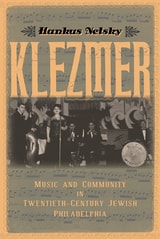
cover of Klezmer: Music and Community in Twentieth-Century Jewish Philadelphia

Klezmer

Music and Community in Twentieth-Century Jewish Philadelphia

Hankus Netsky

Temple University Press, 2017

Klezmer presents a lively and detailed overview of the folk musical tradition as practiced in Philadelphia's twentieth-century Jewish community. Through interviews, archival research, and recordings, Hankus Netsky constructs an ethnographic portrait of Philadelphia’s Jewish musicians, the environment they worked in, and the repertoire they performed at local Jewish lifestyle and communal celebrations.

Netsky defines what klezmer music is, how it helped define Jewish immigrant culture in Philadelphia, and how its current revival has changed klezmer’s meaning historically. Klezmer also addresses the place of musicians and celebratory music in Jewish society, the nature of klezmer culture, the tensions between sacred and secular in Jewish music, and the development of Philadelphia's distinctive “Russian Sher” medley, a unique and masterfully crafted composition.

Including a significant amount of musical transcriptions, Klezmer chronicles this special musical genre from its heyday in the immigrant era, through the mid-century period of its decline through its revitalization from the 1980s to today.
[more]
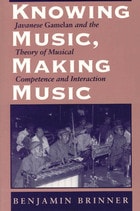
cover of Knowing Music, Making Music: Javanese Gamelan and the Theory of Musical Competence and Interaction

Knowing Music, Making Music

Javanese Gamelan and the Theory of Musical Competence and Interaction

Benjamin Brinner

University of Chicago Press, 1995

How do musicians know what they know? This study is a new approach to the nature of musical competence. Using the intricate collaborative structure of gamelan—Javanese ensemble music—as a point of departure, Knowing Music, Making Music lays the foundation for a comprehensive theory of musical competence and interaction.

Using illustrative examples from a variety of traditions, Benjamin Brinner first examines the elements and characteristics of musical competence, the different kinds of competence in a musical community, the development of multiple competences, and the acquisition and transformation of competence through time. He then shows how these factors come into play in musical interaction, establishing four intersecting theoretical perspectives based on ensemble roles, systems of communication, sound structures, and individual motivations. These perspectives are applied to the dynamics of gamelan performance to explain the social, musical, and contextual factors that affect the negotiation of consensus in musical interaction. The discussion ranges from sociocultural norms of interpersonal conduct to links between music, dance, theater, and ritual, and from issues of authority and deference to musicians' self-perceptions and mutual assessments.

Much more than a portrait of artists making music together, this book brings together a variety of cognitive approaches and a wide range of examples from many cultures to suggest ways of integrating our knowledge of music making both in individual cultures and crossculturally.
[more]
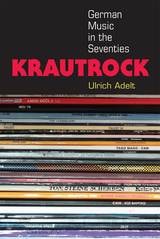
cover of Krautrock: German Music in the Seventies

Krautrock

German Music in the Seventies

Ulrich Adelt

University of Michigan Press, 2016

Krautrock is a catch-all term for the music of various white German rock groups of the 1970s that blended influences of African American and Anglo-American music with the experimental and electronic music of European composers. Groups such as Can, Popol Vuh, Faust, and Tangerine Dream arose out of the German student movement of 1968 and connected leftist political activism with experimental rock music and, later, electronic sounds. Since the 1970s, American and British popular genres such as indie, post-rock, techno, and hip-hop have drawn heavily on krautrock, ironically reversing a flow of influence krautrock originally set out to disrupt.
 
Among other topics, individual chapters of the book focus on the redefinition of German identity in the music of Kraftwerk, Can, and Neu!; on community and conflict in the music of Amon Düül, Faust, and Ton Steine Scherben; on “cosmic music” and New Age; and on Donna Summer’s and David Bowie’s connections to Germany. Rather than providing a purely musicological or historical account, Krautrock discusses the music as being constructed through performance and articulated through various forms of expressive culture, including communal living, spirituality, and sound.

 
[more]
cover of Kusamira Music in Uganda: Spirit Mediumship and Ritual Healing

Kusamira Music in Uganda

Spirit Mediumship and Ritual Healing

Peter J. Hoesing

University of Illinois Press, 2021

A performance culture of illness and wellness

In southern Uganda, ritual healing traditions called kusamira and nswezi rely on music to treat sickness and maintain well-being. Peter J. Hoesing blends ethnomusicological fieldwork with analysis to examine how kusamira and nswezi performance socializes dynamic processes of illness, wellness, and health. People participate in these traditions for reasons that range from preserving ideas to generating strategies that allow them to navigate changing circumstances. Indeed, the performance of kusamira and nswezi reproduces ideas that remain relevant for succeeding generations. Hoesing shows the potential of this social reproduction of well-being to shape development in a region where over 80 percent of the population relies on traditional healers for primary health care.

Comprehensive and vivid with eyewitness detail, Kusamira Music in Uganda offers insight into important healing traditions and the overlaps between expressive culture and healing practices, the human and other-than-human, and Uganda's past and future.

[more]
cover of Kwaito Bodies: Remastering Space and Subjectivity in Post-Apartheid South Africa

Kwaito Bodies

Remastering Space and Subjectivity in Post-Apartheid South Africa

Xavier Livermon

Duke University Press, 2020

In Kwaito Bodies Xavier Livermon examines the cultural politics of the youthful black body in South Africa through the performance, representation, and consumption of kwaito, a style of electronic dance music that emerged following the end of apartheid. Drawing on fieldwork in Johannesburg's nightclubs and analyses of musical performances and recordings, Livermon applies a black queer and black feminist studies framework to kwaito. He shows how kwaito culture operates as an alternative politics that challenges the dominant constructions of gender and sexuality. Artists such as Lebo Mathosa and Mandoza rescripted notions of acceptable femininity and masculinity, while groups like Boom Shaka enunciated an Afrodiasporic politics. In these ways, kwaito culture recontextualizes practices and notions of freedom within the social constraints that the legacies of colonialism, apartheid, and economic inequality place on young South Africans. At the same time, kwaito speaks to the ways in which these legacies reverberate between cosmopolitan Johannesburg and the diaspora. In foregrounding this dynamic, Livermon demonstrates that kwaito culture operates as a site for understanding the triumphs, challenges, and politics of post-apartheid South Africa.
[more]
cover of Kwaito's Promise: Music and the Aesthetics of Freedom in South Africa

Kwaito's Promise

Music and the Aesthetics of Freedom in South Africa

Gavin Steingo

University of Chicago Press, 2016

In mid-1990s South Africa, apartheid ended, Nelson Mandela was elected president, and the country’s urban black youth developed kwaito—a form of electronic music (redolent of North American house) that came to represent the post-struggle generation. In this book, Gavin Steingo examines kwaito as it has developed alongside the democratization of South Africa over the past two decades. Tracking the fall of South African hope into the disenchantment that often characterizes the outlook of its youth today—who face high unemployment, extreme inequality, and widespread crime—Steingo looks to kwaito as a powerful tool that paradoxically engages South Africa’s crucial social and political problems by, in fact, seeming to ignore them.
           
Politicians and cultural critics have long criticized kwaito for failing to provide any meaningful contribution to a society that desperately needs direction. As Steingo shows, however, these criticisms are built on problematic assumptions about the political function of music. Interacting with kwaito artists and fans, he shows that youth aren’t escaping their social condition through kwaito but rather using it to expand their sensory realities and generate new possibilities. Resisting the truism that “music is always political,” Steingo elucidates a music that thrives on its radically ambiguous relationship with politics, power, and the state.
[more]