Results by title
1761 books match the query 'Public Policy' and 10 start with k
Katrina's Imprint
Race and Vulnerability in AmericaWailoo, Keith
Rutgers University Press, 2010
Keeping the World’s Environment under Review
An Intellectual History of the Global Environment OutlookJan Bakkes
Central European University Press, 2022
How do we take stock of the state and direction of the world’s environment, and what can we learn from the experience? Among the myriad detailed narratives about the condition of the planet, the Global Environment Outlook (GEO) reports—issued by the United Nations Environment Programme—stand out as the most ambitious. For nearly three decades the GEO project has not only delivered iconic global assessment reports, but through its multitude of contributors has inspired hundreds of similar processes worldwide from the regional to the local level.
This book provides an inside account of the evolution of the GEO project from its earliest days. Building on meticulous research, including interviews with former heads of the United Nations Environment Programme, diplomats, leading contributing scientists, and senior leaders of collaborating organizations, the story is told from the perspective of five GEO veterans who all played a pivotal role in shaping the periodic assessments. The GEO’s history provides striking insights and will save valuable time to those who commission, design and conduct, as well as critique and improve, assessments of environmental development in the next decade.
Ken Saro-Wiwa
Roy Doron
Ohio University Press, 2016
Hanged by the Nigerian government on November 10, 1995, Ken Saro-Wiwa became a martyr for the Ogoni people and human rights activists, and a symbol of modern Africans’ struggle against military dictatorship, corporate power, and environmental exploitation. Though he is rightly known for his human rights and environmental activism, he wore many hats: writer, television producer, businessman, and civil servant, among others. While the book sheds light on his many legacies, it is above all about Saro-Wiwa the man, not just Saro-Wiwa the symbol.
Roy Doron and Toyin Falola portray a man who not only was formed by the complex forces of ethnicity, race, class, and politics in Nigeria, but who drove change in those same processes. Like others in the Ohio Short Histories of Africa series, Ken Saro-Wiwa is written to be accessible to the casual reader and student, yet indispensable to scholars.
Kid Cops
What Communities Gain and Lose from Junior Police in SchoolsMai Thai
University of Chicago Press, 2026
Some might see police officers as benevolent sources of protection, but in many communities, they are often perceived as a threat due to a legacy of violent interactions and arrests for arbitrary offenses. How, then, do police sustain their presence in places where people might distrust them? In Kid Cops, sociologist Mai Thai offers one answer: junior police academies, high school programs in which police officers provide courses, mentorship, and job training to students in communities with high rates of juvenile delinquency and poverty. These school-police partnerships have expanded rapidly in the United States over the last few decades, largely in response to political unrest and police violence in the 1990s. Programs vary in their offerings, but they generally aim to ease tensions between communities and law enforcement, while also providing needed resources in neighborhoods where education and job opportunities are scarce.
Kid Cops draws on years of observations and interviews with educators, police officers, and, of course, kids. The junior police programs at each high school may have different emphases, but their common goal is for students to graduate from high school and enter college or the workforce. A second goal of the program is to cultivate a positive image of the police. Ultimately, however, Thai finds that these programs tighten the relationship between marginalized youth, schools, and the criminal justice system and strain the students’ relationships with their peers, families, and each other. These programs also distract residents from systemic issues of policing and suppress opportunities for meaningful change.
Written in an accessible tone that balances the seriousness of inequality with the playfulness of the study’s youth, Kid Cops moves beyond the narrative of detentions, suspensions, and arrests to tell a less conventional story about police in schools. It asks, does good, friendly policing exist—especially if it continues to tether low-income communities of color to the criminal justice system?
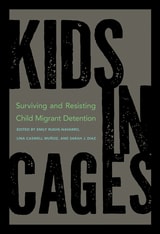
Kids in Cages
Surviving and Resisting Child Migrant DetentionEdited by Emily Ruehs-Navarro, Lina Caswell Muñoz, and Sarah J. Diaz
University of Arizona Press, 2024
In recent years, the plight of immigrant children has been in the national spotlight. A primary issue of concern is the experience of child migrants in detention by the U.S. government.
The authors in this volume approach the topic of child migrant detention from a range of perspectives. Some authors, particularly those who provide a legal perspective, chronicle the harms of detention, arguing that despite governmental assurances of child protection, detention is fundamentally a state-sanctioned form of violence. The social scientists in the volume have worked closely with detained youth themselves; in these chapters, authors highlight the ways in which youth survive detention, often through everyday acts of resistance and through the formation of temporary relationships. Practitioners including psychologists, activists, and faith leaders look at forms of resistance to detention. From retheorizing psychological interventions for detained youth to forming hospitality homes that act as alternatives to detention, these practitioners highlight ways forward for advocates of youth. At the heart of these narratives lies a crucial debate: the tension between harm-reduction strategies and abolition.
This interdisciplinary work brings together voices from the legal realm, the academic world, and the on-the-ground experiences of activists and practitioners.
Contributors
Stella Akello
Jessica Alaniz
Aireen Grace Andal
Samuel Arroyo
Corey Brost
Lina Caswell Muñoz
Marisa Chumil
Patricia Crowley
Iman Dadras
Sarah J. Diaz
Sandra Espinoza
Jacqueline Florian
Michael Gosch
Darlene Gramigna
Lisa Jacobs
Katherine Kaufka Walts
Corinne Kentor
Jenn M. Lilly
Kathlyn Mulcahy
Jennifer Nagda
Vida Opoku
Silvia Rodriguez Vega
Emily Ruehs-Navarro
Herlin Soto-Matute
Luis Edward Tenorio
Jajah Wu
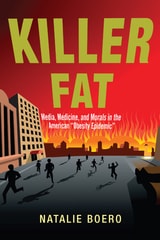
Killer Fat
Media, Medicine, and Morals in the American "Obesity Epidemic”Boero, Natalie
Rutgers University Press, 2013
In the past decade, obesity has emerged as a major public health concern in the United States and abroad. At the federal, state, and local level, policy makers have begun drafting a range of policies to fight a war against fat, including body-mass index (BMI) report cards, “snack taxes,” and laws to control how fast food companies market to children. As an epidemic, obesity threatens to weaken the health, economy, and might of the most powerful nation in the world.
In Killer Fat, Natalie Boero examines how and why obesity emerged as a major public health concern and national obsession in recent years. Using primary sources and in-depth interviews, Boero enters the world of bariatric surgeries, Weight Watchers, and Overeaters Anonymous to show how common expectations of what bodies are supposed to look like help to determine what sorts of interventions and policies are considered urgent in containing this new kind of disease.
Boero argues that obesity, like the traditional epidemics of biological contagion and mass death, now incites panic, a doomsday scenario that must be confronted in a struggle for social stability. The “war” on obesity, she concludes, is a form of social control. Killer Fat ultimately offers an alternate framing of the nation’s obesity problem based on the insights of the “Health at Every Size” movement.
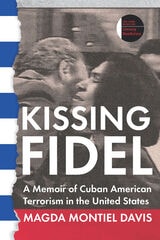
Kissing Fidel
A Memoir of Cuban American Terrorism in the United StatesMagda Montiel Davis
University of Iowa Press, 2020
What does it mean to be instantly transformed into the most hated person in your community? After meeting Fidel Castro at a Havana reception in 1994, Cuban-born Magda Montiel Davis, founder of one of the largest immigration law firms in South Florida, soon found out. The reception—attended by hundreds of other Cuban émigrés—was videotaped for historical archives. In a seconds-long clip, Fidel pecks the traditional protocol kiss on Montiel Davis’s cheek as she thanks him for the social benefits conferred upon the Cuban people. The video, however, was mysteriously sold to U.S. reporters and aired incessantly throughout South Florida. Soon the encounter was an international cause célèbre.
Life as she knew it was over for Montiel Davis and her family, including a father who worked with the CIA to topple Fidel, a nohablo-inglés mother who lived with the family, her five children, and her Jewish Brooklyn-born attorney husband. Kissing Fidel shares the sometimes dismal, sometimes comical realities of an ordinary citizen being thrown into a world of death threats, mob attacks, and terrorism.
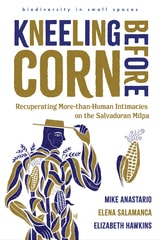
Kneeling Before Corn
Recuperating More-than-Human Intimacies on the Salvadoran MilpaMike Anastario, Elena Salamanca, and Elizabeth Hawkins
University of Arizona Press, 2024
Kneeling Before Corn focuses on the intimate relations that develop between plants and humans in the milpas of the northern rural region of El Salvador. It explores the ways in which more-than-human intimacies travel away from and return to the milpa through human networks.
Collective and multivocal, this work reflects independent lines of investigation and multiple conversations between co-authors—all of whom have lived in El Salvador for extended periods of time. Throughout the six chapters, the co-authors invite readers to consider more-than-human intimacies by rethinking, experimenting with, and developing new ways of documenting, analyzing, and knowing the intimacies that form between humans and the plants that they cultivate, conserve, long for, and eat. This book offers an innovative account of rural El Salvador in the twenty-first century.
Knowing Where It Comes From
Labeling Traditional Foods to Compete in a Global MarketFabio Parasecoli
University of Iowa Press, 2017
Labeling regimes have moved beyond intellectual property to embrace community-based protections, intangible cultural heritage, cultural landscapes, and indigenous knowledge. Reflecting a rich array of juridical, regulatory, and activist perspectives, these approaches seek to level the playing field on which food producers and consumers interact.
Korean Showdown
National Policy and Military Strategy in a Limited War, 1951–1952Bryan R. Gibby
University of Alabama Press, 2021
WINNER OF THE 2023 ANDREW F. KREPINEVICH JR. WRITING AWARD
A historical analysis of the policies and military strategies applied during the Korean War stalemate period.
Korean Showdown: National Policy and Military Strategy in a Limited War, 1951–1952 takes a holistic and integrative approach to strategy, operations, and tactics during the Korean War’s stalemate period and demonstrates how these matters shaped each other and influenced, or were influenced by, political and strategic policy decision-making. Bryan R. Gibby offers an analysis of the major political and military decisions affecting how the war was conducted operationally and diplomatically by examining American, Chinese, North Korean, and South Korean operations in the context of fighting a limited war with limited means, but for objectives that were not always limited in scope or ambition. The foundational political decision was Harry Truman’s voluntary repatriation policy, which extended the war by up to eighteen months. Its military counterpart was the American-led Operation Showdown, the last deliberate military offensive to coerce concessions at the negotiation table. Showdown’s failure (and the Communists’ own equally disappointing military efforts) opened up new avenues for solving the war short of a militarily imposed solution.
Gibby’s research draws on primary sources from American, Korean, and Chinese archives and publications. Many of these sources have not yet been mined in diplomatic and military histories of the Korean War. This innovative book also addresses a significant gap in the study of Korean military operations—the linkage between ground and air pressure campaigns, as well as the many Chinese and American operations conducted to establish negotiation positions. Gibby also explores many political and propagandist developments that assumed great importance in the summer of 1952, such as prisoner of war riots, the bombing of hydroelectric dams, and the South Korean constitutional crisis, which significantly influenced American and Chinese military decision-making.
Ultimately, this volume serves as a cautionary analysis of the limits of force, the necessity to understand an adversary, and the importance of strategic consensus. It also offers an effective case study on an underappreciated period of civil-military tension during the Cold War and on how civilian politicians and military leaders must collaborate to determine a realistic and effective strategy.