Results by title
436 books match the query 'Renaissance' and 2 start with k
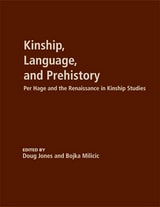
Kinship, Language, and Prehistory
Per Hage and the Renaissance in Kinship StudiesDoug Jones
University of Utah Press, 2011
A chronicle of the renaissance in kinship studies, these seventeen articles pay tribute to Per Hage, one of the founding fathers of the movement and long-time faculty member of the Department of Anthropology at the University of Utah. With mathematician Frank Harary, Hage pioneered the use of graph theoretical models in anthropology, a systematic analysis of diverse cognitive, social, and cultural components that provides a common technical vocabulary for the entire field. Anthropological studies have benefited from quantitative evaluation, particularly kinship, which is newly appreciated for its application to all social sciences. The chapters of this book, some original works by the contributors and some unpublished Hage material, attest to the importance of the continual study of kinship.
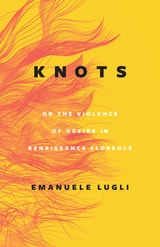
Knots, or the Violence of Desire in Renaissance Florence
Emanuele Lugli
University of Chicago Press, 2023
In this innovative cultural history, hair is the portal through which Emanuele Lugli accesses the cultural production of Lorenzo il Magnifico’s Florence. Lugli reflects on the ways writers, doctors, and artists expressed religious prejudices, health beliefs, and gender and class subjugation through alluring works of art, in medical and political writings, and in poetry. He considers what may have compelled Sandro Botticelli, the young Leonardo da Vinci, and dozens of their contemporaries to obsess over braids, knots, and hairdos by examining their engagement with scientific, philosophical, and theological practices.
By studying hundreds of fifteenth-century documents that engage with hair, Lugli foregrounds hair’s association to death and gathers insights about human life at a time when Renaissance thinkers redefined what it meant to be human and to be alive. Lugli uncovers overlooked perceptions of hair when it came to be identified as a potential vector for liberating culture, and he corrects a centuries-old prejudice that sees hair as a trivial subject, relegated to passing fashion or the decorative. He shows hair, instead, to be at the heart of Florentine culture, whose inherent violence Lugli reveals by prompting questions about the entanglement of politics and desire.