Results by title
3027 books match the query 'Sociology' and 18 start with k

Kamikaze Biker
Parody and Anomy in Affluent JapanIkuya Sato
University of Chicago Press, 1991
"Ikuya Sato's Kamikaze Biker is an exceptionally fine ethnographic analysis of a recurrent form of Japanese collective youth deviance. . . . Sato has contributed a work of value to a wide range of scholarly audiences."—Jack Katz, Contemporary Sociology
"A must for anyone interested in Japan, juvenile delinquency and/or youth behavior in general, or the impact of affluence on society."—Choice
"The volume provides a sophisticated . . . discussion of changes happening in Japanese society in the early 1980s. As such, it serves as a window on the 1990s and beyond."—Ross Mouer, Asian Studies Review
"Kamikaze Biker is a superlative study, one that might help liberate American social science from the simplistic notion that behavior not directly contributing to economic productivity should be summarily dismissed as 'dangerous' and 'deviant.' "—Los Angeles Times Book Review
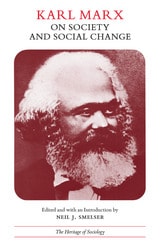
Karl Marx on Society and Social Change
With Selections by Friedrich EngelsKarl Marx
University of Chicago Press, 1975
The first section, "The Structure of Society," contains Marx's writings on the material basis of classes, the basis of the state, and the basis of the family. Among the writings included in this section are Marx's well-known summary from the Preface of A Contribution to a Critique of Political Economy and his equally famous observations on the functional significance of religion in relation to politics.
The second section is titled "The Sweep of Historical Change." The first selection here contains Marx's first statement of the main precapitalist forms of production. The second selection focuses on capitalism, its contradictions, and its impending destruction. Two brief final selections treat the nature of communism, particularly its freedom from the kinds of contradictions that have plagued all earlier forms of societies.
The last section, "The Mechanisms of Change," reproduces several parts of Marx's analysis of the mechanisms by which contradictions develop in capitalism and generate group conflicts. Included is an analysis of competition and its effects on the various classes, a discussion of economic crises and their effects on workers, and Marx's presentation of the historical specifics of the class struggle.
In his comprehensive Introduction to the selections, Professor Smelser provides a biography of Marx, indentifies the various intellectual traditions which formed the background for Marx's writings, and discusses the selections which follow. The editor describes Marx's conception of society as a social system, the differences between functionalism and Marx's theories, and the dynamics of economic and political change as analyzed by Marx.
Karl Marx on Society and Social Change
With Selections by Friedrich EngelsKarl Marx
University of Chicago Press, 1975
This volume presents those writings of Marx that best reveal his contribution to sociology, particularly to the theory of society and social change. The editor, Neil J. Smelser, has divided these selections into three topical sections and has also included works by Friedrich Engels.
The first section, "The Structure of Society," contains Marx's writings on the material basis of classes, the basis of the state, and the basis of the family. Among the writings included in this section are Marx's well-known summary from the Preface of A Contribution to a Critique of Political Economy and his equally famous observations on the functional significance of religion in relation to politics.
The second section is titled "The Sweep of Historical Change." The first selection here contains Marx's first statement of the main precapitalist forms of production. The second selection focuses on capitalism, its contradictions, and its impending destruction. Two brief final selections treat the nature of communism, particularly its freedom from the kinds of contradictions that have plagued all earlier forms of societies.
The last section, "The Mechanisms of Change," reproduces several parts of Marx's analysis of the mechanisms by which contradictions develop in capitalism and generate group conflicts. Included is an analysis of competition and its effects on the various classes, a discussion of economic crises and their effects on workers, and Marx's presentation of the historical specifics of the class struggle.
In his comprehensive Introduction to the selections, Professor Smelser provides a biography of Marx, indentifies the various intellectual traditions which formed the background for Marx's writings, and discusses the selections which follow. The editor describes Marx's conception of society as a social system, the differences between functionalism and Marx's theories, and the dynamics of economic and political change as analyzed by Marx.

Keepin' It Real
Essays on Race in Contemporary AmericaElwood David Watson
Intellect Books, 2019
America’s racial problems aren’t going away any time soon. Keepin’ It Real will serve as a marker of the arguments we’re having right now, and an argument for the changes we need to make to become the better nation we’ve long imagined ourselves to be.
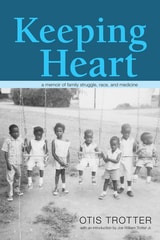
Keeping Heart
A Memoir of Family Struggle, Race, and MedicineOtis Trotter
Ohio University Press, 2015
“After saying our good-byes to friends and neighbors, we all got in the cars and headed up the hill and down the road toward a future in Ohio that we hoped would be brighter,” Otis Trotter writes in his affecting memoir, Keeping Heart: A Memoir of Family Struggle, Race, and Medicine.
Organized around the life histories, medical struggles, and recollections of Trotter and his thirteen siblings, the story begins in 1914 with his parents, Joe William Trotter Sr. and Thelma Odell Foster Trotter, in rural Alabama. By telling his story alongside the experiences of his parents as well as his siblings, Otis reveals cohesion and tensions in twentieth-century African American family and community life in Alabama, West Virginia, and Ohio.
This engaging chronicle illuminates the journeys not only of a black man born with heart disease in the southern Appalachian coalfields, but of his family and community. It fills an important gap in the literature on an underexamined aspect of American experience: the lives of blacks in rural Appalachia and in the nonurban endpoints of the Great Migration. Its emotional power is a testament to the importance of ordinary lives.

Kicking
Jules Boykoff
Duke University Press, 2026
Kid Cops
What Communities Gain and Lose from Junior Police in SchoolsMai Thai
University of Chicago Press, 2026
Some might see police officers as benevolent sources of protection, but in many communities, they are often perceived as a threat due to a legacy of violent interactions and arrests for arbitrary offenses. How, then, do police sustain their presence in places where people might distrust them? In Kid Cops, sociologist Mai Thai offers one answer: junior police academies, high school programs in which police officers provide courses, mentorship, and job training to students in communities with high rates of juvenile delinquency and poverty. These school-police partnerships have expanded rapidly in the United States over the last few decades, largely in response to political unrest and police violence in the 1990s. Programs vary in their offerings, but they generally aim to ease tensions between communities and law enforcement, while also providing needed resources in neighborhoods where education and job opportunities are scarce.
Kid Cops draws on years of observations and interviews with educators, police officers, and, of course, kids. The junior police programs at each high school may have different emphases, but their common goal is for students to graduate from high school and enter college or the workforce. A second goal of the program is to cultivate a positive image of the police. Ultimately, however, Thai finds that these programs tighten the relationship between marginalized youth, schools, and the criminal justice system and strain the students’ relationships with their peers, families, and each other. These programs also distract residents from systemic issues of policing and suppress opportunities for meaningful change.
Written in an accessible tone that balances the seriousness of inequality with the playfulness of the study’s youth, Kid Cops moves beyond the narrative of detentions, suspensions, and arrests to tell a less conventional story about police in schools. It asks, does good, friendly policing exist—especially if it continues to tether low-income communities of color to the criminal justice system?

Kids in Cages
Surviving and Resisting Child Migrant DetentionEdited by Emily Ruehs-Navarro, Lina Caswell Muñoz, and Sarah J. Diaz
University of Arizona Press, 2024
In recent years, the plight of immigrant children has been in the national spotlight. A primary issue of concern is the experience of child migrants in detention by the U.S. government.
The authors in this volume approach the topic of child migrant detention from a range of perspectives. Some authors, particularly those who provide a legal perspective, chronicle the harms of detention, arguing that despite governmental assurances of child protection, detention is fundamentally a state-sanctioned form of violence. The social scientists in the volume have worked closely with detained youth themselves; in these chapters, authors highlight the ways in which youth survive detention, often through everyday acts of resistance and through the formation of temporary relationships. Practitioners including psychologists, activists, and faith leaders look at forms of resistance to detention. From retheorizing psychological interventions for detained youth to forming hospitality homes that act as alternatives to detention, these practitioners highlight ways forward for advocates of youth. At the heart of these narratives lies a crucial debate: the tension between harm-reduction strategies and abolition.
This interdisciplinary work brings together voices from the legal realm, the academic world, and the on-the-ground experiences of activists and practitioners.
Contributors
Stella Akello
Jessica Alaniz
Aireen Grace Andal
Samuel Arroyo
Corey Brost
Lina Caswell Muñoz
Marisa Chumil
Patricia Crowley
Iman Dadras
Sarah J. Diaz
Sandra Espinoza
Jacqueline Florian
Michael Gosch
Darlene Gramigna
Lisa Jacobs
Katherine Kaufka Walts
Corinne Kentor
Jenn M. Lilly
Kathlyn Mulcahy
Jennifer Nagda
Vida Opoku
Silvia Rodriguez Vega
Emily Ruehs-Navarro
Herlin Soto-Matute
Luis Edward Tenorio
Jajah Wu

Kids on the Street
Queer Kinship and Religion in San Francisco's TenderloinJoseph Plaster
Duke University Press, 2023
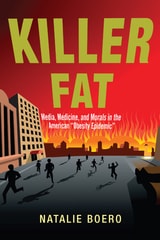
Killer Fat
Media, Medicine, and Morals in the American "Obesity Epidemic”Boero, Natalie
Rutgers University Press, 2013
In the past decade, obesity has emerged as a major public health concern in the United States and abroad. At the federal, state, and local level, policy makers have begun drafting a range of policies to fight a war against fat, including body-mass index (BMI) report cards, “snack taxes,” and laws to control how fast food companies market to children. As an epidemic, obesity threatens to weaken the health, economy, and might of the most powerful nation in the world.
In Killer Fat, Natalie Boero examines how and why obesity emerged as a major public health concern and national obsession in recent years. Using primary sources and in-depth interviews, Boero enters the world of bariatric surgeries, Weight Watchers, and Overeaters Anonymous to show how common expectations of what bodies are supposed to look like help to determine what sorts of interventions and policies are considered urgent in containing this new kind of disease.
Boero argues that obesity, like the traditional epidemics of biological contagion and mass death, now incites panic, a doomsday scenario that must be confronted in a struggle for social stability. The “war” on obesity, she concludes, is a form of social control. Killer Fat ultimately offers an alternate framing of the nation’s obesity problem based on the insights of the “Health at Every Size” movement.
Kinship and Casework
Hope Jensen Leichter
Russell Sage Foundation, 1967
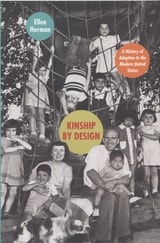
Kinship by Design
A History of Adoption in the Modern United StatesEllen Herman
University of Chicago Press, 2008
Beginning in the early 1900s, when children were still transferred between households by a variety of unregulated private arrangements, Ellen Herman details efforts by the U.S. Children’s Bureau and the Child Welfare League of America to establish adoption standards in law and practice. She goes on to trace Americans’ shifting ideas about matching children with physically or intellectually similar parents, revealing how research in developmental science and technology shaped adoption as it navigated the nature-nurture debate.
Concluding with an insightful analysis of the revolution that ushered in special needs, transracial, and international adoptions, Kinship by Design ultimately situates the practice as both a different way to make a family and a universal story about love, loss, identity, and belonging. In doing so, this volume provides a new vantage point from which to view twentieth-century America, revealing as much about social welfare, statecraft, and science as it does about childhood, family, and private life.
Kinship in Bali
Hildred Geertz and Clifford Geertz
University of Chicago Press, 1978
Kneeling Before Corn
Recuperating More-than-Human Intimacies on the Salvadoran MilpaMike Anastario, Elena Salamanca, and Elizabeth Hawkins
University of Arizona Press, 2024
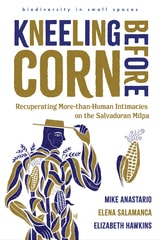
Kneeling Before Corn focuses on the intimate relations that develop between plants and humans in the milpas of the northern rural region of El Salvador. It explores the ways in which more-than-human intimacies travel away from and return to the milpa through human networks.
Collective and multivocal, this work reflects independent lines of investigation and multiple conversations between co-authors—all of whom have lived in El Salvador for extended periods of time. Throughout the six chapters, the co-authors invite readers to consider more-than-human intimacies by rethinking, experimenting with, and developing new ways of documenting, analyzing, and knowing the intimacies that form between humans and the plants that they cultivate, conserve, long for, and eat. This book offers an innovative account of rural El Salvador in the twenty-first century.

Knowing What We Know
African American Women's Experiences of Violence and ViolationGarfield, Gail
Rutgers University Press, 2005
In recent years there has been an attempt by activists, service providers, and feminists to think about violence against women in more inclusive ways. In Knowing What We Know, activist and sociologist Gail Garfield argues that this effort has not gone far enough and that in order to understand violence, we must take the lived experiences of African American women seriously. Doing so, she cautions, goes far beyond simply adding voices of black women to existing academic and activist discourses, but rather, requires a radical shift in our knowledge of these women’s lives and the rhetoric used to describe them.
Bringing together a series of life-history interviews with nine women, this unique study urges a departure from established approaches that position women as victims of exclusively male violence. Instead, Garfield explores what happens when women’s ability to make decisions and act upon those choices comes into conflict with cultural and social constraints. Chapters explore how women experience racialized or class-based violence, how these forms of violence are related to gendered violence, and what these violations mean to a woman’s sense of identity. By showing how women maintain, sustain, and in some instances regain their sense of human worth as a result of their experiences of violation, Garfield complicates the existing dialogue on violence against women in new and important ways.
Knowledge in the Age of Digital Capitalism
An Introduction to Cognitive MaterialismMariano Zukerfeld
University of Westminster Press, 2017
Author Mariano Zukerfeld was awarded the best book prize by The Association ESOCITE (Asociación Latinamericana de Estudios Sociales de la Cience y la Tecnología).
“the book is a refreshing, dynamic approach leading back into discussions which have been neglected during the last 20 years.” -https://www.triple-c.at/index.php/tripleC/article/view/971
Knowledge in the Age of Digital Capitalism proposes a new critical theory concerning the functioning of capitalism and how we consider knowledge and information. This ambitious book systematically and lucidly introduces contemporary phenomena into the framework of cognitive materialism to address some of the great themes of the social sciences: knowledge, exploitation and social class in an account of capitalism's totality in the present day. Author Mariano Zukerfeld reinvigorates materialist study of communications, presenting a typology of knowledge to explain the underlying material forms of information, intellectual property and cognitive work in contemporary societies. Using current examples the book also examines concerns such as free labour and the pivotal role of intellectual property. The book offers nothing less than an introduction to the theory of cognitive materialism and an account of the entirety of the digital (or knowledge) capitalism of our time.

Knowledge in the Time of Cholera
The Struggle over American Medicine in the Nineteenth CenturyOwen Whooley
University of Chicago Press, 2013
These cholera outbreaks raised fundamental questions about medical knowledge and its legitimacy, giving fuel to alternative medical sects that used the confusion of the epidemic to challenge both medical orthodoxy and the authority of the still-new American Medical Association. In Knowledge in the Time of Cholera, Owen Whooley tells us the story of those dark days, centering his narrative on rivalries between medical and homeopathic practitioners and bringing to life the battle to control public understanding of disease, professional power, and democratic governance in nineteenth-century America.
Korean Families Yesterday and Today
Hyunjoon Park and Hyeyoung Woo, Editors
University of Michigan Press, 2020
Korean families have changed significantly during the last few decades in their composition, structure, attitudes, and function. Delayed and forgone marriage, fertility decline, and rising divorce rates are just a few examples of changes that Korean families have experienced at a rapid pace, more dramatic than in many other contemporary societies. Moreover, the increase of marriages between Korean men and foreign women has further diversified Korean families. Yet traditional norms and attitudes toward gender and family continue to shape Korean men and women’s family behaviors.
Korean Families Yesterday and Today portrays diverse aspects of the contemporary Korean families and, by explicitly or implicitly situating contemporary families within a comparative historical perspective, reveal how the past of Korean families evolved into their current shapes. While the study of families can be approached in many different angles, our lens focuses on families with children or young adults who are about to forge family through marriage and other means. This focus reflects that delayed marriage and declined fertility are two sweeping demographic trends in Korea, affecting family formation. Moreover, “intensive” parenting has characterized Korean young parents and therefore, examining change and persistence in parenting provides important clues for family change in Korea.
This volume should be of interest not only to readers who are interested in Korea but also to those who want to understand broad family changes in East Asia in comparative perspective.