Results by title
323 books match the query 'Southeast Asia' and 2 start with k
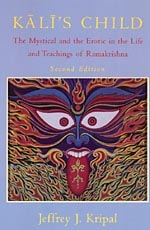
Kali's Child
The Mystical and the Erotic in the Life and Teachings of RamakrishnaJeffrey J. Kripal
University of Chicago Press, 1998
In a book now marked by both critical acclaim and cross-cultural controversy, Jeffrey J. Kripal explores the life and teachings of Ramakrishna Paramahamsa, a nineteenth-century Bengali saint who played a major role in the creation of modern Hinduism. Through extended textual and symbolic analyses of Ramakrishna's censored "secret talk," Kripal demonstrates that the saint's famous ecstatic and visionary experiences were driven by mystico-erotic energies that he neither fully accepted nor understood. The result is a striking new vision of Ramakrishna as a conflicted, homoerotic Tantric mystic that is as complex as it is clear and as sympathetic to the historical Ramakrishna as it is critical of his traditional portraits.
In a substantial new preface to this second edition, Kripal answers his critics, addresses the controversy the book has generated in India, and traces the genealogy of his work in the history of psychoanalytic discourse on mysticism, Hinduism, and Ramakrishna himself. Kali's Child has already proven to be provocative, groundbreaking, and immensely enjoyable.
"Only a few books make such a major contribution to their field that from the moment of publication things are never quite the same again. Kali's Child is such a book."—John Stratton Hawley, History of Religions
Winner of the American Academy of Religion's History of Religions Prize for the Best First Book of 1995
[more]
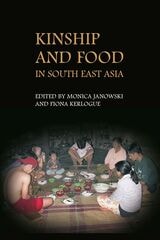
Kinship and Food in South East Asia
Edited by Monica Janowski and Fiona G. Kerlogue
National University of Singapore Press, 2007
Food has an important role in establishing and structuring social and kin relations in Southeast Asian societies. For this reason, there is growing interest within anthropology in understanding how the production, processing and consumption of food is one important basis for the construction of ties of relatedness, so-called ‘kin’ ties. These are often based at least partly on ‘shared substance’. In this respect, a book on Southeast Asia is especially interesting in understanding kinship since the region is generally taken to include a number of distinct types of kin structure. This book offers eleven chapters covering a range of societies in different parts of Southeast Asia. It examines ways in which food is used to think about and bring about ties between generations and within generations – including between the living and the dead – in particular through the feeding relationship. Significant parallels emerge between the societies covered: in the role of rice especially; in gender complementarity in relation to different foods; in the belief that food and drink carry fertility, ‘blessings’ or ‘life force’ from ascending to descending generations; and in the use of the feeding relationship to generate hierarchy. These parallels suggest that there may be underlying similarities in cosmology between these widely varying societies. A significant contribution to the ongoing debate on the nature of kinship in Southeast Asia, this volume will be useful as a textbook for courses within anthropology, including on the anthropology of food and environmental anthropology.
[more]