Results by title
1927 books match the query 'Technology & Engineering' and 7 start with k
Kandik Map
Linda Johnson
University of Alaska Press, 2009
In 1880, a Native American named Paul Kandik and a French explorer, François Mercier, traveled across northeastern Alaska and western Canada to create the earliest known map of the region. Linda Johnson now delves into the fascinating story behind the Kandik Map, examining the reasons why and how these two men from such different backgrounds combined their extensive knowledge of the country to map the Kandik River region. Drawing on historical letters, geographical analysis, and the original map itself held in the University of California’s Bancroft Library, Johnson produces a groundbreaking study on the history of the Kandik Map and reveals its significant implications for Native American scholarship.
[more]
Key Enablers for User-Centric Advertising Across Next Generation Networks
Jose Simoes
The Institution of Engineering and Technology, 2012
Telecommunication and internet services are constantly subject to change, seeking the customer's full satisfaction. Enriching these services with innovative approaches such as contextaware, social, mobile, adaptable and interactive mechanisms, enables users to experience a variety of personalized services seamlessly across different platforms and technologies. In this sense, advertising is no exception, especially if we consider that it will become the business enabler for next generation services. Nevertheless, currently there is no cross-domain solution capable of delivering real-time advertising across heterogeneous environments or domains, and at the same time, address user needs, desires and intentions. This is because most of the products available today are only used within isolated environments / silos. Therefore, managing advertising campaigns across different verticals is still very complex. However, leveraging on the advances provided by Next Generation Networks, together with the design principles inherent to Service Oriented Architectures and capabilities offered by Service Delivery Platforms, this scenario is about to change. Based on key conceptual entities called enablers, this work aims to change the current scenario. More concretely, this book introduces three distinct but complementary enablers. The Human Enabler provides a real-time context brokerage system capable of securely managing different types of user-related data in a standardized way. The Reasoning Enabler is the result of a welldefined methodology that enables new knowledge to be reasoned, based on previously stored data, by aggregating, correlating and inferring new information about people and their contexts. Lastly, the Session Management Enabler is responsible for abstracting the communication layers. It provides a context-aware multimedia delivery system capable of personalizing and adapting multimedia content according to a set of user and system pre-defined context data or rules, respectively. Altogether, they form the Converged User-Centric Advertising System and introduce new features that address the needs of both users and advertisers.
[more]
Keywords in Technical and Professional Communication
Han Yu
University Press of Colorado, 2024
Keywords in Technical and Professional Communication explores the multiple and sometimes conflicting uses of terms central to the discipline of technical and professional communication (TPC). Each keyword was selected through a multi-stage process that involved corpus analysis of journal publications and surveys of technical communication scholars, educators, and practitioners. Written by experts who have published extensively on the concepts underlying each keyword, each essay provides a history and/or a summary of the changing contemporary and disciplinary contexts in which the keyword has been used, discusses the debates surrounding the term, considers the critical lenses shaping our understanding of it, and discusses how the term could be used in the future and/or whether it needs to be rethought in our current environment.
[more]

Klondike Women
True Tales of the 1897–1898 Gold RushMelanie J. Mayer
Ohio University Press, 1989
Klondike Women is a compelling collection of historical photographs and first-hand accounts of the adventures, challenges, and disappointments of women on the trails to the Klondike gold fields. In the midst of a depression near the turn of the twentieth century, these women dared to act on the American dream. As they journeyed through the Northwest wilderness, they explored and extended not only the physical frontiers of North America but also the social frontiers about the “women’s place.”
Challenging the myth that the only women who participated in gold rushes were prostitutes and gold-diggers of the euphemistic sort, Melanie Mayer shows us that Klondike women came from all walks of life—socialites to poor immigrants, single women, wives, widows, and children. They planned to make their money through many different undertakings including mining, business, entertainment, professional, and service enterprises. Their approaches to life were as varied as their roles—optimistic or skeptical; cautious or adventuresome; gregarious or self-contained; contemplative or active. There was no typical Klondike woman. Individually, their stories can be funny, hopeful, tragic, or poignant. Taken together, they give rich, complex images of the people, times, and places of the gold rush.
A visually exciting book, Klondike Women features over 150 photographs and illustrations. This volume should appeal not only to the general reader, but to those interested in history, women’s studies, and the Pacific Northwest as well.
[more]
Knowledge Flows in a Global Age
A Transnational ApproachEdited by John Krige
University of Chicago Press, 2022
A transnational approach to understanding and analyzing knowledge circulation.
The contributors to this collection focus on what happens to knowledge and know-how at national borders. Rather than treating it as flowing like currents across them, or diffusing out from center to periphery, they stress the human intervention that shapes how knowledge is processed, mobilized, and repurposed in transnational transactions to serve diverse interests, constraints, and environments. The chapters consider both what knowledge travels and how it travels across borders of varying permeability that impede or facilitate its movement. They look closely at a variety of platforms and objects of knowledge, from tangible commodities—like hybrid wheat seeds, penicillin, Robusta coffee, naval weaponry, seed banks, satellites and high-performance computers—to the more conceptual apparatuses of plant phenotype data and statistics. Moreover, this volume decenters the Global North, tracking how knowledge moves along multiple paths across the borders of Mexico, India, Portugal, Guinea-Bissau, the Soviet Union, China, Angola, Palestine and the West Bank, as well as the United States and the United Kingdom. An important new work of transnational history, this collection recasts the way we understand and analyze knowledge circulation.
The contributors to this collection focus on what happens to knowledge and know-how at national borders. Rather than treating it as flowing like currents across them, or diffusing out from center to periphery, they stress the human intervention that shapes how knowledge is processed, mobilized, and repurposed in transnational transactions to serve diverse interests, constraints, and environments. The chapters consider both what knowledge travels and how it travels across borders of varying permeability that impede or facilitate its movement. They look closely at a variety of platforms and objects of knowledge, from tangible commodities—like hybrid wheat seeds, penicillin, Robusta coffee, naval weaponry, seed banks, satellites and high-performance computers—to the more conceptual apparatuses of plant phenotype data and statistics. Moreover, this volume decenters the Global North, tracking how knowledge moves along multiple paths across the borders of Mexico, India, Portugal, Guinea-Bissau, the Soviet Union, China, Angola, Palestine and the West Bank, as well as the United States and the United Kingdom. An important new work of transnational history, this collection recasts the way we understand and analyze knowledge circulation.
[more]

Knowledge-based Systems for Industrial Control
J. McGhee
The Institution of Engineering and Technology, 1990
Expert and knowledge-based systems have great potential for industrial control systems, particularly in the process industries. Recognising the importance of this emerging area, the Institution of Electrical Engineers organised a Vacation School on the subject, for engineers from industry and academia, at the University of Strathclyde in September 1990.
[more]
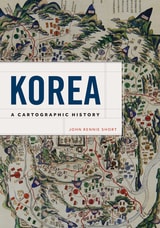
Korea
A Cartographic HistoryJohn Rennie Short
University of Chicago Press, 2012
The first general history of Korea as seen through maps, Korea: A Cartographic History provides a beautifully illustrated introduction to how Korea was and is represented cartographically. John Rennie Short, one of today’s most prolific and well-respected geographers, encapsulates six hundred years of maps made by Koreans and non-Koreans alike.
Largely chronological in its organization, Korea begins by examining the differing cartographic traditions prevalent in the early Joseon period in Korea—roughly 1400 to 1600—and its temporal equivalent in early modern Europe. As one of the longest continuous dynasties, Joseon rule encompassed an enormous range and depth of cartographic production. Short then surveys the cartographic encounters from 1600 to 1900, distinguishing between the early and late Joseon periods and highlighting the influences of China, Japan, and the rest of the world on Korean cartography. In his final section, Short covers the period from Japanese colonial control of Korea to the present day and demonstrates how some of the tumultuous events of the past hundred years are recorded and contested in maps. He also explores recent cartographic controversies, including the naming of the East Sea/Sea of Japan and claims of ownership of the island of Dokdo.
A common theme running throughout Short’s study is how the global flow of knowledge and ideas affects mapmaking, and Short reveals how Korean mapmakers throughout history have embodied, reflected, and even contested these foreign depictions of their homeland.
[more]