Results by title
805 books match the query '18th Century' and 24 start with l
LITTLE SONGS
WOMEN, SILENCE, AND THE NINETEENTH-CENTURY SONNETAMY CHRISTINE BILLONE
The Ohio State University Press, 2002
La Harpe's Post
Tales of French-Wichita Contact on the Eastern PlainsGeorge H. Odell
University of Alabama Press, 2002
This major contribution to contact period studies points to the Lasley Vore site in modern Oklahoma as the most likely first meeting place of Plains Indians and Europeans more than 300 years ago.
In 1718, Jean-Baptiste Bénard, Sieur de la Harpe, departed St. Malo in Brittany for the New World. La Harpe, a member of the French bourgeoisie, arrived at Dauphin Island on the Gulf coast to take up the entrepreneurial concession provided by the director of the French colony, Jean Baptiste LeMoyne de Bienville. La Harpe's charge was to open a trading post on the Red River just above a Caddoan village not far from present-day Texarkana. Following the establishment of this post, La Harpe ventured farther north to extend his trade market into the region occupied by the Wichita Indians. Here he encountered a Tawakoni village with an estimated 6,000 inhabitants, a number that swelled to 7,000 during the ten-day visit.
Despite years of ethnohistoric and archaeological research, no scholar had successfully established where this important meeting took place. Then in 1988, George Odell and his crew surveyed and excavated an area 13 miles south of Tulsa, along the Arkansas River, that revealed undeniable association of Native American habitation refuse with 18th-century European trade goods.
Odell here presents a full account of the presumed location of the Tawakoni village as revealed through the analysis of excavated materials from nine specialist collaborators. In a strikingly well-written narrative report, employing careful study and innovative analysis supported by appendixes containing the excavation data, Odell combines documentary history and archaeological evidence to pinpoint the probable site of the first European contact with North American Plains Indians.
Lake Methodism
Jasper Cragwall
The Ohio State University Press, 2013
Land of Big Rivers
French and Indian Illinois, 1699-1778M. J. Morgan
Southern Illinois University Press, 2010
Drawing on research from a variety of academic fields, such as archaeology, history, botany, ecology, and physical science, M. J. Morgan explores the intersection of people and the environment in early eighteenth-century Illinois Country—a stretch of fecund, alluvial river plain along the Mississippi river. Arguing against the traditional narrative that describes Illinois as an untouched wilderness until the influx of American settlers, Morgan illustrates how the story began much earlier.
She focuses her study on early French and Indian communities, and later on the British, nestled within the tripartite environment of floodplain, riverine cliffs and bluffs, and open, upland till plain/prairie and examines the impact of these diverse groups of people on the ecological landscape. By placing human lives within the natural setting of the period—the abundant streams and creeks, the prairies, plants and wildlife—she traces the environmental change that unfolded across almost a century. She describes how it was a land in motion; how the occupying peoples used, extracted, and extirpated its resources while simultaneously introducing new species; and how the flux and flow of life mirrored the movement of the rivers. Morgan emphasizes the importance of population sequences, the relationship between the aboriginals and the Europeans, the shared use of resources, and the effects of each on the habitat.
Land of Big Rivers is a unique, many-themed account of the big-picture ecological change that occurred during the early history of the Illinois Country. It is the first book to consider the environmental aspects of the Illinois Indian experience and to reconsider the role of the French and British in environmental change in the mid-Mississippi Valley. It engagingly recreates presettlement Illinois with a remarkable interdisciplinary approach and provides new details that will encourage understanding of the interaction between physical geography and the plants, animals, and people in the Illinois Country. Furthermore, it exhibits the importance of looking at the past in the context of environmental transformation, which is especially relevant in light of today’s global climate change.
Last Works
Moses Mendelssohn. Translated by Bruce Rosenstock
University of Illinois Press, 2012
Laurence Sterne’s A Sentimental Journey
A Legacy to the WorldW. B. Gerard
Bucknell University Press, 2021
Lessons of Romanticism
A Critical CompanionThomas Pfau and Robert F. Gleckner, eds.
Duke University Press, 1998
With over twenty essays on such diverse topics as the aesthetic and pedagogical purposes of art exhibits in London, the materiality of late Romantic salon culture, the extracanonical status of Jane Austen and Fanny Burney, and Romantic imagery in Beethoven’s music and letters, Lessons of Romanticism reveals the practices that were at the heart of European Romantic life. Focusing on the six decades from 1780 to 1832, this collection is arranged thematically around gender and genre, literacy, marginalization, canonmaking, and nationalist ideology. As Americanists join with specialists in German culture, as Austen is explored beside Beethoven, and as discussions on newly recovered women’s writings follow fresh discoveries in long-canonized texts, these interdisciplinary essays not only reflect the broad reach of contemporary scholarship but also point to the long-neglected intertextual and intercultural dynamics in the various and changing faces of Romanticism itself.
Contributors. Steven Bruhm, Miranda J. Burgess, Joel Faflak, David S. Ferris, William Galperin, Regina Hewitt, Jill Heydt-Stevenson, H. J. Jackson, Theresa M. Kelley, Greg Kucich, C. S. Matheson, Adela Pinch, Marc Redfield, Nancy L. Rosenblum, Marlon B. Ross, Maynard Solomon, Richard G. Swartz, Nanora Sweet, Joseph Viscomi, Karen A. Weisman, Susan I. Wolfson
Letters from Spain
A Seventeenth-Century French Noblewoman at the Spanish Royal CourtMarie Gigault de Bellefonds
Iter Press, 2021
This volume includes her surviving letters from Madrid to her friend Madame de Coulanges and an appendix of her letters sent from Paris and Turin. The letters from Spain, written between 1679 and 1681, paint a vivid and engaging picture of the royal court and its new queen.
Lewd and Notorious
Female Transgression in the Eighteenth CenturyKatharine Kittredge, Editor
University of Michigan Press, 2003
Lift Every Voice
African American Oratory, 1787-1901Philip S. Foner
University of Alabama Press, 1997
The essential collection of African American voices that shaped the struggle for freedom, equality, and citizenship.
Lift Every Voice is a completely revised, updated, and expanded version of Philip Foner's 1972 classic Voice of Black America, which Library Journal hailed as "indispensable.""This well-edited and
richly inclusive work," wrote Benjamin Quarles, "unveils the full sweep of Black expression as found in platform addresses" by "men and women who join eloquence with reason in articulating their
grievances and their aspirations and in arousing their listeners with their ringing and prophetic challenges." This new collection includes over 60 additional texts and revised and expanded introductory essays that provide historical, biographical, and critical information for each speech.
For Americans of the 19th century, as W. E. B. Du Bois observed, eloquent speeches were 'the shining lights of civilization' that both expressed and sought to improve the lives and communities from which they sprang. Through political speeches, sermons, lectures, oral testimonies, and ceremonial addresses, African Americans offered diverse responses to the issues and events of their times, including not only slavery and racial equality but also women's rights, education, religion, immigration, socialism, war, Indian policy, and labor organization, among others. The speeches in this
collection are among the most powerful expressions of African American opinions on these issues and were delivered on occasions and before audiences where the speakers believed their words might be transformative.
Containing more than 150 speeches, this anthology represents the most extensive and diverse collection of African American oratory of the 18th and 19th centuries ever published. Lift Every Voice makes readily accessible not only the classic orations of such well-known figures as Frederick Douglass, Sojourner Truth, and Booker T. Washington but also dozens of lesser-known but important speeches deserving greater recognition and study. Many of these speeches are previously unpublished, uncollected, or long out of print.

Light in Germany
Scenes from an Unknown EnlightenmentT. J. Reed
University of Chicago Press, 2015
Reed looks closely at the arguments, achievements, conflicts, and controversies of these major thinkers and how their development of a lucid and active liberal thinking matured in the late eighteenth century into an imaginative branching that ran through philosophy, theology, literature, historiography, science, and politics. He traces the various pathways of their thought and how one engendered another, from the principle of thinking for oneself to the development of a critical epistemology; from literature’s assessment of the past to the formulation of a poetic ideal of human development. Ultimately, Reed shows how the ideas of the German Enlightenment have proven their value in modern secular democracies and are still of great relevance—despite their frequent dismissal—to us in the twenty-first century.
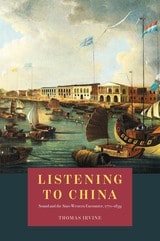
Listening to China
Sound and the Sino-Western Encounter, 1770-1839Thomas Irvine
University of Chicago Press, 2020
Through these stories, Irvine not only investigates how the Sino-Western encounter sounded, but also traces the West’s shifting response to China. As the trading relationships between China and the West broke down, travelers and music theorists abandoned the vision of shared musical approaches, focusing instead on China’s noisiness and sonic disorder and finding less to like in its music. At the same time, Irvine reconsiders the idea of a specifically Western music history, revealing that it was comparison with China, the great “other,” that helped this idea emerge. Ultimately, Irvine draws attention to the ways Western ears were implicated in the colonial and imperial project in China, as well as to China’s importance to the construction of musical knowledge during and after the European Enlightenment. Timely and original, Listening to China is a must-read for music scholars and historians of China alike.
Literary Conclusions
The Poetics of Ending in Lessing, Goethe, and KleistOliver Simons
Northwestern University Press, 2022
Simons examines the interrelations of Lessing’s literary endings with modes of logical conclusion; he highlights how Goethe’s narrative closures are forestalled by an uncontrollable vital force that was discussed in the sciences of the time; and he reveals that Kleist conceived of literary genres themselves as forms of reasoning. Kleist’s endings, Simons demonstrates, mark the beginning of modernism. Through close readings of these authors and supplemental analyses of works by Walter Benjamin, Friedrich Hölderlin, and Georg Wilhelm Friedrich Hegel, he crafts an elegant theory of conclusions that revises established histories of literary genres and forms.
Literary Publishing in America, 1790-1850
William Charvat
University of Massachusetts Press, 1993
Available for the first time in paperback, this book is a succinct distillation of the work and thought of William Charvat, a pioneer in the study of the history of the American book. This burgeoning field of inquiry investigates the social and cultural context of the act of literary creation by relating it to the modes of its production and distribution. This new edition of Literary Publishing in America contains an afterword by Michael Winship that discusses scholarship in the field since publication of Charvat's groundbreaking work.
Literature Incorporated
The Cultural Unconscious of the Business Corporation, 1650-1850John O'Brien
University of Chicago Press, 2015
Examining British and American essays, poems, novels, and stories from the seventeenth through the nineteenth centuries, O’Brien pursues the idea of incorporation as a trope discernible in a wide range of texts. Key authors include John Locke, Eliza Haywood, Harriet Martineau, and Edgar Allan Poe, and each chapter is oriented around a type of corporation reflected in their works, such as insurance companies or banks. In exploring issues such as whether sentimental interest is the same as economic interest, these works bear witness to capitalism’s effect on history and human labor, desire, and memory. This period’s imaginative writing, O’Brien argues, is where the unconscious of that process left its mark. By revealing the intricate ties between literary models and economic concepts, Literature Incorporated shows us how the business corporation has shaped our understanding of our social world and ourselves.
Literature and the Arts
Interdisciplinary Essays in Memory of James Anderson WinnAnna Battigelli
University of Delaware Press, 2024
Little Tools of Knowledge
Historical Essays on Academic and Bureaucratic PracticesPeter Becker and William Clark, Editors
University of Michigan Press, 2001
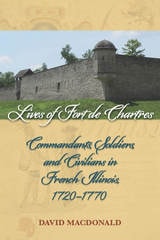
Lives of Fort de Chartres
Commandants, Soldiers, and Civilians in French Illinois, 1720–1770David MacDonald
Southern Illinois University Press, 2016
Fort de Chartres, built in 1719-1720 in the heart of what would become the American Midwest, embodied French colonial power for half a century. Lives of Fort de Chartres, by David MacDonald, details the French colonial experience in Illinois from 1720 to 1770 through vivid depictions of the places, people, and events around the fort and its neighboring villages.
In the first section, MacDonald explores the fascinating history of French Illinois and the role of Fort de Chartres in this history, focusing on native peoples, settlers, slaves, soldiers, villages, trade routes, military administration, and the decline of French rule in Illinois. The second section profiles the fort’s twelve distinctive and often colorful commandants, who also served as administrative heads of French Illinois. These men’s strong personalities served them well when dealing simultaneously with troops, civilians, and Indians and their multifaceted cultures. In the third section, MacDonald presents ten thought-provoking biographies of people whose lives intersected with Fort de Chartres in various ways, from a Kaskaskia Indian woman known as “the Mother of French Illinois” to an ill-fated chicken thief and a European aristocrat. Subjects treated in the book include French–Native American relations, the fur trade, early Illinois agriculture, and tensions among different religious orders. Together, the biographies and historical narrative in the volume illuminate the challenges that shaped the French colonies in America.
The site of Fort de Chartres, recognized as a National Historic Landmark in 1966, still exists today as a testament to the ways in which French, British, Spanish, and American histories have intertwined. Both informative and entertaining, Lives of Fort de Chartres contributes to a more complete understanding of the French colonial experience in the Midwest and portrays a vital and vigorous community well worth our appreciation.
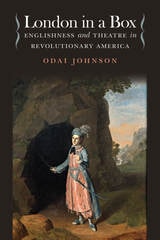
London in a Box
Englishness and Theatre in Revolutionary AmericaOdai Johnson
University of Iowa Press, 2017
If one went looking for the tipping point in the prelude to the American Revolution, it would not be the destruction of the tea in Boston Harbor, or the blockade of Boston by British warships, or even the gathering of the first Continental Congress; rather, it was the Congress’s decision in late October of 1774 to close the theatres. In this remarkable feat of historical research, Odai Johnson pieces together the surviving fragments of the story of the first professional theatre troupe based in the British North American colonies. In doing so, he tells the story of how colonial elites came to decide they would no longer style themselves British gentlemen, but instead American citizens.
London in a Box chronicles the enterprise of David Douglass, founder and manager of the American Theatre, from the 1750s to the climactic 1770s. The ambitious Scotsman’s business was teaching provincial colonials to dress and behave as genteel British subjects. Through the plays he staged, the scenery and costumes, and the bearing of his actors, he displayed London fashion and London manners. He counted among his patrons the most influential men in America, from British generals and governors to local leaders, including the avid theatre-goers George Washington and Thomas Jefferson. By 1774, Douglass operated a monopoly of theatres in six colonies and the Anglophone Caribbean, from Jamaica to Charleston and northward to New York City. (Boston remained an impregnable redoubt against theatre.)
How he built this network of patrons and theatres and how it all went up in flames as the revolution began is the subject of this witty history. A treat for anyone interested in the world of the American Revolution and an important study for historians of the period.
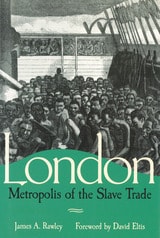
London, Metropolis of the Slave Trade
James A. Rawley & Foreword by David Eltis
University of Missouri Press, 2003
"The recognition that ordinary people could and did trade in slaves, as well as the fact that ordinary people became slaves, is, indeed, the beginning of comprehending the enormity of the forced migration of eleven million people and the attendant deaths of many more."
Rawley draws on material from the year 1700 to the American Civil War as he explores the role of London in the trade. He covers its activity as a port of departure for ships bound for Africa; its continuing large volume after the trade extended to Bristol and Liverpool; and the controversy between London’s parliamentary representatives, who defended the trade, and the abolitionist movement that was quartered there.
Sweeping in scope and thorough in its analysis, this collection of essays from a seasoned scholar will be welcomed by historians concerned with slavery and the slave trade, as well as by students just beginning their exploration of this subject.

London
Prints & Drawings before 1800Bernard Nurse
Bodleian Library Publishing, 2017
This book presents more than a hundred images of Greater London from before 1800, all from the Gough Collection of the Bodleian Library. We see prints of London before and after the Great Fire, images of the 1780 tornado, panoramas of the Thames, depictions of the building and destruction of landmark bridges, and much more. Making brilliant use of the most extensive collection of London images amassed by any private collector of the period, the book will be essential to anyone delving into the history of the city.
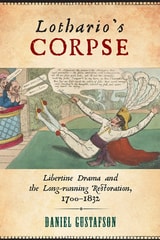
Lothario's Corpse
Libertine Drama and the Long-Running Restoration, 1700-1832Daniel Gustafson
Bucknell University Press, 2020
Published by Bucknell University Press. Distributed worldwide by Rutgers University Press.
Louis Sébastien Mercier
Revolution and Reform in Eighteenth-Century ParisMichael J. Mulryan
Bucknell University Press, 2023

Loving Dr. Johnson
Helen Deutsch
University of Chicago Press, 2005
Loving Dr. Johnson uses the enormous popularity of Johnson to understand a singular case of author love and to reflect upon what the love of authors has to do with the love of literature. Helen Deutsch's work is driven by several impulses, among them her affection for both Johnson's work and Boswell's biography of him, and her own distance from the largely male tradition of Johnsonian criticism—a tradition to which she remains indebted and to which Loving Dr. Johnson is ultimately an homage. Limning sharply Johnson's capacious oeuvre, Deutsch's study is also the first of its kind to examine the practices and rituals of Johnsonian societies around the world, wherein Johnson's literary work is now dwarfed by the figure of the writer himself.
An absorbing look at one iconic author and his afterlives, Loving Dr. Johnson will be of enormous value to students of English literature and literary scholars keenly interested in canon formation.