168 books match the query '1989-' and 4 start with l
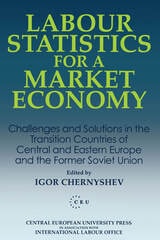
cover of Labour Statistics for a Market Economy: Challenges and Solutions in the Transition Countries of Central and Eastern Europe and the Former Soviet Union

Labour Statistics for a Market Economy

Challenges and Solutions in the Transition Countries of Central and Eastern Europe and the Former Soviet Union

Igor Chernyshev

Central European University Press, 1995
The International Labour Office is the moving force behind the adoption of the Labour Force Survey in Western countries as the only reliable means of gathering information about trends in employment and unemployment, and on pay. The countries of East-Central Europe and the former USSR have recognized their need of such statistiics and turned to the ILO to help them set up systems to provide data required by decision makers. This pioneering work shows how the old "command" economies are setting up brand new systems to classify occupations, to measure employment and unemployment, and to collect information on wages and labour costs, which will be useful to students of the area and essential for statisticians world-wide concerned with the challenge of instigating an entirely new statistical service.
[more]
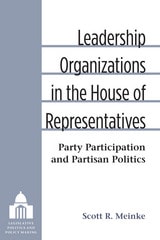
cover of Leadership Organizations in the House of Representatives: Party Participation and Partisan Politics

Leadership Organizations in the House of Representatives

Party Participation and Partisan Politics

Scott R. Meinke

University of Michigan Press, 2016

In recent Congresses, roughly half of the members of the U.S. House of Representatives served in whip organizations and on party committees. According to Scott R. Meinke, rising electoral competition and polarization over the past 40 years have altered the nature of party participation. In the 1970s and 1980s, the participation of a wide range of members was crucial to building consensus. Since then, organizations responsible for coordination in the party have become dominated by those who follow the party line. At the same time, key leaders in the House use participatory organizations less as forums for internal deliberations over policy and strategy than as channels for exchanging information with supporters outside Congress, and broadcasting sharply partisan campaign messages to the public.
 
[more]
cover of Liberalism After Communism: The Implications of the 1993 Elections to the Federal Assembly

Liberalism After Communism

The Implications of the 1993 Elections to the Federal Assembly

Jerzy Szacki

Central European University Press, 1995
This study is devoted to recent developments in Central European (especially Polish) political thought, and concentrates on the emergence of liberal ideas, a subject largely neglected by Western observers. It provides a clear account of protoliberal and liberal thinking in Central Europe both before and after 1989, a critical appraisal of the democratic opposition to communism, and an analysis of economic liberalism as its rival orientation. The author examines the changes which occur in classical liberal ideas when they are implemented in a region with practically no liberal tradition and no socioeconomic infrastructure, and shows how liberal ideas in Central Europe are becoming constructivist, functioning as the ideological justification for a new kind of Utopian social engineering that aims at constructing capitalism.
[more]
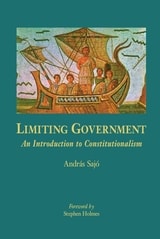
cover of Limiting Government: An Introduction to Constitutionalism

Limiting Government

An Introduction to Constitutionalism

András Sajó

Central European University Press, 1999

Until the previous decade, constitutionalism in Eastern Europe was considered to be an outmoded concept of the nineteenth century. Changes in the region, however, have brought back the fundamental question of the need to restrict government power through social self-binding.

This book discusses the mechanisms of such restriction, including different forms of the separation of powers and constitutional review. It relates the theoretical and practical importance of the issue to the present world-wide discontent with majoritarian democracy and the growing disrepute of parliaments. Increasing executive efficiency is, however, a threat to fundamental rights, and the battlecry of efficiency is often only a means to new despotism and inefficiency. A careful re-evaluation of the concept of constitutionalism assists in the search for a useful balance between majoritarianism and rights, and in the avoidance of all forms of public tyranny.

Written in non-technical language and using the most important English, American, French, and German examples of constitutional history, the book also examines East European (in particular, Russian) and Latin American examples, in part to illustrate certain dead-ends in constitutional development. It is intended to be an introduction for all those concerned with liberty.

[more]