Results by title
3703 books match the query '19th century' and 132 start with l

LAKE EFFECTS
HISTORY OF URBAN POLICY MAKING IN CLEVELRONALD R WEINER
The Ohio State University Press, 2005
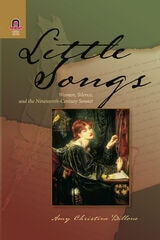
LITTLE SONGS
WOMEN, SILENCE, AND THE NINETEENTH-CENTURY SONNETAMY CHRISTINE BILLONE
The Ohio State University Press, 2002
LOST CAUSES
Historical Consciousness in Victorian LiteratureJason B. Jones
The Ohio State University Press, 2006
What if we didn’t always historicize when we read Victorian fiction?
Lost Causes shows that Victorian writers frequently appear to have a more supple and interesting understanding of the relationship between history, causality, and narrative than the one typically offered by readers who are burdened by the new historicism. As a return to these writers emphasizes, the press of modern historicism deforms Victorian novels, encouraging us to read deviations from strict historical accuracy as ideological bad faith. By contrast, Jason B. Jones argues through readings of works ranging from The French Revolution to Middlemarch that literature’s engagement with history has to be read otherwise.Perhaps perversely, Lost Causes suggests simultaneously that psychoanalysis speaks pressingly to the vexed relationship between history and narrative, and that the theory is neither a- nor anti-historical. Through his readings of Victorian fiction addressing the recent past, Jones finds in psychoanalysis not a set of truths, but rather a method for rhetorical reading, ultimately revealing how its troubled account of psychic causality can help us follow literary language’s representation of the real. Victorian narratives of the recent past and psychoanalytic interpretation share a fascination with effects that persist despite baffling, inexplicable, or absent causes.
In chapters focusing on Thomas Carlyle, Charles Dickens, Charlotte Brontë, and George Eliot, Lost Causes demonstrates that history can carry an ontological, as well as an epistemological, charge—one that suggests a condition of being in the world as well as a way of knowing the world as it really is. From this point of view, Victorian fiction that addresses the recent past is not a failed realism, as it is so frequently claimed, but rather an exploration of possibility in history.
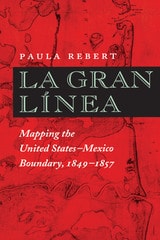
La Gran Línea
Mapping the United States–Mexico Boundary, 1849–1857By Paula Rebert
University of Texas Press, 2001
The Treaty of Guadalupe Hildalgo, which officially ended the U.S.-Mexican War in 1848, cost Mexico half its territory, while the United States gained land that became California, Nevada, Utah, Texas, and parts of Colorado, Arizona, and New Mexico. Because the new United States-Mexico border ran through territory that was still incompletely mapped, the treaty also called for government commissions from both nations to locate and mark the boundary on the ground. This book documents the accomplishments of both the U.S. and the Mexican Boundary Commissions that mapped the boundary between 1849 and 1857, as well as the fifty-four pairs of maps produced by their efforts and the ongoing importance of these historical maps in current boundary administration. Paula Rebert explores how, despite the efforts of both commissions to draw neutral, scientific maps, the actual maps that resulted from their efforts reflected the differing goals and outlooks of the two countries. She also traces how the differences between the U.S. and Mexican maps have had important consequences for the history of the boundary.
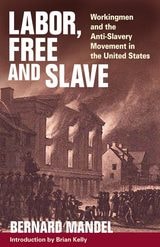
Labor, Free and Slave
Workingmen and the Anti-Slavery Movement in the United StatesBernard Mandel.Introduction by Brian Kelly
University of Illinois Press, 2006
Bernard Mandel's classic study provides a concise overview of the relationship between organized abolitionism and the fledgling labor movement in the period before the Civil War. Mandel argues that slavery reinforced the powerlessness of white workers North and South, and the racial divisions that it upheld rendered effective labor solidarity impossible. Deep distrust between abolitionists and the working classes, however, compelled Northern workers to find their own way into the antislavery ranks.
Laboring to Play
Home Entertainment and the Spectacle of Middle-Class Cultural Life, 1850-1920Melanie Dawson
University of Alabama Press, 2005
Where Leisure Became Labor and the Parlor Became a Stage for American Middle-Class Identity.
The changing styles of middle-class home entertainments, Melanie Dawson argues, point to evolving ideas of class identity in U.S. culture. Drawing from 19th- and early-20th-century fiction, guidebooks on leisure, newspaper columns, and a polemical examination of class structures, Laboring to Play interrogates the ways that leisure performances (such as parlor games, charades, home dramas, and tableaux vivants) encouraged participants to test out the boundaries that were beginning to define middle-class lifestyles.
From 19th-century parlor games involving grotesque physical contortions to early-20th-century recitations of an idealized past, leisure employments mediated between domestic and public spheres, individuals and class-based affiliations, and ideals of egalitarian social life and visible hierarchies based on privilege. Negotiating these paradigms, home entertainments provided their participants with unique ways of performing displays of individual ambitions within a world of polite social interaction.
Laboring to Play deals with subjects as wide ranging as social performances, social history (etiquette and gentility), literary history, representations of childhood, and the history of the book.
Ladies of the Canyons
A League of Extraordinary Women and Their Adventures in the American SouthwestLesley Poling-Kempes
University of Arizona Press, 2015
Educated, restless, and inquisitive, Natalie Curtis, Carol Stanley, Alice Klauber, and Mary Cabot Wheelwright were plucky, intrepid women whose lives were transformed in the first decades of the twentieth century by the people and the landscape of the American Southwest. Part of an influential circle of women that included Louisa Wade Wetherill, Alice Corbin Henderson, Mabel Dodge Luhan, Mary Austin, and Willa Cather, these ladies imagined and created a new home territory, a new society, and a new identity for themselves and for the women who would follow them.
Their adventures were shared with the likes of Theodore Roosevelt and Robert Henri, Edgar Hewett and Charles Lummis, Chief Tawakwaptiwa of the Hopi, and Hostiin Klah of the Navajo. Their journeys took them to Monument Valley and Rainbow Bridge, into Canyon de Chelly, and across the high mesas of the Hopi, down through the Grand Canyon, and over the red desert of the Four Corners, to the pueblos along the Rio Grande and the villages in the mountains between Santa Fe and Taos.
Although their stories converge in the outback of the American Southwest, the saga of Ladies of the Canyons is also the tale of Boston’s Brahmins, the Greenwich Village avant-garde, the birth of American modern art, and Santa Fe’s art and literary colony.
Ladies of the Canyons is the story of New Women stepping boldly into the New World of inconspicuous success, ambitious failure, and the personal challenges experienced by women and men during the emergence of the Modern Age.
Ladies' Pages
African American Women's Magazines and the Culture That Made ThemRooks, Noliwe M
Rutgers University Press, 2004
Beginning in the late nineteenth century, mainstream magazines established ideal images of white female culture, while comparable African American periodicals were cast among the shadows. Noliwe M. Rooks’s Ladies’ Pages sheds light on the most influential African American women’s magazines––Ringwood’s Afro-American Journal of Fashion, Half-Century Magazine for the Colored Homemaker, Tan Confessions, Essence, and O, the Oprah Magazine––and their little-known success in shaping the lives of black women.
Ladies’ Pages demonstrates how these rare and thought-provoking publications contributed to the development of African American culture and the ways in which they in turn reflect important historical changes in black communities. What African American women wore, bought, consumed, read, cooked, and did at home with their families were all fair game, and each of the magazines offered copious amounts of advice about what such choices could and did mean. At the same time, these periodicals helped African American women to find work and to develop a strong communications network. Rooks reveals in detail how these publications contributed to the concepts of black sexual identity, rape, migration, urbanization, fashion, domesticity, consumerism, and education. Her book is essential reading for everyone interested in the history and culture of African Americans.
Lake Methodism
Jasper Cragwall
The Ohio State University Press, 2013

Late Colonial Sublime
Neo-Epics and the End of RomanticismG. S. Sahota
Northwestern University Press, 2018
By bringing together distinct literary canons—both metropolitan and colonial, hegemonic and subaltern, Western and Eastern, all of which took shape upon the common realities of imperial capitalism—Late Colonial Sublime takes an original dialectical approach. It experiments with fragments, parallaxes, and constellational form to explore the aporias of modernity as well as the possible futures they may signal in our midst. A bold intervention into contemporary debates that synthesizes a wealth of sources, this book will interest readers and scholars in world literature, critical theory, postcolonial criticism, and South Asian studies.
Law and the Conditions of Freedom in the Nineteenth-Century United States
James Willard Hurst
University of Wisconsin Press, 1964
In these essays J. Willard Hurst shows the correlation between the conception of individual freedom and the application of law in the nineteenth-century United States—how individuals sought to use law to increase both their personal freedom and their opportunities for personal growth. These essays in jurisprudence and legal history are also a contribution to the study of social and intellectual history in the United States, to political science, and to economics as it concerns the role of public policy in our economy. The nonlawyer will find in them demonstration of how "technicalities" express deep issues of social values.

Law and the Conditions of Freedom in the Nineteenth-Century United States
J. Willard Hurst
University of Wisconsin Press, 1956
In these essays J. Willard Hurst shows the correlation between the conception of individual freedom and the application of law in the nineteenth-century United States—how individuals sought to use law to increase both their personal freedom and their opportunities for personal growth. These essays in jurisprudence and legal history are also a contribution to the study of social and intellectual history in the United States, to political science, and to economics as it concerns the role of public policy in our economy. The nonlawyer will find in them demonstration of how "technicalities" express deep issues of social values.

Lawless Liberators
Political Banditry and Cuban IndependenceRosalie Schwartz
Duke University Press, 1989
Manuel Garcia, a hero-villian of Cuban folklore to this day, was the most notorious of the brigand-patriots and led a gang that spread terror throughout Havana province, contributing to the breakdown of rural order that preceded full-scale rebellion in 1895. Lawless Liberators examines the origins, actions, and ends (often sudden and violent) of the bandit groups such as Garcia’s that paved the way for the revolution and offers a reasoned and balanced analysis of their role in those dramatic events.
Learned Patriots
Debating Science, State, and Society in the Nineteenth-Century Ottoman EmpireM. Alper Yalçinkaya
University of Chicago Press, 2015
In Learned Patriots, M. Alper Yalçinkaya examines what it meant for nineteenth-century Ottoman elites themselves to have a debate about science. Yalçinkaya finds that for anxious nineteenth-century Ottoman politicians, intellectuals, and litterateurs, the chief question was not about the meaning, merits, or dangers of science. Rather, what mattered were the qualities of the new “men of science.” Would young, ambitious men with scientific education be loyal to the state? Were they “proper” members of the community? Science, Yalçinkaya shows, became a topic that could hardly be discussed without reference to identity and morality.
Approaching science in culture, Learned Patriots contributes to the growing literature on how science travels, representations and public perception of science, science and religion, and science and morality. Additionally, it will appeal to students of the intellectual history of the Middle East and Turkish politics.
Leaving a Legacy
Lessons from the Writings of Daniel DrakePhilip Diller
University of Minnesota Press, 2019
Leaving a Legacy: Lessons from the Writings of Daniel Drake is a selective collection of excerpts from the vast writings from the nineteenth-century doctor and medical pioneer Daniel Drake. From Drake’s life, documented here in his own words from excerpts of lectures, personal journal entries, presentations, speeches, books, and letters to his children, readers learn about the scope of his accomplishments in medicine, contributions to his community, and dedication to his family. Diller goes beyond biography to contextualize Drake’s life choices and what made him a role model for today’s physicians. Diller selected one hundred and eighty thematically arranged excerpts, which he paired with original reflection questions to guide the reader through thought-provoking prompts. In doing so, Diller presents the lessons from Drake’s remarkable life and work as a guide for others who wish to build an enduring legacy.
Lee's Lost Dispatch and Other Civil War Controversies
Philip Leigh
Westholme Publishing, 2015
Which over-arching decisions made by the Confederacy or Union had a greater effect on the course of the war than generally thought? Were there lauded command changes that may not have been as beneficial as presumed? How intertwined were the business aspirations on both sides of the conflict and what role did disinformation play in key battles? In Lee’s Lost Dispatch and Other Civil War Controversies, New York Times “Disunion” contributor Philip Leigh presents twelve stories from these turbulent times that afford a better understanding of how the war unfolded and how it was fought. The stories range from the Union’s delayed introduction of repeating arms and why a commercial steamer and not a warship was sent to relieve Fort Sumter to how Robert E. Lee’s critical dispatch at the battle of Antietam may have been lost and whether Southern poverty is the most protracted legacy of the war. Written to promote discussion and debate, this volume will intrigue those who enjoy Civil War history and contemplating alternatives to many assumed conclusions.
Legal Spectatorship
Slavery and the Visual Culture of Domestic ViolenceKelli Moore
Duke University Press, 2022
Duke University Press Scholars of Color First Book Award recipient
Legislating the French Family
Feminism, Theater, and Republican Politics: 1870-1920Jean Elisabeth Pedersen
Rutgers University Press, 2003
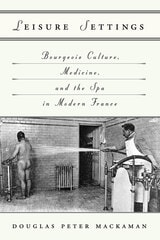
Leisure Settings
Bourgeois Culture, Medicine, and the Spa in Modern FranceDouglas P. Mackaman
University of Chicago Press, 1998
Taking us into the vibrant social world of France's great spas, Mackaman explores the links between class identity and vacationing. Mackaman shows how, after 1800, physicians and entrepreneurs zealously tried to break their milieu's strong association with aristocratic excess and indecency by promoting spas as a rational, ordered equivalent to the busy lives of the bourgeoisie. Rather than seeing leisure time as slothful, Mackaman argues, the bourgeoisie willingly became patients at spas and viewed this therapeutic vacation as a sensible, even productive, way of spending time. Mackaman analyzes this transformation, and ultimately shows how the premier vacation of an era made and was made by the bourgeoisie.

Les Icariens
THE UTOPIAN DREAM IN EUROPE AND AMERICARobert P. Sutton
University of Illinois Press, 1994

Lessons of Romanticism
A Critical CompanionThomas Pfau and Robert F. Gleckner, eds.
Duke University Press, 1998
With over twenty essays on such diverse topics as the aesthetic and pedagogical purposes of art exhibits in London, the materiality of late Romantic salon culture, the extracanonical status of Jane Austen and Fanny Burney, and Romantic imagery in Beethoven’s music and letters, Lessons of Romanticism reveals the practices that were at the heart of European Romantic life. Focusing on the six decades from 1780 to 1832, this collection is arranged thematically around gender and genre, literacy, marginalization, canonmaking, and nationalist ideology. As Americanists join with specialists in German culture, as Austen is explored beside Beethoven, and as discussions on newly recovered women’s writings follow fresh discoveries in long-canonized texts, these interdisciplinary essays not only reflect the broad reach of contemporary scholarship but also point to the long-neglected intertextual and intercultural dynamics in the various and changing faces of Romanticism itself.
Contributors. Steven Bruhm, Miranda J. Burgess, Joel Faflak, David S. Ferris, William Galperin, Regina Hewitt, Jill Heydt-Stevenson, H. J. Jackson, Theresa M. Kelley, Greg Kucich, C. S. Matheson, Adela Pinch, Marc Redfield, Nancy L. Rosenblum, Marlon B. Ross, Maynard Solomon, Richard G. Swartz, Nanora Sweet, Joseph Viscomi, Karen A. Weisman, Susan I. Wolfson
Let Something Good Be Said
Speeches and Writings of Frances E. WillardFrances E. Willard. Edited by Carolyn De Swarte Gifford and Amy R. Slagell
University of Illinois Press, 2007
Celebrated as the most famous woman in America at the time of her death in 1898, Frances E. Willard was a leading nineteenth-century American temperance and women's rights reformer and a powerful orator. President of Evanston College for Ladies (before it merged with Northwestern University) and then professor of rhetoric and aesthetics and the first dean of women at Northwestern, Willard is best known for leading the Woman's Christian Temperance Union (WCTU), America's largest women's organization. The WCTU shaped both domestic and international opinion on major political, economic, and social reform issues, including temperance, women's rights, and the rising labor movement. In what Willard regarded as her most important and far-reaching reform, she championed a new ideal of a powerful, independent womanhood and encouraged women to become active agents of social change. Willard's reputation as a powerful reformer reached its height with her election as president of the National Council of Women in 1888.
This definitive collection follows Willard's public reform career, providing primary documents as well as the historical context necessary to clearly demonstrate her skill as a speaker and writer who addressed audiences as diverse as political conventions, national women's organizations, teen girls, state legislators, church groups, and temperance advocates. Including Willard's representative speeches and published writings on everything from temperance and women's rights to the new labor movement and Christian socialism, Let Something Good Be Said is the first volume to collect the messages of one of America's most important social reformers who inspired a generation of women to activism.
Liberalism and Empire
A Study in Nineteenth-Century British Liberal ThoughtUday Singh Mehta
University of Chicago Press, 1999
Ironically, it is in the conservative Edmund Burke—a severe critic of Britain's arrogant, paternalistic colonial expansion—that Mehta finds an alternative and more capacious liberal vision. Shedding light on a fundamental tension in liberal theory, Liberalism and Empire reaches beyond post-colonial studies to revise our conception of the grand liberal tradition and the conception of experience with which it is associated.
Liberalism and the Culture of Security
The Nineteenth-Century Rhetoric of ReformKatherine Henry
University of Alabama Press, 2011
Rethinking the language of liberty, protection, and citizenship in nineteenth-century America.
Figures of protection and security are everywhere in American public discourse, from the protection of privacy or civil liberties to the protection of marriage or the unborn, and from social security to homeland security. Liberalism and the Culture of Security traces a crucial paradox in historical and contemporary notions of citizenship: in a liberal democratic culture that imagines its citizens as self-reliant, autonomous, and inviolable, the truth is that claims for citizenship—particularly for marginalized groups such as women and slaves—have just as often been made in the name of vulnerability and helplessness.
Katherine Henry traces this turn back to the eighteenth-century opposition of liberty and tyranny, which imagined our liberties as being in danger of violation by the forces of tyranny and thus in need of protection. She examines four particular instances of this rhetorical pattern. The first chapters show how women’s rights and antislavery activists in the antebellum era exploited the contradictions that arose from the liberal promise of a protected citizenry: first by focusing primarily on arguments over slavery in the 1850s that invoke the Declaration of Independence, including Harriet Beecher Stowe’s fiction and Frederick Douglass’s “Fourth of July” speech; and next by examining Angelina Grimké’s brief but intense antislavery speaking career in the 1830s.
New conditions after the Civil War and Emancipation changed the way arguments about civic inclusion and exclusion could be advanced. Henry considers the issue of African American citizenship in the 1880s and 1890s, focusing on the mainstream white Southern debate over segregation and the specter of a tyrannical federal government, and then turning to Frances E. W. Harper’s fictional account of African American citizenship in Iola Leroy. Finally, Henry examines Henry James’s 1886 novel The Bostonians, in which arguments over the appropriate role of women and the proper place of the South in post–Civil War America are played out as a contest between Olive Chancellor and Basil ransom for control over the voice of the eloquent girl Verena Tarrant.
Liberals under Autocracy
Modernization and Civil Society in Russia, 1866–1904Anton A. Fedyashin
University of Wisconsin Press, 2012
With its rocky transition to democracy, post-Soviet Russia has made observers wonder whether a moderating liberalism could ever succeed in such a land of extremes. But in Liberals under Autocracy, Anton A. Fedyashin looks back at the vibrant Russian liberalism that flourished in the country’s late imperial era, chronicling its contributions to the evolution of Russia’s rich literary culture, socioeconomic thinking, and civil society.
For five decades prior to the revolutions of 1917, The Herald of Europe (Vestnik Evropy) was the flagship journal of Russian liberalism, garnering a large readership. The journal articulated a distinctively Russian liberal agenda, one that encouraged social and economic modernization and civic participation through local self-government units (zemstvos) that defended individual rights and interests—especially those of the peasantry—in the face of increasing industrialization. Through the efforts of four men who turned The Herald into a cultural nexus in the imperial capital of St. Petersburg, the publication catalyzed the growing influence of journal culture and its formative effects on Russian politics and society.
Challenging deep-seated assumptions about Russia’s intellectual history, Fedyashin’s work casts the country’s nascent liberalism as a distinctly Russian blend of self-governance, populism, and other national, cultural traditions. As such, the book stands as a contribution to the growing literature on imperial Russia's nonrevolutionary, intellectual movements that emphasized the role of local politics in both successful modernization and the evolution of civil society in an extraparliamentary environment.
Liberating Language
Sites of Rhetorical Education in Nineteenth-Century Black AmericaShirley Wilson Logan
Southern Illinois University Press, 2008
Liberating Language identifies experiences of nineteenth-century African Americans—categorized as sites of rhetorical education—that provided opportunities to develop effective communication and critical text-interpretation skills. Author Shirley Wilson Logan considers how nontraditional sites, which seldom involved formal training in rhetorical instruction, proved to be effective resources for African American advancement.
Logan traces the ways that African Americans learned lessons in rhetoric through language-based activities associated with black survival in nineteenth-century America, such as working in political organizations, reading and publishing newspapers, maintaining diaries, and participating in literary societies. According to Logan, rhetorical training was manifested through places of worship and military camps, self-education in oratory and elocution, literary societies, and the black press. She draws on the experiences of various black rhetors of the era, such as
Frederick Douglass, Frances Harper, Fanny Coppin, Charles Chesnutt, Ida B. Wells, and the lesser-known Oberlin-educated Mary Virginia Montgomery, Virginia slave preacher "Uncle Jack," and former slave "Mrs. Lee."
Liberating Language addresses free-floating literacy, a term coined by scholar and writer Ralph Ellison, which captures the many settings where literacy and rhetorical skills were acquired and developed, including slave missions, religious gatherings, war camps, and even cigar factories. In Civil War camp- sites, for instance, black soldiers learned to read and write, corresponded with the editors of black newspapers, edited their own camp-based papers, and formed literary associations.
Liberating Language outlines nontraditional means of acquiring rhetorical skills and demonstrates how African Americans, faced with the lingering consequences of enslavement and continuing oppression, acquired rhetorical competence during the late eighteenth century and throughout the nineteenth century.
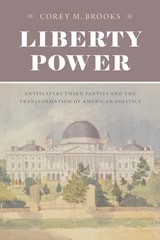
Liberty Power
Antislavery Third Parties and the Transformation of American PoliticsCorey M. Brooks
University of Chicago Press, 2015
As Corey M. Brooks explains, abolitionist trailblazers who organized first the Liberty Party and later the more moderate Free Soil Party confronted formidable opposition from a two-party system expressly constructed to suppress disputes over slavery. Identifying the Whigs and Democrats as the mainstays of the southern Slave Power’s national supremacy, savvy abolitionists insisted that only a party independent of slaveholder influence could wrest the federal government from its grip. A series of shrewd electoral, lobbying, and legislative tactics enabled these antislavery third parties to wield influence far beyond their numbers. In the process, these parties transformed the national political debate and laid the groundwork for the success of the Republican Party and the end of American slavery.
Libidinal Currents
Sexuality and the Shaping of ModernismJoseph Allen Boone
University of Chicago Press, 1997
Challenging overarching theories of the novel by carefully mapping the historical contexts that have influenced modern experimental narratives, Boone constructs a model for interpreting sexuality that reaches from Freud's theory of the libidinal instincts to Foucault's theory of sexual discourse. The most ambitious study yet written on the links between literary modernity and the psychology of sex, Boone's Libidinal Currents will be a landmark book in the study of modernist fiction, gay studies/queer theory, feminist criticism, and studies in sexuality and gender.
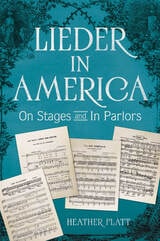
Lieder in America
On Stages and In ParlorsHeather Platt
University of Illinois Press, 2023
Though viewed as quintessentially German, lieder became a centerpiece of nineteenth century song recitals in the United States. By the 1890s, these songs, which were often sung in English, were a sensation among tutored and untutored music lovers alike. Heather Platt examines the varied supporters and singers who both established the lied as a concert repertoire and shaped a new kind of recital dedicated to art songs. Lieder were embraced and spread by performers like Max Heinrich and advocates like John Sullivan Dwight, as well as by the women’s clubs that flourished nationwide. At the same time as examining the critical reception of the artists and songs, Platt reveals ways in which US recital programs anticipated trends in European recitals. She also places lieder against the backdrop of the time, when factors like the growth in the sheet music industry, the evolution of American art song, and emerging anti-German feeling had a profound impact on the genre’s popularity.

Life at Swift Water Place
Northwest Alaska at the Threshold of European ContactEdited by Doug D. Anderson and Wanni W. Anderson
University of Alaska Press, 2019
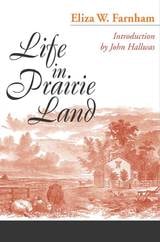
Life in Prairie Land
Eliza W. Farnham
University of Illinois Press, 1988
Life in Prairie Land is a complex portrait of the midwestern wilderness during the 1830s--beautiful and ugly, beneficent and threatening. Farnham's vivid recreation of her experiences on the Illinois frontier offers a realistic depiction of the harsh pioneer lifestyle as well as a romantic view of an Edenic landscape.
Life in Prairie Land includes descriptions of Farnham's encounters with early settlers and Native Americans, her eye-opening experiences with birth and death, the flora and fauna that surrounded her, and the developing towns she passed through in her travels. Farnham's years on the Illinois frontier showed her the possibilities of a less restrictive society and planted the seeds that would later grow into firmly held and eloquently expressed views on women's equality.
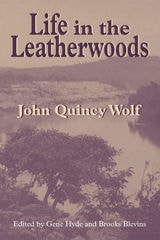
Life in the Leatherwoods
New EditionJohn Quincy Wolf
University of Arkansas Press, 2000
Originally published by Memphis State University Press in 1974, this new edition includes additional writings of John Q. Wolf and a continuation of the autobiographical narrative after his 1887 move to Batesville. Wolf’s writings are valuable resources for southern historians, folklorists, general readers, and scholars of Ozarkiana because they provide a rare glimpse into the social and family life of a largely misunderstood and stereotyped people—the independent hill farmers of the Arkansas Ozarks of the 1870s and 1880s. With Life in the Leatherwoods, Wolf bestows a benediction upon a society that existed vibrantly and humorously in his memory—one that has now forever disappeared from the American countryside.
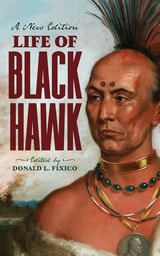
Life of Black Hawk
A New EditionDonald L. Fixico
Westholme Publishing, 2026
Born in 1767 at Saukenuk on the Rock River in western Illinois, Black Hawk of the Sauk and Fox Nation rose from young warrior to fierce defender of his people as the United States pushed relentlessly westward. His autobiography, originally dictated in 1833, is one of the earliest Native American life narratives recorded: a warrior’s unfiltered account of betrayal, resistance, and the patriotic fight to protect his homeland. In 1832, Black Hawk led his people to reclaim Saukenuk. Settlers had destroyed their homes and crops and illegally occupied their land that had been recognized as Sauk and Fox by treaty. After winning the first two battles against the U.S. military and volunteer militia in Wisconsin, Black Hawk’s band lost the final one at Bad Axe. Black Hawk’s people were forced to accept permanent removal to the west, and he became a prisoner of war at the Fort Jefferson barracks near St. Louis. It was there that he dictated his autobiography to an interpreter.
Introduced and edited by historian Donald L. Fixico, this new edition of Life of Black Hawk brings fresh context and cultural depth to Black Hawk’s words, illuminating the Sauk and Fox worldview, the sacred traditions of the Thunder Clan, and the spiritual life that shaped this remarkable leader. Black Hawk's account conveys what it was like to be a Sauk warrior in the early 1800s. He explains the Medicine Way of his people and how the traditional worldview of Black Hawk was quickly changing from a harmonious relationship with nature to unavoidable frontier hostilities with an expanding United States. You feel the frustrating dilemma of Black Hawk, who knows that defending his people and fighting to save his homeland is morally right. Timely, intimate, and essential, this volume is both a vivid window into the Indigenous experience on the frontier and a testament to a man who stands alongside the great Native patriots. For readers of Native American history, military history, and American biography, this is an extraordinary story that has never been more important to hear.

Life of Henry David Thoreau
Henry S. SaltEdited by George Hendrick, Willene Hendrick, and Fritz Oehlschlaeger
University of Illinois Press, 1993
In 1890 Salt published the initial version of Thoreau's Life. With the help of American friends, he revised the book and published it anew six years later. The present volume is the third version of the biography, completed in 1908 but never published in Salt's lifetime.
Combining a concise narrative of Thoreau's life with a perceptive treatment of his ideas and writings, it stands as a penetrating study of Thoreau, stressing his distinctive individuality. Through an astute analysis of the text and a concise biography, the editors illustrate Salt's growth as a scholar and his changing views on Thoreau and Thoreau's philosophy.
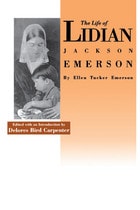
Life of Lidian Jackson Emerson
Delores Bird Carpenter
Michigan State University Press, 2012

Life of the Marlows
A True Story of Frontier Life of Early DaysWilliam Rathmell
University of North Texas Press, 2004

Life, Death, and Archaeology at Fort Blue Mounds
A Settlers’ Fortification of the Black Hawk WarRobert A. Birmingham
Wisconsin Historical Society Press, 2012
Life, Death, and Archaeology at Fort Blue Mounds is an archaeological detective story illuminating the lives of white settlers in the lead-mining region during the tragic events of the historically important conflict known as the Black Hawk War.
Focusing on the strategically located Fort Blue Mounds in southwestern Wisconsin, Robert A. Birmingham summarizes the 1832 conflict and details the history of the fort, which played a major role not only in U.S. military and militia operations but also in the lives of the white settlers who sought refuge there. Birmingham then transports us to the site decades later, when he and fellow Wisconsin Historical Society archaeologists and dedicated volunteers began their search for the fort. The artifacts they unearthed provide fascinating—and sometimes surprising—insights into the life, material culture, and even the food of the frontier.
Recommended for readers interested in the Black Hawk War, frontier life, Native American history, military history, and archaeology, Life, Death, and Archaeology at Fort Blue Mounds is grounded by a sense of place and the discovery of what a careful examination of our surroundings can tell us about the past.
Lift Every Voice
African American Oratory, 1787-1901Philip S. Foner
University of Alabama Press, 1997
The essential collection of African American voices that shaped the struggle for freedom, equality, and citizenship.
Lift Every Voice is a completely revised, updated, and expanded version of Philip Foner's 1972 classic Voice of Black America, which Library Journal hailed as "indispensable.""This well-edited and
richly inclusive work," wrote Benjamin Quarles, "unveils the full sweep of Black expression as found in platform addresses" by "men and women who join eloquence with reason in articulating their
grievances and their aspirations and in arousing their listeners with their ringing and prophetic challenges." This new collection includes over 60 additional texts and revised and expanded introductory essays that provide historical, biographical, and critical information for each speech.
For Americans of the 19th century, as W. E. B. Du Bois observed, eloquent speeches were 'the shining lights of civilization' that both expressed and sought to improve the lives and communities from which they sprang. Through political speeches, sermons, lectures, oral testimonies, and ceremonial addresses, African Americans offered diverse responses to the issues and events of their times, including not only slavery and racial equality but also women's rights, education, religion, immigration, socialism, war, Indian policy, and labor organization, among others. The speeches in this
collection are among the most powerful expressions of African American opinions on these issues and were delivered on occasions and before audiences where the speakers believed their words might be transformative.
Containing more than 150 speeches, this anthology represents the most extensive and diverse collection of African American oratory of the 18th and 19th centuries ever published. Lift Every Voice makes readily accessible not only the classic orations of such well-known figures as Frederick Douglass, Sojourner Truth, and Booker T. Washington but also dozens of lesser-known but important speeches deserving greater recognition and study. Many of these speeches are previously unpublished, uncollected, or long out of print.

Like Wine Through Water
A NovelKathleen Hill
Northwestern University Press, 2027
A pivotal summer in the life of Maria Branwell, the mother of the Brontë sisters
In imagined diary entries from the summer of 1812, twenty-nine-year-old Maria Branwell is pondering a momentous choice. Far from her Cornish home, working with her aunt and uncle at their Methodist boys’ school on the moors of Yorkshire, she has just been introduced to the Irish clergyman Patrick Brontë. The two are powerfully drawn to one another, resulting in a proposal Maria accepts wholeheartedly—yet reservations begin to surface. From her earliest years she has felt marked by an uncommon destiny, one she had assumed incompatible with an ordinary life of marriage and children. Does marriage fit into that destiny? Or is there a different path to take? The choice of this woman forgotten by history will alter the course of literature forever.
Lincoln Looks West
From the Mississippi to the PacificEdited by Richard W. Etulain
Southern Illinois University Press, 2010
This first-ever volume to comprehensively explore President Abraham Lincoln’s ties to the American West brings together a variety of scholars and experts who offer a fascinating look at the sixteenth president’s lasting legacy in the territory beyond the Mississippi River. Editor Richard W. Etulain’s extensive introductory essay treats these western connections from Lincoln’s early reactions to Texas, Oregon, and the Mexican War in the 1840s, through the 1850s, and during his presidency, providing a framework for the nine essays that follow.
Each of these essays offers compelling insight into the many facets of Lincoln’s often complex interactions with the American West. Included in this collection are a provocative examination of Lincoln’s opposition to the Mexican War; a discussion of the president’s antislavery politics as applied to the new arena of the West; new perspectives on Lincoln’s views regarding the Thirteenth Amendment and his reluctance regarding the admission of Nevada to the Union; a fresh look at the impact of the Radical Republicans on Lincoln’s patronage and appointments in the West; and discussion of Lincoln’s favorable treatment of New Mexico and Arizona, primarily Southern and Democratic areas, in an effort to garner their loyalty to the Union. Also analyzed is “The Tribe of Abraham”—Lincoln’s less-than-competent appointments in Washington Territory made on the basis of political friendship—and the ways in which Lincoln’s political friends in the Western Territories influenced his western policies. Other essays look at Lincoln’s dealings with the Mormons of Utah, who supported the president in exchange for his tolerance, and American Indians, whose relations with the government suffered as the president’s attention was consumed by the crisis of the Civil War.
In addition to these illuminating discussions, Etulain includes a detailed bibliographical essay, complete with examinations of previous interpretations and topics needing further research, as well as an extensive list of resources for more information on Lincoln's ties west of the Mississippi. Loaded with a wealth of information and fresh historical perspectives, Lincoln Looks West explores yet another intriguing dimension to this dynamic leader and to the history of the American West.
Contributors:
Richard W. Etulain
Michael S. Green
Robert W. Johannsen
Deren Earl Kellogg
Mark E. Neely Jr.
David A. Nichols
Earl S. Pomeroy
Larry Schweikart
Vincent G. Tegeder
Paul M. Zall
Lincoln and Citizenship
Mark E. Steiner
Southern Illinois University Press, 2021
At its most basic level, citizenship is about who belongs to a political community, and for Abraham Lincoln in nineteenth-century America, the answer was in flux. The concept of “fellow citizens,” for Lincoln, encompassed different groups at different times. In this first book focused on the topic, Mark E. Steiner analyzes and contextualizes Lincoln’s evolving views about citizenship over the course of his political career.
As an Illinois state legislator, Lincoln subscribed to the by-then-outmoded belief that suffrage must be limited to those who met certain obligations to the state. He rejected the adherence to universal white male suffrage that had existed in Illinois since statehood. In 1836 Lincoln called for voting rights to be limited to white people who had served in the militia or paid taxes. Surprisingly, Lincoln did not exclude women, though later he did not advocate giving women the right to vote and did not take women seriously as citizens. The women at his rallies, he believed, served as decoration.
For years Lincoln presumed that only white men belonged in the political and civic community, and he saw immigration through this lens. Because Lincoln believed that white male European immigrants had a right to be part of the body politic, he opposed measures to lengthen the time they would have to wait to become a citizen or to be able to vote. Unlike many in the antebellum north, Lincoln rejected xenophobia and nativism. He opposed black citizenship, however, as he made clear in his debates with Stephen Douglas. Lincoln supported Illinois’s draconian Black Laws, which prohibited free black men from voting and serving on juries or in the militia. Further, Lincoln supported sending free black Americans to Africa—the ultimate repudiation and an antithesis of citizenship.
Yet, as president, Lincoln came to embrace a broader vision of citizenship for African Americans. Steiner establishes how Lincoln’s meetings at the White House with Frederick Douglass and other black leaders influenced his beliefs about colonization, which he ultimately disavowed, and citizenship for African Americans, which he began to consider. Further, the battlefield success of black Union soldiers revealed to Lincoln that black men were worthy of citizenship. Lincoln publicly called for limited suffrage among black men, including military veterans, in his speech about Reconstruction on April 11, 1865. Ahead of most others of his era, Lincoln showed just before his assassination that he supported rights of citizenship for at least some African Americans.
Lincoln and Congress
William C. Harris
Southern Illinois University Press, 2017
In Lincoln and Congress, William C. Harris reveals that the relationship between the president and Congress, though sometimes contentious, was cooperative rather than adversarial. During his time as president, Abraham Lincoln embodied his personal conviction that the nation’s executive should not interfere with the work of the legislature, and though often critical of him privately, in public congressional leaders compromised with and assisted the president to unite the North and minimize opposition to the war.
Despite the turbulence of the era and the consequent tensions within the government, the executive and legislative branches showed restraint in their dealings with each other. In fact, except in his official messages to Congress, Lincoln rarely lobbied for congressional action, and he vetoed only one important measure during his tenure as president. Many congressmen from Lincoln’s own party, although publicly supportive, doubted his leadership and sought a larger role for Congress in setting war policies. Though they controlled Congress, Republican legislators frequently differed among themselves in shaping legislation and in their reactions to events as well as in their relationships both with each other and with the president. Harris draws intriguing sketches of nineteenth-century congressional leaders and shows that, contrary to what historians have traditionally concluded, radical Republicans such as Representative Thaddeus Stevens and Senator Charles Sumner did not dominate their party or Congress. Harris includes the minority party’s role, showing that Northern Democrats and conservative Unionists of the border states generally opposed Republican policies but worked with them on support for the troops and on nonwar issues like the Pacific Railroad Bill.
Lincoln and Congress sheds new light on the influence of members of Congress and their relationship with Lincoln on divisive issues such as military affairs, finance, slavery, constitutional rights, reconstruction, and Northern political developments. Enjoyable both for casual Civil War readers and professional historians, this book provides an engaging narrative that helps readers redefine and understand the political partnership that helped the Union survive.
Lincoln and Emancipation
Edna Greene Medford
Southern Illinois University Press, 2015
In this succinct study, Edna Greene Medford examines the ideas and events that shaped President Lincoln’s responses to slavery, following the arc of his ideological development from the beginning of the Civil War, when he aimed to pursue a course of noninterference, to his championing of slavery’s destruction before the conflict ended. Throughout, Medford juxtaposes the president’s motivations for advocating freedom with the aspirations of African Americans themselves, restoring African Americans to the center of the story about the struggle for their own liberation.
Lincoln and African Americans, Medford argues, approached emancipation differently, with the president moving slowly and cautiously in order to save the Union while the enslaved and their supporters pressed more urgently for an end to slavery. Despite the differences, an undeclared partnership existed between the president and slaves that led to both preservation of the Union and freedom for those in bondage. Medford chronicles Lincoln’s transition from advocating gradual abolition to campaigning for immediate emancipation for the majority of the enslaved, a change effected by the military and by the efforts of African Americans. The author argues that many players—including the abolitionists and Radical Republicans, War Democrats, and black men and women—participated in the drama through agitation, military support of the Union, and destruction of the institution from within. Medford also addresses differences in the interpretation of freedom: Lincoln and most Americans defined it as the destruction of slavery, but African Americans understood the term to involve equality and full inclusion into American society. An epilogue considers Lincoln’s death, African American efforts to honor him, and the president’s legacy at home and abroad.
Both enslaved and free black people, Medford demonstrates, were fervent participants in the emancipation effort, showing an eagerness to get on with the business of freedom long before the president or the North did. By including African American voices in the emancipation narrative, this insightful volume offers a fresh and welcome perspective on Lincoln’s America.
Lincoln and Medicine
Glenna R. Schroeder-Lein
Southern Illinois University Press, 2012
Since his assassination in 1865, Lincoln has been diagnosed with no less than seventeen conditions by doctors, historians, and researchers, including congestive heart failure, epilepsy, Marfan syndrome, and mercury poisoning. Schroeder-Lein offers objective scrutiny of the numerous speculations and medical mysteries that continue to be associated with the president’s physical and mental health, from the recent interest in testing Lincoln’s DNA and theories that he was homosexual, to analysis of the deep depressions, accidents, and illnesses that plagued his early years. Set within the broader context of the prevailing medical knowledge and remedies of the era, Lincoln and Medicine takes into account new perspectives on the medical history of Abraham Lincoln and his family, offering an absorbing and informative view into a much-mythologized, yet underinvestigated, dimension of one of the nation’s most famous leaders.
Best of the Best by the Univeristy Press Books for Public and Secondary School Libraries, 2013
Lincoln and Native Americans
Michael S. Green
Southern Illinois University Press, 2021
First exploration of Lincoln’s relationship with the Native population in more than four decades
President Abraham Lincoln ordered the largest mass execution of Indigenous people in American history, following the 1862 uprising of hungry Dakota in Minnesota and suspiciously speedy trials. He also issued the largest commutation of executions in American history for the same act. But there is much more to the story of Lincoln’s interactions and involvement, personal and political, with Native Americans, as Michael S. Green shows. His evenhanded assessment explains how Lincoln thought about Native Americans, interacted with them, and was affected by them.
Although ignorant of Native customs, Lincoln revealed none of the hatred or single-minded opposition to Native culture that animated other leaders and some of his own political and military officials. Lincoln did far too little to ease the problems afflicting Indigenous people at the time, but he also expressed more sympathy for their situation than most other politicians of the day. Still, he was not what those who wanted legitimate improvements in the lives of Native Americans would have liked him to be.
At best, Lincoln’s record is mixed. He served in the Black Hawk War against tribes who were combating white encroachment. Later he supported policies that exacerbated the situation. Finally, he led the United States in a war that culminated in expanding white settlement. Although as president, Lincoln paid less attention to Native Americans than he did to African Americans and the Civil War, the Indigenous population received considerably more attention from him than previous historians have revealed.
In addition to focusing on Lincoln’s personal and familial experiences, such as the death of his paternal grandfather at the hands of Indians, Green enhances our understanding of federal policies toward Native Americans before and during the Civil War and how Lincoln’s decisions affected what came after the war. His patronage appointments shaped Indian affairs, and his plans for the West would also have vast consequences. Green weighs Lincoln’s impact on the lives of Native Americans and imagines what might have happened if Lincoln had lived past the war’s end. More than any many other historians, Green delves into Lincoln’s racial views about people of color who were not African American.
Lincoln and Race
Richard Striner
Southern Illinois University Press, 2012
Named on the 2013 list of University Press Books for Public and Secondary Schools
Abraham Lincoln is known as the Great Emancipator, yet his personal views on race have long been debated. Since his death, his legend has been shadowed by the mystery of his true stance toward non-whites. While Lincoln took many actions to fight slavery throughout his political career, his famously crafted speeches can be interpreted in different ways: at times his words suggest personal bigotry, but at other times he sounds like an enemy of racists. In Lincoln and Race, Richard Striner takes on one of the most sensitive subjects of Abraham Lincoln’s legacy, exploring in depth Lincoln’s mixed record and writings on the issue of race.
Striner gives fair hearing to two prevailing theories about Lincoln’s seemingly contradictory words and actions: Did Lincoln fight a long-term struggle to overcome his personal racism? Or were his racist comments a calculated act of political deception? Beginning with an exploration of the historical context of Lincoln’s attitudes toward race in the years before his presidency, Striner details the ambiguity surrounding the politician’s participation in the Free Soil Movement and his fight to keep slavery from expanding into the West. He explores Lincoln’s espousal of colonization—the controversial idea that freed slaves should be resettled in a foreign land—as a voluntary measure for black people who found the prospect attractive. The author analyzes some of Lincoln’s most racially charged speeches and details Lincoln’s presidential words and policies on race and the hotbed issue of voting rights for African Americans during the last years of the president’s life.
A brief but comprehensive look into one of the most contentious quandaries about Abraham Lincoln, Lincoln and Race invites readers to delve into the mind, heart, and motives of one of America’s most fascinating and complex leaders.
University Press Books for Public and Secondary Schools 2013 edition
Lincoln and Reconstruction
John C. Rodrigue
Southern Illinois University Press, 2013
Although Abraham Lincoln dominates the literature on the American Civil War, he remains less commonly associated with reconstruction. Previous scholarly works touch on Lincoln and reconstruction, but they tend either to speculate on what Lincoln might have done after the war had he not been assassinated or to approach his reconstruction plans merely as a means of winning the war. In this thought-provoking study, John C. Rodrigue offers a succinct but significant survey of Lincoln’s wartime reconstruction initiatives while providing a fresh interpretation of the president’s plans for postwar America.
Revealing that Lincoln concerned himself with reconstruction from the earliest days of his presidency, Rodrigue details how Lincoln’s initiatives unfolded, especially in the southern states where they were attempted. He explores Lincoln’s approach to various issues relevant to reconstruction, including slavery, race, citizenship, and democracy; his dealings with Congressional Republicans, especially the Radicals; his support for and eventual abandonment of colonization; his dealings with the border states; his handling of the calls for negotiations with the Confederacy as a way of reconstructing the Union; and his move toward emancipation and its implications for his approach to reconstruction.
As the Civil War progressed, Rodrigue shows, Lincoln’s definition of reconstruction transformed from the mere restoration of the seceded states to a more fundamental social, economic, and political reordering of southern society and of the Union itself. Based on Lincoln’s own words and writings as well as an extensive array of secondary literature, Rodrigue traces the evolution of Lincoln’s thinking on reconstruction, providing new insight into a downplayed aspect of his presidency.
Lincoln and Religion
Ferenc Morton Szasz with Margaret Connell Szasz
Southern Illinois University Press, 2014
Abraham Lincoln’s faith has commanded more broad-based attention than that of any other American president. Although he never joined a denomination, Baptists, Presbyterians, Quakers, Episcopalians, Disciples of Christ, Spiritualists, Jews, and even atheists claim the sixteenth president as one of their own. In this concise volume, Ferenc Morton Szasz and Margaret Connell Szasz offer both an accessible survey of the development of Lincoln’s religious views and an informative launch pad for further academic inquiry. A singular key to Lincoln’s personality, especially during the presidential years, rests with his evolving faith perspective.
After surveying Lincoln’s early childhood as a Hard-Shell Baptist in Kentucky and Indiana, the authors chronicle his move from skepticism to participation in Episcopal circles during his years in Springfield, and, finally, after the death of son Eddie, to Presbyterianism. They explore Lincoln’s relationship with the nation’s faiths as president, the impact of his son Willie’s death, his adaptation of Puritan covenant theory to a nation at war, the role of prayer during his presidency, and changes in his faith as reflected in the Emancipation Proclamation and his state papers and addresses. Finally, they evaluate Lincoln’s legacy as the central figure of America’s civil religion, an image sharpened by his prominent position in American currency.
A closing essay by Richard W. Etulain traces the historiographical currents in the literature on Lincoln and religion, and the volume concludes with a compilation of Lincoln’s own words about religion.
In assessing the enigma of Lincoln’s Christianity, the authors argue that despite his lack of church membership, Lincoln lived his life through a Christian ethical framework. His years as president, dominated by the Civil War and personal loss, led Lincoln to move into a world beholden to Providence.
Lincoln and the Abolitionists
Stanley Harrold
Southern Illinois University Press, 2018
Abraham Lincoln has often been called the “Great Emancipator.” But he was not among those Americans who, decades before the Civil War, favored immediate emancipation of all slaves inside the United States. Those who did were the abolitionists—the men and women who sought freedom and equal rights for all African Americans. Stanley Harrold traces how, despite Lincoln’s political distance from abolitionists, they influenced his evolving political orientation before and during the Civil War.
While explaining how the abolitionist movement evolved, Harrold also clarifies Lincoln’s connections with and his separation from this often fiery group. For most of his life Lincoln regarded abolitionists as dangerous fanatics. Like many northerners during his time, Lincoln sought compromise with the white South regarding slavery, opposed abolitionist radicalism, and doubted that free black people could have a positive role in America. Yet, during the 1840s and 1850s, conservative northern Democrats as well as slaveholders branded Lincoln an abolitionist because of his sympathy toward black people and opposition to the expansion of slavery.
Lincoln’s election to the presidency and the onslaught of the Civil War led to a transformation of his relationship with abolitionists. Lincoln’s original priority as president had been to preserve the Union, not to destroy slavery. Nevertheless many factors—including contacts with abolitionists—led Lincoln to favor ending slavery. After Lincoln issued the Emancipation Proclamation in 1863 and raised black troops, many, though not all, abolitionists came to view him more favorably.
Providing insight into the stressful, evolving relationship between Lincoln and the abolitionists, and also into the complexities of northern politics, society, and culture during the Civil War era, this concise volume illuminates a central concern in Lincoln’s life and presidency.
Lincoln and the American Founding
Lucas E. Morel
Southern Illinois University Press, 2020
In this persuasive work of intellectual history, Lucas E. Morel argues that the most important influence on Abraham Lincoln’s political thought and practice was what he learned from the leading figures of and documents from the birth of the United States. In this systematic account of those principles, Morel compellingly demonstrates that to know Lincoln well is to understand thoroughly the founding of America.
With each chapter describing a particular influence, Morel leads readers from the Founding Father, George Washington; to the founding documents, the Declaration of Independence and Constitution; to the founding compromise over slavery; and finally to a consideration of how the original intentions of the Founding Fathers should be respected in light of experience, progress, and improvements over time. Within these key discussions, Morel shows that without the ideals of the American Revolution, Lincoln’s most famous speeches would be unrecognizable, and the character of the nation would have lost its foundation on the universal principles of human equality, individual liberty, and government by the consent of the governed.
Lincoln thought that the principles of human equality and individual rights could provide common ground for a diverse people to live as one nation and that some old things, such as the political ideals of the American founding, were worth preserving. He urged Americans to be vigilant in maintaining the institutions of self-government and to exercise and safeguard the benefits of freedom for future generations. Morel posits that adopting the way of thinking and speaking Lincoln advocated, based on the country’s founding, could help mend our current polarized discourse and direct the American people to employ their common government on behalf of a truly common good.