Results by title
8642 books match the query '20th century' and 251 start with l

LAKE EFFECTS
HISTORY OF URBAN POLICY MAKING IN CLEVELRONALD R WEINER
The Ohio State University Press, 2005
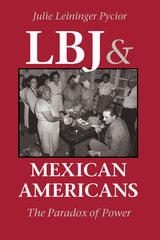
LBJ and Mexican Americans
The Paradox of PowerBy Julie Leininger Pycior
University of Texas Press, 1997
T. R. Fehrenbach Award, 1997
As he worked to build his Great Society, Lyndon Johnson often harkened back to his teaching days in the segregated "Mexican" school at Cotulla, Texas. Recalling the poverty and prejudice that blighted his students' lives, Johnson declared, "It never occurred to me in my fondest dreams that I might have the chance to help the sons and daughters of those students and to help people like them all over this country. But now I do have that chance—and I'll let you in on a secret—I mean to use it."
This book explores the complex and sometimes contradictory relations between LBJ and Mexican Americans. Julie Pycior shows that Johnson's genuine desire to help Mexican Americans—and reap the political dividends—did not prevent him from allying himself with individuals and groups intent on thwarting Mexican Americans' organizing efforts. Not surprisingly, these actions elicited a wide range of response, from grateful loyalty to, in some cases, outright opposition. Mexican Americans' complicated relationship with LBJ influenced both their political development and his career with consequences that reverberated in society at large.
LBJ and Vietnam
A Different Kind of WarBy George C. Herring
University of Texas Press, 1994
Decades later, the Vietnam War remains a divisive memory for American society. Partisans on all sides still debate why the war was fought, how it could have been better fought, and whether it could have been won at all.
In this major study, a noted expert on the war brings a needed objectivity to these debates by examining dispassionately how and why President Lyndon Johnson and his administration conducted the war as they did. Drawing on a wealth of newly released documents from the LBJ Library, including the Tom Johnson notes from the influential Tuesday Lunch Group, George Herring discusses the concept of limited war and how it affected President Johnson's decision making, Johnson's relations with his military commanders, the administration's pacification program of 1965-1967, the management of public opinion, and the "fighting while negotiating" strategy pursued after the Tet Offensive in 1968.
The author's in-depth analysis exposes numerous flaws in Johnson's management of the war. In Herring's view, the Johnson administration lacked any overall strategy for conducting the war. No change in approach was ever discussed, despite popular and even administration dissatisfaction with the progress of the war, and no oversight committee coordinated the activities of the military services and various governmental agencies, which were left to follow their own, often conflicting, agendas.
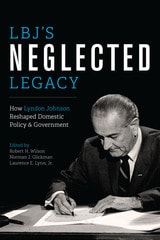
LBJ's Neglected Legacy
How Lyndon Johnson Reshaped Domestic Policy and GovernmentEdited by Robert H. Wilson, Norman J. Glickman, and Laurence E. Lynn, Jr.
University of Texas Press, 2015
During the five full years of his presidency (1964–1968), Lyndon Johnson initiated a breathtaking array of domestic policies and programs, including such landmarks as the Civil Rights Act, Head Start, Food Stamps, Medicare and Medicaid, the Immigration Reform Act, the Water Quality Act, the Voting Rights Act, Social Security reform, and Fair Housing. These and other “Great Society” programs reformed the federal government, reshaped intergovernmental relations, extended the federal government’s role into new public policy arenas, and redefined federally protected rights of individuals to engage in the public sphere. Indeed, to a remarkable but largely unnoticed degree,Johnson’s domestic agenda continues to shape and influence current debates on major issues such as immigration, health care, higher education funding, voting rights, and clean water, even though many of his specific policies and programs have been modified or, in some cases, dismantled since his presidency.
LBJ’s Neglected Legacy examines the domestic policy achievements of one of America’s most effective, albeit controversial, leaders. Leading contributors from the fields of history, public administration, economics, environmental engineering, sociology, and urban planning examine twelve of LBJ’s key domestic accomplishments in the areas of citizenship and immigration, social and economic policy, science and technology, and public management. Their findings illustrate the enduring legacy of Johnson’s determination and skill in taking advantage of overwhelming political support in the early years of his presidency to push through an extremely ambitious and innovative legislative agenda, and emphasize the extraordinary range and extent of LBJ’s influence on American public policy and administration.
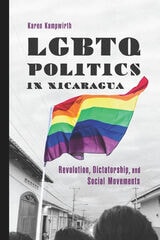
LGBTQ Politics in Nicaragua
Revolution, Dictatorship, and Social MovementsKaren Kampwirth
University of Arizona Press, 2022
Karen Kampwirth is a renowned scholar of the Nicaraguan Revolution, who has been writing at the intersection of gender and politics for decades. In this chronological telling of the last fifty years of political history in Nicaragua, Kampwirth deploys a critical new lens: understanding politics from the perspective of the country’s LGBTQ community. Kampwirth details the gay and lesbian guerrillas in the 1960s and 1970s, Nicaragua’s first openly gay television wizard in the 1980s, and the attempts by LGBTQ revolutionaries to create a civil rights movement and the subsequent squashing of that movement by the ruling Sandinista party. She analyzes the shifting political alliances, the rise of strong feminist and LGBTQ movements in Nicaragua, and the attempts by the administration of Daniel Ortega to co-opt and control these movements.
Ultimately, this is a story of struggle and defeat, progress and joy. This timely book provides a well-documented review of LGBTQ politics in modern Nicaragua, helping us to see the Sandinista Revolution and its ongoing aftermath in a new light.
La Gente
Struggles for Empowerment and Community Self-Determination in SacramentoLorena V. Márquez
University of Arizona Press, 2020
Though diverse in their cultural and generational backgrounds, la gente were constantly negotiating acts of resistance, especially when their lives, the lives of their children, their livelihoods, or their households were at risk. Historian Lorena V. Márquez documents early community interventions to challenge the prevailing notions of desegregation by barrio residents, providing a look at one of the first cases of outright resistance to desegregation efforts by ethnic Mexicans. She also shares the story of workers in the Sacramento area who initiated and won the first legal victory against canneries for discriminating against brown and black workers and women, and demonstrates how the community crossed ethnic barriers when it established the first accredited Chicana/o and Native American community college in the nation.
Márquez shows that the Chicana/o Movement was not solely limited to a handful of organizations or charismatic leaders. Rather, it encouraged those that were the most marginalized—the working poor, immigrants and/or the undocumented, and the undereducated—to fight for their rights on the premise that they too were contributing and deserving members of society.
La Grande Italia
The Rise and Fall of the Myth of the Nation in the Twentieth CenturyEmilio Gentile
University of Wisconsin Press, 2008
Gentile’s definition of “Italians” encompasses the whole range of political, cultural, and social actors: Liberals and Catholics, Monarchists and Republicans, Fascists and Socialists. La Grande Italia presents a sweeping study of the development of Italian national identity in all its incarnations throughout the twentieth century. This important contribution to the study of modern Italian nationalism and the ambition to achieve a “great Italy” between the unification of Italy and the advent of the Italian Republic will appeal to anyone interested in modern European history, Fascism, and nationalism.
Best Books for Special Interests, selected by the American Association of School Librarians, and Best Books for Regional General Interests, selected by the Public Library Association
La Raza Cosmética
Beauty, Identity, and Settler Colonialism in Postrevolutionary MexicoNatasha Varner
University of Arizona Press, 2020
Critically examining beauty pageants, cinema, tourism propaganda, photography, murals, and more, Natasha Varner shows how postrevolutionary understandings of mexicanidad were fundamentally structured by legacies of colonialism, as well as shifting ideas about race, place, and gender. This interdisciplinary study smartly weaves together cultural history, Indigenous and settler colonial studies, film and popular culture analysis, and environmental and urban history. It also traces a range of Indigenous interventions in order to disrupt top-down understandings of national identity construction and to “people” this history with voices that have all too often been entirely ignored.

Lab Dog
What Global Science Owes American BeaglesBrad Bolman
University of Chicago Press, 2025
Intrepid, docile, and cloaked in coats of white, black, and tan, beagles were one of the most popular breeds in the United States in the twentieth century. From Snoopy to dog shows, many Americans loved and identified with beagles. But during the same period, as scientists searched for a standard research dog, beagles emerged as something else: an ideal animal for laboratory experimentation.
In Lab Dog, historian Brad Bolman explains how the laboratory dog became a subject of intense focus for twentieth-century scientists and charts the beagle’s surprising trajectory through global science. Following beagles as they moved from eugenics to radiobiology, pharmaceutical testing to Alzheimer’s studies, Lab Dog sheds new light on pivotal stories of twentieth-century science, including the Manhattan Project, tobacco controversies, contraceptive testing, and behavioral genetics research. Bolman shows how these experiments shaped our understanding of dogs as intelligent companions who deserve moral protection and socialization—and in some cases, daily medication. Compelling and accessible, Lab Dog tells the thorny story of the participation of beagles in science, including both their sacrifices and their contributions, and offers a glimpse into the future of animal experimentation.
Labor Histories
Class, Politics, and the Working-Class ExperienceEdited by Eric Arnesen, Julie Greene, and Bruce Laurie
University of Illinois Press, 1998
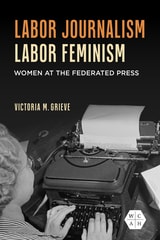
Labor Journalism, Labor Feminism
Women at the Federated PressVictoria M. Grieve
University of Illinois Press, 2026
These journalists wrote women into labor news by shedding light on essential issues like the need for equal pay and an end to discrimination. Their work increased women’s visibility in unions and the workforce while revealing that not only class but gender and race shaped their on-the-job experiences. Grieve also examines labor feminism within the larger stories of links between the Old Left and New Left and the FP’s pioneering role in articulating early iterations of intersectional feminism.
A compelling portrait of four women and a movement, Labor Journalism, Labor Feminism looks at an essential labor press organization and profiles politically active, leftist women who created relationships, established networks, and worked for social change.
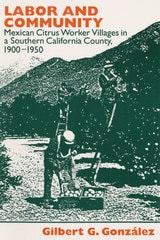
Labor and Community
Mexican Citrus Worker Villages in a Southern California County, 1900-1950Gilbert G. González
University of Illinois Press, 1994

Labor and Democracy in Namibia, 1971–1996
Gretchen Bauer
Ohio University Press, 1998
In this compelling study of labor and nationalism during and after Namibia's struggle for liberation, Gretchen Bauer addresses the very difficult task of consolidating democracy in an independent Namibia. Labor and Democracy in Namibia, 1971-1996 argues that a vibrant and autonomous civil society is crucial to the consolidation of new democracies, and it identifies trade unions, in particular, as especially important organizations of civil society. In Namibia, however, trade unions have emerged from the liberation struggle and the first years of independence in a weakened state. Dr. Bauer gives a lucid explanation for this phenomenon by tracing the origins and evolution of the trade unions in Namibia and discusses the implications thereof for the future of democracy in Namibia.
Based on material not widely available before independence in 1990, this study takes a critical look at the nationalist movement in Namibia. Through the use of dozens of interviews with political leaders, trade unionists, community activists, and others, Bauer offers the controversial suggestion that there are many within the nationalist movement (now the ruling party in government) who would rather not see a strong trade union movement (or any other potential rival) emerge in independent Namibia.
Labor and the Chinese Revolution
Class Strategies and Contradictions of Chinese Communism, 1928–1948S. Bernard Thomas
University of Michigan Press, 1983
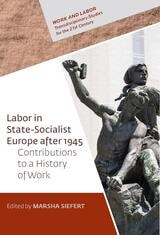
Labor in State-Socialist Europe, 1945–1989
Contributions to a History of WorkMarsha Siefert
Central European University Press, 2020
Labor regimes under communism in East-Central Europe were complex, shifting, and ambiguous. This collection of sixteen essays offers new conceptual and empirical ways to understand their history from the end of World War II to 1989, and to think about how their experiences relate to debates about labor history, both European and global.
The authors reconsider the history of state socialism by re-examining the policies and problems of communist regimes and recovering the voices of the workers who built them. The contributors look at work and workers in Albania, Bulgaria, Czechoslovakia, the German Democratic Republic, Hungary, Poland, Romania, and Yugoslavia. They explore the often contentious relationship between politics and labor policy, dealing with diverse topics including workers’ safety and risks; labor rights and protests; working women’s politics and professions; migrant workers and social welfare; attempts to control workers’ behavior and stem unemployment; and cases of incomplete, compromised, or even abandoned processes of proletarianization. Workers are presented as active agents in resisting and supporting changes in labor policies, in choosing allegiances, and in defining the very nature of work.
Labor'S War At Home
The Cio In World War IiNelson Lichtenstein
Temple University Press, 2003
Labor's End
How the Promise of Automation Degraded WorkJason Resnikoff
University of Illinois Press, 2022
A forceful intellectual history, Labor's End challenges entrenched assumptions about automation's transformation of the American workplace.
Labor's Mind
A History of Working-Class Intellectual LifeTobias Higbie
University of Illinois Press, 2019
Labor's Outcasts
Migrant Farmworkers and Unions in North America, 1934-1966Andrew J. Hazelton
University of Illinois Press, 2022
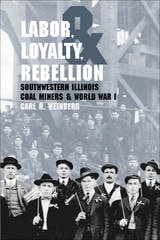
Labor, Loyalty, and Rebellion
Southwestern Illinois Coal Miners & World War ICarl R. Weinberg
Southern Illinois University Press, 2005
On April 5, 1918, as American troops fought German forces on the Western Front, German American coal miner Robert Prager was hanged from a tree outside Collinsville, Illinois, having been accused of disloyal utterances about the United States and chased out of town by a mob. In Labor, Loyalty, and Rebellion: Southwestern Illinois Coal Miners and World War I, Carl R. Weinberg offers a new perspective on the Prager lynching and confronts the widely accepted belief among labor historians that workers benefited from demonstrating loyalty to the nation.
The first published study of wartime strikes in southwestern Illinois is a powerful look at a group of people whose labor was essential to the war economy but whose instincts for class solidarity spawned a rebellion against mine owners both during and after the war. At the same time, their patriotism wreaked violent working-class disunity that crested in the brutal murder of an immigrant worker. Weinberg argues that the heightened patriotism of the Prager lynching masked deep class tensions within the mining communities of southwestern Illinois that exploded after the Great War ended.
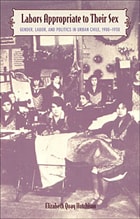
Labors Appropriate to Their Sex
Gender, Labor, and Politics in Urban Chile, 1900–1930Elizabeth Quay Hutchison
Duke University Press, 2001
In addition to population and industrial censuses, Hutchison culls published and archival sources to illuminate such misconceptions and to reveal how women’s paid labor became a locus of anxiety for a society confronting social problems—both real and imagined—that were linked to industrialization and modernization. The limited options of working women were viewed by politicians, elite women, industrialists, and labor organizers as indicative of a society in crisis, she claims, yet their struggles were also viewed as the potential springboard for reform. Labors Appropriate to Their Sex thus demonstrates how changing norms concerning gender and work were central factors in conditioning the behavior of both male and female workers, relations between capital and labor, and political change and reform in Chile.
Labour's Civil Wars
How Infighting has Kept the Left from Power (and What Can Be Done About It)Patrick Diamond and Giles Radice
Haus Publishing, 2023
The biblical adage that “if a house be divided against itself, that house cannot stand” remains sound theological advice. It is also essential counsel for any political party that aspires to win elections. When a party is riven with division, the public does not know what it stands for. Though both major UK parties have been subject to internal conflict over the years, the Labour Party has been more prone to damaging splits. The divide exposed by the Corbyn insurgency is only the most recent example in almost a century of destructive infighting. Indeed, it has often seemed as though Labour has been more adept at fighting itself than in defeating the Tory party. This book examines the history of Labour’s civil wars and the underlying causes of the party’s schisms, from the first split of 1931, engineered by Ramsay MacDonald, to the ongoing battle for the future between the incumbent, Keir Starmer, and those who fundamentally altered the party’s course under his predecessor, Jeremy Corbyn.
Lacan in Public
Psychoanalysis and the Science of RhetoricChristian Lundberg
University of Alabama Press, 2012
Lacan in Public argues that Lacan’s contributions to the theory of rhetoric are substantial and revolutionary and that rhetoric is, in fact, the central concern of Lacan’s entire body of work.
Lacan’s conception of rhetoric, Christian Lundberg argues in Lacan in Public, upsets and extends the received wisdom of American rhetorical studies—that rhetoric is a science, rather than an art; that rhetoric is predicated not on the reciprocal exchange of meanings, but rather on the impossibility of such an exchange; and that rhetoric never achieves a correspondence with the real-world circumstances it attempts to describe.
As Lundberg shows, Lacan’s work speaks directly to conversations at the center of current rhetorical scholarship, including debates regarding the nature of the public and public discourses, the materiality of rhetoric and agency, and the contours of a theory of persuasion.
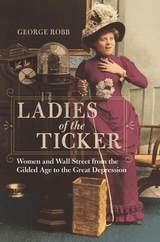
Ladies of the Ticker
Women and Wall Street from the Gilded Age to the Great DepressionGeorge Robb
University of Illinois Press, 2017
George Robb’s pioneering study explores the financial methods, accomplishments, and careers of three generations of women. Plumbing sources from stock brokers’ ledgers to media coverage, Robb reveals the many ways women invested their capital while exploring their differing sources of information, approaches to finance, interactions with markets, and levels of expertise. He also rediscovers the forgotten women bankers, brokers, and speculators who blazed new trails--and sparked public outcries over women’s unsuitability for the predatory rough-and-tumble of market capitalism.
Entertaining and vivid with details, Ladies of the Ticker sheds light on the trailblazers who transformed Wall Street into a place for women’s work.
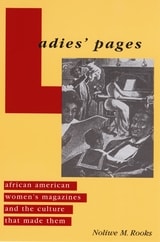
Ladies' Pages
African American Women's Magazines and the Culture That Made ThemRooks, Noliwe M
Rutgers University Press, 2004
Beginning in the late nineteenth century, mainstream magazines established ideal images of white female culture, while comparable African American periodicals were cast among the shadows. Noliwe M. Rooks’s Ladies’ Pages sheds light on the most influential African American women’s magazines––Ringwood’s Afro-American Journal of Fashion, Half-Century Magazine for the Colored Homemaker, Tan Confessions, Essence, and O, the Oprah Magazine––and their little-known success in shaping the lives of black women.
Ladies’ Pages demonstrates how these rare and thought-provoking publications contributed to the development of African American culture and the ways in which they in turn reflect important historical changes in black communities. What African American women wore, bought, consumed, read, cooked, and did at home with their families were all fair game, and each of the magazines offered copious amounts of advice about what such choices could and did mean. At the same time, these periodicals helped African American women to find work and to develop a strong communications network. Rooks reveals in detail how these publications contributed to the concepts of black sexual identity, rape, migration, urbanization, fashion, domesticity, consumerism, and education. Her book is essential reading for everyone interested in the history and culture of African Americans.

Lady Daredevils
American Women and Early AviationBarbara Ganson
University of Illinois Press, 2026
Women aviators challenged social norms that considered them inept with machinery and incapable of handling early flight’s very real dangers. Ganson follows how the New Woman ethos of freedom of movement and career inspired engagement with aviation. Despite resistance, women pushed limits by setting records for speed, altitude, distance, and endurance. The fashions of airwomen, meanwhile, reflected changing attitudes of women toward traditional roles and the pursuit of their career aspirations.
Informed by interviews and rare archival information, Lady Daredevils tells the stories of the pioneering women of early aviation history and reveals their dynamic interactions with social and technological change.

Lady Dicks and Lesbian Brothers
Staging the Unimaginable at the WOW Café TheatreKate Davy
University of Michigan Press, 2010
"A rich and detailed picture of a particular historical moment that has now passed . . . I found myself immersed in the world of the East Village theatre scene and its connections to the larger world of feminism, theatre, and politics. Davy's long-standing association with this world pays off handsomely---it is impossible to imagine that anyone could write a more informative portrait."
---Charlotte Canning, University of Texas at Austin
"After hosting two annual international women's performance festivals in 1980 and '81, Peggy Shaw, Lois Weaver, and comrades put on such extravaganzas as the Freudian Slip party and the Debutante Ball (a coming-out party if ever there was one) to raise the first several months' rent for a narrow vestibule on East 11th Street, where they could keep the creativity going year-round. There, on a stage no bigger than a queen-sized mattress, . . . artists honed their craft, giving birth to a celebratory feminist-and-tinsel-tinged queer aesthetic. By the mid '80s . . . the rent quadrupled, and WOW moved to a city-owned building on East 4th Street, where it has flourished ever since, presenting hundreds---if not thousands---of plays, solo shows, concerts, dance pieces, cabarets, and sundry performances that defy classification."
---Alisa Solomon, Village Voice
Out of a small, hand-to-mouth, women's theater collective called the WOW Café located on the lower east side of Manhattan, there emerged some of the most important theater troupes and performance artists of the 1980s and 1990s, including the Split Britches Company, the Five Lesbian Brothers, Carmelita Tropicana, Holly Hughes, Lisa Kron, Deb Margolin, Reno, Peggy Shaw, and Lois Weaver. The WOW (Women's One World) Café Theatre appeared on the cultural scene at a critical turning point in both the women's movement and feminist theory, putting a witty, hilarious, gender-bending and erotically charged aesthetic on the stage for women in general and lesbians in particular.
The storefront that became the WOW Café Theatre saw dozens of excitingly original and enormously funny performances created, performed, and turned over at lightning speed---a kind of "hit and run" theater. As the demands on the space increased, the women behind WOW organized as a collective and moved their theater to an abandoned doll factory where it continues to operate today. For three decades the WOW Café has nurtured fledgling women writers, designers, and performers who continue to create important performance work.
Lady Dicks and Lesbian Brothers provides a critical history of this avant-garde venture whose ongoing "system of anarchy" has been largely responsible for its thirty-year staying power, after dozens of other women's theaters have collapsed. WOW artists were creating a wholly original cultural landscape across which women could represent themselves on their own terms. Parody, cross-dressing, zany comedy, and an unbridled eroticism are hallmarks of WOW's aesthetic, combined---importantly and powerfully---with a presumptive address to the audience as if everyone onstage, in the audience, and in the world is lesbian. Author Kate Davy's extensive research included in-depth interviews with WOW veterans; newspaper reviews of the earliest productions; and rare, unpublished photographs. The book also includes a chronology of productions that have highlighted WOW's performance schedule since the early '80s.
Kate Davy is currently Provost and Vice Chancellor for Academic Affairs at the University of Michigan-Dearborn. Her previous books include Richard Foreman: Plays and Manifestos and Richard Foreman and the Ontological-Hysteric Theatre.

Lake Song
A Novel in StoriesLesley Pratt Bannatyne
The Ohio State University Press, 2025
Selected by Deesha Philyaw as winner of the AWP Grace Paley Prize in Short Fiction
Shortlisted, 2026 Massachusetts Book Award, Fiction Category
The linked stories of Lake Song, set in the fictional town of Kinder Falls in New York’s Finger Lakes region, span decades to plumb the complexities, violence, and compassion of small-town life as the twentieth century hurtles forward. Against a backdrop of historical events—bootlegging, Klan attacks, gold smuggling, the Albany Ketchup Murders, the 1965 Northeast blackout—a generations-long mystery unwinds. In 1906 Mavis Staunch drowns in Okisee Lake days after she refuses to sell her land to a trio of brothers. The same night, one of the brothers, Angus Epps, doesn’t come home. Few suspect the two events are connected, and no one imagines the role that a ten-year-old boy, a canoe, and a pack of coyotes play in the tragedies. Spiritualists, grifters, sugar makers, arsonists, seekers, and saleswomen wind through each other’s lives and across decades to add layers of resonance to each captivating story. The mercurial lake that unites the people of Kinder Falls sustains as much as it haunts, both witness and diary.
Lakota Hoops
Life and Basketball on Pine Ridge Indian ReservationAlan Klein
Rutgers University Press, 2020
In Lakota Hoops, anthropologist Alan Klein trains his experienced eye on the ways that Lakota traditions find a seamless expression in the sport. In a variety of way such as weaving time-honored religious practices into the game or extending the warrior spirit of Crazy Horse to the players on the court, basketball has become a preferred way of finding continuity with the past. But the game is also well suited to the present and has become the largest regular gathering for all Lakota, promoting national pride as well as a venue for the community to creatively and aggressively confront white bigotry when needed.
Richly researched and filled with interviews with Pine Ridge residents, including both male and female players, Lakota Hoops offers a compelling look at the highs and lows of a community that has made basketball its own.
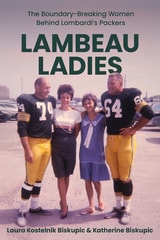
Lambeau Ladies
The Boundary-Breaking Women Behind Lombardi’s PackersLaura Kostelnik Biskupic
Wisconsin Historical Society Press, 2026
A book for anyone who thinks they know everything there is to know about the Green Bay Packers!
Long before NFL players had teams of trainers, nutritionists, therapists, agents, and other specialists, the dynastic Green Bay Packers of the 1960s relied on a different kind of support staff: their wives. In Lambeau Ladies, mother and daughter Laura Kostelnik Biskupic and Katherine Biskupic tell the remarkable, largely untold story of the women who helped to keep the Lombardi-era Packers performing at a championship level. From preparing game-day sandwiches, nursing injuries, and reviewing game film to managing households, hosting social gatherings, and providing emotional strength to their spouses, these women were a driving force behind one of the greatest teams in football history.
Through intimate interviews and vivid storytelling, the authors bring to life the experiences of Cherry Starr, Vicky Aldridge, Barbara Gregg, Ruth Pitts, Peggy Kostelnik, and many other wives who formed deep friendships and carved out lives of meaning far from their hometowns, often in the face of social and racial barriers. With humor and candor, they describe making ends meet on modest salaries, feeding hungry young players who wandered into their kitchens, boosting their husbands’ confidence, and coming up with ingenious strategies for staying warm—and stylish—on the sidelines during Green Bay’s frigid winters.
Their stories reach far beyond football. Some of these women helped integrate Green Bay during the civil rights movement. One became one of the district’s first Black teachers; another was half of one of the NFL’s first interracial marriages. Others made contributions in their own singular ways—fostering children, launching a business and a community organization, becoming a voice in local media. And at the center of it all was Marie Lombardi, the coach’s wife and the de facto mentor of the entire wives’ cohort, whose influence extended from locker-room culture to community life.
Lambeau Ladies paints a rich portrait of midcentury Green Bay—a place where championship football, small-town rhythms, and national social change converged—and reveals how the Packers’ dynasty was shaped as much in living rooms, kitchens, and carpool lanes as on the frozen turf of Lambeau Field.
Warm, funny, and deeply inspiring, Lambeau Ladies celebrates the extraordinary women who helped build a dynasty—and, in the process, changed their town, their team, and each other.
Lamentation for 77,297 Victims
Jirí Weil
Karolinum Press, 2020
So begins Jiří Weil’s unforgettable prose poem, Lamentation for 77, 297 Victims, his literary monument to the Czech Jews killed during the Holocaust. A Czech-Jewish writer who worked at Prague’s Jewish Museum both during and after the Nazi Occupation—he survived the Holocaust by faking his own death and hiding out until the war had ended—Weil wrote Lamentation while he served as the museum’s senior librarian in the 1950s. This remarkable literary experiment presents a number of innovative approaches to writing about a horror many would deem indescribable, combining a narrative account of the Shoah with newspaper-style reportage on a handful of the lives ended by the Holocaust and quotes from the Hebrew Bible to create a specific and powerful portrait of loss and remembrance. Translated by David Lightfoot, Lamentation for 77,297 Victims is a startling and singular introduction to a writer whose works have been acclaimed by Philip Roth, Michiko Kakutani, and Siri Hustvedt.
Land Beyond
A MemoirJack Ives
University of Alaska Press, 2010
Geographer Jack Ives moved to Canada in 1954, and soon after he played an instrumental role in the establishment of the McGill Sub-Arctic Research Laboratory in central Labrador-Ungava. This fascinating account of his fifty-plus years living and working in the arctic is simultaneously a light-hearted, winning memoir and a call to action on the issues of environmental awareness and conservation that are inextricably intertwined with life in the north. Mixing personal impressions of key figures of the postwar scientific boom with the intellectual drama of field research, The Land Beyond is a memorable depiction of a life in science.
Land and Desire in Early Zionism
Boaz Neumann
Brandeis University Press, 2011
Land of Hope
Chicago, Black Southerners, and the Great MigrationJames R. Grossman
University of Chicago Press, 1989
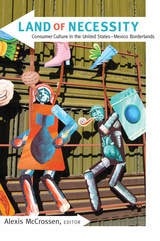
Land of Necessity
Consumer Culture in the United States–Mexico BorderlandsAlexis McCrossen, ed.
Duke University Press, 2009
In Land of Necessity, historians and anthropologists unravel the interplay of the national and transnational and of scarcity and abundance in the region split by the 1,969-mile boundary line dividing Mexico and the United States. This richly illustrated volume, with more than 100 images including maps, photographs, and advertisements, explores the convergence of broad demographic, economic, political, cultural, and transnational developments resulting in various forms of consumer culture in the borderlands. Though its importance is uncontestable, the role of necessity in consumer culture has rarely been explored. Indeed, it has been argued that where necessity reigns, consumer culture is anemic. This volume demonstrates otherwise. In doing so, it sheds new light on the history of the U.S.-Mexico borderlands, while also opening up similar terrain for scholarly inquiry into consumer culture.
The volume opens with two chapters that detail the historical trajectories of consumer culture and the borderlands. In the subsequent chapters, contributors take up subjects including smuggling, tourist districts and resorts, purchasing power, and living standards. Others address home décor, housing, urban development, and commercial real estate, while still others consider the circulation of cinematic images, contraband, used cars, and clothing. Several contributors discuss the movement of people across borders, within cities, and in retail spaces. In the two afterwords, scholars reflect on the U.S.-Mexico borderlands as a particular site of trade in labor, land, leisure, and commodities, while also musing about consumer culture as a place of complex political and economic negotiations. Through its focus on the borderlands, this volume provides valuable insight into the historical and contemporary aspects of the big “isms” shaping modern life: capitalism, nationalism, transnationalism, globalism, and, without a doubt, consumerism.
Contributors. Josef Barton, Peter S. Cahn, Howard Campbell, Lawrence Culver, Amy S. Greenberg, Josiah McC. Heyman, Sarah Hill, Alexis McCrossen, Robert Perez, Laura Isabel Serna, Rachel St. John, Mauricio Tenorio-Trillo, Evan R. Ward
Land of Opportunity
One Family's Quest for the American Dream in the Age of CrackWilliam M. Adler
University of Michigan Press, 2021
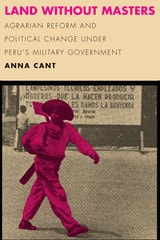
Land without Masters
Agrarian Reform and Political Change under Peru's Military GovernmentBy Anna Cant
University of Texas Press, 2021
In 1969, Juan Velasco Alvarado’s military government began an ambitious land reform program in Peru, transferring holdings from large estates to peasant cooperatives. Fifty years later this reform remains controversial: critics claim it unjustly expropriated land and ruined the Peruvian economy, while supporters emphasize its success in addressing rural inequality and exploitation.
Moving beyond agricultural policy to offer a fresh perspective on the agrarian reform, Land without Masters shows how ideological assumptions and state interventions surrounding the reform transformed Peru’s political culture and social fabric. Drawing on fieldwork in three different regions, Anna Cant shows how the government adapted its discourse and interventions to the local context while using the reform as a platform for nation-building. This comparative approach reveals how local actors shaped the regional impact of the agrarian reform and highlights the new forms of agency that emerged, including that of marginalized peasants who helped forge a new social, cultural, and political landscape.
Making novel use of both visual and cultural sources, this book is a fascinating look at how the agrarian reform process permanently altered the relationship between rural citizens and the national government—and how it continues to resonate in Peruvian politics today.
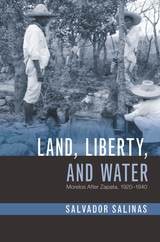
Land, Liberty, and Water
Morelos After Zapata, 1920–1940Salvador Salinas
University of Arizona Press, 2018
Salvador Salinas takes readers inside the diverse pueblos of the former Zapatistas during the 1920s and 1930s and recounts the first statewide land reform carried out in postrevolutionary Mexico. Based on extensive archival research, he reveals how an alliance with the national government that began in 1920 stimulated the revival of rural communities after ten years of warfare and helped once-landless villagers reclaim Morelos’s valley soils, forested mountains, and abundant irrigation waters.
During the presidency of Plutarco Elías Calles (1924–1928), pueblos forged closer ties to the centralized government in Mexico City through a plethora of new national institutions, such as ejidos, forestry cooperatives, water juntas, credit societies, and primary schools. At the same time, the expansion of charcoal production in the Sierra de Ajusco and rice cultivation in the lowland valleys accelerated deforestation and intensified water conflicts.
Salinas recounts how the federal reforms embraced by the countryside aided the revival of the pueblos, and in return, villagers repeatedly came to the defense of an embattled national regime. Salinas gives readers interested in modern Mexico, the Zapatista revolution, and environmental history a deeply researched analysis of the outcomes of the nation’s most famous revolutionary insurgency.

Landing Platform Dock Intrepid
Jantinus Mulder
Amsterdam University Press, 2024

Landscape for a Good Woman
A Story of Two LivesCarolyn Kay Steedman
Rutgers University Press, 1987
This book is about lives lived out on the borderlands, lives for which the central interpretative devices of the culture don't quite work. It has a childhood at its centre - my childhood, a personal past - and it is about the disruption of that fifties childhood by the one my mother had lived out before me, and the stories she told about it.'
Intricate and inspiring, this unusual book uses autobiographical elements to depict a mother and her daughter and two working-class childhoods (Burnley in the 1920s, South London in the 1950s) and to find a place for their stories in history and politics, in psychoanalysis and feminism.
'Provocative and quite dazzling in its ambitions. . . Beautifully written, intellectually compelling'.' Judith Walkowitz
--From 500 Great Books by Women; review by Jesse Larsen.

Landscape of Modernity
Essays on New York City, 1900-1940David Ward
Russell Sage Foundation, 1992
Landscape with Smokestacks
The Case of the Allegedly Plundered DegasHoward J. Treinens
Northwestern University Press, 2000
Langston Hughes and the Blues
Steven C. Tracy
University of Illinois Press, 2024

Las Raras
Feminine Style, Intellectual Networks, and Women Writers during Spanish-American ModernismoSarah Moody
Vanderbilt University Press, 2024
Premio al Mejor Libro en Humanidades, Latin American Studies Association–Nineteenth-Century Section, 2025
Premio Victoria Urbano de Monografía Crítica, Association of Gender and Sexuality Studies, 2025 (co-winner)
Segundo Premio, Adela Zamudio Prize, Feministas Unidas, 2025
Las Raras proposes that the Modernistas’ advocacy for a writing style they considered feminine helps us to understand why so few (and perhaps no) women were accepted as active participants in Modernismo. Author Sarah Moody studies how particular writers contributed to the idea of a feminine aesthetic and tracks the intellectual networks of Modernismo through periodicals and personal papers, such as albums and correspondence. Buenos Aires, Paris, and Montevideo figure prominently in this transatlantic study, which reexamines some of the most important period writers in Spanish, including Rubén Darío, Amado Nervo, and Enrique Gómez Carrillo.
This book also considers the critiques launched by women writers, such as Aurora Cáceres, Clorinda Matto de Turner, and María Eugenia Vaz Ferreira, who experienced Modernista exclusion firsthand, deconstructed the Modernista discourse of a modern, “feminine” style, and built literary success in alternative terms. These writers reoriented the discussion about women in modernity to address women’s education, professionalization, and advocacy for social and civic improvements. In this study, Modernismo emerges as both a literary style and an intellectual network, in which style and sociability are mutually determining and combine to form a system of prestige and validation that excluded women writers.
Last Days of Theresienstadt
Eva Noack-Mosse; Translated by Skye Doney and Biruté Ciplijauskaité
University of Wisconsin Press, 2018
Noack-Mosse's aim in documenting the horrors of daily life within Theresienstadt was to ensure that such a catastrophe could never be repeated. She also gathered from surviving inmates information about earlier events within the walled fortress, witnessed the defeat and departure of the Nazis, saw the arrival of the International Red Cross and the Soviet Army takeover of the camp and town, assisted in administration of the camp's closure, and aided displaced persons in discovering the fates of their family and friends. After the war ended, and she returned home, Noack-Mosse cross-referenced her data with that of others to provide evidence of Nazi crimes. At least 35,000 people died at Theresienstadt and another 90,000 were sent on to death camps.

Last Gangster in Austin
Frank Smith, Ronnie Earle, and the End of a Junkyard MafiaJesse Sublett
University of Texas Press, 2021
Ronnie Earle was a Texas legend. During his three decades as the district attorney responsible for Austin and surrounding Travis County, he prosecuted corrupt corporate executives and state officials, including the notorious US congressman Tom DeLay. But Earle maintained that the biggest case of his career was the one involving Frank Hughey Smith, the ex-convict millionaire, alleged criminal mastermind, and Dixie Mafia figure.
With the help of corrupt local authorities, Smith spent the 1970s building a criminal empire in auto salvage and bail bonds. But there was one problem: a rival in the salvage business threatened his dominance. Smith hired arsonists to destroy the rival; when they botched the job, he sent three gunmen, but the robbery they planned was a bloody fiasco. Investigators were convinced that Smith was guilty, but many were skeptical that the newly elected and inexperienced Earle could get a conviction. Amid the courtroom drama and underworld plots the book describes, Willie Nelson makes a cameo. So do the private eyes, hired guns, and madams who kept Austin not only weird but also riddled with vice. An extraordinary true story, Last Gangster in Austin paints an unusual picture of the Texas capital as a place that was wild, wonderful, and as crooked as the dirt road to paradise.
Last Mountain Dancer
Hard-Earned Lessons in Love, Loss, and Honky-Tonk Outlaw LifeChuck Kinder
West Virginia University Press, 2018
This gonzo-style metamemoir follows Chuck Kinder on a wild tour of the back roads of his home state of West Virginia, where he encounters Mountain State legends like Sid Hatfield, Dagmar, Robert C. Byrd, the Mothman, Chuck Yeager, Soupy Sales, Don Knotts, and Jesco White, the “Dancing Outlaw.”

Last Stop, Carnegie Hall
New York Philharmonic Trumpeter William VacchianoBrian A. Shook
University of North Texas Press, 2011
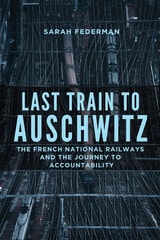
Last Train to Auschwitz
The French National Railways and the Journey to AccountabilitySarah Federman
University of Wisconsin Press, 2021
In the immediate decades after World War II, the French National Railways (SNCF) was celebrated for its acts of wartime heroism. However, recent debates and litigation have revealed the ways the SNCF worked as an accomplice to the Third Reich and was actively complicit in the deportation of 75,000 Jews and other civilians to death camps. Sarah Federman delves into the interconnected roles—perpetrator, victim, and hero—the company took on during the harrowing years of the Holocaust.
Grounded in history and case law, Last Train to Auschwitz traces the SNCF’s journey toward accountability in France and the United States, culminating in a multimillion-dollar settlement paid by the French government on behalf of the railways.The poignant and informative testimonies of survivors illuminate the long-term effects of the railroad’s impact on individuals, leading the company to make overdue amends. In a time when corporations are increasingly granted the same rights as people, Federman’s detailed account demonstrates the obligations businesses have to atone for aiding and abetting governments in committing atrocities. This volume highlights the necessity of corporate integrity and will be essential reading for those called to engage in the difficult work of responding to past harms.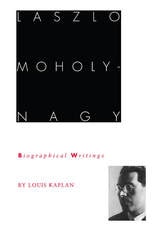
Laszlo Moholy-Nagy
Biographical WritingsLouis Kaplan
Duke University Press, 1995
In Laszlo Moholy-Nagy, Louis Kaplan applies the Derridean deconstructivist model of the "signature effect" to an intellectual biography of a Constructivist artist. Inhabiting the borderline between life and work, the book demonstrates how the signature inscribed by "Moholy" operates in a double space, interweaving signified object and signifying matter, autobiography and auto-graphy. Through interpretative readings of over twenty key artistic and photographic works, Kaplan graphically illustrates Moholy’s signature effect in action. He shows how this effect plays itself out in the complex of relations between artistic originality and plagiarism, between authorial identity and anonymity, as well as in the problematic status of the work of art in the age of technical reproduction. In this way, the book reveals how Moholy’s artistic practice anticipates many of the issues of postmodernist debate and thus has particular relevance today. Consequently, Kaplan clarifies the relationship between avant-garde Constructivism and contemporary deconstruction.
This new and innovative configuration of biography catalyzed by the life writing of Moholy-Nagy will be of critical interest to artists and writers, literary theorists, and art historians.