Results by title
1713 books match the query '21st century' and 60 start with l
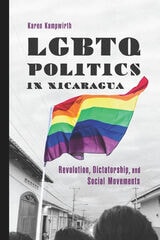
LGBTQ Politics in Nicaragua
Revolution, Dictatorship, and Social MovementsKaren Kampwirth
University of Arizona Press, 2022
Karen Kampwirth is a renowned scholar of the Nicaraguan Revolution, who has been writing at the intersection of gender and politics for decades. In this chronological telling of the last fifty years of political history in Nicaragua, Kampwirth deploys a critical new lens: understanding politics from the perspective of the country’s LGBTQ community. Kampwirth details the gay and lesbian guerrillas in the 1960s and 1970s, Nicaragua’s first openly gay television wizard in the 1980s, and the attempts by LGBTQ revolutionaries to create a civil rights movement and the subsequent squashing of that movement by the ruling Sandinista party. She analyzes the shifting political alliances, the rise of strong feminist and LGBTQ movements in Nicaragua, and the attempts by the administration of Daniel Ortega to co-opt and control these movements.
Ultimately, this is a story of struggle and defeat, progress and joy. This timely book provides a well-documented review of LGBTQ politics in modern Nicaragua, helping us to see the Sandinista Revolution and its ongoing aftermath in a new light.

LOST, HURT, OR IN TRANSIT BEAUTIFUL
Rohan Chhetri
Tupelo Press, 2021
—from the Judge’s Citation by Kristina Marie Darling

La Voz Latina
Contemporary Plays and Performance Pieces by LatinasEdited by Elizabeth C. Ramirez and Catherine Casiano
University of Illinois Press, 2011
Contributors: Yareli Arizmendi, Josefina Báez, The Colorado Sisters, Migdalia Cruz, Evelina Fernández, Cherríe Moraga, Carmen Peláez, Carmen Rivera, Celia H. Rodríguez, Diane Rodriguez, and Milcha Sanchez-Scott. The volume also includes commentary by Kathy Perkins and Caridad Svich.
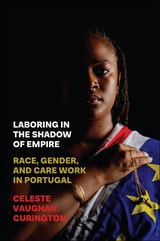
Laboring in the Shadow of Empire
Race, Gender, and Care Work in PortugalCeleste Vaughan Curington
Rutgers University Press, 2024
Winner of the ASA Race, Gender, and Class section's Distinguished Contribution to Scholarship Award
Winner of the ASA Racial and Ethnic Minorities section’s Oliver Cromwell Cox Book Award
Laboring in the Shadow of Empire: Race, Gender, and Care Work in Portugal examines the everyday lives of an African-descendant care service workforce that labors in an ostensibly “anti-racial” Europe and against the backdrop of the Portuguese colonial empire. While much of the literature on global care work has focused on Asian and Latine migrant care workers, there is comparatively less research that explicitly examines African care workers and their migration histories to Europe. Sociologist Celeste Vaughan Curington focuses on Portugal—a European setting with comparatively liberal policies around family settlement and naturalization for migrants. In this setting, rapid urbanization in the late twentieth century, along with a national push to reconcile work and family, has shaped the growth of paid home care and cleaning service industries. Many researchers focus on informal work settings, where immigrant rights are restricted and many workers are undocumented or without permanent residence status. Curington instead examines workers who have accessed citizenship or permanent residence status and also explores African women’s experiences laboring in care and service industries in the formal market, revealing how deeply colonial and intersectional logics of a racialized and international division of reproductive labor in Portugal render these women “hyper-invisible” and “hyper-visible” as “appropriate” workers in Lisbon.
Labour's Civil Wars
How Infighting has Kept the Left from Power (and What Can Be Done About It)Patrick Diamond and Giles Radice
Haus Publishing, 2023
The biblical adage that “if a house be divided against itself, that house cannot stand” remains sound theological advice. It is also essential counsel for any political party that aspires to win elections. When a party is riven with division, the public does not know what it stands for. Though both major UK parties have been subject to internal conflict over the years, the Labour Party has been more prone to damaging splits. The divide exposed by the Corbyn insurgency is only the most recent example in almost a century of destructive infighting. Indeed, it has often seemed as though Labour has been more adept at fighting itself than in defeating the Tory party. This book examines the history of Labour’s civil wars and the underlying causes of the party’s schisms, from the first split of 1931, engineered by Ramsay MacDonald, to the ongoing battle for the future between the incumbent, Keir Starmer, and those who fundamentally altered the party’s course under his predecessor, Jeremy Corbyn.

Lake|Flato Houses
Embracing the LandscapeLake|Flato Architects
University of Texas Press, 2014
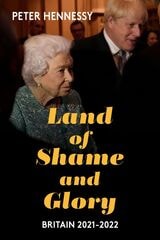
Land of Shame and Glory
Britain 2021–22Peter Hennessy
Haus Publishing, 2023
2021 and 2022 were two of the most turbulent and disruptive years experienced by Britain in peacetime. Land of Shame and Glory: Britain 2021–22 addresses a series of unprecedented challenges that laid bare the fragility of Britain and the Union during this time. Beginning with the chaotic Fall of Kabul, which exposed Britain's military dependence on the United States, through the prolonged, unsatisfying removal of a prime minister—and the economically catastrophic, short-lived tenure of his successor—that further exposed the vulnerabilities of an unwritten constitution; to the country sweltering in record-breaking temperatures amid dire warnings of climate catastrophe; and finally, to the death of a much-loved monarch, who was a point of consistency during decades of tremendous social and technological change. Peter Hennessy considers the continuities and upheavals of the last seventy years, asking whether there can be said to have been a second Elizabethan Age and lamenting that the post-war period came to its close amid such upheaval and loss.
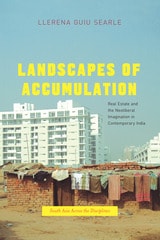
Landscapes of Accumulation
Real Estate and the Neoliberal Imagination in Contemporary IndiaLlerena Guiu Searle
University of Chicago Press, 2016
In Landscapes of Accumulation, Llerena Guiu Searle examines India’s booming developments and offers a nuanced ethnographic treatment of late capitalism. India’s land, she shows, is rapidly transforming from a site of agricultural and industrial production to an international financial resource. Drawing on intensive fieldwork with investors, developers, real estate agents, and others, Searle documents the new private sector partnerships and practices that are transforming India’s built environment, as well as widely shared stories of growth and development that themselves create self-fulfilling prophecies of success. As a result, India’s cities are becoming ever more inaccessible to the country’s poor. Landscapes of Accumulation will be a welcome contribution to the international study of neoliberalism, finance, and urban development and will be of particular interest to those studying rapid—and perhaps unsustainable—development across the Global South.
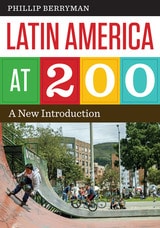
Latin America at 200
A New IntroductionBy Phillip Berryman
University of Texas Press, 2016
Between 2010 and 2025, most of the countries of Latin America will commemorate two centuries of independence, and Latin Americans have much to celebrate at this milestone. Most countries have enjoyed periods of sustained growth, while inequality is showing modest declines and the middle class is expanding. Dictatorships have been left behind, and all major political actors seem to have accepted the democratic process and the rule of law. Latin Americans have entered the digital world, routinely using the Internet and social media.
These new realities in Latin America call for a new introduction to its history and culture, which Latin America at 200 amply provides. Taking a reader-friendly approach that focuses on the big picture and uses concrete examples, Phillip Berryman highlights what Latin Americans are doing to overcome extreme poverty and underdevelopment. He starts with issues facing cities, then considers agriculture and farming, business, the environment, inequality and class, race and ethnicity, gender, and religion. His survey of Latin American history leads into current issues in economics, politics and governance, and globalization. Berryman also acknowledges the ongoing challenges facing Latin Americans, especially crime and corruption, and the efforts being made to combat them. Based on decades of experience, research, and travel, as well as recent studies from the World Bank and other agencies, Latin America at 200 will be essential both as a classroom text and as an introduction for general readers.
Latin America in the 21st Century
Challenges and SolutionsEdited by Gregory Knapp
University of Texas Press, 2002
This book showcases the achievements of geographers in helping understand and solve major problems facing Latin America. Chapters cover a variety of topics from conservation to transportation to gender. Each chapter is written by an expert in the geography of Latin America. The chapters include case studies of recent problems or issues in Latin America and provide examples of geographic research that has helped illuminate or solve these problems.
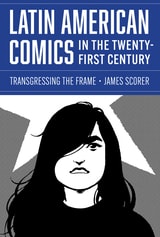
Latin American Comics in the Twenty-First Century
Transgressing the FrameJames Scorer
University of Texas Press, 2024
2025 Katherine Singer Kovacs Prize, Modern Language Association
2025 Comics Studies Society Charles Hatfield Book Prize, Honorable Mention
How twenty-first-century Latin American comics transgress social, political, and cultural frontiers.
Given comics’ ability to cross borders, Latin American creators have used the form to transgress the political, social, spatial, and cultural borders that shape the region. A groundbreaking and comprehensive study of twenty-first-century Latin American comics, Latin American Comics in the Twenty-First Century documents how these works move beyond national boundaries and explores new aspects of the form, its subjects, and its creators.
Latin American comics production is arguably more interconnected and more networked across national borders than ever before. Analyzing works from Argentina, Chile, Colombia, Mexico, Peru, and Uruguay, James Scorer organizes his study around forms of “transgression,” such as transnationalism, border crossings, transfeminisms, punk bodies, and encounters in the neoliberal city. Scorer examines the feminist comics collective Chicks on Comics; the DIY comics zine world; nonfiction and journalistic comics; contagion and zombie narratives; and more. Drawing from archives across the United States, Europe, and Latin America, Latin American Comics in the Twenty-First Century posits that these comics produce micronarratives of everyday life that speak to sites of social struggle shared across nation states.
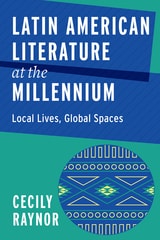
Latin American Literature at the Millennium
Local Lives, Global SpacesCecily Raynor
Bucknell University Press, 2021
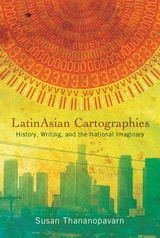
LatinAsian Cartographies
History, Writing, and the National ImaginaryThananopavarn, Susan
Rutgers University Press, 2018
Thananopavarn creates a new “LatinAsian” view of the United States that emphasizes previously suppressed aspects of national history, including imperialism, domestic racism during World War II, Cold War operations in Latin America and Asia, and the politics of borders in an age of globalization. LatinAsian Cartographies ultimately reimagines national narratives in a way that transforms dominant ideas of what it means to be American.
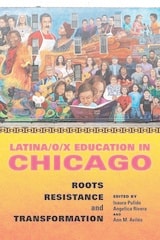
Latina/o/x Education in Chicago
Roots, Resistance, and TransformationEdited by Isaura Pulido, Angelica Rivera, and Ann M. Aviles
University of Illinois Press, 2022
Insightful and enlightening, Latina/o/x Education in Chicago brings to light the ongoing struggle for educational equity in the Chicago Public Schools.
Latinas/os in New Jersey
Histories, Communities, and CulturesAldo A. Lauria Santiago
Rutgers University Press, 2025
Contributors: Yamil Avivi; Jennifer Ayala; Ulla D. Berg; Giovani Burgos; Elsa Candelario; Laura Curran; Lilia Fernández; Ismael García Colón; Olga Jiménez de Wagenheim; Benjamin Lapidus; Aldo A. Lauria Santiago; Johana Londoño; Kathleen Lopez; Giancarlo Muschi; Melanie Z. Plasencia; Ana Y. Ramos-Zayas; Elena Sabogal; Raymond Sanchez Mayers; William Suárez Gómez; Alex F. Trillo; Daniela Valdez; Anil Venkatesh; Lyna L. Wiggins
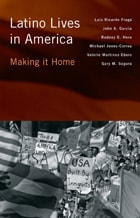
Latino Lives in America
Making It HomeLuis R. Fraga, John A. Garcia, Rodney E. Hero, Michael Jones-Correa, Valerie Martinez-Ebers and Gary Segura
Temple University Press, 2010
Latinos are the largest and fastest growing ethnic group in the United States, with increased levels of political mobilization and influence. In the timely and thoroughgoing Latino Lives in America, six prominent Latino scholars explore the profound implications of Latinos’ population growth and geographic dispersion for American politics and society, tracking key changes and continuities in Latinos' attitudes, behavior, and social experiences.
Utilizing a unique set of “narratives” from focus group interviews, supplemented with quantitative findings from the 2006 Latino National Survey, the authors provide a snapshot of Latino life in America. The Latinos interviewed provide their thoughts regarding their sense of belonging and group identification, assimilation and transnationalism, housing, education, civic engagement, and perceptions of discrimination, as well as their experiences in new destinations, where they are trying to realize the “Americano” dream.
Latino Lives in America uses these conversations and the survey data to offer both a micro and macro look at how Latinos are transforming various aspects of American politics, culture, and life and how their experiences in the United States are changing them and their families.
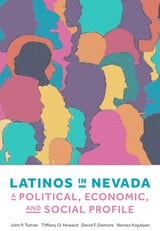
Latinos in Nevada
A Political, Economic, and Social ProfileJohn P. Tuman
University of Nevada Press, 2021
This extensive study by a distinguished and multidisciplinary team of scholars discusses the impact of the Latinx population from the early development of the state of Nevada and highlights their roles in society, as well as the specific implications of their growing presence in the state. It also contemplates the future of the Latinx population and the role they will continue to play in politics and the economy.
This in-depth examination of a large and relatively understudied population will be of interest to scholars and students who study disparities in health and education opportunities as well as the political and economic climate among Latinos and other groups in Nevada and beyond. A political, economic, and demographic profile, this book:
- Explores the history, growth, and diversity of the Latinx population.
- Draws on an array of census data, voter surveys, statistics, interviews, and health, education, employment, wages, and immigration statistics.
- Evaluates key trends in employment, education, religion, and health.
- Analyzes the dynamics of political participation, including implications of a growing Latino political electorate in a western swing state.
- Assesses key determinants of health disparities, educational inequities, and civic engagement among Latinos in the state.
- Demonstrates the impact of the Great Recession of 2008 and provides a preliminary assessment of the COVID-19 pandemic on Latino employment.
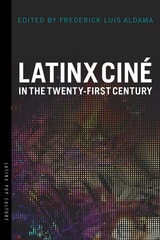
Latinx Ciné in the Twenty-First Century
Edited by Frederick Luis Aldama
University of Arizona Press, 2019
Twenty-first-century Latinx film offers much to celebrate, but as noted pop culture critic Frederick Luis Aldama writes, there’s still room to be purposefully critical. In Latinx Ciné in the Twenty-First Century contributors offer groundbreaking scholarship that does both, bringing together a comprehensive presentation of contemporary film and filmmakers from all corners of Latinx culture.
The book’s seven sections cover production techniques and evolving genres, profile those behind and in front of the camera, and explore the distribution and consumption of contemporary Latinx films. Chapters delve into issues that are timely, relevant, and influential, including representation or the lack thereof, identity and stereotypes, hybridity, immigration and detention, historical recuperation, and historical amnesia.
With its capacious range and depth of vision, this timeless volume of cutting-edge scholarship blazes new paths in understanding the full complexities of twenty-first century Latinx filmmaking.
Contributors
Contributors
Iván Eusebio Aguirre Darancou
Frederick Luis Aldama
Juan J. Alonzo
Lee Bebout
Debra A. Castillo
Nikolina Dobreva
Paul Espinosa
Mauricio Espinoza
Camilla Fojas
Rosa-Linda Fregoso
Desirée J. Garcia
Enrique García
Clarissa Goldsmith
Matthew David Goodwin
Monica Hanna
Sara Veronica Hinojos
Carlos Gabriel Kelly
Jennifer M. Lozano
Manuel M. Martín-Rodríguez
J. V. Miranda
Valentina Montero Román
Danielle Alexis Orozco
Henry Puente
John D. “Rio” Riofrio
Richard T. Rodríguez
Ariana Ruiz
Samuale Saldívar III
Jorge Santos
Rebecca A. Sheehan
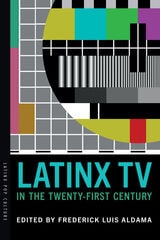
Latinx TV in the Twenty-First Century
Edited by Frederick Luis Aldama
University of Arizona Press, 2022
In this volume, editor Frederick Luis Aldama brings together leading experts who show how Latinx TV is shaped by historical, social, cultural, regional, and global contexts. Contributors address head on harmful stereotypes in Latinx representation while giving key insights to a positive path forward. TV narratives by and about Latinx people exist across all genres. In this century, we see Latinx people in sitcoms, sci-fi, noir, soap operas, rom-coms, food shows, dramas, action-adventure, and more. Latinx people appear in television across all formats, from quick webisodes, to serialized big-arc narratives, to animation and everything in between. The diverse array of contributors to this volume delve into this rich landscape of Latinx TV from 2000 to today, spanning the ever-widening range of genres and platforms.
Latinx TV in the Twenty-First Century argues that Latinx TV is not just television—it’s an entire movement. Digital spaces and streaming platforms today have allowed for Latinx representation on TV that speaks to Latinx people and non-Latinx people alike, bringing rich and varied Latinx cultures into mainstream television and addressing urbanization, immigration, family life, language, politics, gender, sexuality, class, race, and ethnicity.
Once heavily underrepresented and harmfully stereotypical, Latinx representation on TV is beginning to give careful nuance to regional, communal, and familial experiences among U.S. Latinx people. This volume unpacks the negative implications of older representation and celebrates the progress of new representation, recognizing that television has come a long way, but there is still a lot of important work to do for truly diverse and inclusive representation.
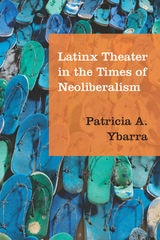
Latinx Theater in the Times of Neoliberalism
Patricia A. Ybarra
Northwestern University Press, 2018
Patricia A. Ybarra examines IMF interventions, NAFTA, shifts in immigration policy, the escalation of border industrialization initiatives, and austerity programs. She demonstrates how these policies have created the conditions for many of the most tumultuous events in the Americas in the last forty years, including dictatorships in the Southern Cone; the 1994 Cuban Rafter Crisis; femicides in Juárez, Mexico; the Zapatista uprising in Chiapas, Mexico; and the rise of narcotrafficking as a violent and vigorous global business throughout the Americas.
Latinx artists have responded to these crises by writing and developing innovative theatrical modes of representation about neoliberalism. Ybarra analyzes the work of playwrights María Irene Fornés, Cherríe Moraga, Michael John Garcés, Caridad Svich, Quiara Alegría Hudes, Victor Cazares, Jorge Ignacio Cortiñas, Tanya Saracho, and Octavio Solis. In addressing histories of oppression in their home countries, these playwrights have newly imagined affective political and economic ties in the Americas. They also have rethought the hallmark movements of Latin politics in the United States—cultural nationalism, third world solidarity, multiculturalism—and their many discontents.
Laughing to Keep from Dying
African American Satire in the Twenty-First CenturyDanielle Fuentes Morgan
University of Illinois Press, 2020
Adventurous and perceptive, Laughing to Keep from Dying reveals how African American satirists unmask the illusions and anxieties surrounding race in the twenty-first century.

Le Maya Q’atzij / Our Maya Word
Emil’ Keme
University of Minnesota Press, 2021
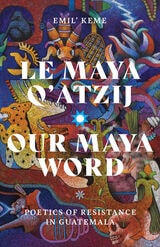
Le Maya Q’atzij/Our Maya Word
Poetics of Resistance in GuatemalaEmil’ Keme
University of Minnesota Press, 2021
Bringing to the fore the voices of Maya authors and what their poetry tells us about resistance, sovereignty, trauma, and regeneration
In 1954, Guatemala suffered a coup d’etat, resulting in a decades-long civil war. During this period, Indigenous Mayans were subject to displacement, disappearance, and extrajudicial killing. Within the context of the armed conflict and the postwar period in Guatemala, K’iche’ Maya scholar Emil’ Keme identifies three historical phases of Indigenous Maya literary insurgency in which Maya authors use poetry to dignify their distinct cultural, political, gender, sexual, and linguistic identities.
Le Maya Q’atzij / Our Maya Word employs Indigenous and decolonial theoretical frameworks to critically analyze poetic works written by ten contemporary Maya writers from five different Maya nations in Iximulew/Guatemala. Similar to other Maya authors throughout colonial history, these authors and their poetry criticize, in their own creative ways, the continuing colonial assaults to their existence by the nation-state. Throughout, Keme displays the decolonial potentialities and shortcomings proposed by each Maya writer, establishing a new and productive way of understanding Maya living realities and their emancipatory challenges in Iximulew/Guatemala.
This innovative work shows how Indigenous Maya poetics carries out various processes of decolonization and, especially, how Maya literature offers diverse and heterogeneous perspectives about what it means to be Maya in the contemporary world.
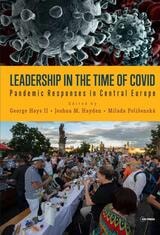
Leadership in the Time of Covid
Pandemic Responses in Central EuropeMilada Polisenská
Central European University Press, 2023
The Covid pandemic has put all modern societies to a serious test of resilience. The interdisciplinary research on which this book is based examined how four European governments behaved in these circumstances. During the months of the crisis, the team of experts coordinated by the editors of this volume took a close look at the decision-making processes in the Czech Republic, Hungary, Poland, and Slovakia – the so-called Visegrad Four.
The inquiries focused on experiences from the academic, health, economic and social fields. The methods of comparison included surveys, interviews, discourse analysis, for which the adaptive leadership theory provided the conceptual framework.
The conclusions are both academic and practical. Aside the description of the pandemic responses, the research had a formative dimension: how can an adaptive leadership approach better help societies manage the health and societal impacts of similar challenges? The spectrum of emerging anti-democratic tendencies in the region provided the specific context of the exercise. The four states face varying degrees of democratic backsliding as well as illiberal influences that have affected their response to the pandemic, which gives this research on the Visegrad Four a worldwide resonance.
Left Populism in Europe
Lessons from Jeremy Corbyn to PodemosMarina Prentoulis
Pluto Press, 2021
Legacies, Logics, Logistics
Essays in the Anthropology of the Platform EconomyJane I. Guyer
University of Chicago Press, 2016
Focusing on economic actors—whether ordinary consumers or financial experts—Guyer traces how people and institutions hold together past experiences (legacies), imagined scenarios and models (logics), and situational challenges (logistics) in a way that makes the performance of economic life (on platforms made of these legacies, logics, and logistics) work in practice. Individual essays explore a number of topics—including time frames and the future, the use of percentages in observations and judgments, the explanation of prices, the coexistence of different world currencies, the reapplication of longtime economic theories in new settings, and, crucially, how we talk about the economy, how we use stable terms to describe a turbulent system. Valuable as standalone pieces, the essays build into a cogent method of economic anthropology.

Leonard Cohen
A NovelJeffrey Lewis
Haus Publishing, 2025
The Leonard Cohen at the center of Leonard Cohen: A Novel is an everyman, a would-be artist, a would-be lover, a would-be tragic figure, yet a man haunted by the greatness of his namesake. He struggles to compete. He struggles to be more than a punchline in his own mind. He struggles, in particular, to write one song as great as the least of the great Leonard Cohen's songs.
At the center of Leonard's life is Daphne. In their meeting on a Greek island, a contemporary fable of Daphne and Apollo plays out. But even with Daphne, Leonard is shadowed by the other Leonard Cohen, whom he fears is the real Apollo. The ancient myth haunts the fated lovers, and the nobody Leonard Cohen’s life becomes at once a mystery, a miracle, and a myth on its own terms.
Once upon a time, Apollo fell hard for Daphne, who turned herself into a laurel tree. No less a fate awaits the protagonists of this slender yet universal novel, where art, love, and fame all fatefully intertwine.
Let Me Tell You Where I've Been
New Writing by Women of the Iranian DiasporaPersis M. Karim
University of Arkansas Press, 2006
Lethal Theater
Susannah Nevison
The Ohio State University Press, 2019
Reckons with the rituals of violence that underpin the American prison system, asking readers to consider the act and complications of looking at violence and suffering.
In Lethal Theater, Susannah Nevison offers a stark and lyrical reckoning with the hidden architectures of the American prison system. These poems inhabit the charged territory where medicine and punishment converge, revealing how the body becomes both patient and instrument under state control. Moving through histories of wartime confinement, interrogation, and isolation, Nevison writes a poetry of witness to the carceral state, illuminating what is so often kept from view.
With precision and moral force, Nevison examines the shadows cast by medical experimentation on imprisoned bodies, the blurred boundary between hospital anesthesia and the drugs used in lethal injection protocols, and the rituals of surveillance that shape life behind bars. This is a work rooted in the medical humanities of confinement, an inquiry into how suffering is recorded, observed, and, at times, rendered invisible.
Lethal Theater makes visible the brutal logics beneath state-sanctioned pain and insists on the urgency—and responsibility—of looking closely at what the nation asks its incarcerated to endure.
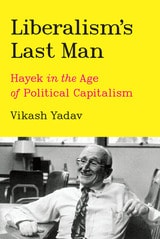
Liberalism's Last Man
Hayek in the Age of Political CapitalismVikash Yadav
University of Chicago Press, 2023
A modern reframing of Friedrich Hayek’s most famous work for the 21st century.
Friedrich Hayek’s The Road to Serfdom was both an intellectual milestone and a source of political division, spurring fiery debates around capitalism and its discontents. In the ensuing discord, Hayek’s true message was lost: liberalism is a thing to be protected above all else, and its alternatives are perilous.
In Liberalism’s Last Man, Vikash Yadav revives the core of Hayek’s famed work to map today’s primary political anxiety: the tenuous state of liberal meritocratic capitalism—particularly in North America, Europe, and Asia—in the face of strengthening political-capitalist powers like China, Vietnam, and Singapore. As open societies struggle to match the economic productivity of authoritarian-capitalist economies, the promises of a meritocracy fade; Yadav channels Hayek to articulate how liberalism’s moral backbone is its greatest defense against repressive social structures.
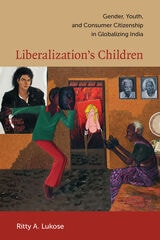
Liberalization's Children
Gender, Youth, and Consumer Citizenship in Globalizing IndiaRitty A. Lukose
Duke University Press, 2009
Moving beyond elite figurations of globalizing Indian youth, Lukose draws on ethnographic research to examine how non-elite college students in the southern state of Kerala mediate region, nation, and globe. Kerala sits at the crossroads of development and globalization. Held up as a model of left-inspired development, it has also been transformed through an extensive and largely non-elite transnational circulation of labor, money, and commodities to the Persian Gulf and elsewhere. Focusing on fashion, romance, student politics, and education, Lukose carefully tracks how gender, caste, and class, as well as colonial and postcolonial legacies of culture and power, affect how students navigate their roles as citizens and consumers. She explores how mass-mediation and an expanding commodity culture have differentially incorporated young people into the structures and aspirational logics of globalization.
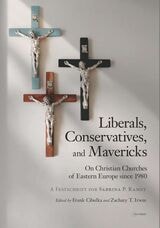
Liberals, Conservatives, and Mavericks
On Christian Churches of Eastern Europe since 1980. A Festschrift for Sabrina P. RametFrank Cibulka
Central European University Press, 2025
No Church is monolithic—this is the preliminary premise of this volume on the public place of religion in a representative number of post-communist countries. The studies confirm that within any religious organization we can expect to find fissures, factions, theological or ideological quarrels, and perhaps even competing interest groups, such as missionary workers, regular clergy versus secular clergy, and sometimes even competing ecclesiastical hierarchies. The main focus of the book rests on the divisions arising within select Christian Churches, as they confront the processes of secularization and atheization. The coverage area includes Russia and the Ukraine, East-Central Europe and South-Eastern Europe. Some chapters focus on individual clergy who challenge the mainstream of their given Church either from a more liberal or from a more conservative perspective, while others deal with the divisive forces impacting the religious organizations.
This festschrift to honor Sabrina Ramet’s seminal contribution to the study of religion in the politics of the communist and post-communist world, brings together several generations of scholars from a variety of countries, both those well established in their fields of study as well as young promising academics.

Life after Guns
Reciprocity and Respect among Young Men in LiberiaHardgrove, Abby
Rutgers University Press, 2017
Download open access ebook here.

Like Love
Michele Morano
The Ohio State University Press, 2020
Crushes. Infatuations. Attractions. Unexpected, inexplicable allure. Entanglements steeped in taboo and disruption. In Like Love, nothing is off limits.
In these remarkable essays, Michele Morano explores the pleasures, possibilities, strangeness, and lessons of unconsummated romance. With insight and imagination, Like Love interweaves poignant, humorous episodes from adulthood with the backstory of a young family’s turbulent breakup. When Morano was an adolescent in blue-collar Poughkeepsie, New York, her mother left her father for a woman in an era when LGBTQ parents were widely viewed as “unfit.” Through the turmoil, adolescent Morano paid attention, tucking away the stories that were shaping her and guiding her understanding of love.
Turning romantic clichés inside out and challenging us to rethink our notions about what it means to love, Like Love tells hard and necessary truths about the importance of desire in growing, traveling, mourning, parenting, and figuring out who you are in the world. With precision and depth, Morano explores what it means to find ourselves in relationships that are not quite—but almost—like love.
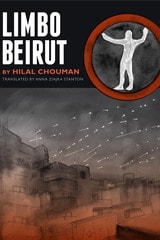
Limbo Beirut
By Hilal Chouman<br>Translated by Anna Ziajka Stanton
University of Texas Press, 2016
In Hilal Chouman’s Limbo Beirut, a gay artist, a struggling novelist, a pregnant woman, a disabled engineering student, a former militia member, and a medical intern all take turns narrating the violent events of May 2008, when Hezbollah militants and Sunni fighters clashed in the streets of Beirut. For most of these young men and women, the Lebanese Civil War (1975–1990) is but a vague recollection, but the brutality of May 2008 serves to reawaken forgotten memories and stir up fears of a revival of sectarian violence. Yet despite these fears, the violence these characters witness helps them to break free from the mundane details of their lives and look at the world anew.
The multiple narrative voices and the dozens of pen-and-ink illustrations that accompany the text allow Chouman to achieve a mesmerizing cinematic quality with this novel that is unique in modern Arabic fiction. Not only will readers appreciate the meaningful exploration of the effects of violence on the psyche, but they will also enjoy discovering how the lives of these characters—almost all of whom are strangers to one another—intersect in surprising ways.
Linkages of Financial Groups in the European Union
Financial Conglomeration Developments in the Old and New Member StatesIngrid Ulst
Central European University Press, 2005
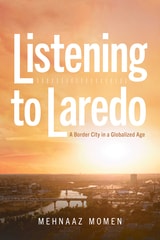
Listening to Laredo
A Border City in a Globalized AgeMehnaaz Momen
University of Arizona Press, 2023
Bringing together issues of growth, globalization, and identity, Mehnaaz Momen traces Laredo’s trajectory through the voices of its people. In contrast to the many studies of border cities defined by the outside—and seldom by the people who live at the border—this volume collects oral histories from seventy-five in-depth interviews that collectively illuminate the evolution of the city’s cultural and economic infrastructure, its interdependence with its sister city across the national boundary, and, above all, the strength of its community as it adapts to and even challenges the national narrative regarding the border. The resonant and lively voices of Laredo’s people convey proud ownership of an archetypal border city that has time and again resurrected itself.

Literature for Change
The Case for Literary Research Across Languages and CulturesEdited by Charles Burdett, Joseph Ford, Godela Weiss-Sussex, and Naomi Wells
University of London Press, 2026
Highlighting efforts to address today’s most pressing social challenges through the study of texts in languages other than English.
Literature for Change examines how the study, production, circulation, and reception of literary texts in languages other than English contribute to addressing contemporary social challenges. Through eleven case studies across diverse languages and cultures, it analyzes the real-world impact of literary research, showing its relevance to sectors such as museums and heritage, the environmental and medical humanities, and the digital sphere. Combining hermeneutic and aesthetic approaches, the chapters demonstrate the value of varied methods, including theoretically grounded creative inquiry, and the connections between literary studies and other disciplines. The book affirms the importance of the field of modern languages and the continuing role of literary texts in shaping social and cultural life.
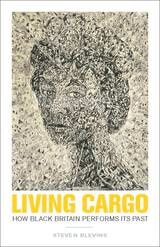
Living Cargo
How Black Britain Performs Its PastSteven Blevins
University of Minnesota Press, 2016
Offering a wide-ranging study of contemporary literature, film, visual art, and performance by writers and artists who live and work in the United Kingdom but also maintain strong ties to postcolonial Africa and the Caribbean, Living Cargo explores how contemporary black British culture makers have engaged with the institutional archives of colonialism and the Atlantic slave trade in order to reimagine blackness in British history and to make claims for social and political redress.
Steven Blevins calls this reimagining “unhousing history”—an aesthetic and political practice that animates and improvises on the institutional archive, repurposing it toward different ends and new possibilities. He discusses the work of novelists, including Caryl Phillips, Fred D’Aguiar, David Dabydeen, and Bernardine Evaristo; filmmakers Isaac Julien and Inge Blackman; performance poet Dorothea Smartt; fashion designer Ozwald Boateng; artists Hew Locke and Yinka Shonibare; and the urban redevelopment of Bristol, England, which unfolded alongside the public demand to remember the city’s slave-trading past.
Living Cargo argues that the colonial archive is neither static nor residual but emergent. By reassembling historical fragments and traces consolidated in the archive, these artists not only perform a kind of counter-historiography, they also imagine future worlds that might offer amends for the atrocities of the past.
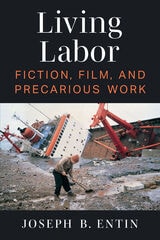
Living Labor
Fiction, Film, and Precarious WorkJoseph B. Entin
University of Michigan Press, 2023
Cover attribution: Allan Sekula, Shipwreck and worker, Istanbul, from TITANIC’s wake, 1998/2000. Courtesy of the Allan Sekula Studio.
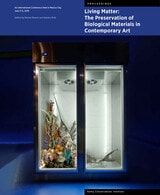
Living Matter
The Preservation of Biological Materials in Contemporary Art: An International Conference Held in Mexico City, June 3–5, 2019Rachel Rivenc
J. Paul Getty Trust, The, 2022
Eggshells, flowers, onion peels, sponge cake, dried bread, breast milk, bacteria, living organisms—these are just a few of the biological materials that contemporary artists are using to make art. But how can works made from such perishable ingredients be preserved? And what logistical, ethical, and conceptual dilemmas might be posed by doing so?
Because they are prone to rapid decay, even complete disappearance, biological materials used in art pose a range of unique conservation challenges. This groundbreaking book probes the issues associated with displaying, collecting, and preserving these unique works of art. The twenty-four papers from the conference present a range of case studies, prominently featuring artists’ perspectives, as well as conceptual discussions, thereby affording a comprehensive and richly detailed overview of current thinking and practices on this topic. Living Matter is the first publication to explore broadly the role of biological materials in the creative process and present a variety of possible approaches to their preservation.
The free online edition of this open-access publication is available at www.getty.edu/publications/living-matter/ and includes videos and zoomable illustrations. Also available are free PDF, EPUB, and Kindle/MOBI downloads of the book.

Living the High Life in Minsk
Russian Energy Rents, Domestic Populism and Belarus' Impending CrisisMargarita M. Balmaceda
Central European University Press, 2014
Living the High Life in Minsk looks at the sources of stability and instability in post-Soviet authoritarian states through the case study of President Lukashenka’s firm hold on power in Belarus. In particular, it seeks to understand the role of energy relations, policies, and discourses in the maintenance of this power. The central empirical question Balmaceda seeks to answer is what has been the role of energy policies in the maintenance of Lukashenka’s power in Belarus? In particular, it analyzes the role of energy policies in the management of Lukashenka’s relationship with three constituencies crucial to his hold on power: Russian actors, the Belarusian nomenklatura, and the Belarusian electorate.
In terms of foreign relations, the book focuses on the factors explaining Lukashenka’s ability to project Belarus’ power in its relationship with Russia in such a way as to compensate for its objective high level of dependency, assuring high levels of energy subsidies and rents continuing well beyond the initial worsening of the relationship in c. 2004. In terms of domestic relations, Balmaceda examines Lukashenka’s specific use of those energy rents in such a way as to assure the continuing support of both the Belarusian nomenklatura and the Belarusian electorate.
Lobbying and Policy Change
Who Wins, Who Loses, and WhyFrank R. Baumgartner, Jeffrey M. Berry, Marie Hojnacki, David C. Kimball, and Beth L. Leech
University of Chicago Press, 2009
During the 2008 election season, politicians from both sides of the aisle promised to rid government of lobbyists’ undue influence. For the authors of Lobbying and Policy Change, the most extensive study ever done on the topic, these promises ring hollow—not because politicians fail to keep them but because lobbies are far less influential than political rhetoric suggests.
Based on a comprehensive examination of ninety-eight issues, this volume demonstrates that sixty percent of recent lobbying campaigns failed to change policy despite millions of dollars spent trying. Why? The authors find that resources explain less than five percent of the difference between successful and unsuccessful efforts. Moreover, they show, these attempts must overcome an entrenched Washington system with a tremendous bias in favor of the status quo.
Though elected officials and existing policies carry more weight, lobbies have an impact too, and when advocates for a given issue finally succeed, policy tends to change significantly. The authors argue, however, that the lobbying community so strongly reflects elite interests that it will not fundamentally alter the balance of power unless its makeup shifts dramatically in favor of average Americans’ concerns.
Local Officials and the Struggle to Transform Cities
A View from Post-Apartheid South AfricaEdited by Claire Bénit-Gbaffou
University College London, 2024
Why are even progressive local authorities with the will to improve seldom able to change cities? Why does it seem almost impossible to redress spatial inequalities, deliver and maintain basic services, elevate impoverished areas, and protect marginalized communities? Why do municipalities in the Global South refuse to work with prevailing social informalities, and resort instead to interventions that are known to displace and aggravate the very issues they aim to address?
Local Officials and the Struggle to Transform Cities analyzes these challenges in South African cities, where the brief post-apartheid moment opened a window for progressive city government and made research into state practices both possible and necessary. The book interrogates city officials’ practices through a comparative gaze into other ‘progressive moments’ in large cities in Brazil, the United States, and India. It considers the instruments that these officials invent to implement urban policies, the agency these officials develop, and the constraints they navigate in governing unequal cities. Claire Bénit-Gbaffou captures in this book actual officials’ practices through first-hand experience, state ethnographies, and engaged research. This reveals day-to-day practices that question generalized explanations of state failure in complex urban societies as essential malevolence, contextual weakness, corruption, and inefficiency.
This book opens the black box of the workings of the state, with the hope of opening paths for the construction of progressive policies in contemporary cities.
Local Transcendence
Essays on Postmodern Historicism and the DatabaseAlan Liu
University of Chicago Press, 2008
In the essays collected in Local Transcendence, Alan Liu takes the pulse of such postmodern historicism by tracking two leading indicators of its acceleration in the late twentieth and early twenty-first centuries: postmodern cultural criticism—including the new historicism, the new cultural history, cultural anthropology, the new pragmatism, and postmodern and postindustrial theory—and digital information technology. What is the relation between the new historicist anecdote and the database field, Liu asks, and can either have a critical function in the age of postmodern historicism? Local Transcendence includes two previously unpublished essays and a synthetic introduction in which Liu traverses from his earlier work on the theory of historicism to his recent studies of information culture to propose a theory of contingent method incorporating a special inflection of history: media history.

Locked In and Out
Priya Basil
Diaphanes, 2025
Having recently accepted German citizenship, writer and activist Priya Basil explores the Humboldt Forum from a deeply personal perspective. She delves into the question of what such a building, such a project, means for an understanding of the past and for belonging in the present. This much disputed, contested, celebrated monument now exists—but what exactly does it monumentalize? Basil writes, “In German, the word Schloss means a palace, and also a lock. The central question: Can a lock also be a key?”
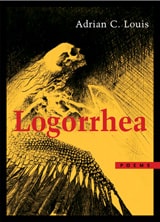
Logorrhea
PoemsAdrian C. Louis
Northwestern University Press, 2006
In a torrent of rage, love, and irony, Adrian C. Louis explodes all the myths and hypocrisy of Middle America in the twenty-first century. This is how Walt Whitman or Allen Ginsburg might have written about our post-9/11 world--where the realities of poverty on Indian reservations and the plight of Hurricane Katrina victims come in second place to the vagaries of Homeland Security. For Louis, both he and our nation face an uncertain future. Like many of us he is trapped in a surreal void of the present, where he is faced with middle age and isolation, the death of loved ones, an unsatisfying job, and the battle against loneliness and self-destruction. He writes as if he has nothing left to lose but then fills the page with bittersweet sorrow for everything that has been lost. Armed with unforgettable images, relentless rhythms, and a dark and scathing humor, Louis takes aim at this American life.

Lone Stars III
A Legacy of Texas Quilts, 1986-2011By Karoline Patterson Bresenhan and Nancy O'Bryant Puentes
University of Texas Press, 2011
From frontier times in the Republic of Texas until today, Texans have been making gorgeous quilts. Karoline Patterson Bresenhan and Nancy O'Bryant Puentes documented the first 150 years of the state's rich heritage of quilt art in Lone Stars: A Legacy of Texas Quilts, 1836–1936 and Lone Stars II: A Legacy of Texas Quilts, 1936–1986. Now in Lone Stars III, they bring the Texas quilt story into the twenty-first century, presenting two hundred traditional and art quilts that represent "the best of the best" quilts created since 1986.
The quilts in Lone Stars III display the explosion of creativity that has transformed quilting over the last quarter century. Some of the quilts tell stories, create landscapes, record events, and memorialize people. Others present abstract designs that celebrate form and color. Their makers have embraced machine quilting, as well as hand sewing, and they often embellish their quilts with buttons, beads, lace, ribbon, and even more exotic items. Each quilt is pictured in its entirely, and some entries also include photographs of quilt details. The accompanying text describes the quilt's creation, its maker, and its physical details.
With 16.3 million American quilters who spend $3.6 billion annually on their pastime, the quilting community has truly become a force to reckon with both artistically and socially. Lone Stars III is the perfect introduction to this world of creativity.
Long Shadows
The Second World War in British Fiction and FilmEdited by Petra Rau
Northwestern University Press, 2016
Long Suffering
American Endurance Art as Prophetic WitnessKaren Gonzalez Rice
University of Michigan Press, 2016