Results by title
77 books match the query 'Adventurers & Explorers' and 5 start with l
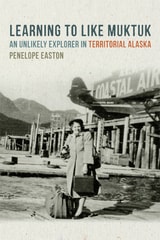
Learning to Like Muktuk
An Unlikely Explorer in Territorial AlaskaPenelope S. Easton
Oregon State University Press, 2014
Letters from the Southwest
Charles Lummis; Edited by James W. Byrkit
University of Arizona Press, 0
In the fall of 1884, journalist Charles Lummis set out on foot from Ohio to California on assignment for the Los Angeles Times. The reports he mailed ahead to that newspaper were later refashioned for the book A Tramp Across the Continent, a work that helped to establish Lummis as the most active promoter of Southwestern culture who ever lived.
Lummis wrote another set of letters during his journey, however, which he sent back to Ohio for publication by the Chillicothe Leader. Although these letters contain basically the same narrative as those sent to Los Angeles and later found in A Tramp, the Ohio letters more closely reflect the author’s thoughts and observations while on the journey. In fact, a comparison of the two drafts indicates that Lummis spent considerable effort removing spontaneous details from the Ohio letters in favor or a more commercial, self-promoting, and politic reporting for the California paper.
The twenty-four Ohio letters, assembled here by James W. Byrkit, offer a far more candid look at the Southwest than Lummis was later to bring to print, as well as greater insight into the author’s own personality. Byrkit’s introductory essay provides the background for Lummis’s career, compares the three bodies of work relating to the trek, and offers an account of Lummis’s transformation from chronicler to promoter.

Life-Writing in the History of Archaeology
Critical perspectivesEdited by Clare Lewis and Gabriel Moshenska
University College London, 2023
Travels and adventures of the “great archaeologists” have generated centuries worth of bestselling books that, in turn, have shaped the public perception of archaeology. The lives of archaeologists are entangled with histories of museums and collections, developments in science and scholarship, and narratives of nationalism and colonialism into the present. In recent years, life-writing has played an important role in the surge of new research in the history of archaeology, including ground-breaking studies of discipline formation, institutionalization, and social and intellectual networks. Sources such as diaries, wills, film, and the growing body of digital records are powerful tools for highlighting the contributions of hitherto marginalized archaeological lives including many pioneering women, hired laborers, and other “hidden hands.”
This book brings together critical perspectives on life-writing in the history of archaeology from leading figures in the field. These include studies of archive formation and use, the concept of “dig-writing” as a distinctive genre of archaeological creativity, and reviews of new sources for already well-known lives. Several chapters reflect on the experience of life-writing, review the historiography of the field, and assess the intellectual value and significance of life-writing as a genre. Together, they work to problematize underlying assumptions about this genre, foregrounding methodology, social theory, ethics, and other practice-focused frameworks in conscious tension with previous practices.
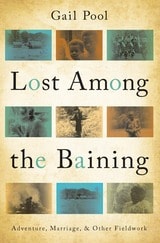
Lost Among the Baining
Adventure, Marriage, and Other FieldworkGail Pool
University of Missouri Press, 2015
In the late sixties, Gail Pool and her husband set off for an adventure in New Guinea. He was a graduate student in anthropology; she was an aspiring writer. They prepared, as academics do, by reading, practicing with language tapes, consulting with the nearest thing to experts, and then, excited and optimistic, off they went. But all their research could not prepare them for the reality of life in the jungle. As they warded off gargantuan insects, slogged through seemingly endless mud, and turned on each other in fatigue and frustration, they struggled to somehow connect with their enigmatic hosts, the Baining—a people who showed no desire to be studied.
Sixteen months later they returned home. Despite months of trying, they had not been able to make sense of the Baining’s culture. Worse yet, their lives no longer seemed to make sense. Pool put her journals away. Her husband abandoned the study of anthropology.
Decades later, Pool returned to her journals and found in her jumbled notes the understanding that had eluded her twenty-three–year-old self. Finally, she and her husband returned to New Guinea for a shorter visit and a warm reunion with the tribe that challenged them on so many levels and, Pool now realized, made their journey and lives deeper and richer.
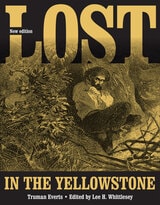
Lost in the Yellowstone
"Thirty-Seven Days of Peril" and a Handwritten Account of Being LostTruman Everts; Edited by Lee H. Whittlesey
University of Utah Press, 2015
In 1870, Truman Everts visited what would two years later become Yellowstone National Park, traveling with an exploration party intent on mapping and investigating that mysterious region. Scattered reports of a mostly unexplored wilderness filled with natural wonders had caught the public’s attention and the fifty-four-year-old Everts, near-sighted and an inexperienced woodsman, had determined to join the expedition. He was soon separated from the rest of the party and from his horse, setting him on a grueling quest for survival. For over a month he wandered Yellowstone alone and injured, with little food, clothing, or other equipment. In “Thirty-seven Days of Peril” he recounted his experiences for the readers of Scribner’s Monthly.
In June 1996, Everts’s granddaughter arrived at Mammoth Hot Springs in Yellowstone National Park to meet with park archivist Lee Whittlesey. She brought two documents that her father had kept hidden and both were handwritten by Everts. One was a brief autobiography that gave new insight into his early life. The other was a never-published alternative account of his confused 1870 journey through Yellowstone. Both have been added to this volume, further enhancing Everts’s unlikely tale of survival.