Results by title
312 books match the query 'African American authors' and 8 start with l
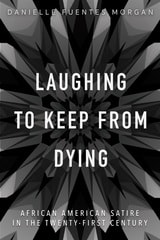
Laughing to Keep from Dying
African American Satire in the Twenty-First CenturyDanielle Fuentes Morgan
University of Illinois Press, 2020
Adventurous and perceptive, Laughing to Keep from Dying reveals how African American satirists unmask the illusions and anxieties surrounding race in the twenty-first century.
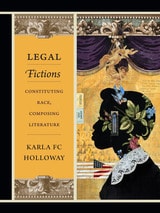
Legal Fictions
Constituting Race, Composing LiteratureKarla FC Holloway
Duke University Press, 2014
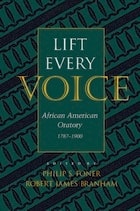
Lift Every Voice
African American Oratory, 1787-1901Philip S. Foner
University of Alabama Press, 1997
The essential collection of African American voices that shaped the struggle for freedom, equality, and citizenship.
Lift Every Voice is a completely revised, updated, and expanded version of Philip Foner's 1972 classic Voice of Black America, which Library Journal hailed as "indispensable.""This well-edited and
richly inclusive work," wrote Benjamin Quarles, "unveils the full sweep of Black expression as found in platform addresses" by "men and women who join eloquence with reason in articulating their
grievances and their aspirations and in arousing their listeners with their ringing and prophetic challenges." This new collection includes over 60 additional texts and revised and expanded introductory essays that provide historical, biographical, and critical information for each speech.
For Americans of the 19th century, as W. E. B. Du Bois observed, eloquent speeches were 'the shining lights of civilization' that both expressed and sought to improve the lives and communities from which they sprang. Through political speeches, sermons, lectures, oral testimonies, and ceremonial addresses, African Americans offered diverse responses to the issues and events of their times, including not only slavery and racial equality but also women's rights, education, religion, immigration, socialism, war, Indian policy, and labor organization, among others. The speeches in this
collection are among the most powerful expressions of African American opinions on these issues and were delivered on occasions and before audiences where the speakers believed their words might be transformative.
Containing more than 150 speeches, this anthology represents the most extensive and diverse collection of African American oratory of the 18th and 19th centuries ever published. Lift Every Voice makes readily accessible not only the classic orations of such well-known figures as Frederick Douglass, Sojourner Truth, and Booker T. Washington but also dozens of lesser-known but important speeches deserving greater recognition and study. Many of these speeches are previously unpublished, uncollected, or long out of print.
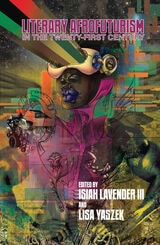
Literary Afrofuturism in the Twenty-First Century
Edited by Isiah Lavender III and Lisa Yaszek
The Ohio State University Press, 2020
In Literary Afrofuturism in the Twenty-First Century, eminent contributors pay tribute to Afrofuturism as a powerful and evolving aesthetic practice that communicates the experience of science, technology, and race across centuries, continents, and cultures. While Ryan Coogler and Janelle Monáe may have helped bring the genre into contemporary pop consciousness, it in fact extends back to the writing of eighteenth-century poet Phyllis Wheatley and has continued in the work of Samuel R. Delany, Octavia E. Butler, N. K. Jemisin, and many others. In examining this heritage, contributors in this volume question generic boundaries, recover lost artists and introduce new ones, and explore how the meteoric rise of a new, pan-African speculative literary tradition may or may not connect with Afrofuturism.
Additionally, the editors have marshaled some of today’s most exciting writers for a roundtable discussion of the genre: Bill Campbell, Minister Faust, Nalo Hopkinson, N. K. Jemisin, Chinelo Onwualu, Nisi Shawl, and Nick Wood. Pioneering author and editor Sheree R. Thomas limns how black women have led new developments in contemporary Afrofuturism, and artist Stacey Robinson’s illustrations orient readers to the spirited themes of this enduring and consequential literary tradition.
Literary Sisters
Dorothy West and Her Circle, A Biography of the Harlem RenaissanceMitchell, Verner D
Rutgers University Press, 2012
Harlem Renaissance writer Dorothy West led a charmed life in many respects. Born into a distinguished Boston family, she appeared in Gershwin’s Porgy and Bess, then lived in the Soviet Union with a group that included Langston Hughes, to whom she proposed marriage. She later became friends with Jacqueline Kennedy Onassis, who encouraged her to finish her second novel, The Wedding, which became the octogenarian author’s first bestseller.
Literary Sisters reveals a different side of West’s personal and professional lives—her struggles for recognition outside of the traditional literary establishment, and her collaborations with talented African American women writers, artists, and performers who faced these same problems. West and her “literary sisters”—women like Zora Neale Hurston and West’s cousin, poet Helene Johnson—created an emotional support network that also aided in promoting, publishing, and performing their respective works. Integrating rare photos, letters, and archival materials from West’s life, Literary Sisters is not only a groundbreaking biography of an increasingly important author but also a vivid portrait of a pivotal moment for African American women in the arts.
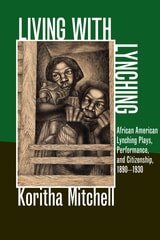
Living with Lynching
African American Lynching Plays, Performance, and Citizenship, 1890-1930Koritha Mitchell
University of Illinois Press, 2012
In closely analyzing the political and spiritual uses of black theatre during the Progressive Era, Mitchell demonstrates that audiences were shown affective ties in black families, a subject often erased in mainstream images of African Americans. Examining lynching plays as archival texts that embody and reflect broad networks of sociocultural activism and exchange in the lives of black Americans, Mitchell finds that audiences were rehearsing and improvising new ways of enduring in the face of widespread racial terrorism. Images of the black soldier, lawyer, mother, and wife helped readers assure each other that they were upstanding individuals who deserved the right to participate in national culture and politics. These powerful community coping efforts helped African Americans band together and withstand the nation's rejection of them as viable citizens.
The Left of Black interview with author Koritha Mitchell begins at 14:00.
An interview with Koritha Mitchell at The Ohio Channel.
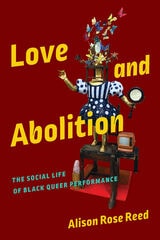
Love and Abolition
The Social Life of Black Queer PerformanceAlison Rose Reed
The Ohio State University Press, 2022
Reed identifies abolition literature as an emergent field of inquiry that emphasizes social relationships in the ongoing struggle to dismantle systems of coercion, criminalization, and control. Focusing on love as an affective modality and organizing tool rooted in the Black radical tradition’s insistence on collective sociality amidst unrelenting state violence, Reed provides fresh readings of visionaries such as James Baldwin, Ntozake Shange, Sharon Bridgforth, and vanessa german. Both abolitionist manifesto and examination of how Black queer performance offers affective modulations of tough and tender love, Love and Abolition ultimately calls for a critical reconsideration of the genre of prison literature—and the role of the humanities—during an age of mass incarceration.
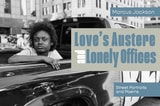
Love’s Austere and Lonely Offices
Street Portraits and PoemsMarcus Jackson
Northwestern University Press, 2026
An astounding collection of photographs from a renowned poet
Created during the tumultuous years of 2020 and 2021, Love’s Austere and Lonely Offices: Street Portraits and Poems intersects the lens of accomplished poet and photographer Marcus Jackson with his words. The focus: the Black experience and existence. Amid isolation, protest, and survival, Jackson is the aperture and scribe giving visual consciousness and breath to these human portraits. His camera strips the view of endless cycles of social and moral injustices, presenting a resonant collection of photographs that make space for the moments and the people whose beings represent the ongoing interplay between history, society, and the individual soul.