Results by title
239 books match the query 'Agriculture' and 12 start with l
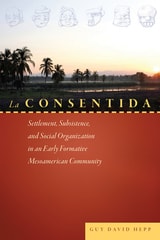
La Consentida
Settlement, Subsistence, and Social Organization in an Early Formative Mesoamerican CommunityGuy David Hepp
University Press of Colorado, 2019
La Consentida explores Early Formative period transitions in residential mobility, subsistence, and social organization at the site of La Consentida in coastal Oaxaca, Mexico. Examining how this site transformed during one of the most fundamental moments of socioeconomic change in the ancient Americas, the book provides a new way of thinking about the social dynamics of Mesoamerican communities of the period.
Guy David Hepp summarizes the results of several seasons of fieldwork and laboratory analysis under the aegis of the La Consentida Archaeological Project, drawing on various forms of evidence—ground stone tools, earthen architecture, faunal remains, human dental pathologies, isotopic indicators, ceramics, and more— to reveal how transitions in settlement, subsistence, and social organization at La Consentida were intimately linked. While Mesoamerica is too diverse for research at a single site to lay to rest ongoing debates about the Early Formative period, evidence from La Consentida should inform those debates because of the site’s unique ecological setting, its relative lack of disturbance by later occupations, and because it represents the only well-documented Early Formative period village in a 300-mile stretch of Mexico’s Pacific coast.
One of the only studies to closely document multiple lines of evidence of the transition toward a sedentary, agricultural society at an individual settlement in Mesoamerica, La Consentida is a key resource for understanding the transition to settled life and social complexity in Mesoamerican societies.
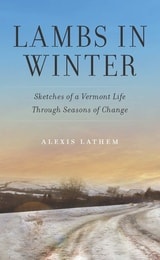
Lambs in Winter
Sketches of a Vermont Life Through Seasons of ChangeAlexis Lathem
University of Massachusetts Press, 2025
Finding hope in a small farm, an engaged community, and an age-old connection to the earth
After half a lifetime spent moving from place to place, Alexis Lathem at last settled down with her husband on a small farm near Vermont’s largest city. The lyric essays of Lambs in Winter take readers through the seasonal cycles of raising sheep and hens and growing fruits and vegetables while confronting the challenges of winter storms, summer floods, invasive weeds, and pests and diseases.
Ever conscious of her place in a historically colonized and ecologically degraded landscape, Lathem wrestles with ethical questions that come to many rural dwellers who—following Thoreau—set out to “live deliberately,” in a time of climate crisis, persistent racial inequity, and growing economic inequality. Likewise, she grapples with the moral complexities of small-scale animal husbandry. Through her efforts at self-provisioning, without holding illusions of the self-reliant individual, Lathem finds herself deeply embedded in the community and reliant on others, especially as her region deals with repeated catastrophic flooding brought on by climate change.
Through elegant prose and insightful investigations into pressing contemporary issues, Lathem evokes the world of her farm and the surrounding countryside with a spiritual awareness of the human journey on this earth. Living in place, attuned to the unfolding changes in the world around her, gives her much to grieve, but the pages of Lambs in Winter are luminous with moments of joy and beauty.
Land Hunger
Ohio and the Western FrontiersMansel G. Blackford
Ohio University Press, 2025
Land of Famished Beings
West Papuan Theories of HungerSophie Chao
Duke University Press, 2025

Land of the Underground Rain
Irrigation on the Texas High Plains, 1910-1970By Donald E. Green
University of Texas Press, 1973
The scarcity of surface water which has so marked the Great Plains is even more characteristic of its subdivision, the Texas High Plains. Settlers on the plateau were forced to use pump technology to tap the vast ground water resources—the underground rain—beneath its flat surface.
The evolution from windmills to the modern high-speed irrigation pumps took place over several decades. Three phases characterized the movement toward irrigation. In the period from 1910 to 1920, large-volume pumping plants first appeared in the region, but, due to national and regional circumstances, these premature efforts were largely abortive. The second phase began as a response to the drouth of the Dust Bowl and continued into the 1950s. By 1959, irrigation had become an important aspect of the flourishing High Plains economy. The decade of the 1960s was characterized chiefly by a growing alarm over the declining ground water table caused by massive pumping, and by investigations of other water sources.
Land of the Underground Rain is a study in human use and threatened exhaustion of the High Plains' most valuable natural resource. Ground water was so plentiful that settlers believed it flowed inexhaustibly from some faraway place or mysteriously from a giant underground river. Whatever the source, they believed that it was being constantly replenished, and until the 1950s they generally opposed effective conservation of ground water. A growing number of weak and dry wells then made it apparent that Plains residents were "mining" an exhaustible resource.
The Texas High Plains region has been far more successful in exploiting its resource than in conserving it. The very success of its pump technology has produced its environmental crisis. The problem brought about by the threatened exhaustion of this resource still awaits a solution.
This study is the first comprehensive history of irrigation on the Texas High Plains, and it is the first comprehensive treatment of the development of twentieth-century pump irrigation in any area of the United States.
Landscapes in Transition
B. Finlayson
Council for British Research in the Levant, 2010
Language, Coffee, and Migration on an Andean-Amazonian Frontier
Nicholas Q. Emlen
University of Arizona Press, 2020
The rich-tasting Peruvian coffee in your cup is the distillate of an intensely dynamic Amazonian frontier, where native Matsigenkas, state agents, and migrants from the rural highlands are carving the forest into farms. Language, Coffee, and Migration on an Andean-Amazonian Frontier shows how people of different backgrounds married together and blended the Quechua, Matsigenka, and Spanish languages in their day-to-day lives. This frontier relationship took place against a backdrop of deforestation, cocaine trafficking, and destructive natural gas extraction.
Nicholas Q. Emlen’s rich account—which takes us to remote Amazonian villages, dusty frontier towns, roadside bargaining sessions, and coffee traders’ homes—offers a new view of settlement frontiers as they are negotiated in linguistic interactions and social relationships. This interethnic encounter was not a clash between distinct groups but rather an integrated network of people who adopted various stances toward each other as they spoke.
The book brings together a fine-grained analysis of multilingualism with urgent issues in Latin America today, including land rights, poverty, drug trafficking, and the devastation of the world’s largest forest. It offers a timely on-the-ground perspective on the agricultural colonization of the Amazon, which has triggered an environmental emergency threatening the future of the planet.
Late Prehistoric Hunter-Gatherers and Farmers of the Jornada Mogollon
Thomas R. Rocek
University Press of Colorado, 2023
The Jornada branch of the Mogollon culture and its inhabitants played a significant economic, political, and social role at multiple scales. This volume draws together results from recent large-scale CRM work that has amassed among the largest data sets in the Southwest with up-to-date chronological, architectural, faunal, ceramic, obsidian sourcing, and other specialized studies. Chapters by some of the most active researchers in the area address topics that reach beyond the American Southwest, such as mobility, forager adaptations, the transition to farming, responses to environmental challenges, and patterns of social interaction.
Late Prehistoric Hunter-Gatherers and Farmers of the Jornada Mogollon is an up-to-date summary of the major developments in the region and their implications for Southwest archaeology in particular and anthropological archaeological research more generally.
The publication of this book is supported in part by the Arizona Archaeological and Historical Society and the Center for Material Culture Studies at the University of Delaware.
Contributors: Rafael Cruz Antillón, Douglas H. M. Boggess, Peter C. Condon, Linda Scott Cummings, Moira Ernst, Tim Graves, David V. Hill, Nancy A. Kenmotsu, Shaun M. Lynch, Arthur C. MacWilliams, Mary Malainey, Timothy D. Maxwell, Myles R. Miller, John Montgomery, Jim A. Railey, Thomas R. Rocek, Matt Swanson, Christopher A. Turnbow, Javier Vasquez, Regge N. Wiseman, Chad L. Yost
Law and the Rural Economy in the Roman Empire
Dennis P. Kehoe
University of Michigan Press, 2010
The economy of the Roman Empire was predominantly agrarian: Roman landowners, agricultural laborers, and small tenant farmers were highly dependent upon one another for assuring stability. By examining the property rights established by the Roman government, in particular the laws concerning land tenure and the contractual relationships between wealthy landowners and the tenant farmers to whom they leased their land, Dennis P. Kehoe is able to demonstrate how the state fostered economic development and who benefited the most. In this bold application of economic theory, Kehoe explores the relationship between Roman private law and the development of the Roman economy during a crucial period of the Roman Empire, from the second to the fourth century C.E. Kehoe is able to use the laws concerning land tenure, and the Roman government's enforcement of those laws, as a window through which to develop a more comprehensive view of the Roman economy. With its innovative application of the methodologies of law and economics and the New Institutional Economics Law and the Rural Economy in the Roman Empire is a groundbreaking addition to the study of the Roman economy.
Dennis P. Kehoe is Professor of Classical Studies at Tulane University. He is the author of several books, including Investment, Profit, and Tenancy: The Jurists and the Roman Agrarian Economy(University of Michigan Press, 1997).
"Kehoe brings his deep expertise in Roman land tenure systems and his broad knowledge of the methodologies of New Institutional Economics to bear on questions of fundamental importance regarding the relationship of Roman law and society. Was governmental policy on agriculture designed to benefit large landowners or small farmers? What impact did it have on the rural economy? The fascinating answers Kehoe provides in this pathbreaking work should occasion a major reassessment of such problems by social and legal historians."
---Thomas McGinn, Department of Classical Studies at Vanderbilt University, and author of The Economy of Prostitution in the Roman World: A Study of Social History and the Brothel and Prostitution, Sexuality, and the Law in Ancient Rome
"A ground-breaking study using the principles of New Institutional Economics to analyze the impact of legal policy in balancing the interests of Roman tenant-farmers and landowners in the 2-4 centuries C.E. Kehoe's book will be essential reading for historians of the Roman Empire, demonstrating how the government overcame challenges and contradictions as it sought to regulate this enormous sector of the economy."
---Susan D. Martin, Department of Classics, University of Tennessee
"In Law and the Rural Economy, Kehoe brings to life the workings of the ancient economy and the Roman legal system. By analyzing interactions between the imperial government, landlords, and tenant farmers in provinces across the Empire, Kehoe opens insights into imperial economic policy. He handles a variety of challenging sources with mastery and wit, and his knowledge of scholarship is extensive and thorough, covering ancient history, textual problems in the sources, legal history and, perhaps most impressively, the modern fields of economic theory and 'law and economics.' Kehoe's innovative and sophisticated methodology sets his work apart. The book will make an important contribution to our understanding of access to the law and the effectiveness of the legal system, important topics for scholars of law, ancient and modern."
---Cynthia J. Bannon, Department of Classical Studies, Indiana University
Lifeways in the Northern Maya Lowlands
New Approaches to Archaeology in the Yucatán PeninsulaEdited by Jennifer P. Mathews and Bethany A. Morrison
University of Arizona Press, 2006
By exploring various social and political levels of Maya society through a broad expanse of time, Lifeways in the Northern Maya Lowlands not only reconstructs a little-known past, it also suggests the broad implications of archaeology for related studies of tourism, household economies, and ethnoarchaeology. It is a benchmark work that pointedly demonstrates the need for researchers in both north and south to ignore modern geographic boundaries in their search for new ideas to further their understanding of the ancient Maya.

Livestock/Deadstock
Working with Farm Animals from Birth to SlaughterAuthored by Rhoda M. Wilkie
Temple University Press, 2010
The connection between people and companion animals has received considerable attention from scholars. In her original and provocative ethnography Livestock/Deadstock, sociologist Rhoda Wilkie asks, how do the men and women who work on farms, in livestock auction markets, and slaughterhouses, interact with—or disengage from—the animals they encounter in their jobs?
Wilkie provides a nuanced appreciation of how those men and women who breed, rear, show, fatten, market, medically treat, and slaughter livestock, make sense of their interactions with the animals that constitute the focus of their work lives. Using a sociologically informed perspective, Wilkie explores their attitudes and behaviors to explain how agricultural workers think, feel, and relate to food animals.
Livestock/Deadstock looks at both people and animals in the division of labor and shows how commercial and hobby productive contexts provide male and female handlers with varying opportunities to bond with and/or distance themselves from livestock. Exploring the experiences of stockpeople, hobby farmers, auction workers, vets and slaughterers, she offers timely insight into the multifaceted, gendered, and contradictory nature of human roles in food animal production.
Lore of the Lumber Camps
Earl Clifton Beck
University of Michigan Press, 1948
The text discusses the cultural life of the lumberjacks, who, despite their rugged lifestyle, adhered to a chivalrous code of conduct. Beck details their traditions, storytelling, music, and dance, emphasizing the rich folklore that emerged from the camps. The book promises further exploration of the log-marking system, notable lumber figures, and the impact of deforestation on Michigan’s landscape.