977 books match the query 'American literature' and 26 start with l
cover of LatinAsian Cartographies: History, Writing, and the National Imaginary

LatinAsian Cartographies

History, Writing, and the National Imaginary

Thananopavarn, Susan

Rutgers University Press, 2018

LatinAsian Cartographies examines how Latina/o and Asian American writers provide important counter-narratives to the stories of racial encroachment that have come to characterize twenty-first century dominant discourses on race. Susan Thananopavarn contends that the Asian American and Latina/o presence in the United States, although often considered marginal in discourses of American history and nationhood, is in fact crucial to understanding how national identity has been constructed historically and continues to be constructed in the present day. 

Thananopavarn creates a new “LatinAsian” view of the United States that emphasizes previously suppressed aspects of national history, including imperialism, domestic racism during World War II, Cold War operations in Latin America and Asia, and the politics of borders in an age of globalization. LatinAsian Cartographies ultimately reimagines national narratives in a way that transforms dominant ideas of what it means to be American.   
 
[more]
cover of Latino Los Angeles in Film and Fiction: The Cultural Production of Social Anxiety

Latino Los Angeles in Film and Fiction

The Cultural Production of Social Anxiety

Ignacio López-Calvo

University of Arizona Press, 2014

Los Angeles has long been a place where cultures clash and reshape. The city has a growing number of Latina/o authors and filmmakers who are remapping and reclaiming it through ongoing symbolic appropriation. In this illuminating book, Ignacio López-Calvo foregrounds the emotional experiences of authors, implicit authors, narrators, characters, and readers in order to demonstrate that the evolution of the imaging of Los Angeles in Latino cultural production is closely related to the politics of spatial location. This spatial-temporal approach, he writes, reveals significant social anxieties, repressed rage, and deep racial guilt.

Latino Los Angeles in Film and Fiction sets out to reconfigure the scope of Latino literary and cultural studies. Integrating histories of different regions and nations, the book sets the interplay of unresolved contradictions in this particular metropolitan area. The novelists studied here stem from multiple areas, including the U.S. Southwest, Guatemala, and Chile. The study also incorporates non-Latino writers who have contributed to the Latino culture of the city.

The first chapter examines Latino cultural production from an ecocritical perspective on urban interethnic relations. Chapter 2 concentrates on the representation of daily life in the barrio and the marginalization of Latino urban youth. The third chapter explores the space of women and how female characters expand their area of operations from the domestic space to the public space of both the barrio and the city.

A much-needed contribution to the fields of urban theory, race critical theory, Chicana/o–Latina/o studies, and Los Angeles writing and film, López-Calvo offers multiple theoretical perspectives—including urban theory, ecocriticism, ethnic studies, gender studies, and cultural studies— contextualized with notions of transnationalism and post-nationalism.
[more]
cover of Latinx  Environmentalisms: Place, Justice, and the Decolonial

Latinx Environmentalisms

Place, Justice, and the Decolonial

Sarah D. Wald

Temple University Press, 2019

The whiteness of mainstream environmentalism often fails to account for the richness and variety of Latinx environmental thought. Building on insights of environmental justice scholarship as well as critical race and ethnic studies, the editors and contributors to Latinx Environmentalisms map the ways Latinx cultural texts integrate environmental concerns with questions of social and political justice. 

Original interviews with creative writers, including Cherríe Moraga, Helena María Viramontes, and Héctor Tobar, as well as new essays by noted scholars of Latinx literature and culture, show how Latinx authors and cultural producers express environmental concerns in their work. These chapters, which focus on film, visual art, and literature—and engage in fields such as disability studies, animal studies, and queer studies—emphasize the role of racial capitalism in shaping human relationships to the more-than-human world and reveal a vibrant tradition of Latinx decolonial environmentalism.

Latinx Environmentalisms accounts for the ways Latinx cultures are environmental, but often do not assume the mantle of “environmentalism.”
[more]
cover of Latinx Rising: An Anthology of Latinx Science Fiction and Fantasy

Latinx Rising

An Anthology of Latinx Science Fiction and Fantasy

Edited by Matthew David Goodwin / Introduction by Frederick Luis Aldama

The Ohio State University Press, 2020

It has been half a century since a few now-canonical Latin American writers introduced magical realism to the world. In that time, new generations of Latinx writers and artists have used that watershed moment as a springboard into new and bold explorations of speculative and fantasy forms. Collectively, they have found exciting new ways to delve into Latinx identities and cultures across genres. Latinx Rising, the first anthology of science fiction and fantasy by Latinxs living in the United States, exuberantly displays the full range of their art. 
 
The new and established voices assembled here (including Kathleen Alcalá, Carmen Maria Machado, Ernest Hogan, and other luminaries) invite us to imagine a Latinx past, present, and future that have not been whitewashed by mainstream perspectives. As in the best mixtapes, this anthology moves satisfyingly through the loud and brash, the quiet and thoughtful. There are ghosts, space aliens, robots—and a grandmother who unwittingly saves the universe through her cooking. The result is a deeply pleasurable read that pushes beyond magical realism and social realism to demonstrate all the thrilling possibilities of what Latinx literature can be. 
 
[more]
cover of Laughing to Keep from Dying: African American Satire in the Twenty-First Century

Laughing to Keep from Dying

African American Satire in the Twenty-First Century

Danielle Fuentes Morgan

University of Illinois Press, 2020

By subverting comedy's rules and expectations, African American satire promotes social justice by connecting laughter with ethical beliefs in a revolutionary way. Danielle Fuentes Morgan ventures from Suzan-Lori Parks to Leslie Jones and Dave Chappelle to Get Out and Atlanta to examine the satirical treatment of race and racialization across today's African American culture. Morgan analyzes how African American artists highlight the ways that society racializes people and bolsters the powerful myth that we live in a "post-racial" nation. The latter in particular inspires artists to take aim at the idea racism no longer exists or the laughable notion of Americans "not seeing" racism or race. Their critique changes our understanding of the boundaries between staged performance and lived experience and create ways to better articulate Black selfhood.

Adventurous and perceptive, Laughing to Keep from Dying reveals how African American satirists unmask the illusions and anxieties surrounding race in the twenty-first century.

[more]
cover of Left Turns in Brown Study

Left Turns in Brown Study

Sandra Ruiz

Duke University Press, 2024
In Left Turns in Brown Study Sandra Ruiz offers a poetic-theoretical inquiry into the interlacing forms of study and mourning. Drawing on Black and Brown activism and theory, Ruiz interweaves poetry, memoir, lyrical essay, and vignettes to examine study as an emancipatory practice. Proposing “brown study” as key for understanding how Brownness harbors loss and suffering along with the possibility for more abundant ways of living, Ruiz invites readers to turn left into the sounds, phrases, and principles of anticolonial ways of reading, writing, citing, and listening. In doing so, Ruiz engages with a panoply of hauntings, ghosts, and spectral presences, from deceased teachers, illiterate ancestors, and those lost to unnatural disasters to all those victims of institutional and colonial violence. Study is shared movement and Brownness lives in citation. Conceptual, poetic, and unconventional, this book is crucial for all those who theorize minoritarian literary aesthetics and think through utopia, queer possibility, and the entwinement of forms.
[more]
cover of Legal Fictions: Constituting Race, Composing Literature

Legal Fictions

Constituting Race, Composing Literature

Karla FC Holloway

Duke University Press, 2014
In Legal Fictions, Karla FC Holloway both argues that U.S. racial identity is the creation of U.S. law and demonstrates how black authors of literary fiction have engaged with the law's constructions of race since the era of slavery. Exploring the resonance between U.S. literature and U.S. jurisprudence, Holloway reveals Toni Morrison's Beloved and Charles Johnson's Middle Passage as stories about personhood and property, David Bradley's The Chaneysville Incident and Ralph Ellison's Invisible Man as structured by evidence law, and Nella Larsen's Passing as intimately related to contract law. Holloway engages the intentional, contradictory, and capricious constructions of race embedded in the law with the same energy that she brings to her masterful interpretations of fiction by U.S. writers. Her readings shed new light on the many ways that black U.S. authors have reframed fundamental questions about racial identity, personhood, and the law from the nineteenth into the twenty-first centuries. Legal Fictions is a bold declaration that the black body is thoroughly bound by law and an unflinching look at the implications of that claim.
[more]
cover of Let Me Tell You Where I've Been: New Writing by Women of the Iranian Diaspora

Let Me Tell You Where I've Been

New Writing by Women of the Iranian Diaspora

Persis M. Karim

University of Arkansas Press, 2006
Until recently, Iranian literature has overwhelmingly been the domain of men. But the new hybrid culture of diaspora Iranians has produced a prolific literature by women that reflects a unique perspective and voice. Let Me Tell You Where I've Been is an extensive collection of poetry, fiction, and nonfiction by women whose lives have been shaped and influenced by Iran's recent history, exile, immigration and the formation of new cultural identities in the United States and Europe. These writings represent an emerging and multi-cultural female sensibility. Unlike many flat media portrayals of Iranian women—as veiled, silenced—these writers offer a complex literary view of Iranian culture and its influences. These writers interrogate, challenge, and re-define notions of home and language and their work offers readers an experience of Iranian diaspora culture. Featuring over one hundred selections (two-thirds of which have never been published before) by more than fifty contributors--including such well-known writers as Gelareh Asayesh, Tara Bahrampour, Firoozeh Dumas, Roya Hakakian and Mimi Khalvati--the collection represents a substantial diversity of voices in this multicultural community. Divided into six sections, the book's themes of exile, family, culture resistance, and love, create a rich and textured view of the Iranian diaspora. The poems, short stories, and essays are suggestive of an important conversation about Iran, Iranian culture, the Persian and English languages, and the dual identities of many of its authors. This powerful collection is a tribute to the wisdom, insight, and sensitivity of women attempting to invent and articulate a literature of in-betweenness.
[more]
cover of Letras y Limpias: Decolonial Medicine and Holistic Healing in Mexican American Literature

Letras y Limpias

Decolonial Medicine and Holistic Healing in Mexican American Literature

Amanda Ellis

University of Arizona Press, 2021

Letras y Limpias is the first book to explore the literary significance of the figure of the curandera within Mexican American literature. Amanda Ellis traces the significance of the curandera and her evolution across a variety of genres written by leading Mexican American authors, including Américo Paredes, Rudolfo Anaya, Gloria E. Anzaldúa, Manuel Munoz, ire’ne lara silva, and more.

Ellis explores the curandera in relationship to decoloniality, bioethics, and the topic of healing while recognizing the limitations and spiritual shortcomings of Western medicine. Ellis argues that our contemporary western health-care system does not know how to fully grapple with illnesses that patients face. Ellis reads the curandera’s perennial representation as an ongoing example of decolonial love useful for deconstructing narrow definitions of health and personhood, and for grappling with the effects of neoliberalism and colonialism on the health-care industry.

Letras y Limpias draws from Chicana feminist theory to assert the importance of the mindbodyspirit connection. Ellis conveys theoretical insights about the continual reimagining of the figure of the curandera as a watermark across Mexican American literary texts. This literary figure points to the oppressive forces that create susto and reminds us that healing work requires specific attention to colonialism, its legacy, and an intentional choice to carry forward the traditional practices rooted in curanderismo passed on from prior generations. By turning toward the figure of the curandera, readers are better poised to challenge prevailing ideas about health, and imagine ways to confront the ongoing problems that coloniality creates. Letras y Limpias shows how the figure of the curandera offers us ways to heal that have nothing to do with copays or medical professionals refusing care, and everything to do with honoring the beauty and complexity of any, every, and all humans.
 
[more]
cover of Liberalism and the Culture of Security: The Nineteenth-Century Rhetoric of Reform

Liberalism and the Culture of Security

The Nineteenth-Century Rhetoric of Reform

Katherine Henry

University of Alabama Press, 2011

Normal0falsefalsefalseMicrosoftInternetExplorer4
Figures of protection and security are everywhere in American public discourse, from the protection of privacy or civil liberties to the protection of marriage or the unborn, and from social security to homeland security. Liberalism and the Culture of Security traces a crucial paradox in historical and contemporary notions of citizenship: in a liberal democratic culture that imagines its citizens as self-reliant, autonomous, and inviolable, the truth is that claims for citizenship—particularly for marginalized groups such as women and slaves—have just as often been made in the name of vulnerability and helplessness.
 
Katherine Henry traces this turn back to the eighteenth-century opposition of liberty and tyranny, which imagined our liberties as being in danger of violation by the forces of tyranny and thus in need of protection. She examines four particular instances of this rhetorical pattern. The first chapters show how women’s rights and antislavery activists in the antebellum era exploited the contradictions that arose from the liberal promise of a protected citizenry: first by focusing primarily on arguments over slavery in the 1850s that invoke the Declaration of Independence, including Harriet Beecher Stowe’s fiction and Frederick Douglass’s “Fourth of July” speech; and next by examining Angelina Grimké’s brief but intense antislavery speaking career in the 1830s.
 
New conditions after the Civil War and Emancipation changed the way arguments about civic inclusion and exclusion could be advanced. Henry considers the issue of African American citizenship in the 1880s and 1890s, focusing on the mainstream white Southern debate over segregation and the specter of a tyrannical federal government, and then turning to Frances E. W. Harper’s fictional account of African American citizenship in Iola Leroy. Finally, Henry examines Henry James’s 1886 novel The Bostonians, in which arguments over the appropriate role of women and the proper place of the South in post–Civil War America are played out as a contest between Olive Chancellor and Basil ransom for control over the voice of the eloquent girl Verena Tarrant.
[more]
cover of Lingering Inland: A Literary Tour of the Midwest

Lingering Inland

A Literary Tour of the Midwest

Edited by Andy Oler Foreword by José Olivarez

University of Illinois Press, 2025
How do the stories we tell about Midwestern places influence or reflect our experiences? How is the literature of a place or a region relevant to the people who live there? In this expansive anthology, Andy Oler collects 72 original short essays by a diverse array of contemporary writers. Each explores locales in Midwestern literature relevant to the life and work of literary figures and canonical authors such as Toni Morrison and Willa Cather. Lingering in these places in both body and mind, the contributors contemplate the resonances and desires nurtured by their chosen location. Together, the essays take readers on an odyssey that maps our inner longing to connect across vast landscapes. A singular collection of creative nonfiction, Lingering Inland plumbs the personal and collective essence that binds Midwesterners together through words and places.
[more]
cover of Lionel Trilling and the Fate of Cultural Criticism

Lionel Trilling and the Fate of Cultural Criticism

Mark Krupnick

Northwestern University Press, 1986
Lionel Trilling was one of the twentieth century's most widely read and influential American literary critics. Mark Krupnick traces Trilling’s career from the 1920s through the 1970s, following the shifting intellectual and ideological currents in his thought. Krupnick places Trilling’s criticism and fiction in the context of his New York intellectual group, illuminating the connection between Trilling’s preoccupation with self-definition and his struggle to achieve a cultural overview in a period marked by contradictions, polarizations, and reversals. He provides not only the best single assessment of Trilling but also an incisive history of American literary criticism through the mid-twentieth century.
[more]
cover of Literary Afrofuturism in the Twenty-First Century

Literary Afrofuturism in the Twenty-First Century

Edited by Isiah Lavender III and Lisa Yaszek

The Ohio State University Press, 2020

Finalist, 2021 Locus Award

In Literary Afrofuturism in the Twenty-First Century, eminent contributors pay tribute to Afrofuturism as a powerful and evolving aesthetic practice that communicates the experience of science, technology, and race across centuries, continents, and cultures. While Ryan Coogler and Janelle Monáe may have helped bring the genre into contemporary pop consciousness, it in fact extends back to the writing of eighteenth-century poet Phyllis Wheatley and has continued in the work of Samuel R. Delany, Octavia E. Butler, N. K. Jemisin, and many others. In examining this heritage, contributors in this volume question generic boundaries, recover lost artists and introduce new ones, and explore how the meteoric rise of a new, pan-African speculative literary tradition may or may not connect with Afrofuturism.
 
Additionally, the editors have marshaled some of today’s most exciting writers for a roundtable discussion of the genre: Bill Campbell, Minister Faust, Nalo Hopkinson, N. K. Jemisin, Chinelo Onwualu, Nisi Shawl, and Nick Wood. Pioneering author and editor Sheree R. Thomas limns how black women have led new developments in contemporary Afrofuturism, and artist Stacey Robinson’s illustrations orient readers to the spirited themes of this enduring and consequential literary tradition.
 
[more]
cover of Literary Gestures: The Aesthetic in Asian American Writing

Literary Gestures

The Aesthetic in Asian American Writing

edited by Rocío G. Davis and Sue-Im Lee

Temple University Press, 2005
Literary Gestures:The Aesthetic in Asian American Writing contests the dominance of materialist and cultural critiques in Asian American literary discourse by re-centering critical attention around issues of aesthetics and literary form. Collapsing the perceived divisions between the "ethnic" and the "aesthetic" in Asian American literary criticism, the eleven original essays in this volume provide theoretically sophisticated and formally sensitive readings of works in prose, poetry, and drama. These contributions bring discussions of genre, canonicity, narrative, and literary value to the fore to show how aesthetic and formal concerns play an important part in the production and consumption of these works. By calling for a more balanced mode of criticism, this collection invites students and scholars to reinvest in the literary, not as a negation of the sociopolitical, but as a complementary strategy in reading and understanding Asian American literature.
[more]
cover of Literary Nevada: Writings from the Silver State

Literary Nevada

Writings from the Silver State

Cheryll Glotfelty

University of Nevada Press, 2008
Over 200 writings about Nevada with selections from Native American tales to contemporary writings on urban experience and environmental concerns. The state of Nevada embodies paradox and contradiction—home to one of the fastest-growing cities in the nation and to isolated ranches scattered across a sparsely populated backcountry. Nevada is a place where the lust for sudden wealth has prompted both wild mining booms and glittering casinos, and where forbidding atomic test sites coexist with alluring tourist meccas. The variety and distinctiveness of Nevada’s landscape and peoples have inspired writers from the beginning of immigrant contact with the region. This contact has produced abundant literary wealth that includes the rich oral traditions of Native American peoples and an amazing spectrum of contemporary voices. Literary Nevada is the first comprehensive literary anthology of Nevada. It contains over 200 selections ranging from traditional Native American tales, explorers’ and emigrants’ accounts, and writing from the Comstock Lode and other mining boomtowns, as well as compelling fiction, poetry, and essays from throughout the state’s history. There is work by well-known Nevada writers such as Sarah Winnemucca, Mark Twain, and Robert Laxalt, by established and emerging writers from all parts of the state, and by some nonresident authors whose work illuminates important facets of the Nevada experience. The book includes cowboy poetry, travel writing, accounts of nuclear Nevada, narratives about rural life and urban life in Las Vegas and Reno, poetry and fiction from the state’s best contemporary writers, and accounts of the special beauty of wild Nevada’s mountains and deserts. Editor Cheryll Glotfelty provides insightful introductions to each section and author. The book also includes a photo gallery of selected Nevada writers and a generous list of suggested further readings. Nevada has inspired an exceptionally rich panorama of fine writing and a dazzling array of literary voices. The selections in Literary Nevada will engage and delight readers while revealing the complex and exciting diversity of the state’s history, people, and life.
[more]
cover of Literary Publishing in America, 1790-1850

Literary Publishing in America, 1790-1850

William Charvat

University of Massachusetts Press, 1993

Available for the first time in paperback, this book is a succinct distillation of the work and thought of William Charvat, a pioneer in the study of the history of the American book. This burgeoning field of inquiry investigates the social and cultural context of the act of literary creation by relating it to the modes of its production and distribution. This new edition of Literary Publishing in America contains an afterword by Michael Winship that discusses scholarship in the field since publication of Charvat's groundbreaking work.
[more]
cover of Literary Sisters: Dorothy West and Her Circle, A Biography of the Harlem Renaissance

Literary Sisters

Dorothy West and Her Circle, A Biography of the Harlem Renaissance

Mitchell, Verner D

Rutgers University Press, 2012

Harlem Renaissance writer Dorothy West led a charmed life in many respects. Born into a distinguished Boston family, she appeared in Gershwin’s Porgy and Bess, then lived in the Soviet Union with a group that included Langston Hughes, to whom she proposed marriage. She later became friends with Jacqueline Kennedy Onassis, who encouraged her to finish her second novel, The Wedding, which became the octogenarian author’s first bestseller.

Literary Sisters reveals a different side of West’s personal and professional lives—her struggles for recognition outside of the traditional literary establishment, and her collaborations with talented African American women writers, artists, and performers who faced these same problems. West and her “literary sisters”—women like Zora Neale Hurston and West’s cousin, poet Helene Johnson—created an emotional support network that also aided in promoting, publishing, and performing their respective works. Integrating rare photos, letters, and archival materials from West’s life, Literary Sisters is not only a groundbreaking biography of an increasingly important author but also a vivid portrait of a pivotal moment for African American women in the arts.
[more]
cover of Literature and Criminal Justice in Antebellum America

Literature and Criminal Justice in Antebellum America

Carl Ostrowski

University of Massachusetts Press, 2016

The United States set about defining and reforming its criminal justice institutions during the antebellum years, just as an innovative, expanding print culture afforded authors and publishers unprecedented opportunities to reflect on these important social developments. Carl Ostrowski traces the impact of these related historical processes on American literature, identifying a set of culturally resonant narratives that emerged from criminal justice-related discourse to shape the period's national literary expression.

Drawing on an eclectic range of sources including newspaper arrest reports, prison reform periodicals, popular literary magazines, transatlantic travel narratives, popular crime novels, anthologies of prison poetry, and the memoirs of prison chaplains, Ostrowski analyzes how authors as canonical as Nathaniel Hawthorne and as obscure as counterfeiter/poet/prison inmate Christian Meadows adapted, manipulated, or rejected prevailing narratives about criminality to serve their artistic and rhetorical ends. These narratives led to the creation of new literary subgenres while also ushering in psychological interiority as an important criterion by which serious fiction was judged. Ostrowski joins and extends recent scholarly conversations on subjects including African American civic agency, literary sentimentalism, outsider authorship, and the racial politics of antebellum prison reform.
[more]
cover of Literature at the Barricades: The American Writer in the 1930s

Literature at the Barricades

The American Writer in the 1930s

Edited by Ralph F. Bogardus and Fred Hobson

University of Alabama Press, 1982

 This collection captures the sense—at times the ordeal—of the 1930s literary experience in America. Fourteen essayists deal with the experience of being a writer in a time of overwhelming economic depression and political ferment, and thereby illuminate the social, political, intellectual, and aesthetic problems and pressures that characterized the experience of American writers and influenced their works.

The essays, as a group, constitute a reevaluation of the American literature of the 1930s. At the same time they support and reinforce certain assumptions about the decade of the Great Depression—that it was grim, desperate, a time when dreams died and poverty became something other than genteel—they challenge other assumptions, chief among them in the notion that 1930s literature was uniform in content, drab in style, anti-formalist, and always political or sociological in nature. They leave us with an impression that there was variety in American writing of the 1930s and a convincing argument that the decade was not a retreat from the modernism of the 1920s. Rather it was a transitional period in which literary modernism was very much an issue and a force that bore imaginative fruit.

[more]
cover of Loose Ends: Closure and Crisis in the American Social Text

Loose Ends

Closure and Crisis in the American Social Text

Russell Reising

Duke University Press, 1996

In this study of American cultural production from the colonial era to the present, Russell Reising takes up the loose ends of popular American narratives to craft a new theory of narrative closure. In the range of works examined here—from Phillis Wheatley’s poetry to Herman Melville’s Israel Potter , from Henry James’s "The Jolly Corner" to the Disney Studio’s Dumbo—Reising finds endings that violate all existing theories of closure and narratives that expose the the often unarticulated issues that inspired these texts.
Reising suggests that these "non-endings" entirely refocus the narrative structures they appear to conclude, accentuate the narrative stresses and ideological fissures that the texts seem to suppress, and reveal "shadow narratives" that trail alongside the dominant story line. He argues that unless the reader notices the ruptures in the closing moments of these works, the social and historical moments in which the narrative and the reader are embedded will be missed. This reading not only offers new interpretive possibilities, but also uncovers startling affinities between the poetry of Phillis Wheatley and the fiction of Henry James, between Charles Brockden Brown’s Wieland and Melville’s least-studied novel, and between Emily Dickinson’s poem "I Started Early—Took My Dog" and Disney’s animated classic.
Pursuing the implications of these failed moments of closure, Reising elaborates on topics ranging from the roots of domestic violence and mass murder in early American religious texts to the pornographic imperative of mid-century nature writing, and from James’s "descent" into naturalist and feminist fiction to Dumbo’s explosive projection of commercial, racial, and political agendas for postwar U. S. culture.
[more]
cover of Losing the Plot: Film and Feeling in the Modern Novel

Losing the Plot

Film and Feeling in the Modern Novel

Pardis Dabashi

University of Chicago Press, 2023

An examination of the relationship between literature and classical Hollywood cinema reveals a profound longing for plot in modernist fiction.

The modernist novel sought to escape what Virginia Woolf called the “tyranny” of plot. Yet even as twentieth-century writers pushed against the constraints of plot-driven Victorian novels, plot kept its hold on them through the influence of another medium: the cinema. Focusing on the novels of Nella Larsen, Djuna Barnes, and William Faulkner—writers known for their affinities and connections to classical Hollywood—Pardis Dabashi links the moviegoing practices of these writers to the tensions between the formal properties of their novels and the characters in them. Even when they did not feature outright happy endings, classical Hollywood films often provided satisfying formal resolutions and promoted normative social and political values. Watching these films, modernist authors were reminded of what they were leaving behind—both formally and in the name of aesthetic experimentalism—by losing the plot.
[more]
cover of Lost in the Customhouse: Authorship in the American Renaissance

Lost in the Customhouse

Authorship in the American Renaissance

Jerome Loving

University of Iowa Press, 1993
In this vigorous challenge to dominant literary criticism, Jerome Loving extends the traditional period of American literary rebirth to the end of the 19th century and argues for the intrinsic value of literature in the face of new historicist and deconstructionist readings. Bucking the trend for revisionist interpretations, Loving discusses the major work of the 19th century’s canonized writers as restorative adventures with the self and society.
From Irving, Hawthorne, Melville, Poe, Thoreau, and Emerson to Whitman, Twain, Dickinson, James, Chopin, and Dreiser, Loving finds the American literary tradition filled with narrators who keep waking up to the central scene of the author’s real or imagined life. They travel through a customhouse of the imagination in which the Old World experience of the present is taxed by the New World of the utopian past, where life is always cyclical instead of linear and ameliorative.
Loving celebrates, enjoys, and experiences these awakened and reborn writers as he challenges the notion that American literature is preponderately “cultural work.” In the epilogue, he packs up his own carpetbag—the American ego—and passes through the European customhouse to find that American writers are more readily perceived as literary geniuses outside their culture than within it.
[more]
cover of Love and Abolition: The Social Life of Black Queer Performance

Love and Abolition

The Social Life of Black Queer Performance

Alison Rose Reed

The Ohio State University Press, 2022

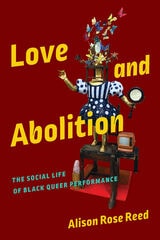
In Love and Abolition, Alison Rose Reed traces how the social life of Black queer performance from the 1960s to the present animates the unfinished work of abolition. She grounds social justice–oriented reading and activist practices specifically in the movement to abolish the prison industrial complex, with far-reaching implications for how we understand affective response as a mobilizing force for revolutionary change.

Reed identifies abolition literature as an emergent field of inquiry that emphasizes social relationships in the ongoing struggle to dismantle systems of coercion, criminalization, and control. Focusing on love as an affective modality and organizing tool rooted in the Black radical tradition’s insistence on collective sociality amidst unrelenting state violence, Reed provides fresh readings of visionaries such as James Baldwin, Ntozake Shange, Sharon Bridgforth, and vanessa german. Both abolitionist manifesto and examination of how Black queer performance offers affective modulations of tough and tender love, Love and Abolition ultimately calls for a critical reconsideration of the genre of prison literature—and the role of the humanities—during an age of mass incarceration.
[more]
cover of Loving God's Wildness: The Christian Roots of Ecological Ethics in American Literature

Loving God's Wildness

The Christian Roots of Ecological Ethics in American Literature

Jeffrey Bilbro

University of Alabama Press, 2015

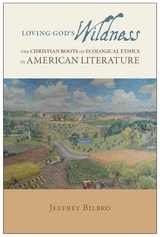
When the Puritans arrived in the New World to carry out the colonization they saw as divinely mandated, they were confronted by the American wilderness. Part of their theology led them to view the natural environment as “a temple of God” in which they should glorify and serve its creator. The larger prevailing theological view, however, saw this vast continent as “the Devil’s Territories” needing to be conquered and cultivated for God’s Kingdom. These contradictory designations gave rise to an ambivalence regarding the character of this land and humanity’s proper relation to it.
 
Loving God’s Wildness rediscovers the environmental roots of America’s Puritan heritage. In tracing this history, Jeffrey Bilbro demonstrates how the dualistic Christianity that the Puritans brought to America led them to see the land as an empty wilderness that God would turn into a productive source of marketable commodities. Bilbro carefully explores the effect of this dichotomy in the nature writings of Henry David Thoreau, John Muir, Willa Cather, and Wendell Berry.
 
Thoreau, Muir, Cather, and Berry imaginatively developed the Puritan theological tradition to propose practical, physical means by which humans should live and worship within the natural temple of God’s creation. They reshaped Puritan dualism, each according to the particular needs of his or her own ecological and cultural contexts, into a theology that demands care for the entire created community. While differing in their approaches and respective ecological ethics, the four authors Bilbro examines all share the conviction that God remains active in creation and that humans ought to relinquish their selfish ends to participate in his wild ecology.
 
Loving God’s Wildness fills a critical gap in literary criticism and environmental studies by offering a sustained, detailed argument regarding how Christian theology has had a profound and enduring legacy in shaping the contours of the American ecological imagination. Literary critics, scholars of religion and environmental studies, and thoughtful Christians who are concerned about environmental issues will profit from this engaging new book.
[more]
cover of Loyal Subjects: Bonds of Nation, Race, and Allegiance in Nineteenth-Century America

Loyal Subjects

Bonds of Nation, Race, and Allegiance in Nineteenth-Century America

Duquette, Elizabeth

Rutgers University Press, 2010

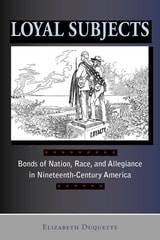
When one nation becomes two, or when two nations become one, what does national affiliation mean or require? Elizabeth Duquette answers this question by demonstrating how loyalty was used during the U.S. Civil War to define proper allegiance to the Union. For Northerners during the war, and individuals throughout the nation after Appomattox, loyalty affected the construction of national identity, moral authority, and racial characteristics.

Loyal Subjects considers how the Civil War complicated the cultural value of emotion, especially the ideal of sympathy. Through an analysis of literary works written during and after the conflict-from Nathaniel Hawthorne's "Chiefly About War Matters" through Henry James's The Bostonians and Charles Chestnutt's "The Wife of His Youth," to the Pledge of Allegiance and W.E.B. Du Bois's John Brown, among many others-Duquette reveals that although American literary criticism has tended to dismiss the Civil War's impact, postwar literature was profoundly shaped by loyalty.
[more]
cover of Luso-American Literature: Writings by Portuguese-Speaking Authors in North America

Luso-American Literature

Writings by Portuguese-Speaking Authors in North America

Moser, Robert H

Rutgers University Press, 2011

Portuguese and Cape Verdean immigrants have had a significant presence in North America since the nineteenth century. Recently, Brazilians have also established vibrant communities in the U.S. This anthology brings together, for the first time in English, the writings of these diverse Portuguese-speaking, or "Luso-American" voices. Historically linked by language, colonial experience, and cultural influence, yet ethnically distinct, Luso-Americans have often been labeled an "invisible minority." This collection seeks to address this lacuna, with a broad mosaic of prose, poetry, essays, memoir, and other writings by more than fifty prominent literary figures--immigrants and their descendants, as well as exiles and sojourners. It is an unprecedented gathering of published, unpublished, forgotten, and translated writings by a transnational community that both defies the stereotypes of ethnic literature, and embodies the drama of the immigrant experience.
[more]