Results by title
167 books match the query 'Artists, Architects, Photographers' and 10 start with l
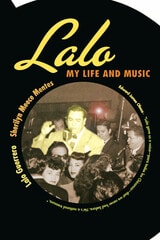
Lalo
My Life and MusicLalo Guerrero and Sherilyn Meece Mentes
University of Arizona Press, 2002
Lalo's autobiography takes readers on a musical rollercoaster, from his earliest enjoyment of Latino and black sounds in Tucson to his burgeoning career in Los Angeles singing with Los Carlistas, the quartet with which he began his recording career in 1938. During the fifties and sixties his music dominated the Latin American charts in both North and South America, and his song "Canción Mexicana" has become the unofficial anthem of Mexico. Through the years, Lalo mastered boleros, rancheras, salsas, mambos, cha-chas, and swing; he performed protest songs, children's music, and corridos that told of his people's struggles. Riding the crest of changing styles, he wrote pachuco boogies in one period and penned clever Spanish parodies of American hit songs in another. For all of these contributions to American music, Lalo was awarded a National Medal of the Arts from President Clinton.
Lalo's story is also the story of his times. We meet his family and earliest musical associates—including his long relationship with Manuel Acuña, who first got Lalo into the recording studio—and the many performers he counted as friends, from Frank Sinatra to Los Lobos. We relive the spirit of the nightclubs where he was a headliner and the one-night stands he performed all over the Southwest. We also discover what life was like in old Tucson and in mid-century L.A. as seen through the eyes of this uniquely creative artist. "In 1958," Guerrero recalls, "I wrote a song about a Martian who came to Earth to clear up certain misunderstandings about Mars. Now I have decided that it is time to set some things straight about Lalo Guerrero." Lalo does just that, in an often funny, sometimes sentimental story that traces the musical genius of a man whose talent has taken him all over the world, but who still believes in giving back to the community. His story is a gift to that community.
The book also features a detailed discography, compiled by Lalo's son Mark, tracing his recorded output from the days of 78s to his most recent CDs.
Laszlo Moholy-Nagy
Biographical WritingsLouis Kaplan
Duke University Press, 1995
In Laszlo Moholy-Nagy, Louis Kaplan applies the Derridean deconstructivist model of the "signature effect" to an intellectual biography of a Constructivist artist. Inhabiting the borderline between life and work, the book demonstrates how the signature inscribed by "Moholy" operates in a double space, interweaving signified object and signifying matter, autobiography and auto-graphy. Through interpretative readings of over twenty key artistic and photographic works, Kaplan graphically illustrates Moholy’s signature effect in action. He shows how this effect plays itself out in the complex of relations between artistic originality and plagiarism, between authorial identity and anonymity, as well as in the problematic status of the work of art in the age of technical reproduction. In this way, the book reveals how Moholy’s artistic practice anticipates many of the issues of postmodernist debate and thus has particular relevance today. Consequently, Kaplan clarifies the relationship between avant-garde Constructivism and contemporary deconstruction.
This new and innovative configuration of biography catalyzed by the life writing of Moholy-Nagy will be of critical interest to artists and writers, literary theorists, and art historians.
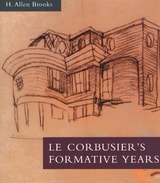
Le Corbusier's Formative Years
Charles-Edouard Jeanneret at La Chaux-de-FondsH. Allen Brooks
University of Chicago Press, 1997
"There is much in this fine volume for anyone interested not just in architecture, but in the roots of human creativity and in the origins of the most powerful artistic current of our century. . . . This book is a life's work of scholarship. It has been well spent."—Toronto Globe and Mail
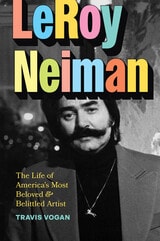
LeRoy Neiman
The Life of America’s Most Beloved and Belittled ArtistTravis Vogan
University of Chicago Press, 2024
LeRoy Neiman—the cigar-smoking and mustachioed artist famous for his Playboy illustrations, sports paintings, and brash interviews—stood among the twentieth century’s most famous, wealthy, and polarizing artists. His stylish renderings of musicians, athletes, and sporting events captivated fans but baffled critics, who accused Neiman of debasing art with popular culture. Neiman cashed in on the controversy, and his extraordinary popularity challenged the norms of what art should be, where it belongs, and who should have access to it.
The story of a Depression-era ragamuffin–turned–army chef–turned–celebrity artist, Neiman’s biography is a rollicking ride through twentieth-century American history, punctuated by encounters with the likes of Muhammad Ali, Frank Sinatra, Joe Namath, and Andy Warhol. In the whirlwind of his life, Neiman himself once remarked that even he didn’t know who he really was—but, he said, the fame and money that came his way made it all worth it. In this first biography of the captivating and infamous man, Travis Vogan hunts for the real Neiman amid the America that made him.
.
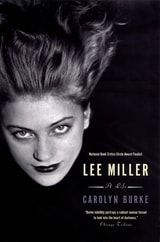
Lee Miller
A LifeCarolyn Burke
University of Chicago Press, 2007
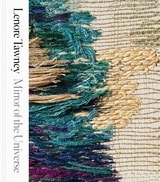
Lenore Tawney
Mirror of the UniverseEdited by Karen Patterson
University of Chicago Press, 2019
Raised and trained in Chicago before she moved to New York, Tawney had a storied career. She was known for employing an ancient Peruvian gauze weave technique to create a painterly effect that appeared to float in space rather than cling to the wall, as well as for being one of the first artists to blend sculptural techniques with weaving practices and, in the process, pioneered a new direction in fiber art. Despite her prominence on the New York art scene, however, she has only recently begun to receive her due from the greater art world. Accompanying a retrospective at the John Michael Kohler Arts Center, this catalog features a comprehensive biography of Tawney, additional essays on her work, and two hundred full-color illustrations, making it of interest to contemporary artists, art historians, and the growing audience for fiber art.
Copublished with the John Michael Kohler Arts Center.
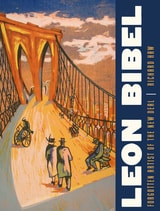
Leon Bibel
Forgotten Artist of the New DealRichard Haw
Rutgers University Press, 2025
Honorable Mention for the 2025 New Deal Book Award
Leon Bibel (1913–1995) was a prolific modern American artist who painted, printed, stamped, etched, sketched, and carved. He produced pieces that ranged from social realism to dreamy expressionism and was an aesthetic experimentalist, never working for too long in any medium or style. And despite Bibel's obvious talent, his work would have languished in obscurity were it not for the New Deal programs like the Federal Art Project and Public Works of Art Project.
Leon Bibel, the first biography of this eclectic artist, recounts his life from his birth in Szczebrzeszyn, Poland, in 1913, to his death in New Jersey in 1995. After immigrating to the United States in the 1920s, Bibel came of age during the Great Depression, when New Deal agencies recognized his abilities and supported his artistic endeavors. Working-class artists faced challenges after these programs folded, and Bibel would later spend twenty years as a New Jersey chicken farmer before resurrecting his art career in the 1960s.
Historian Richard Haw shows how Bibel's life was defined by the New Deal, his visionary artwork shaped by the era's commitment to social and economic justice. With reproductions of more than 240 of Bibel's works, most in vivid color, this book reveals how he depicted everything from the trauma of unemployment to the dignity of work, from the horrors of lynching to the pleasures of everyday life.
Living In The Country Growing Weird
A Deep Rural AdventureDennis Parks
University of Nevada Press, 2001
Parks created a pottery school that attracts students from around the world and developed for himself an international reputation as the creator of powerful, innovative works in clay. Meanwhile, he and his family had to master the skills required of those who choose to live in the back country--growing and hunting their own food, renovating or building from scratch the structures they needed for residences or studios, resolving conflicts with neighbors, inventing their own amusements. The transformation from middle-class urbanity to small-town simplicity is, as Parks reveals, a lurching and sometimes hilarious process, and the achievement of self-sufficiency is similarly fraught with unexpected challenges.
Lorado Taft
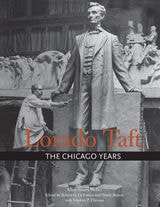
The Chicago YearsAllen Stuart Weller; Edited by Robert G. La France and Henry Adams with Stephen P. Thomas
University of Illinois Press, 2014
Returning to Chicago from France, Taft established a bustling studio and began a twenty-one-year career as an instructor at the Art Institute, succeeded by three decades as head of the Midway Studios at the University of Chicago. This triumphant era included ephemeral sculpture for the 1893 World's Columbian Exposition; a prolific turn-of-the-century period marked by the gold-medal-winning The Solitude of the Soul; the 1913 Fountain of the Great Lakes; the 1929 Alma Mater at the University of Illinois; and large-scale projects such as his ambitious program for Chicago's Midway with the monumental Fountain of Time. In addition, the book charts Taft's mentoring of women artists, including the so-called White Rabbits at the World's Fair, many of whom went on to achieve artistic success.
Lavishly illustrated with color images of Taft's most celebrated works, Lorado Taft: The Chicago Years completes the first major study of a great American artist.
Louis I. Kahn
The Nordic LatitudesPer Olaf Fjeld
University of Arkansas Press, 2019
Kahn’s Nordic and European ties are emphasized in this study that also covers his early childhood in Estonia, his travels, and his relationships with other architects, including the Norwegian architect Arne Korsmo.
The authors have gathered personal reflections, archival material, and other student work to offer insight into the wisdom that Kahn imparted to his students in his famous masterclass. Louis I. Kahn: The Nordic Latitudes addresses Kahn’s legacy both personally and in terms of the profession, documents a research trip the University of Pennsylvania’s Louis I. Kahn Collection, and confronts the affiliation of Kahn’s work with postmodernism.