Results by title
1272 books match the query 'Asia' and 42 start with l
Land for the People
The State and Agrarian Conflict in IndonesiaAnton Lucas
Ohio University Press, 2013
Half of Indonesia’s massive population still lives on farms, and for these tens of millions of people the revolutionary promise of land reform remains largely unfulfilled. The Basic Agrarian Law, enacted in the wake of the Indonesian revolution, was supposed to provide access to land and equitable returns for peasant farmers. But fifty years later, the law’s objectives of social justice have not been achieved.
Land for the People provides a comprehensive look at land conflict and agrarian reform throughout Indonesia’s recent history, from the roots of land conflicts in the prerevolutionary period and the Sukarno and Suharto regimes, to the present day, in which democratization is creating new contexts for people’s claims to the land. Drawing on studies from across Indonesia’s diverse landscape, the contributors examine some of the most significant issues and events affecting land rights, including shifts in policy from the early postrevolutionary period to the New Order; the Land Administration Project that formed the core of land policy during the late New Order period; a long-running and representative dispute over a golf course in West Java that pitted numerous local farmers against the government and local elites; Suharto’s notorious “million hectare” project that resulted in loss of access to land and resources for numerous indigenous farmers in Kalimantan; and the struggle by Bandung’s urban poor to be treated equitably in the context of commercial land development. Together, these essays provide a critical resource for understanding one of Indonesia’s most pressing and most influential issues.
Contributors: Afrizal, Dianto Bachriadi, Anton Lucas, John McCarthy, John Mansford Prior, Gustaaf Reerink, Carol Warren, and Gunawan Wiradi.
Land's End
Capitalist Relations on an Indigenous FrontierTania Murray Li
Duke University Press, 2014
The book challenges complacent, modernization narratives promoted by development agencies that assume inefficient farmers who lose out in the shift to high-value export crops can find jobs elsewhere. Decades of uneven and often jobless growth in Indonesia meant that for newly landless highlanders, land's end was a dead end. The book also has implications for social movement activists, who seldom attend to instances where enclosure is initiated by farmers rather than coerced by the state or agribusiness corporations. Li's attention to the historical, cultural, and ecological dimensions of this conjuncture demonstrates the power of the ethnographic method and its relevance to theory and practice today.
Landbridge
Life in FragmentsY-Dang Troeung
Duke University Press, 2024
Landing Zones
Southern Veterans Remember VietnamJames R. Wilson
Duke University Press, 1990
These stories focus on a uniquely southern view of Vietnam. In terms of numbers the South shouldered more than its share of human cost—31 percent of Americans who served came from one of the eleven states of the old Confederacy, and 28 percent of the dead were southerners. Southerners also brought to Vietnam certain shared cultural tastes and a particularly southern heritage of honor in military service stemming from the Civil War. For many, as their testimony reveals, a sense of patriotism was tested and questioned by the horrors of war, and for others that patriotism was a continued source of strength.
Individually and collectively, however, these oral histories make up a picture of war that prevents us from forgetting the truth as one veteran put it: “Vietnam was not one war, but a thousand little nasty wars.”

Language, Power, and Ideology in Brunei Darussalam
Mis Sea#99Geoffrey C. Gunn
Ohio University Press, 1996

Laughing Lost in the Mountains
Poems of Wang WeiWei Wang
University Press of New England, 1992
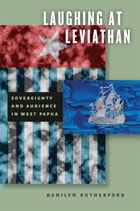
Laughing at Leviathan
Sovereignty and Audience in West PapuaDanilyn Rutherford
University of Chicago Press, 2012
Law and Kingship in Thailand During the Reign of King Chulalongkorn
David M. Engel
University of Michigan Press, 1975
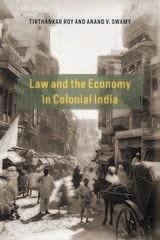
Law and the Economy in Colonial India
Tirthankar Roy and Anand V. Swamy
University of Chicago Press, 2021
Tirthankar Roy and Anand V. Swamy trace the beginnings of the current Indian legal system to the years of British colonial rule. They show how India inherited an elaborate legal system from the British colonial administration, which incorporated elements from both British Common Law and indigenous institutions. In the case of property law, especially as it applied to agricultural land, indigenous laws and local political expediency were more influential in law-making than concepts borrowed from European legal theory. Conversely, with commercial law, there was considerable borrowing from Europe. In all cases, the British struggled with limited capacity to enforce their laws and an insufficient knowledge of the enormous diversity and differentiation within Indian society. A disorderly body of laws, not conducive to production and trade, evolved over time. Roy and Swamy’s careful analysis not only sheds new light on the development of legal institutions in India, but also offers insights for India and other emerging countries through a look at what fosters the types of institutions that are key to economic growth.
Law and the Economy in a Young Democracy
India 1947 and BeyondTirthankar Roy and Anand V. Swamy
University of Chicago Press, 2022
Economists have long lamented how the inefficiency of India's legal system undermines the country’s economic capacity. How has this come to be? The prevailing explanation is that the postcolonial legal system is understaffed and under-resourced, making adjudication and contract enforcement slow and costly.
Taking this as given, Law and the Economy in a Young Democracy examines the contents and historical antecedents of these laws, including how they have stifled economic development. Economists Roy and Swamy argue that legal evolution in independent India has been shaped by three factors: the desire to reduce inequality and poverty; the suspicion that market activity, both domestic and international, can be detrimental to these goals; and the strengthening of Indian democracy over time, giving voice to a growing fraction of society, including the poor.
Weaving the story of India's heralded economic transformation with its social and political history, Roy and Swamy show how inadequate legal infrastructure has been a key impediment to the country's economic growth during the last century. A stirring and authoritative history of a nation rife with contradictions, Law and the Economy in a Young Democracy is essential reading for anyone seeking to understand India's current crossroads—and the factors that may keep its dreams unrealized.
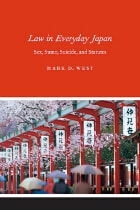
Law in Everyday Japan
Sex, Sumo, Suicide, and StatutesMark D. West
University of Chicago Press, 2005
Compiling case studies based on seven fascinating themes—karaoke-based noise complaints, sumo wrestling, love hotels, post-Kobe earthquake condominium reconstruction, lost-and-found outcomes, working hours, and debt-induced suicide—Law in Everyday Japan offers a vibrant portrait of the way law intermingles with social norms, historically ingrained ideas, and cultural mores in Japan. Each example is informed by extensive fieldwork. West interviews all of the participants-from judges and lawyers to defendants, plaintiffs, and their families-to uncover an everyday Japan where law matters, albeit in very surprising ways.
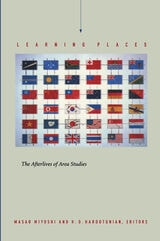
Learning Places
The Afterlives of Area StudiesMasao Miyoshi and H.D. Harootunian, eds.
Duke University Press, 2002
A tremendous amount of money flows—particularly within the sphere of East Asian studies, the contributors claim—from foreign agencies and governments to U.S. universities to underwrite courses on their histories and societies. In the process, this volume argues, such funds have gone beyond support to the wholesale subsidization of students in graduate programs, threatening the very integrity of research agendas. Native authority has been elevated to a position of primacy; Asian-born academics are presumed to be definitive commentators in Asian studies, for example. Area studies, the contributors believe, has outlived the original reason for its construction. The essays in this volume examine particular topics such as the development of cultural studies and hyphenated studies (such as African-American, Asian-American, Mexican-American) in the context of the failure of area studies, the corporatization of the contemporary university, the prehistory of postcolonial discourse, and the problematic impact of unformulated political goals on international activism.
Learning Places points to the necessity, the difficulty, and the possibility in higher education of breaking free from an entrenched Cold War narrative and making the study of a specific area part of the agenda of education generally. The book will appeal to all whose research has a local component, as well as to those interested in the future course of higher education generally.
Contributors. Paul A. Bové, Rey Chow, Bruce Cummings, James A. Fujii, Harry Harootunian, Masao Miyoshi, Tetsuo Najita, Richard H. Okada, Benita Parry, Moss Roberts, Bernard S. Silberman, Stefan Tanaka, Rob Wilson, Sylvia Yanagisako, Mitsuhiro Yoshimoto
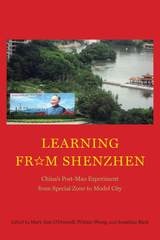
Learning from Shenzhen
China’s Post-Mao Experiment from Special Zone to Model CityEdited by Mary Ann O'Donnell, Winnie Wong, and Jonathan Bach
University of Chicago Press, 2017
Bringing China studies into dialogue with urban studies, the contributors explore how the post-Mao Chinese appropriation of capitalist logic led to a dramatic remodeling of the Chinese city and collective life in China today. These essays show how urban villages and informal institutions enabled social transformation through cases of public health, labor, architecture, gender, politics, education, and more. Offering scholars and general readers alike an unprecedented look at one of the world’s most dynamic metropolises, this collective history uses the urban case study to explore critical problems and possibilities relevant for modern-day China and beyond.
Learning to Live with the Past
Krishna Kumar
Seagull Books, 2023
How does education shape political rivalry and hostility? The Partition of the Indian subcontinent in 1947—the violence that followed it, and its living legacy of rival nationalisms—has made a deep and pervasive impact on education in both India and Pakistan. In Learning to Live with the Past, educationist Krishna Kumar dwells on the complex terrain every history teacher has to navigate: how to make the past come alive without running the risk of creating a desire to lose this “pastness.”
Substantiating this question with a wealth of experiences gained from his extensive research on history textbooks, as well as his interactions with students and teachers in both countries, Kumar explores the integral function the discipline of history plays in the project of nation-building. To help children learn to live with the past, Kumar amplifies the need for spaces that create possibilities for inquiries into a “longer” common heritage shared by South Asia without necessarily denying a national narrative or encouraging an urge to undo the past.
Learning to Love
Intimacy and the Discourse of Development in ChinaSonya E. Pritzker
University of Michigan Press, 2024
Learning to Love offers a range of perspectives on the embodied, relational, affective, and sociopolitical project of “learning to love” at the New Life Center for Holistic Growth, a popular “mind-body-spirit” bookstore and practice space in northeast China, in the early part of the 21st century. This intimate form of self-care exists alongside the fast-moving, growing capitalist society of contemporary China and has emerged as an understandable response to the pressures of Chinese industrialized life in the early 21st century. Opening with an investigation of the complex ways newcomers to the center suffered a sense of being “off,” both in and with the world at multiple scales, Learning to Love then examines how new horizons of possibility are opened as people interact with one another as well as with a range of aesthetic objects at New Life.
Author Sonya Pritzker draws upon the core concepts of scalar intimacy—a participatory, discursive process in which people position themselves in relation to others as well as dominant ideologies, concepts, and ideals—and scalar inquiry—the process through which speakers interrogate these forms, their relationship with them, and their participation in reproducing them. In demonstrating the collaborative interrogation of culture, history, and memory, she examines how these exercises in physical, mental, and spiritual self-care allow participants to grapple with past social harms and forms of injustice, how historical systems of power—including both patriarchal and governance structures—continue in the present, and how they might be transformed in the future. By examining the interactions and relational experiences from New Life, Learning to Love offers a range of novel theoretical interventions into political subjectivity, temporality, and intergenerational trauma/healing.

Leaving the Tomboy Behind
Sinophone Lesbian Subjectivities and Transnational Queer MediaCarman K. M. Fung
University of Michigan Press, 2027
For decades queer women in the Sinophone world have followed a strict dating custom: a lesbian relationship usually consists of a masculine partner, known as a tomboy, and a feminine counterpart. In the 2010s, however, many queer women have come to reject this custom and abandon their own former identities as tomboys. Leaving The Tomboy Behind follows their journey moving beyond lesbian masculinity and turning towards global LGBTQ+ media from Japan, Thailand, and the United States to explore new forms of gender expressions. Carman K. M. Fung offers a rich ethnography of the impacts media has had on queer Sinophone women’s lives, focusing on transnational interpretations and misinterpretations, and how media globalization shapes viewers’ perceptions of unfamiliar places. Through a combination of personal interviews and analysis of the global media these communities consume, Fung traces the genealogy of the tomboy identity in China, Hong Kong, and Taiwan in relation to global queer and trans cultures.
Legitimizing Empire
Filipino American and U.S. Puerto Rican Cultural CritiqueFaye Caronan
University of Illinois Press, 2015
Faye Caronan's examination interprets the pivotal engagement of novels, films, performance poetry, and other cultural productions as both symptoms of and resistance against American military, social, economic, and political incursions. Though the Philippines became an independent nation and Puerto Rico a U.S. commonwealth, both remain subordinate to the United States. Caronan's juxtaposition reveals two different yet simultaneous models of U.S. neocolonial power and contradicts American exceptionalism as a reluctant empire that only accepts colonies for the benefit of the colonized and global welfare. Her analysis, meanwhile, demonstrates how popular culture allows for alternative narratives of U.S. imperialism, but also functions to contain those alternatives.

Letters from Clara
One Intrepid Woman's Travels on the Eve of War, 1936-1939Janet Newman
Wisconsin Historical Society Press, 2022
Liberalism and the Postcolony
Thinking the State in 20th-Century PhilippinesLisandro E. Claudio
National University of Singapore Press, 2017
Through the biographies of four Filipino scholar-bureaucrats—Camilo Osias, Salvador Araneta, Carlos P. Romulo, and Salvador P. Lopez—Lisandro E. Claudio argues that liberal thought served as the grammar of Filipino democracy in the twentieth century. Melding political philosophy and narrative history, he takes us through various articulations of liberalism in pedagogy, international affairs, economics, and literature. In this first book on Filipino liberals in the twentieth century, Claudio brings to light an obscured history of the Philippine state and also argues for a new liberalism rooted in the postcolonial experience, a timely intervention in light of the ascent of President Rodrigo Duterte and the current developments in Southeast Asian politics.
Liberalization's Children
Gender, Youth, and Consumer Citizenship in Globalizing IndiaRitty A. Lukose
Duke University Press, 2009
Moving beyond elite figurations of globalizing Indian youth, Lukose draws on ethnographic research to examine how non-elite college students in the southern state of Kerala mediate region, nation, and globe. Kerala sits at the crossroads of development and globalization. Held up as a model of left-inspired development, it has also been transformed through an extensive and largely non-elite transnational circulation of labor, money, and commodities to the Persian Gulf and elsewhere. Focusing on fashion, romance, student politics, and education, Lukose carefully tracks how gender, caste, and class, as well as colonial and postcolonial legacies of culture and power, affect how students navigate their roles as citizens and consumers. She explores how mass-mediation and an expanding commodity culture have differentially incorporated young people into the structures and aspirational logics of globalization.
Life Under the Palms
The Sublime World of the Anti-colonialist Jacob HaafnerPaul van der Velde
National University of Singapore Press, 2019
With the help of generous excerpts from Haafner's own writings, including material newly translated into English, Paul van der Velde tells an affecting story of a young man who made a world for himself along the Coromandel Coast, in Ceylon and Calcutta, but who returned to Europe to live the last years of his life in Amsterdam, suffering an acute nostalgia for Asia. This will be compelling reading for anyone interested in European response to the cultures of Asia.
Life in a Cambodian Orphanage
A Childhood Journey for New OpportunitiesKathie Carpenter
Rutgers University Press, 2021
Lifelines
The Traffic of TraumaHarris Solomon
Duke University Press, 2022
Like Cattle and Horses
Nationalism and Labor in Shanghai, 1895-1927S. A. Smith
Duke University Press, 2002
While the massive wave of labor protest in the 1920s was principally an expression of militant nationalism rather than of class consciousness, Smith argues, elements of a precarious class identity were in turn forged by the very discourse of nationalism. By linking work-related demands to the defense of the nation, anti-imperialist nationalism legitimized participation in strikes and sensitized workers to the fact that they were worthy of better treatment as Chinese citizens. Smith shows how the workers’ refusal to be treated “like cattle and horses” (a phrase frequently used by workers to describe their condition) came from a new but powerfully felt sense of dignity. In short, nationalism enabled workers to interpret the anger they felt at their unjust treatment in the workplace in political terms and to create a link between their position as workers and their position as members of an oppressed nation. By focusing on the role of the working class, Like Cattle and Horses is one of very few studies that examines nationalism “from below,” acknowledging the powerful agency of nonelite forces in promoting national identity.
Like Cattle and Horses will interest historians of labor, modern China, and nationalism, as well as those engaged in the study of revolutions and revolt.
Linking Community and Corrections in Japan
Elmer H. Johnson with Carol H. Jonnson
Southern Illinois University Press, 2000
Completing Elmer H. Johnson’s impressive three-volume examination of corrections in Japan, Linking Community and Corrections in Japan (written with the assistance of Carol H. Johnson) focuses on the Rehabilitation Bureau’s responsibilities regarding probation, parole, and aftercare as well as the Correction Bureau’s role in Japan’s version of community-oriented corrections. Johnson first outlines the tasks of the Rehabilitation Bureau, then turns to historical and contemporary views of community and corrections. In discussions of the probation and parole system for both adults and juveniles, he describes in detail the Japanese version of supervision and the return of prisoners to the community. One strength of this study is Johnson’s impartiality. As an investigator, he functions as a "friend of the court," an adviser who is free to conduct an objective pursuit of the fundamental strengths and shortcomings of the Japanese prison system. He also follows the Foucauldian dictum: "With the prisons there would be no sense of limiting oneself to discourses about prisons; just as important are the discourses which arise within the prison, the decisions and regulations which are among its constituent elements, its means of functioning, along with its strategies."
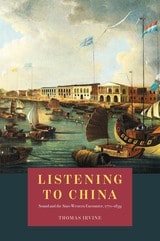
Listening to China
Sound and the Sino-Western Encounter, 1770-1839Thomas Irvine
University of Chicago Press, 2020
Through these stories, Irvine not only investigates how the Sino-Western encounter sounded, but also traces the West’s shifting response to China. As the trading relationships between China and the West broke down, travelers and music theorists abandoned the vision of shared musical approaches, focusing instead on China’s noisiness and sonic disorder and finding less to like in its music. At the same time, Irvine reconsiders the idea of a specifically Western music history, revealing that it was comparison with China, the great “other,” that helped this idea emerge. Ultimately, Irvine draws attention to the ways Western ears were implicated in the colonial and imperial project in China, as well as to China’s importance to the construction of musical knowledge during and after the European Enlightenment. Timely and original, Listening to China is a must-read for music scholars and historians of China alike.
Listening to the Voices of the Dead
The 3-11 Tohoku Disaster SpeaksIsomae Jun'ichi
University of Michigan Press, 2024
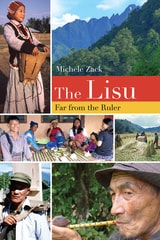
Lisu
Far from the RulerMichele Zack
University Press of Colorado, 2017
This book brings the ironic worldview of the Lisu to life through vivid, often amusing accounts of individuals, communities, regions, and practices. One of the smallest and last groups of stateless people, and the most egalitarian of all Southeast Asian highland minorities, the Lisu have not only survived extremes at the crossroads of civil wars, the drug trade, and state-sponsored oppression but adapted to modern politics and technology without losing their identity.
The Lisu weaves a lively narrative that condenses humanity’s transition from border-free tribal groupings into today’s nation-states and global market economy. Journalist and historian Michele Zack first encountered the Lisu in the 1980s and conducted research and fieldwork among them in the 1990s. In 2014 she again traveled extensively in tribal areas of Thailand, Myanmar, and China, when she documented the transformative changes of globalization. Some Lisu have adopted successful new urban occupations in business and politics, while most continue to live as agriculturists “far from the ruler.”
The cohesiveness of Lisu culture has always been mysterious—they reject hierarchical political organization and traditionally had no writing system—yet their culture provides a particular skillset that has helped them navigate the terrain of the different religious and political systems they have recently joined. They’ve made the transition from living in lawless, self-governing highland peripheries to becoming residents and citizens of nation-states in a single generation.
Ambitious and written with journalist’s eye for detail and storytelling, The Lisu introduces the unique and fascinating culture of this small Southeast Asian minority. Their path to national and global citizenship illustrates the trade-offs all modern people have made, and their egalitarian culture provides insight into current political choices in a world turning toward authoritarianism.
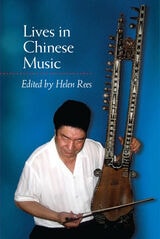
Lives in Chinese Music
Edited by Helen Rees
University of Illinois Press, 2008
Using biography to deepen understanding of Chinese music, contributors present richly contextualized portraits of rural folk singers, urban opera singers, literati, and musicians on both geographic and cultural frontiers. The topics investigated by these authors provide fresh insights into issues such as the urban-rural divide, the position of ethnic minorities within the People's Republic of China, the adaptation of performing arts to modernizing trends of the twentieth century, and the use of the arts for propaganda and commercial purposes.
The social and political history of China serves as a backdrop to these discussions of music and culture, as the lives chronicled here illuminate experiences from the pre-Communist period through the Cultural Revolution to the present. Showcasing multiple facets of Chinese musical life, this collection is especially effective in taking advantage of the liberalization of mainland China that has permitted researchers to work closely with artists and to discuss the interactions of life and local and national histories in musicians' experiences.
Contributors are Nimrod Baranovitch, Rachel Harris, Frank Kouwenhoven, Tong Soon Lee, Peter Micic, Helen Rees, Antoinet Schimmelpenninck, Shao Binsun, Jonathan P. J. Stock, and Bell Yung.
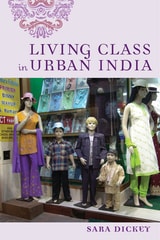
Living Class in Urban India
Dickey, Sara
Rutgers University Press, 2016
Many Americans still envision India as rigidly caste-bound, locked in traditions that inhibit social mobility. In reality, class mobility has long been an ideal, and today globalization is radically transforming how India’s citizens perceive class. Living Class in Urban India examines a nation in flux, bombarded with media images of middle-class consumers, while navigating the currents of late capitalism and the surges of inequality they can produce.
This book is also freely available online as an open-access digital edition, published with the support of the National Endowment for the Humanities.

Living Worth
Value and Values in Global Pharmaceutical MarketsStefan Ecks
Duke University Press, 2022
Living in the Stone Age
Reflections on the Origins of a Colonial FantasyDanilyn Rutherford
University of Chicago Press, 2018
Living in the Stone Age answers this question by following the adventures of officials sent to the New Guinea highlands in the 1930s to establish a foothold for Dutch colonialism. These officials became deeply dependent on the good graces of their would-be Papuan subjects, who were their hosts, guides, and, in some cases, friends. Danilyn Rutherford shows how, to preserve their sense of racial superiority, these officials imagined that they were traveling in the Stone Age—a parallel reality where their own impotence was a reasonable response to otherworldly conditions rather than a sign of ignorance or weakness. Thus, Rutherford shows, was born a colonialist ideology.
Living in the Stone Age is a call to write the history of colonialism differently, as a tale of weakness not strength. It will change the way readers think about cultural contact, colonial fantasies of domination, and the role of anthropology in the postcolonial world.
Living with Agent Orange
Conversations in Postwar Viet NamDiane Niblack Fox
University of Massachusetts Press, 2024
For over half a century, the Vietnamese people have endured the harmful legacies of Agent Orange, the toxic herbicide used by the American military as a type of chemical warfare. While scientists and politicians continue to debate how to best address its human and environmental consequences, the nearly three million Vietnamese whose lives have been shaped by its lingering effects have been largely left out of the conversation.
To understand how Agent Orange has impacted the lives and livelihoods of everyday Vietnamese people, Diane Niblack Fox interviewed families and individuals living with its aftereffects across the northern, central, and southern regions of the country. In powerfully written prose, Fox shares the personal accounts of villagers, as they describe caring for loved ones with chronic illnesses and disabilities and their attempts to secure medical and financial assistance. Living with Agent Orange also chronicles the moving stories of rebuilt lives, of family and community support, and of the overriding power of the human spirit.
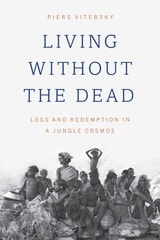
Living without the Dead
Loss and Redemption in a Jungle CosmosPiers Vitebsky
University of Chicago Press, 2017
Today, young Sora are rejecting the worldview of their ancestors and switching their allegiance to warring sects of fundamentalist Christianity or Hinduism. Communion with ancestors is banned as sacred sites are demolished, female shamans are replaced by male priests, and debate with the dead gives way to prayer to gods. For some, this shift means liberation from jungle spirits through literacy, employment, and democratic politics; others despair for fear of being forgotten after death.
How can a society abandon one understanding of reality so suddenly and see the world in a totally different way? Over forty years, anthropologist Piers Vitebsky has shared the lives of shamans, pastors, ancestors, gods, policemen, missionaries, and alphabet worshippers, seeking explanations from social theory, psychoanalysis, and theology. Living without the Dead lays bare today’s crisis of indigenous religions and shows how historical reform can bring new fulfillments—but also new torments and uncertainties.
Vitebsky explores the loss of the Sora tradition as one for greater humanity: just as we have been losing our wildernesses, so we have been losing a diverse range of cultural and spiritual possibilities, tribe by tribe. From the award-winning author of The Reindeer People, this is a heartbreaking story of cultural change and the extinction of an irreplaceable world, even while new religious forms come into being to take its place.
Logics of Empowerment
Development, Gender, and Governance in Neoliberal IndiaAradhana Sharma
University of Minnesota Press, 2008
A critical look at the globally dominant development strategy of “empowerment”
Celebratory news features about India’s thriving middle class tell only part of the story of the country’s recent economic rise, frequently glossing over the 300 million Indians who live on the margins and struggle to survive under economic liberalization. How do those cast out of their country’s successes perceive and respond to their position and mobilize against disempowerment?
In Logics of Empowerment, Aradhana Sharma takes up these questions, focusing on the work of an innovative women’s program called Mahila Samakhya that is part governmental and part nongovernmental and strives to empower those rural Indian women who have been pushed aside. She details the awkward ideological articulations and paradoxical outcomes of this unique activist-cum-government organizational structure and usage of empowerment. Bringing much-needed specificity to the study of neoliberalism, Logics of Empowerment fosters a deeper understanding of development and politics in contemporary India.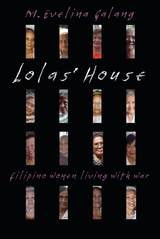
Lolas' House
Filipino Women Living with WarM. Evelina Galang
Northwestern University Press, 2017
During World War II more than one thousand Filipinas were kidnapped by the Imperial Japanese Army. Lolas’ House tells the stories of sixteen surviving Filipino “comfort women.”
M. Evelina Galang enters into the lives of the women at Lolas’ House, a community center in metro Manila. She accompanies them to the sites of their abduction and protests with them at the gates of the Japanese embassy. Each woman gives her testimony, and even though the women relive their horror at each telling, they offer their stories so that no woman anywhere should suffer wartime rape and torture.
Lolas’ House is a book of testimony, but it is also a book of witness, of survival, and of the female body. Intensely personal and globally political, it is the legacy of Lolas’ House to the world.
London
The Selden Map and the Making of a Global City, 1549-1689Robert K. Batchelor
University of Chicago Press, 2013
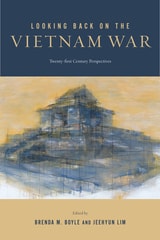
Looking Back on the Vietnam War
Twenty-first-Century PerspectivesBoyle, Brenda M
Rutgers University Press, 2016
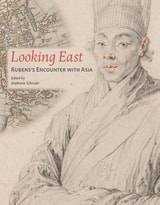
Looking East
Rubens’s Encounter with AsiaStephanie Schrader
J. Paul Getty Trust, The, 2013
Peter Paul Rubens’s fascinating depiction of a man wearing Korean costume of around 1617, in the collection of the J. Paul Getty Museum, has been considered noteworthy since it was made. Published to accompany an exhibition of Rubens’s Man in Korean Costume at the J. Paul Getty Museum from March 5 to June 9, 2013, Looking East: Rubens’s Encounter with Asia explores the various facets of Rubens’s compelling drawing of this Asian man that appears in later Rubens works. This large drawing was copied in Rubens’s studio during his own time and circulated as a reproductive print in the eighteenth century. Despite the drawing’s renown, however, the reasons why it was made and whether it actually depicts a specific Asian person remain a mystery. The intriguing story that develops involves a shipwreck, an unusual hat, the earliest trade between Europe and Asia, the trafficking of Asian slaves, and the role of Jesuit missionaries in Asia.
The book’s editor, Stephanie Schrader, traces the interpretations and meanings ascribed to this drawing over the centuries. Could Rubens have actually encountered a particular Korean man who sailed to Europe, or did he instead draw a model wearing Asian clothing or simply hear about such a person? What did Europeans really know about Korea during that period, and what might the Jesuits have had to do with the production of this drawing? All of these questions are asked and explored by the book’s contributors, who look at the drawing from various points of view.
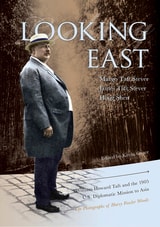
Looking East
William Howard Taft and the 1905 U.S. Diplomatic Mission to Asia: the Photographs of Harry Fowler WoodsMargo Taft Stever, James Taft Stever, and Hong Shen
University of Minnesota Press, 2015
Since the mid-19th century, relations between the United States in the West and Asian countries in the East have been an aggregate of diplomatic miscues and achievements, of trade policy successes and failures, and of cultural chasms and bridges. From the Treaty of Wangxia in 1844 that provided America with trading rights in China on a par with European countries to the contemporary political debates and educational partnerships in nations like Japan, Vietnam, India, and China, the element of understanding and appreciating differences has been paramount.
A singular event in this heritage of almost 150 years in the 1905 mission that sent William Howard Taft on a combination trade and culture junket to Asian countries. Occurring just a few years after U.S. Secretary of State's John Hay's 1899 Open Door Note that sought to keep China open to equitable trade with all countries, the Taft delegation primarily visited China, Japan, and the Philippines to shore up America's interests and to learn more about their emerging partners in the new century.
In Looking East, authors Margo Taft Stever, James Taft Stever, and Hong Shen explore this journey not only by an assiduous use of archives and historical analyses, but especially through the extraordinary images captured by photographer Harry Fowler Woods. Both Taft and Woods are ancestors of two of the authors so there is a particular interest on their part. With scholar Shen, they uncovered these photos and created exhibitions and published the initial Chinese-language edition of this volume by Zhejiang University Press in 2012. In this new, English-language edition, William Howard Taft's 1905 endeavors in Asia are freshly accorded the insight and appreciation they deserve in American diplomatic history.
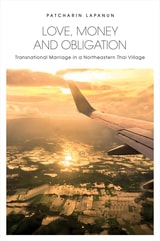
Love, Money and Obligation
Transnational Marriage in a Northeastern Thai VillagePatcharin Lapanun
National University of Singapore Press, 2019
Northeast Thailand has seen an increase in marriages between Thai women and farang (Western) men. Often the women are less well off and from rural areas in the country, while the men largely come from the United States and Europe and settle permanently in Thailand. These unions have created a new social class, with distinctive consumption patterns and lifestyles. And they are challenging gender relations and local perceptions of sexuality, marriage, and family.
In Love, Money and Obligation, Patcharin Lapanun offers an exploration of these marriages and their larger effect on Thai communities. Her interviews with women and men engaging in these transnational relationships highlight the complexities of the associations, as they are shaped by love, money, and gender obligations on the one hand and the dynamics of socio-cultural and historical contexts on the other. Her in-depth and even-handed examination highlights the importance of women’s agency and the strength and creativity of people seeking to forge meaningful lives in the processes of social transition and in the face of local and global encounters.
Lunch With a Bigot
The Writer in the WorldAmitava Kumar
Duke University Press, 2015