Results by title
490 books match the query 'Asian' and 10 start with l
Language Use and Language Change in Brunei Darussalam
Mis Sea#100Peter W. Martin
Ohio University Press, 1996
The oil-rich sultanate of Brunei Darussalam is located on the northern coast of Borneo between the two Malaysian states of Sarawak and Sabah. Though the country is small in size and in population, the variety of language use there provides a veritable laboratory for linguists in the fields of Austronesian linguistics, bilingual studies, and sociolinguistic studies, particularly those dealing with language shift.
This useful reference is divided into three sections: one on varieties of the Malay language used in the country, one on other indigenous languages, and one on the role and form of the English used there. Contributors to the collection include Bruneian scholars as well as established experts in the fields of Austronesian linguistics, sociolinguistics studies, and the description of new varieties of English.
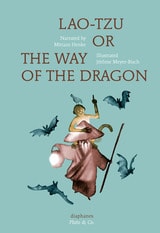
Lao-Tzu, or the Way of The Dragon
Miriam Henke
Diaphanes, 2018
In Lao-Tzu, or the Way of The Dragon, we follow the ancient Chinese philosopher who founded Taoism, from the comet that announced his birth up to his inspired composition, more than fifty years later, of the Tao Te Ching, the Book of the Way. In body and mind an old sage from birth, Lao-Tzu devotes his life to deciphering the endless book of the world. But he soon becomes frustrated with the silliness of human order, impatient kings, and greedy people, and rides off on the back of a water buffalo in search of the Way. He encounters clouds that solidify under his feet, a cave guarded by a golden monkey, and the venerable Confucius himself, and ultimately finds the wisdom of the dragon already residing deep in his own heart.
Late Colonial Sublime
Neo-Epics and the End of RomanticismG. S. Sahota
Northwestern University Press, 2018
By bringing together distinct literary canons—both metropolitan and colonial, hegemonic and subaltern, Western and Eastern, all of which took shape upon the common realities of imperial capitalism—Late Colonial Sublime takes an original dialectical approach. It experiments with fragments, parallaxes, and constellational form to explore the aporias of modernity as well as the possible futures they may signal in our midst. A bold intervention into contemporary debates that synthesizes a wealth of sources, this book will interest readers and scholars in world literature, critical theory, postcolonial criticism, and South Asian studies.
Learning to Love
Intimacy and the Discourse of Development in ChinaSonya E. Pritzker
University of Michigan Press, 2024
Learning to Love offers a range of perspectives on the embodied, relational, affective, and sociopolitical project of “learning to love” at the New Life Center for Holistic Growth, a popular “mind-body-spirit” bookstore and practice space in northeast China, in the early part of the 21st century. This intimate form of self-care exists alongside the fast-moving, growing capitalist society of contemporary China and has emerged as an understandable response to the pressures of Chinese industrialized life in the early 21st century. Opening with an investigation of the complex ways newcomers to the center suffered a sense of being “off,” both in and with the world at multiple scales, Learning to Love then examines how new horizons of possibility are opened as people interact with one another as well as with a range of aesthetic objects at New Life.
Author Sonya Pritzker draws upon the core concepts of scalar intimacy—a participatory, discursive process in which people position themselves in relation to others as well as dominant ideologies, concepts, and ideals—and scalar inquiry—the process through which speakers interrogate these forms, their relationship with them, and their participation in reproducing them. In demonstrating the collaborative interrogation of culture, history, and memory, she examines how these exercises in physical, mental, and spiritual self-care allow participants to grapple with past social harms and forms of injustice, how historical systems of power—including both patriarchal and governance structures—continue in the present, and how they might be transformed in the future. By examining the interactions and relational experiences from New Life, Learning to Love offers a range of novel theoretical interventions into political subjectivity, temporality, and intergenerational trauma/healing.
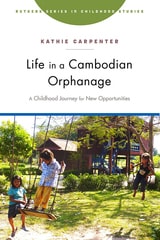
Life in a Cambodian Orphanage
A Childhood Journey for New OpportunitiesKathie Carpenter
Rutgers University Press, 2021

Limiting Secularism
The Ethics of Coexistence in Indian Literature and FilmPriya Kumar
University of Minnesota Press, 2008
With a backdrop of religious violence and escalating regional tensions in South Asia, Priya Kumar’s Limiting Secularism probes the urgent topic of secularism and tolerance in Indian culture and life. Kumar explores Partition as the founding trauma of the Indian nation-state and traces the consequences of its marking off of “Indian” from “Pakistani” and the positioning of Indian Muslims as strangers within the nation.
Kumar unpacks the implications of the Nehruvian doctrine of tolerance-with all of its resonances of condescension and inequality-and asks whether more ethical cohabitation can replace the “arrogant compulsive tolerance” of the state and the majority. Informed by Jacques Derrida’s recent work on hospitality and living together, Kumar argues for the emergence of an “ethics of coexistence” in Indian fiction and film. Considering narratives ranging from the cosmopolitan English novels of Rushdie and Ghosh to literature in South Asian languages as well as recent Hindi cinema, Kumar demonstrates that these fictions are important resources for reimagining tolerance and coexistence.
Distinctive and timely in its investigation of secularism and communalism, Limiting Secularism works to envision the radical possibilities of going beyond tolerance to living well together.
Priya Kumar is associate professor of English at the University of Iowa.
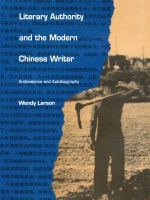
Literary Authority and the Modern Chinese Writer
Ambivalence and AutobiographyWendy Larson
Duke University Press, 1991
Larson focuses on the most famous writers associated with the May Fourth Movement, a group most active in the 1920s and 1930s, and their fundamental ambivalence about writing. She analyzes how their writing paradoxically characterized textual labor as passive, negative, and inferior to material labor and the more physical political work of social progress, and she describes the ways they used textual means to devalue literary labor.
The impact of China’s increasing contact with the West—particularly the ways in which Western notions of “individualism” and “democracy” influenced Chinese ideologies of self and work—is considered. Larson also studies the changes in China’s social structure, notably those linked to the abolition in 1905 of the educational exam system, which subsequently broke the link between the mastery of certain texts and the attainment of political power, further denigrating the cultural role of the writer.
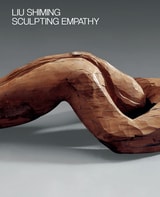
Liu Shiming
Sculpting EmpathyRichard Vine
Rutgers University Press, 2026
Liu Shiming (1926–2010) is a revered Chinese artist whose works have had a distinct impact on the course of modern Chinese sculpture. Born in Tianjin in 1926, Shiming attended the prestigious Central Academy of Fine Arts (CAFA) in Beijing, where he was part of the first generation of sculptors trained by the People’s Republic of China to study both traditional Chinese art and French modernist principles. Shiming received early recognition for his work, and his student project Measuring Land (1950) was one of the first works exhibited abroad following the establishment of the People’s Republic of China.
Though well respected in China, the sculptor, who died in 2010 at the age of eighty-four, is only now beginning to win the wider recognition he deserves. Meanwhile, contemporary competitors are numberless, most of them Instagram-friendly, while art history tends to focus on towering names and indisputably major movements and events: Braque and Picasso inventing Cubism, Duchamp’s readymades redefining art itself, Warhol’s mind-bending Brillo Boxes, and so on. So why examine an artist in the middle ground? Perhaps, first, because that is where the vast majority of us live, trying to make sense of our lives and grateful for the occasional insight, release, or enrichment that visual art can bring us. Second, because the story of Liu Shiming reveals a great deal about the forces that have shaped postwar art worldwide. He was a man who sought to lead a simple life, dedicated entirely to art, in the midst of China’s epochal, dangerously complex twentieth-century social and political changes.
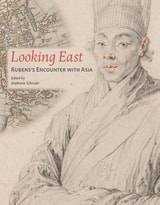
Looking East
Rubens’s Encounter with AsiaStephanie Schrader
J. Paul Getty Trust, The, 2013
Peter Paul Rubens’s fascinating depiction of a man wearing Korean costume of around 1617, in the collection of the J. Paul Getty Museum, has been considered noteworthy since it was made. Published to accompany an exhibition of Rubens’s Man in Korean Costume at the J. Paul Getty Museum from March 5 to June 9, 2013, Looking East: Rubens’s Encounter with Asia explores the various facets of Rubens’s compelling drawing of this Asian man that appears in later Rubens works. This large drawing was copied in Rubens’s studio during his own time and circulated as a reproductive print in the eighteenth century. Despite the drawing’s renown, however, the reasons why it was made and whether it actually depicts a specific Asian person remain a mystery. The intriguing story that develops involves a shipwreck, an unusual hat, the earliest trade between Europe and Asia, the trafficking of Asian slaves, and the role of Jesuit missionaries in Asia.
The book’s editor, Stephanie Schrader, traces the interpretations and meanings ascribed to this drawing over the centuries. Could Rubens have actually encountered a particular Korean man who sailed to Europe, or did he instead draw a model wearing Asian clothing or simply hear about such a person? What did Europeans really know about Korea during that period, and what might the Jesuits have had to do with the production of this drawing? All of these questions are asked and explored by the book’s contributors, who look at the drawing from various points of view.
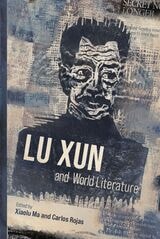
Lu Xun and World Literature
Edited by Xiaolu Ma and Carlos Rojas
Hong Kong University Press, 2025
In Lu Xun and World Literature, the contributors examine various aspects of Lu Xun, who is known as the father of modern Chinese literature. Essays in this book focus on Lu Xun’s works in relation to the notions of world literature and processes of literary worlding. They offer detailed analyses of Lu Xun’s own literary oeuvre and of foreign works that engage with his writings. This volume also focuses on many facets of the publication and dissemination of Lu Xun’s works, from printing and binding to the discussions and debates that followed their release in China and abroad. This book not only makes an important contribution to the field of Lu Xun studies, but also proposes a reexamination of the category of world literature.