Results by title
81 books match the query 'Belonging' and 4 start with l
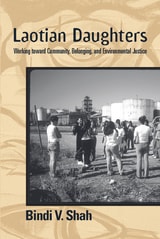
Laotian Daughters
Working toward Community, Belonging, and Environmental JusticeBindi V. Shah
Temple University Press, 2011
Laotian Daughters focuses on second-generation environmental justice activists in Richmond, California. Bindi Shah's pathbreaking book charts these young women's efforts to improve the degraded conditions in their community and explores the ways their activism and political practices resist the negative stereotypes of race, class, and gender associated with their ethnic group.
Using ethnographic observations, interviews, focus groups, and archival data on their participation in Asian Youth Advocates—a youth leadership development project—Shah analyzes the teenagers' mobilization for social rights, cross-race relations, and negotiations of gender and inter-generational relations. She also addresses issues of ethnic youth, and immigration and citizenship and how these shape national identities.
Shah ultimately finds that citizenship as a social practice is not just an adult experience, and that ethnicity is an ongoing force in the political and social identities of second-generation Laotians.
Life Undocumented
Latinx Youth Navigating Place and BelongingEdelina M. Burciaga
University of Arizona Press, 2025
The book is about how undocumented young adults in these two contexts navigate the pathway to and through adulthood, and the powerful role state laws and policies play in shaping their prospects for social mobility and their sense of belonging. Edelina M. Burciaga examines how state laws and policies in California and Georgia shape the pathways to adulthood for these individuals. California, with its supportive legal frameworks, contrasts sharply with Georgia’s restrictive environment, highlighting the significant impact of state-level immigration policies.
The book highlights the complexities and contradictions that emerge from these distinct legal ecologies, which include the intersections of federal, state, local, familial, and individual dynamics, and shape the daily lives and future orientations of undocumented young adults. This book underscores the resilience and agency of undocumented youth as they confront and resist the structural constraints imposed by immigration laws, offering a vivid portrayal of their emotional and social journeys. This book is a vital resource for anyone committed to creating equitable and inclusive systems for undocumented students.
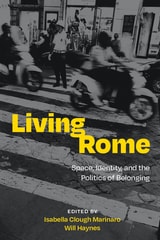
Living Rome
Space, Identity, and the Politics of BelongingEdited by Isabella Clough Marinaro and Will Haynes
Lever Press, 2026
Living Rome: Space, Identity, and the Politics of Belonging looks beyond the romanticized image of Rome, towards a kaleidoscopic view of the city shaped by inequalities, socio-political challenges, and acts of resistance and solidarity. In the wake of urban developments related to migration, housing shortages, COVID-19, crime, and other social changes, this volume offers a grounded approach, mapping the contemporary realities of Italy’s capital from a variety of methodological standpoints. Contributors argue that the unseen fringes, both geographically peripheral and those embedded within the very heart of Rome, are crucial for understanding its social dynamics. These ‘hidden’ geographies foster vibrant communities, challenge ideas of home and belonging, and act as key sites of creativity, resistance and everyday life.
Bringing together urban sociologists, anthropologists, geographers, demographers, criminologists, decolonizing and feminist scholars, this study contributes to a growing body of research on the city and its social movements, aiming to inform policy and contribute to a more just and sustainable Rome. Using a variety of methods, from quantitative cartography and policy analysis to (auto)ethnography and creative methodologies, this volume speaks well beyond Rome, to conversations about cities worldwide.
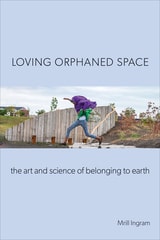
Loving Orphaned Space
The Art and Science of Belonging to EarthMrill Ingram
Temple University Press, 2022
How we relate to orphaned space matters. Voids, marginalia, empty spaces—from abandoned gas stations to polluted waterways—are created and maintained by politics, and often go unquestioned. In Loving Orphaned Space, Mrill Ingram provides a call to action to claim and to cherish these neglected spaces and make them a source of inspiration through art and/or remuneration.
Ingram advocates not only for “urban greening” and “green planning,” but also for “radical caring.” These efforts create awareness and understanding of ecological connectivity and environmental justice issues—from the expropriation of land from tribal nations, to how race and class issues contribute to creating orphaned space. Case studies feature artists, scientists, and community collaborations in Chicago, New York, and Fargo, ND, where grounded and practical work of a fundamentally feminist nature challenges us to build networks of connection and care.
The work of environmental artists who venture into and transform these disconnected sites of infrastructure allow us to rethink how to manage the enormous amount of existing overlooked and abused space. Loving Orphaned Space provides new ways humans can negotiate being better citizens of Earth.