Results by title
282 books match the query 'Caribbean & West Indies' and 3 start with l
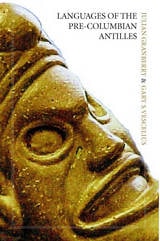
Languages of the Pre-Columbian Antilles
Julian Granberry and Gary Vescelius
University of Alabama Press, 2004
A linguistic analysis supporting a new model of the colonization of the Antilles before 1492
This work formulates a testable hypothesis of the origins and migration patterns of the aboriginal peoples of the Greater Antilles (Cuba, Jamaica, Hispaniola, and Puerto Rico), the Lucayan Islands (the Commonwealth of the Bahamas and the Crown Colony of the Turks and Caicos), the Virgin Islands, and the northernmost of the Leeward Islands, prior to European contact. Using archaeological data as corroboration, the authors synthesize evidence that has been available in scattered locales for more than 500 years but which has never before been correlated and critically examined.
Within any well-defined geographical area (such as these islands), the linguistic expectation and norm is that people speaking the same or closely related language will intermarry, and, by participating in a common gene pool, will show similar socioeconomic and cultural traits, as well as common artifact preferences. From an archaeological perspective, the converse is deducible: artifact inventories of a well-defined sociogeographical area are likely to have been created by speakers of the same or closely related language or languages.
Languages of the Pre-Columbian Antilles presents information based on these assumptions. The data is scant—scattered words and phrases in Spanish explorers' journals, local place names written on maps or in missionary records—but the collaboration of the authors, one a linguist and the other an archaeologist, has tied the linguistics to the ground wherever possible and allowed the construction of a framework with which to understand the relationships, movements, and settlement patterns of Caribbean peoples before Columbus arrived.

Lawless Liberators
Political Banditry and Cuban IndependenceRosalie Schwartz
Duke University Press, 1989
Manuel Garcia, a hero-villian of Cuban folklore to this day, was the most notorious of the brigand-patriots and led a gang that spread terror throughout Havana province, contributing to the breakdown of rural order that preceded full-scale rebellion in 1895. Lawless Liberators examines the origins, actions, and ends (often sudden and violent) of the bandit groups such as Garcia’s that paved the way for the revolution and offers a reasoned and balanced analysis of their role in those dramatic events.
Living with the Puerto Rico Shore
David M. Bush, Richard M. T. Webb, José González Liboy, Lisbeth Hyman, and William J. Neal
Duke University Press, 1995
The book provides detailed descriptions of the entire shoreline, noting the specific coastal hazards of each coastal reach. These hazards include coastal erosion, storm surge flooding, and potential damage from earthquakes. Where high-density development or significant roads and utilities are particularly at risk, these are also noted. The effects that sand mining, seawalls, jetties, and other attempts at coastal engineering have had on the island are examined. Finally, the authors discuss historical and legal aspects of coastal planning in Puerto Rico, presenting guidelines for selecting building sites.
Of interest to all concerned with protecting our shores and beaches and useful to the coastal planner and manager, Living With the Puerto Rico Shore contains an extensive bibliography and a list of agencies involved in coastal issues.