475 books match the query 'Catholic' and 14 start with l

cover of Law and Liberty: Jesus, Paul, and the Newness of Christianity

Law and Liberty

Jesus, Paul, and the Newness of Christianity

Romano Penna

Catholic University of America Press, 2026
This newest volume in the CUA Press Verbum Domini series by the late Professor Romano Penna, represents a synthesis of Penna's thought, which often engaged with the question of Christian originality. The relationship between Law and liberty is a theme that effectively runs like a red thread through the “grand narrative” of the Bible. Law and liberty represent two values that mutually call forth one another and require thorough and nuanced reflection on multiple levels. The book offers a biblical-theological journey that enables the reader to grasp the central aspects of the Law-liberty dialectic and to focus on the uniqueness of the Christian message. Through engagement with the Greek and Jewish cultural backgrounds, Romano Penna demonstrates the richness of the Law understood as a gift from God and embraced as a commitment to responsible living—a commitment that presupposes the gift of a new kind of liberty and demands existential involvement. In the message of Jesus of Nazareth and in its Pauline reinterpretation, one perceives how the dialectic between Law and liberty reveals the “filial” condition of the Christian. It is precisely the ability to understand and synthesize the Law-liberty pairing that defines Christian conduct and its testimonial power. The originality of Christianity can be well summarized by the expression “free because children”. This phrase encapsulates an unprecedented vision and an extraordinary fecundity, much needed by humanity in our time.
[more]
cover of Law and Religion in a Secular Age

Law and Religion in a Secular Age

Rafael Domingo

Catholic University of America Press, 2023
Law and Religion in a Secular Age seeks to restore the connection between spirituality and justice, religion and law, theology and jurisprudence, and natural law and positive law by building a new bridge suitable for pluralistic societies in the secular age. The author argues for a multidimensional view of reality that includes legal, political, moral, and spiritual dimensions of human nature and society. Each of these dimensions of life needs to recognize the existence, influence, and function of the others, which act as a filter or check on the excesses of each other. This multidimensionality of reality clarifies why no legal theory can fully account for law from the legal dimension alone, just as no moral theory makes perfect sense of morality from the moral dimension—and, for that matter, nothing in physics can fully interpret the physical dimension of reality. The premises of a legal system cannot be fully explained by the legal dimension alone because the fundamental conditions and qualities of justice, freedom, and dignity touch all the dimensions of reality in which the human person acts, including the moral and the spiritual, not just the legal. Building on this multidimensional theory of reality, the author explores the core differences and the essential interconnections between law, morality, religion, and spirituality and some of the legal implications of these connections. Rafael Domingo reminds readers of the vital role of religion in shaping the conceptual framework of Western legal systems, underscores the spirit of Christianity that inspired legal institutions, principles, and values, and recalls the contributions of specific Christian jurists as central figures for the development of justice in society. Law and Religion in a Secular Age aims to be a valuable antidote against the dominant legal positivism that has cornered public morality, the defiant secularism that has marginalized religion, and any other legal doctrine that diminishes the spiritual dimension of law and justice.
[more]
cover of Learning Christ

Learning Christ

Gregory Vall

Catholic University of America Press, 2013

Learning Christ represents a thorough reevaluation of Ignatius as author and theologian, demonstrating that his seven authentic letters present a sophisticated and cohesive vision of the economy of redemption. Gregory Vall argues that Ignatius’s thought represents a vital synthesis of Pauline, Johannine, and Matthean perspectives while anticipating important elements of later patristic theology. Topics treated in this volume include Ignatius’s soteriological anthropology, his Christology and nascent Trinitarianism, his nuanced understanding of the relationship between Judaism and Christianity, and his ecclesiology and eschatology.
[more]
cover of Legal Norms, Proceures, and Exchanges in the Early Modern <i>ius commune</i?

Legal Norms, Proceures, and Exchanges in the Early Modern <i>ius commune</i?

Damian Smith

Catholic University of America Press, 2026
[more]
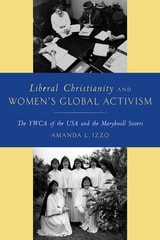
cover of Liberal Christianity and Women's Global Activism: The YWCA of the USA and the Maryknoll Sisters

Liberal Christianity and Women's Global Activism

The YWCA of the USA and the Maryknoll Sisters

Amanda L. Izzo

Rutgers University Press, 2018

Religiously influenced social movements tend to be characterized as products of the conservative turn in Protestant and Catholic life in the latter part of the twentieth century, with women's mobilizations centering on defense of the “traditional” family. In Liberal Christianity and Women’s Global Activism, Amanda L. Izzo argues that, contrary to this view, liberal wings of Christian churches have remained an instrumental presence in U.S. and transnational politics. Women have been at the forefront of such efforts.

Focusing on the histories of two highly influential groups, the Young Women’s Christian Association of the USA, an interdenominational Protestant organization, and the Maryknoll Sisters, a Roman Catholic religious order, Izzo offers new perspectives on the contributions of these women to transnational social movements, women’s history, and religious studies, as she traces the connections between turn-of-the-century Christian women’s reform culture and liberal and left-wing religious social movements of the 1960s and 1970s. Izzo suggests that shared ethical, theological, and institutional underpinnings can transcend denominational divides, and that strategies for social change often associated with secular feminism have ties to spiritually inspired social movements.  
 
[more]
cover of Light and Glory: The Transfiguration of Christ in Early Franciscan and Dominican Theology

Light and Glory

The Transfiguration of Christ in Early Franciscan and Dominican Theology

Aaron Canty

Catholic University of America Press, 2011
Light and Glory offers an engaging comparison of the teachings of seven thirteenth-century theologians -- three Franciscans and four Dominicans -- on the subject of the transfiguration of Christ.
[more]
cover of Liturgical Hermeneutics of Sacred Scripture

Liturgical Hermeneutics of Sacred Scripture

Marco Benini

Catholic University of America Press, 2023
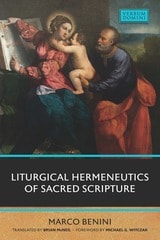
The purpose of this book is to explore what a liturgical approach to the Bible looks like and what hermeneutical implications this might have: How does the liturgy celebrate, understand, and communicate Scripture? The starting point is Pope Benedict's affirmation that “a faith-filled understanding of sacred Scripture must always refer back to the liturgy” (Verbum Domini 52). The first part of the book (based on SC 24) provides significant examples to demonstrate: The liturgical order of readings intertextually combines Old Testament and New Testament readings using manifold hermeneutical principles, specifically how the psalms show the wide range of interpretations the liturgy employs. Prayers are biblically inspired and help to appropriate Scripture personally. The hymns convey Scripture in a poetic way. Signs and actions such as foot-washing or the Ephphetha rite enact Scripture. The study considers the Mass, the sacraments and the Liturgy of the Hours. In the second part, Benini systematically focuses on the various dimensions of liturgical hermeneutics of the Bible, which emerge from the first part. The study reflects the approaches the liturgy offers to Scripture and its liturgical reception. It explores theological aspects such as the unity of the two Testaments in Christ’s paschal mystery or the anamnesis as a central category in both Scripture and liturgy. The liturgy does not understand Scripture primarily as a document of the past, but celebrates it as a current and living “Word of the Lord,” as a medium of encounter with God: Scripture is sacramental. Liturgical Hermeneutics of Sacred Scripture seeks to contribute not only to the comparison of the Roman, Ambrosian, and Byzantine Rite regarding the Word of God, but most of all to the overall “liturgical approach” to Scripture. As such, it promotes an interdisciplinary dialogue of liturgical and biblical studies.
[more]
cover of Liturgical Theology in Thomas Aquinas: Sacrifice and Salvation History

Liturgical Theology in Thomas Aquinas

Sacrifice and Salvation History

Franck Quoex

Catholic University of America Press, 2023
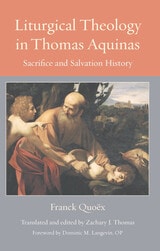
In this volume, Fr. Franck Quoëx responds to Joseph Ratzinger’s call for a renewed appreciation of liturgical rite. A student of Pierre Gy, OP, he brings to this study of Aquinas’s liturgical theology a rare combination of expert knowledge of liturgical sources and history and the best of modern historical-critical research guided by sound theological judgment. Fr. Quoëx frames his study with an overview of the problem of rite in modern theological-anthropological discourse, before turning to Aquinas’ theory of worship in the treatise on the virtue of religion. He then explores Aquinas’ doctrine on the cultic dimensions of the Eucharist and other sacraments in his sacramental theology more broadly, finishing with a close study of the mass commentary of the Tertia Pars. Although there has been increasing attention to Thomas’s treatment of religion as a virtue, none have approached him from an anthropological angle with a focus on the nature of liturgical rite, or fully exploited the perspectives of liturgical scholarship to shed light on sacramental theology. Quoëx’s work, as the work of a Thomist, liturgist, and medievalist well versed in medieval liturgical development and in the genre of often-allegorical liturgical commentary, opens up this crucial but neglected facet of Aquinas’ theological synthesis. Few books have been published on Aquinas’s liturgical theology. Now that interest in Aquinas’s virtue theory and sacramental theology is growing rapidly, Quoëx’s studies are an invitation to further reflection on the topic of Aquinas’s liturgical theology with its manifold ramifications for and connections with other theological topics in his Summa, including his theological anthropology, his soteriology, his treatment of the Old and New Laws, and his account of the virtue of religion in connection with the other virtues.
[more]
cover of Local Production, Administration, and Reception of Medieval Canon Law

Local Production, Administration, and Reception of Medieval Canon Law

Steven A. Schoenig

Catholic University of America Press, 2026
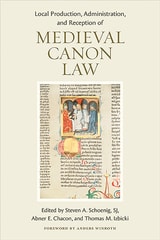
These nine essays, written by leading experts in the field, focus on the production and application of canon law at the local level. This broad theme permits many subjects to be explored: canonical collections produced in a particular locale by key figures in that area; local manuscript copies of widespread texts; administrative usages and canonical rules for churches within a certain area; specific synodal decrees important to regional ecclesiastical activity and governance; and the reception and adaptation of canonical norms and rules in a particular diocese or other venue. These studies collectively deepen our appreciation of the importance of canon law for people in their home churches and regions. They help us understand canon law in its decentralized, non-papally administered forms, across the full temporal range of the Middle Ages. The special value of these works lies in illuminating the pragmatic role of particular circumstances in adapting the church’s tradition in order to be relevant and to meet local needs.
[more]
cover of Look Out Below! A Story of the Airborne by a Paratrooper Padre

Look Out Below! A Story of the Airborne by a Paratrooper Padre

Francis L. Sampson

Catholic University of America Press, 2023
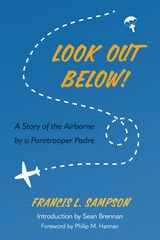
A veteran of the Second World War and the Korean War, Francis L. Sampson was a real-life hero whose exploits inspired one of the most famous war films of all time, Saving Private Ryan. From rural beginnings in northwestern Iowa, Sampson’s life would take him from the University of Notre Dame to the battlefields of Normandy on D-Day, the ambitious failure of Operation Market Garden, the harshness of a winter as a POW of the Germans during the closing stages of the Second World War, to the fall of North Korean capital Pyongyang in the early stages of the Korean War. Part of the very rare breed of Parachute Chaplains, in his case with the 101 st Airborne Division, Sampson spent much of his career as an army chaplain in the center of maelstroms of the 20 th century. Throughout it all, Sampson offered a valuable Christian witness in the darkest of times and the most difficult of circumstances. This second edition of his memoirs, Look Out Below! contains material on his service during the Korean War and occupation duty in Germany and Japan as well as the Second World War, with a new historical introduction by University of Scranton Professor Sean Brennan.
[more]
cover of Lord I Love You! Homilies through the Liturgical Year: Volume 2: Advent, Christmas, Marian Feasts, and Saints Days

Lord I Love You! Homilies through the Liturgical Year

Volume 2: Advent, Christmas, Marian Feasts, and Saints Days

Pietro Pope Benedict XVI

Catholic University of America Press, 2025
Pope Benedict XVI was known for his brilliant mind, but he also had a heart in love with the Lord. In this careful selection from his papal homilies, read­ers can not only learn from his encyclopedic knowledge of the Christian tra­dition, but grow in their own love for God as they journey with Benedict through the seasons and feasts of the liturgical year. Lord I Love You! Volume 2 includes the joyful seasons of Advent and Christmas as well as important Marian feasts and other saints’ days throughout the year, making it an excel­lent choice for spiritual reading and a great Advent/Christmas gift idea for those who appreciate the late pope’s message of the centrality of Christ and the reliability of the Catholic tradition. Pope Benedict was not a charismatic preacher in the mold of his predecessor John Paul II, but the texts themselves are gems of Christian exhortation and reflection that are best appreciated on one’s knees in a chapel or held in one’s hands in a quiet place in one’s home—that is, in a book like this and not scrolling through a website. For scholars and students of the late pope, the collection also provides a helpful distillation of his main themes and princi­pal concerns into short, easily digestible pieces. The editor, Fr. Pietro Rossot­ti, uses the official Vatican translation with only minor spelling modifications and added footnotes with bibliographical references whenever possible.
[more]
cover of Lord, I Love You! Homilies through the Liturgical Year: Volume 1: Lent, Easter, and Solemnities of the Lord

Lord, I Love You! Homilies through the Liturgical Year

Volume 1: Lent, Easter, and Solemnities of the Lord

Pietro Pope Benedict XVI

Catholic University of America Press, 2025
Pope Benedict XVI was known for his brilliant mind, but he also had a heart in love with the Lord. In this careful selection from his papal homilies, readers can not only learn from his encyclopedic knowledge of the Christian tradition, but grow in their own love for God as they journey with Benedict through the seasons and feasts of the liturgical year. Lord I Love You! Volume 1 includes the holiest days of Lent and Easter as well as other important solemnities such as Trinity Sunday and Corpus Christi, making it an excellent choice for spiritual reading and a great Lenten gift idea for those who appreciated the late pope's message of the centrality of Christ and the reliability of the Catholic tradition. Pope Benedict was not a charismatic preacher in the mold of his predecessor John Paul II, but the texts themselves are gems of Christian exhortation and reflection that are best appreciated on one's knees in a chapel or held in one's hands in a quiet place in one's home--that is, in a book like this and not scrolling through a website. For scholars and students of the late pope, the collection also provides a helpful distillation of his main themes and principal concerns into short, easily digestible pieces. The editor, Fr. Pietro Rossotti, uses the official Vatican translation with only minor spelling modifications and added footnotes with bibliographical references whenever possible.
[more]
cover of Love Seeking Understanding: Aquinas, Balthasar, and the Renewal of Sapiential Theology

Love Seeking Understanding

Aquinas, Balthasar, and the Renewal of Sapiential Theology

Michael Altenburger

Catholic University of America Press, 2024
As Catholic theology emerged from the crisis of modernity, theologians turned to both patristic and medieval sources to recover lost wisdom from the theological tradition, and adapt it to the challenges of an age that separated reason from faith, the practice of theology from the spiritual life. . In time, Thomas Aquinas and Hans Urs von Balthasar became the patrons of two very different approaches to this challenge. St. Thomas Aquinas offering contemporary theologians an approach rooted in the patristic-medieval Latin synthesis of Augustine and Aristotle that also draws on the East, and von Balthasar offering contemporary theologians a patristic-modern approach rooted in the Eastern theological synthesis of Maximus the Confessor and Erich Przywara, that also draws on the West. Although Aquinas and Balthasar, together with their contemporary followers, sought to unite reason and faith, theology and prayer, contemporary Thomists and Balthasarians have tended to diverge widely from one another, often with a polemical spirit. How should one understand the theological genius of St. Thomas Aquinas and Hans Urs von Balthasar today? How can two of the greatest theologians in the Catholic tradition be brought together in more fruitful and peaceful dialogue? This edited volume comprises contributions from a range of scholars who elucidate the depth and breadth of two of the most prominent figures of the Catholic tradition today. A scholar from each school of thought contributes an essay on a particular theme: Metaphysics, Trinity, Revelation, Christology, Anthropology, Evil, and Eschatology. By presenting the two essays side by side, this volume provides the contemporary reader with an opportunity to better engage both thinkers and understand disagreements and areas for constructive movement forward. The tone of the volume is intentionally irenic, seeking points of constructive dialogue, and opening new pathways to the renewal of sapiential theology through a fruitful synthesis of Thomistic and Balthasarian thought.
[more]
cover of Love and Saint Augustine

Love and Saint Augustine

Hannah Arendt

University of Chicago Press, 1995

Hannah Arendt's classic philosophical study, which Kirkus called “a revelation”
 
Hannah Arendt began her scholarly career with an exploration of Saint Augustine's concept of caritas, or neighborly love, written under the direction of Karl Jaspers and the influence of Martin Heidegger. After her German academic life came to a halt in 1933, Arendt carried her dissertation into exile in France, and years later took the same battered and stained copy to New York. During the late 1950s and early 1960s, as she was completing or reworking her most influential studies of political life, Arendt was simultaneously annotating and revising her dissertation on Augustine, amplifying its argument with terms and concepts she was using in her political works of the same period. The disseration became a bridge over which Arendt traveled back and forth between 1929 Heidelberg and 1960s New York, carrying with her Augustine's question about the possibility of social life in an age of rapid political and moral change.

In Love and Saint Augustine, Joanna Vecchiarelli Scott and Judith Chelius Stark make this important early work accessible for the first time. Here is a completely corrected and revised English translation that incorporates Arendt's own substantial revisions and provides additional notes based on letters, contracts, and other documents as well as the recollections of Arendt's friends and colleagues during her later years.
[more]