159 books match the query 'Change' and 6 start with l

cover of Language Use and Language Change in Brunei Darussalam: Mis Sea#100

Language Use and Language Change in Brunei Darussalam

Mis Sea#100

Peter W. Martin

Ohio University Press, 1996

The oil-rich sultanate of Brunei Darussalam is located on the northern coast of Borneo between the two Malaysian states of Sarawak and Sabah. Though the country is small in size and in population, the variety of language use there provides a veritable laboratory for linguists in the fields of Austronesian linguistics, bilingual studies, and sociolinguistic studies, particularly those dealing with language shift.

This useful reference is divided into three sections: one on varieties of the Malay language used in the country, one on other indigenous languages, and one on the role and form of the English used there. Contributors to the collection include Bruneian scholars as well as established experts in the fields of Austronesian linguistics, sociolinguistics studies, and the description of new varieties of English.
[more]
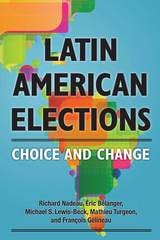
cover of Latin American Elections: Choice and Change

Latin American Elections

Choice and Change

Richard Nadeau, Éric Bélanger, Michael S. Lewis-Beck, Mathieu Turgeon, and François Gélineau

University of Michigan Press, 2017
The Michigan model, named after the institution where it was first articulated, has been used to explain voting behavior in North American and Western European democracies. In Latin American Elections, experts on Latin America join with experts on electoral studies to evaluate the model’s applicability in this region. Analyzing data from the AmericasBarometer, a scientific public opinion survey carried out in 18 Latin American nations from 2008 to 2012, the authors find that, like democratic voters elsewhere, Latin Americans respond to long-term forces, such as social class, political party ties, and political ideology while also paying attention to short-term issues, such as the economy, crime, corruption. Of course, Latin Americans differ from other Americans, and among themselves. Voters who have experienced left-wing populism may favor government curbs on freedom of expression, for example, while voters enduring high levels of economic deprivation or instability tend to vote against the party in power.
The authors thus conclude that, to a surprising extent, the Michigan model offers a powerful explanatory model for voting behavior in Latin America.

[more]
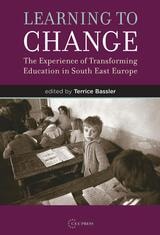
cover of Learning to Change: The Experience of Transforming Education in South East Europe

Learning to Change

The Experience of Transforming Education in South East Europe

Terrice Bassler

Central European University Press, 2005
A collection of first-person narratives by specialists in the field of education in South East Europe. The contributors are recognized leaders in civil society, government, academia and schools. Their works chronicle the profound effect armed conflict, political transition, and the increasing openness the region has experienced on education. It is a significant achievement as it is the work of individuals who are involved in the field and have a first hand perspective on issues of education in the region. The essays shed light on the reality of the educational reforms: they are far from beeing linear progressive processes, on the contrary, they are very often paradoxical and even controversial.
[more]
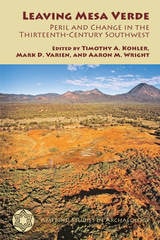
cover of Leaving Mesa Verde: Peril and Change in the Thirteenth-Century Southwest

Leaving Mesa Verde

Peril and Change in the Thirteenth-Century Southwest

Edited by Timothy A. Kohler, Mark D. Varien, and Aaron M. Wright

University of Arizona Press, 2012

It is one of the great mysteries in the archaeology of the Americas: the depopulation of the northern Southwest in the late thirteenth-century AD. Considering the numbers of people affected, the distances moved, the permanence of the departures, the severity of the surrounding conditions, and the human suffering and culture change that accompanied them, the abrupt conclusion to the farming way of life in this region is one of the greatest disruptions in recorded history.

Much new paleoenvironmental data, and a great deal of archaeological survey and excavation, permit the fifteen scientists represented here much greater precision in determining the timing of the depopulation, the number of people affected, and the ways in which northern Pueblo peoples coped—and failed to cope—with the rapidly changing environmental and demographic conditions they encountered throughout the 1200s. In addition, some of the scientists in this volume use models to provide insights into the processes behind the patterns they find, helping to narrow the range of plausible explanations.

What emerges from these investigations is a highly pertinent story of conflict and disruption as a result of climate change, environmental degradation, social rigidity, and conflict. Taken as a whole, these contributions recognize this era as having witnessed a competition between differing social and economic organizations, in which selective migration was considerably hastened by severe climatic, environmental, and social upheaval. Moreover, the chapters show that it is at least as true that emigration led to the collapse of the northern Southwest as it is that collapse led to emigration.
[more]
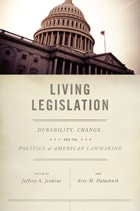
cover of Living Legislation: Durability, Change, and the Politics of American Lawmaking

Living Legislation

Durability, Change, and the Politics of American Lawmaking

Edited by Jeffery A. Jenkins and Eric M. Patashnik

University of Chicago Press, 2012
Politics is at its most dramatic during debates over important pieces of legislation. It is thus no stretch to refer to legislation as a living, breathing force in American politics. And while debates over legislative measures begin before an item is enacted, they also endure long afterward, when the political legacy of a law becomes clear.
 
Living Legislation provides fresh insights into contemporary American politics and public policy. Of particular interest to the contributors to this volume is the question of why some laws stand the test of time while others are eliminated, replaced, or significantly amended. Among the topics the essays discuss are how laws emerge from—and effect change within—coalition structures, the effectiveness of laws at mediating partisan conflicts, and the ways in which laws interact with broader shifts in the political environment. As an essential addition to the study of politics, Living Legislation enhances understanding of democracy, governance, and power.
[more]
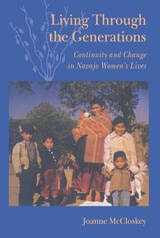
cover of Living Through the Generations: Continuity and Change in Navajo Women’s Lives

Living Through the Generations

Continuity and Change in Navajo Women’s Lives

Joanne McCloskey

University of Arizona Press, 2007

Navajo women’s lives reflect the numerous historical changes that have transformed “the Navajo way.” At the same time, in their behavior, beliefs, and values, women preserve the legacy of Navajo culture passed down through the generations. By comparing and contrasting three generations of Navajo women—grandmothers, mid-life mothers, and young mothers—similarities and differences emerge in patterns of education, work, family life, and childbearing. Women’s roles as mothers and grandmothers are central to their respected position in Navajo society. Mothers bestow membership in matrilineal clans at birth and follow the example of the beloved deity Changing Woman. As guardians of cultural traditions, grandmothers actively plan and participate in ceremonies such as the Kinaaldá, the puberty ceremony, for their granddaughters.

Drawing on ethnographic interviews with 77 women in Crownpoint, New Mexico, and surrounding chapters in the Eastern Navajo Agency, Joanne McCloskey examines the cultural traditions evident in Navajo women’s lives. Navajo women balance the demands of Western society with the desire to preserve Navajo culture for themselves and their families.
[more]