Results by title
152 books match the query 'Childhood and youth' and 11 start with l
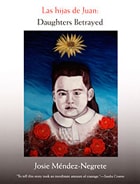
Las hijas de Juan
Daughters BetrayedJosie Méndez-Negrete
Duke University Press, 2006
Méndez-Negrete was born in Mexico, in the state of Zacatecas. She recalls a joyous childhood growing up in the midst of Tabasco, a vibrant town filled with extended family. Her father, though, had dreams of acquiring wealth in el norte. He worked sun-up to sun-down in the fields of south Texas. Returning home to Mexico, his pockets full of dollars, he spent evenings drinking and womanizing.
When Méndez-Negrete was eleven, her father moved the family to the United States, where they eventually settled in California’s Santa Clara Valley. There her father began molesting his daughters, viciously beating them and their mother. Within the impoverished immigrant family, the abuse continued for years, until a family friend brought it to the attention of child welfare authorities. Méndez-Negrete’s father was tried, convicted, and imprisoned.
Las hijas de Juan is told chronologically, from the time Méndez-Negrete was a child until she was a young adult trying, along with the rest of her family, to come to terms with her father’s brutal legacy. It is a harrowing story of abuse and shame compounded by cultural and linguistic isolation and a system of patriarchy that devalues the experiences of women and girls. At the same time, Las hijas de Juan is an inspiring tale, filled with strong women and hard-won solace found in traditional Mexican cooking, songs, and storytelling.
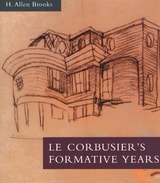
Le Corbusier's Formative Years
Charles-Edouard Jeanneret at La Chaux-de-FondsH. Allen Brooks
University of Chicago Press, 1997
"There is much in this fine volume for anyone interested not just in architecture, but in the roots of human creativity and in the origins of the most powerful artistic current of our century. . . . This book is a life's work of scholarship. It has been well spent."—Toronto Globe and Mail
Leap of Faith
Richard Benyo
University of Scranton Press, 2009
Eastern Pennsylvania during the 1950s: King Coal has been dethroned, the railroads are all but defunct, and the region is in an economic depression. Fathers are forced to commute many miles to work, while at home the kids know no other pastime but to run wild in the woods. From the same author who intrigued readers with his whimsical stories of childhood in Jim Thorpe Never Slept Here comes an all-new batch of coming-of-age tales in Leap of Faith.
In these eight stories, the adults are often offstage, leaving the children to make up the rules as they go. From the story of an unrepentant bully who gets more than he deserves to the tale of a boy who finds serenity in short bursts of flight, Richard Benyo captures a time and a place where small triumphs are enormous, where the strong rule and the swift survive, and where the outside world—beyond the mountains that enclose Mauch Chunk, Pennsylvania—seldom intrudes.
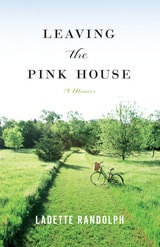
Leaving the Pink House
Ladette Randolph
University of Iowa Press, 2014
On September 12, 2001, Randolph and her husband bought a dilapidated farmhouse on twenty acres outside Lincoln, Nebraska, and set about gutting and rebuilding the house themselves. They had nine months to complete the work. The project, undertaken at a time of national unrest and uncertainty, led Randolph to reflect on the houses of her past and the stages of her life that played out in each, both painful and joyful. As the couple struggles to bring the dilapidated house back to life, Randolph simultaneously traces the contours of a life deeply shaped by the Nebraska plains, where her family has lived for generations, and how those roots helped her find the strength to overcome devastating losses as a young adult. Weaving together strands of departures and arrivals, new houses and deep roots, cycles of change and the cycles of the seasons, Leaving the Pink House is a richly layered and compelling memoir of the meaning of home and family, and how they can never really leave us, even if we leave them.
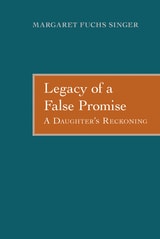
Legacy of a False Promise
A Daughter's ReckoningMargaret Fuchs Singer
University of Alabama Press, 2009
Margaret Fuchs was thirteen in June 1955 when she learned that her parents had been Communists while working for the U.S. government in the 1930s and '40s. This book chronicles the years during which her parents were exposed and her father was subpoenaed before the House Un-American Activities Committee. Eventually he named names, and subsequently lost his job as a law professor at American University, and was blacklisted from teaching ever again. Legacy of a False Promise also details the author's quest as an adult to learn whether or not her parents ever spied for the Soviet Union.
Based on eight years of research using family records, FBI files, American University archives, personal interviews, and the recently declassified Venona cables, Legacy of a False Promise offers unique insights into the McCarthy Era. Most "red-diaper babies" who have written on the subject had parents who refused to give in to HUAC's demands. Singer's work instead recounts the shame and series of betrayals that her father's decision to name names brought to her family. Furthermore, it explores the campaign of the liberal anti-Communist movement to publicize its political position while defending a fired ex-Communist professor, the nature and activities of secret Communist underground cells, and the motivation of New Deal government workers who spied for the Soviets.
This is a poignant meditation on family secrets, father-daughter relationships in times of crisis, teenage loneliness in the midst of trauma, and the effects of parents' actions on the lives of their children. It also serves as a timely reminder of the dangers of sacrificing civil liberties in the name of national security.

Light on the Devils
Coming of Age on the KlamathLouise Wagenknecht
Oregon State University Press, 2011
When Louise Wagenknecht’s family arrived in the remote logging town of Happy Camp in 1962, a boundless optimism reigned. Whites and Indians worked together in the woods and the lumber mills of northern California’s Klamath country. Logging and lumber mills, it seemed, would hold communities together forever.
But that booming prosperity would come to an end. Looking back on her teenage years spent along the Klamath River, Louise Wagenknecht recounts a vanishing way of life. She explores the dynamics of family relationships and the contradictions of being female in a western logging town in the 1960s. And she paints an evocative portrait of the landscape and her relationship with it.
Light on the Devils is a captivating memoir of place. It will appeal to general readers interested in the rural West, personal memoir, history, and natural history.
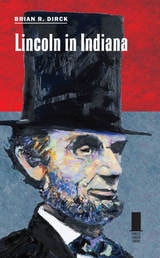
Lincoln in Indiana
Brian R. Dirck
Southern Illinois University Press, 2017
Lincoln in Indiana tells the story of Lincoln’s life in Indiana, from his family’s arrival to their departure. Dirck explains the Lincoln family’s ancestry and how they and their relatives came to settle near Pigeon Creek. He shows how frontier families like the Lincolns created complex farms out of wooded areas, fashioned rough livelihoods, and developed tight-knit communities in the unforgiving Indiana wilderness. With evocative prose, he describes the youthful Lincoln’s relationship with members of his immediate and extended family. Dirck illuminates Thomas Lincoln by setting him into his era, revealing the concept of frontier manhood, and showing the increasingly strained relationship between father and son. He illustrates how pioneer women faced difficulties as he explores Nancy Lincoln’s work and her death from milk sickness; how Lincoln’s stepmother, Sarah Bush, fit into the family; and how Lincoln’s sister died in childbirth. Dirck examines Abraham’s education and reading habits, showing how a farming community could see him as lazy for preferring book learning over farmwork. While explaining how he was both similar to and different from his peers, Dirck includes stories of Lincoln’s occasional rash behavior toward those who offended him. As Lincoln grew up, his ambitions led him away from the family farm, and Dirck tells how Lincoln chafed at his father’s restrictions, why the Lincolns decided to leave Indiana in 1830, and how Lincoln eventually broke away from his family.
In a triumph of research, Dirck cuts through the myths about Lincoln’s early life, and along the way he explores the social, cultural, and economic issues of early nineteenth-century Indiana. The result is a realistic portrait of the youthful Lincoln set against the backdrop of American frontier culture.
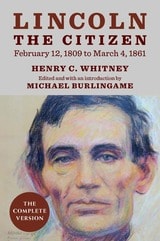
Lincoln the Citizen, February 12, 1809 to March 4, 1861
The Complete VersionHenry C. Whitney. Edited and with an introduction by Michael Burlingame
University of Illinois Press, 2025
Whitney’s work reveals the legal and political spheres where Lincoln moved while providing eyewitness accounts and intimate stories shared by Lincoln himself. Whitney’s unique vantage point informs analyses of everything from Lincoln’s melancholic temperament to his colorful early career to views on his marriage and family life. Burlingame places Whitney’s singular contributions within Lincoln studies but also weighs criticisms of the book and disputes over what information the author may or may not have invented.
A restored edition of an invaluable memoir, Lincoln the Citizen presents a wealth of overlooked biographical detail by one of the people who knew Lincoln best.

Lincoln's Youth
Indiana Years, 1816-1830Louis A. Warren
Indiana Historical Society Press, 1991

Little Big World
Collecting Louis Marx and the American FiftiesJeffrey Hammond
University of Iowa Press, 2010
Jeffrey Hammond’s Little Big World: Collecting Louis Marx and the American Fifties is the story of a middle-aged man’s sudden compulsion to collect the toys of his childhood: specifically themed playsets produced by the Louis Marx Toy Company. Hammond never made a conscious decision to become a collector of any kind, so he was surprised when his occasional visits to web sites turned into hours spent gazing at, and then impulsively purchasing, the tiny plastic people and animals in the Civil War set, the Fort Apache set, Roy Rogers Ranch, and Happi-Time Farm—just a few of the dozens of playsets the Marx Company produced.
Hammond interweaves childhood memories with reflections on what they reveal about the culture and values of cold war America, offering an extended meditation on toys as powerful catalysts for the imagination of both children and adults. Never sentimentalizing his childhood in an effort to get his old toys back, Hammond exposes the dangers of nostalgia by casting an unsettling light on the culture of the fifties and the era’s lasting impact on those who grew up in it.
Writing in a lovably quirky voice, Hammond not only attempts to understand his personal connection to the Marx toys but also examines the psychology of his fellow eBay denizens. In this warm, funny, and contemplative work, the reader encounters an online community of serious adult collectors who, as the author suspects, are driven to obsession by middle-aged nostalgia. When Hammond questions this preoccupation with the past, he comes to realize that his own collecting has prevented him from moving forward. With this insight, he offers an insider’s take on the culture and psychology of collecting.
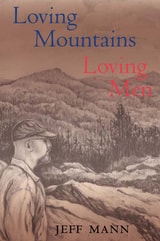
Loving Mountains, Loving Men
Memoirs of a Gay AppalachianJeff Mann
Ohio University Press, 2005