Results by title
267 books match the query 'Children' and 9 start with l
LGBTQAI+ Books for Children and Teens
Providing a Window for AllChristina Dorr
American Library Association, 2018

Law Beyond the State
Pasts and FuturesEdited by Rainer Hofmann and Stefan Kadelbach
Campus Verlag, 2016

Leading Kids to Books Through Crafts
American Library Association, 2000
Leading Kids to Books Through Magic
American Library Association, 1996
Lethal Decisions
The Unnecessary Deaths of Women and Children from HIV/AIDSArthur J. Ammann
Vanderbilt University Press, 2017
Inexplicably, the World Health Organization recommended withholding treatment for the majority of HIV-infected individuals in poor countries, and clinical researchers embarked on studies to evaluate inferior treatment approaches even while the pandemic continued to claim the lives of millions of women and children. Why did it take an additional twenty years for international health organizations to recommend the treatment and prevention measures that had had such a profound impact on the pandemic in wealthy countries? The surprising answers are likely to be debated by medical historians and ethicists.
At last, in 2015, came a universal call for treating all HIV-infected individuals with triple-combination antiretroviral drugs. But this can only be accomplished if the mistakes of the past are rectified. The book ends with recommendations on how the pediatric HIV/AIDS epidemic can finally be brought to an end.
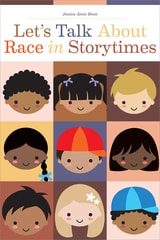
Let’s Talk About Race in Storytimes
Jessica Anne Bratt
American Library Association, 2021
Foreword by Kirby McCurtis
With the help of this book’s adaptable storytime activities, tools for self-reflection, and discussion starters, children’s librarians will learn how to put anti-racism work into their professional practice while fostering an environment that celebrates all identities.As the weekly lists of best-sellers demonstrate, many people want to engage with racial issues. But when it comes to talking about race, they often don’t know how or are hesitant to take the first steps. This includes children's librarians, who are taking seriously our profession’s calls for diversity, equity, and inclusion. They already know that popular storytimes can be an effective way to increase community representation and belonging at the library. Incorporating race into storytimes is an ideal way to foster inclusion by normalizing conversations about these issues. This book will help public and school librarians face their own biases, showing them how to have honest discussions with children, their caregivers, and storytime attendees, as well as their colleagues. In this book, you will discover
- several ready-to-use library storytimes that incorporate racial themes, complete with sample activities and booklists;
- an anti-oppression framework, based on the author’s own real-world practice, that is customizable for different settings and situations;
- concrete suggestions for overcoming fears and awkwardness when it comes to talking about race, with advice on practicing new language, making space to connect around appropriate cultural books for read alouds, and evaluating books for storytime;
- interactive self-reflecting worksheets which explore planning picture book introductions and songs for inclusive storytimes, providing age-appropriate glimpses into history, and suggested affirmations in describing skin tone, hair, and language;
- advocacy talking points centered on social justice that will encourage discussion with co-workers and other library staff; and
- guidance on community engagement, relationship building, and intentionally trying to diversify your world in order to truly become an anti-bias practitioner.
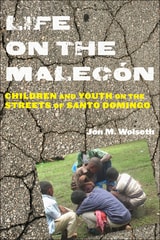
Life on the Malecón
Children and Youth on the Streets of Santo DomingoJon M. Wolseth
Rutgers University Press, 2013
Life on the Malecón is a narrative ethnography of the lives of street children and youth living in Santo Domingo, Dominican Republic, and the non-governmental organizations that provide social services for them. Writing from the perspective of an anthropologist working as a street educator with a child welfare organization, Jon M. Wolseth follows the intersecting lives of children, the institutions they come into contact with, and the relationships they have with each other, their families, and organization workers.
Often socioeconomic conditions push these children to move from their homes to the streets, but sometimes they themselves may choose the allure of the perceived freedoms and opportunities that street life has to offer. What they find, instead, is violence, disease, and exploitation—the daily reality through which they learn to maneuver and survive. Wolseth describes the stresses, rewards, and failures of the organizations and educators who devote their resources to working with this population.
The portrait of Santo Domingo’s street children and youth population that emerges is of a diverse community with variations that may be partly related to skin color, gender, and class. The conditions for these youth are changing as the economy of the Dominican Republic changes. Although the children at the core of this book live and sleep on avenues and plazas and in abandoned city buildings, they are not necessarily glue- and solvent-sniffing beggars or petty thieves on the margins of society. Instead, they hold a key position in the service sector of an economy centered on tourism.
Life on the Malecón offers a window into the complex relationships children and youth construct in the course of mapping out their social environment. Using a child-centered approach, Wolseth focuses on the social lives of the children by relating the stories that they themselves tell as well as the activities he observes.
Listening to Learn
Sharon Grover
American Library Association, 2012

Literature and the Child
Romantic Continuations, Postmodern ContestationsJames Holt Mcgavran
University of Iowa Press, 1999