Results by title
1566 books match the query 'Christianity' and 42 start with l
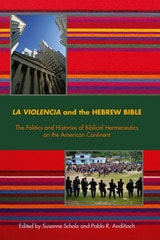
La Violencia and the Hebrew Bible
The Politics and Histories of Biblical Hermeneutics on the AmericaSusanne Scholz
SBL Press, 2016
Exegetically noteworthy and culturally-theologically relevant
Violence in its wide range of horrifying expressions is real in people’s lives, and biblical interpreters must take violence in the world seriously to arrive at relevant ideas about the place of the Bible in the world. Each essay addresses people’s experiences of violence in the study of the Bible through the context of la violencia, the Spanish noun referring to the brutal, repressive, and murderous policies of state-sponsored violence practiced in many South and Central American and Caribbean countries during the twentieth century that external powers such as the USA often endorsed and fostered. The volume represents an important contribution to biblical studies and to the field of Latina/o studies. The contributors are Cheryl B. Anderson, Pablo Andiñach, Nancy Bedford, Lee Cuéllar, Steed V. Davidson, Serge Frolov, Renata Furst, Julia M. O’Brien, Todd Penner, José Enrique Ramírez, Ivoni Richter Reimer, and Susanne Scholz.
Features:
- Twelve essays by scholars living and working on the American continent
- Articles reveal the complex historical, political, and cultural conditions on the American continent that have contributed to our understanding of violence in the Bible
- Focus on themes of racial, social, and cultural violence
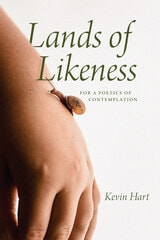
Lands of Likeness
For a Poetics of ContemplationKevin Hart
University of Chicago Press, 2023
In Lands of Likeness, Kevin Hart develops a new hermeneutics of contemplation through a meditation on Christian thought and secular philosophy. Drawing on Kant, Schopenhauer, Coleridge, and Husserl, Hart first charts the emergence of contemplation in and beyond the Romantic era. Next, Hart shows this hermeneutic at work in poetry by Gerard Manley Hopkins, Marianne Moore, Wallace Stevens, and others. Delivered in its original form as the prestigious Gifford Lectures, Lands of Likeness is a revelatory meditation on contemplation for the modern world.
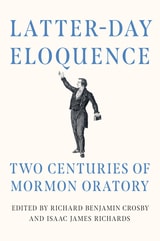
Latter-day Eloquence
Two Centuries of Mormon OratoryEdited by Richard Benjamin Crosby and Isaac James Richards
University of Illinois Press, 2026
Essential and one-of-a-kind, Latter-day Eloquence provides a foundational reference for the study of Latter-day Saint rhetoric and oratory.
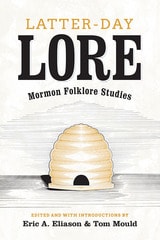
Latter-day Lore
Mormon Folklore StudiesEric A. Eliason
University of Utah Press, 2013
Latter-day Saint Perspectives on Atonement
Edited by Deidre Nicole Green and Eric D. Huntsman
University of Illinois Press, 2024
The Church of Jesus Christ of Latter-day Saints and other Christians have always shared a fundamental belief in the connection between personal salvation and the suffering, death, and resurrection of Jesus Christ. While having faith in and experiencing the atonement of Christ remains a core tenet for Latter-day Saints, some thinkers have in recent decades reconsidered traditional understandings of atonement.
Deidre Nicole Green and Eric D. Huntsman edit a collection that brings together multiple and diverse approaches to thinking about Latter-day Saint views on this foundational area of theology. The essayists draw on and go beyond a wide range of perspectives, classical atonement theories, and contemporary reformulations of atonement theory. The first section focuses on scriptural and historical foundations while the second concentrates on theological explorations. Together, the contributors evaluate what is efficacious and ethical in the Latter-day Saint outlook and offer ways to reconceive those views to provide a robust theological response to contemporary criticisms about atonement.
Contributors: Nicholas J. Frederick, Fiona Givens, Deidre Nicole Green, Sharon J. Harris, J.B. Haws, Eric D. Huntsman, Benjamin Keogh, Ariel Bybee Laughton, Adam S. Miller, Jenny Reeder, T. Benjamin Spackman, and Joseph M. Spencer
Latter-day Screens
Gender, Sexuality, and Mediated MormonismBrenda R. Weber
Duke University Press, 2019
Laughter at the Foot of the Cross
Michael A. Screech
University of Chicago Press, 2015
But we are fortunate in our guide: drawing on his immense knowledge of the classics and of humanists like Erasmus and Rabelais—who used Plato and Aristotle to interpret the Gospels—and incorporating the thoughts of Aesop, Calvin, Lucian of Samosata, Luther, Socrates, and others, Screech shows that Renaissance thinkers revived ancient ideas about what inspires laughter and whether it could ever truly be innocent. As Screech argues, in the minds of Renaissance scholars, laughter was to be taken very seriously. Indeed, in an era obsessed with heresy and reform, this most human of abilities was no laughing matter.

Law and Liberty
Jesus, Paul, and the Newness of ChristianityRomano Penna
Catholic University of America Press, 2026
Law and Religion in a Secular Age
Rafael Domingo
Catholic University of America Press, 2023
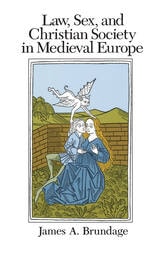
Law, Sex, and Christian Society in Medieval Europe
James A. Brundage
University of Chicago Press, 1990
"Brundage's book is consistently learned, enormously useful, and frequently entertaining. It is the best we have on the relationships between theological norms, legal principles, and sexual practice."—Peter Iver Kaufman, Church History
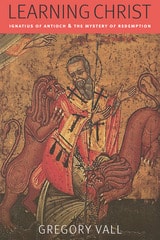
Learning Christ
Gregory Vall
Catholic University of America Press, 2013
Legal Norms, Proceures, and Exchanges in the Early Modern <i>ius commune</i?
Damian Smith
Catholic University of America Press, 2026
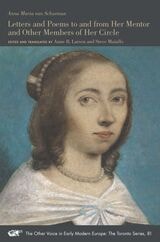
Letters and Poems to and from Her Mentor and Other Members of Her Circle
Anna Maria van Schurman
Iter Press, 2021
This volume presents in translation a remarkable collection of her letters and poems—many of which were previously unpublished—that span almost four decades of her life, from 1631 to 1669.
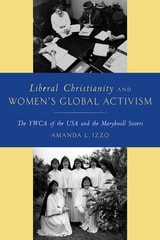
Liberal Christianity and Women's Global Activism
The YWCA of the USA and the Maryknoll SistersAmanda L. Izzo
Rutgers University Press, 2018
Focusing on the histories of two highly influential groups, the Young Women’s Christian Association of the USA, an interdenominational Protestant organization, and the Maryknoll Sisters, a Roman Catholic religious order, Izzo offers new perspectives on the contributions of these women to transnational social movements, women’s history, and religious studies, as she traces the connections between turn-of-the-century Christian women’s reform culture and liberal and left-wing religious social movements of the 1960s and 1970s. Izzo suggests that shared ethical, theological, and institutional underpinnings can transcend denominational divides, and that strategies for social change often associated with secular feminism have ties to spiritually inspired social movements.
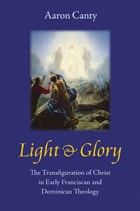
Light and Glory
The Transfiguration of Christ in Early Franciscan and Dominican TheologyAaron Canty
Catholic University of America Press, 2011
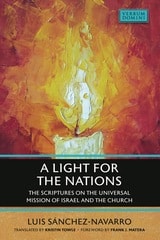
Light for the Nations
The Scriptures on the Universal Mission of Israel and the ChurchLuis Sanchez-Navarro
Catholic University of America Press, 2024
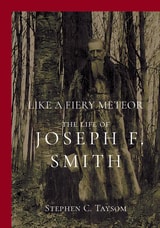
Like a Fiery Meteor
The Life of Joseph F. SmithStephen C. Taysom
University of Utah Press, 2023
Joseph F. Smith was born in 1838 to Hyrum Smith and Mary Fielding Smith. Six years later both his father and his uncle, Joseph Smith Jr., the founding prophet of the Church of Jesus Christ of Latter-day Saints, were murdered in Carthage, Illinois. The trauma of that event remained with Joseph F. for the rest of his life, affecting his personal behavior and public tenure in the highest tiers of the LDS Church, including the post of president from 1901 until his death in 1918. Joseph F. Smith laid the theological groundwork for modern Mormonism, especially the emphasis on temple work. This contribution was capped off by his “revelation on the redemption of the dead,” a prophetic glimpse into the afterlife. Taysom’s book traces the roots of this vision, which reach far more deeply into Joseph F. Smith’s life than other scholars have previously identified.
In this first cradle-to-grave biography of Joseph F. Smith, Stephen C. Taysom uses previously unavailable primary source materials to craft a deeply detailed, insightful story of a prominent member of a governing and influential Mormon family. Importantly, Taysom situates Smith within the historical currents of American westward expansion, rapid industrialization, settler colonialism, regional and national politics, changing ideas about family and masculinity, and more. Though some writers tend to view the LDS Church and its leaders through a lens of political and religious separatism, Taysom does the opposite, pushing Joseph F. Smith and the LDS Church closer to the centers of power in Washington, DC, and elsewhere.
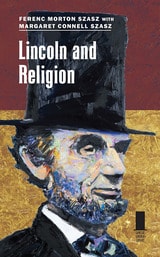
Lincoln and Religion
Ferenc Morton Szasz with Margaret Connell Szasz
Southern Illinois University Press, 2014
Abraham Lincoln’s faith has commanded more broad-based attention than that of any other American president. Although he never joined a denomination, Baptists, Presbyterians, Quakers, Episcopalians, Disciples of Christ, Spiritualists, Jews, and even atheists claim the sixteenth president as one of their own. In this concise volume, Ferenc Morton Szasz and Margaret Connell Szasz offer both an accessible survey of the development of Lincoln’s religious views and an informative launch pad for further academic inquiry. A singular key to Lincoln’s personality, especially during the presidential years, rests with his evolving faith perspective.
After surveying Lincoln’s early childhood as a Hard-Shell Baptist in Kentucky and Indiana, the authors chronicle his move from skepticism to participation in Episcopal circles during his years in Springfield, and, finally, after the death of son Eddie, to Presbyterianism. They explore Lincoln’s relationship with the nation’s faiths as president, the impact of his son Willie’s death, his adaptation of Puritan covenant theory to a nation at war, the role of prayer during his presidency, and changes in his faith as reflected in the Emancipation Proclamation and his state papers and addresses. Finally, they evaluate Lincoln’s legacy as the central figure of America’s civil religion, an image sharpened by his prominent position in American currency.
A closing essay by Richard W. Etulain traces the historiographical currents in the literature on Lincoln and religion, and the volume concludes with a compilation of Lincoln’s own words about religion.
In assessing the enigma of Lincoln’s Christianity, the authors argue that despite his lack of church membership, Lincoln lived his life through a Christian ethical framework. His years as president, dominated by the Civil War and personal loss, led Lincoln to move into a world beholden to Providence.
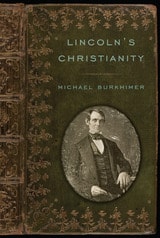
Lincoln's Christianity
Michael Burkhimer
Westholme Publishing, 2007
After listening to Abraham Lincoln’s second inaugural address, many in the audience were stunned. Instead of a positive message about the coming Union victory, the president implicated the entire country in the faults and responsibility for slavery. Using Old Testament references, Lincoln explained that God was punishing all Americans for their role in the calamity with a bloody civil war.
These were surprising words from a man who belonged to no church, did not regularly attend services, and was known to have publicly and privately questioned some of Christianity’s core beliefs. But Lincoln’s life was one with supreme sadness—the death of his first fiancee, the subsequent loss of two of his sons—and these events, along with the chance encounter with a book in Mary Todd’s father’s library, The Christian’s Defense, are all part of the key to understanding Lincoln’s Christianity. Biblical quotations soon entered his speeches—a point noted by Stephen Douglas in their debates—but it is unclear whether Lincoln’s use of scripture was a signal that American politicians should openly embrace religion in their public lives, or a rhetorical tool to manipulate his audience, or a result of a personal religious transformation. After his death both secular and religious biographers claimed Lincoln as one of their own, touching off a controversy that remains today.
In Lincoln’s Christianity, Michael Burkhimer examines the entire history of the president’s interaction with religion—accounts from those who knew him, his own letters and writings, the books he read—to reveal a man who did not believe in orthodox Christian precepts (and might have had a hard time getting elected today) yet, by his example, was a person and president who most truly embodied Christian teachings.
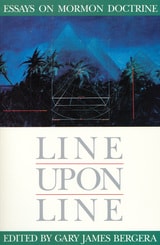
Line upon Line
Essays on Mormon DoctrineGary J. Bergera
Signature Books, 1989
Among the contributors are Thomas G. Alexander, Peter C. Appleby, George Boyd, David John Buerger, Van Hale, Boyd Kirkland, Blake Ostler, Stephen L Richards, Kent E. Robson, Thaddeus E. Shoemaker, Vern Swanson, Dan Vogel, and Linda P. Wilcox.
For anyone who has assumed that Mormon doctrine appeared whole-cloth in a single revelation, Line Upon Line is an important primer. No issue, however central to Latter-day Saint theology, is exempt from gradual development over time. This includes the nature of God, the progression of the soul, free agency, the possibility of repentance and forgiveness through a divine sacrifice, the creation of the world, evolution of the species, and the nature and origin of evil.
In Line Upon Line, sixteen thoughtful, compelling essays offer reflective historical discussions of the development of Mormon doctrine from the statements of church leaders to the writings of LDS theologians to canonized scripture, rather than on the authors’ personal speculations. Noting the relative strengths and weaknesses of various theological or doctrinal teachings due to limited human understanding, the contributors suggest that differences of opinion can indicate the presence of genuine and sincere faith that God’s truth is nevertheless present in scriptural metaphor.
Liturgical Hermeneutics of Sacred Scripture
Marco Benini
Catholic University of America Press, 2023
Liturgical Theology in Thomas Aquinas
Sacrifice and Salvation HistoryFranck Quoex
Catholic University of America Press, 2023
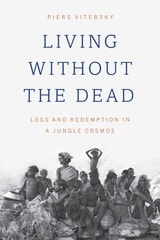
Living without the Dead
Loss and Redemption in a Jungle CosmosPiers Vitebsky
University of Chicago Press, 2017
Today, young Sora are rejecting the worldview of their ancestors and switching their allegiance to warring sects of fundamentalist Christianity or Hinduism. Communion with ancestors is banned as sacred sites are demolished, female shamans are replaced by male priests, and debate with the dead gives way to prayer to gods. For some, this shift means liberation from jungle spirits through literacy, employment, and democratic politics; others despair for fear of being forgotten after death.
How can a society abandon one understanding of reality so suddenly and see the world in a totally different way? Over forty years, anthropologist Piers Vitebsky has shared the lives of shamans, pastors, ancestors, gods, policemen, missionaries, and alphabet worshippers, seeking explanations from social theory, psychoanalysis, and theology. Living without the Dead lays bare today’s crisis of indigenous religions and shows how historical reform can bring new fulfillments—but also new torments and uncertainties.
Vitebsky explores the loss of the Sora tradition as one for greater humanity: just as we have been losing our wildernesses, so we have been losing a diverse range of cultural and spiritual possibilities, tribe by tribe. From the award-winning author of The Reindeer People, this is a heartbreaking story of cultural change and the extinction of an irreplaceable world, even while new religious forms come into being to take its place.
Local Production, Administration, and Reception of Medieval Canon Law
Steven A. Schoenig
Catholic University of America Press, 2026
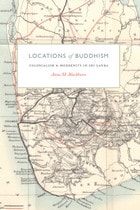
Locations of Buddhism
Colonialism and Modernity in Sri LankaAnne M. Blackburn
University of Chicago Press, 2010
Modernizing and colonizing forces brought nineteenth-century Sri Lankan Buddhists both challenges and opportunities. How did Buddhists deal with social and economic change; new forms of political, religious, and educational discourse; and Christianity? And how did Sri Lankan Buddhists, collaborating with other Asian Buddhists, respond to colonial rule? To answer these questions, Anne M. Blackburn focuses on the life of leading monk and educator Hikkaduve Sumangala (1827–1911) to examine more broadly Buddhist life under foreign rule.
In Locations of Buddhism, Blackburn reveals that during Sri Lanka’s crucial decades of deepening colonial control and modernization, there was a surprising stability in the central religious activities of Hikkaduve and the Buddhists among whom he worked. At the same time, they developed new institutions and forms of association, drawing on pre-colonial intellectual heritage as well as colonial-period technologies and discourse. Advocating a new way of studying the impact of colonialism on colonized societies, Blackburn is particularly attuned here to human experience, paying attention to the habits of thought and modes of affiliation that characterized individuals and smaller scale groups. Locations of Buddhism is a wholly original contribution to the study of Sri Lanka and the history of Buddhism more generally.
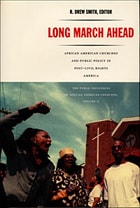
Long March Ahead
African American Churches and Public Policy in Post-Civil Rights AmericaR. Drew Smith ed.
Duke University Press, 2004
Long March Ahead emphasizes the need for African American churches to complement the excellent work they do in implementing policies set by others by getting more involved in shaping public policy. The contributors explore the efficacy of different means of public policy advocacy and social service delivery, including faith-based initiatives. At the same time, they draw attention to trends that have constrained political involvement by African American churches: the increased professionalization of policy advocacy and lobbying, the underdevelopment of church organizational structures devoted to policy work, and tensions between religious imperatives and political activism. Long March Ahead takes an important look at the political role of African American churches after the great policy achievements of the civil rights era.
Contributors
Cathy J. Cohen
Megan McLaughlin
Columba Aham Nnorum
Michael Leo Owens
Desiree Pedescleaux
Barbara D. Savage
R. Drew Smith
Emilie Townes
Christopher Winship
Look Out Below! A Story of the Airborne by a Paratrooper Padre
Francis L. Sampson
Catholic University of America Press, 2023
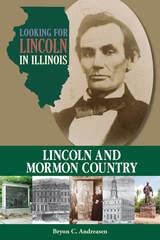
Looking for Lincoln in Illinois
Lincoln and Mormon CountryBryon C. Andreasen
Southern Illinois University Press, 2015
Although they inhabited different political, social, and cultural arenas, Abraham Lincoln and the pioneer generation of Latter-day Saints, or Mormons, shared the same nineteenth-century world. Bryon C. Andreasen’s Looking for Lincoln in Illinois: Lincoln and Mormon Country relates more than thirty fascinating and surprising stories that show how the lives of Lincoln and the Mormons intersected.
This richly illustrated and carefully researched book expands on some of the storyboards found on the Looking for Lincoln Story Trail, from the Mormon capital of Nauvoo to the state capital of Springfield. Created by the Looking for Lincoln Heritage Coalition, this trail consists of wayside exhibits posted in sites of significance to Lincoln’s life and career across fifty-two communities in Illinois. The book’s keyed maps, historic photos, and descriptions of battles, Mormon expeditions, and events at inns, federal buildings, and even Lincoln’s first Illinois log cabin connect the stories to their physical locations.
Exploring the intriguing question of whether Lincoln and Mormon founder Joseph Smith ever met, the book reveals that they traveled the same routes and likely stayed at the same inns. The book also includes colorful and engaging looks at key figures such as Brigham Young, various Mormon apostles, and more. Anyone inspired by Lincoln, as well as Mormon and Illinois history enthusiasts, will appreciate this look back at a long-past, but not forgotten, landscape.
Loose of Earth
A MemoirKathleen Dorothy Blackburn
University of Texas Press, 2024
An arresting memoir of love and unbending religion, toxicity and disease, and one family’s desperate wait for a miracle that never came.
Kathleen Dorothy Blackburn was the oldest of five children, a twelve-year-old from Lubbock, Texas, whose evangelical family eschewed public education for homeschooling, and wove improbable scientific theories into literal interpretations of the Bible. Then her father, a former air force pilot, was diagnosed with cancer at the age of thirty-eight, and, “it was like throwing gasoline on the Holy Spirit.” Stirred by her mother, the family committed to an extreme diet and sought deliverance from equally extreme sources: a traveling tent preacher, a Malaysian holy man, a local faith-healer who led services called “Miracles on 34th Street.”
What they didn’t know at the time was that their lives were entangled with a larger, less visible environmental catastrophe. Fire-fighting foams containing carcinogenic compounds had contaminated the drinking water of every military site where her father worked. Commonly referred to as “forever chemicals,” the presence of PFAS in West Texas besieged a landscape already burdened with vanishing water, taking up residence in wells and in the bloodstreams of people who lived there. An arresting portrait of the pernicious creep of decline, and a powerful cry for environmental justice, Loose of Earth captures the desperate futility and unbending religious faith that devastated a family, leaving them waiting for a miracle that would never come.
Lord I Love You! Homilies through the Liturgical Year
Volume 2: Advent, Christmas, Marian Feasts, and Saints DaysPietro Pope Benedict XVI
Catholic University of America Press, 2025
Lord, I Love You! Homilies through the Liturgical Year
Volume 1: Lent, Easter, and Solemnities of the LordPietro Pope Benedict XVI
Catholic University of America Press, 2025
Losing the Good Portion
Why Men Are Alienated from ChristianityLeon J. Podles
St. Augustine's Press, 2017
Losing the Good Portion: Why Men Are Alienated from Christianity explores the causes and consequences of the almost millennium-old disparity between the participation of lay men and lay women in the churches of Western Christianity. Podles considers both the anecdotal and statistical evidence for the lack of men: sermons, church rolls, censuses, and sociological analyses.
Podles sees the intellectual roots of lack of men in the Aristotelian understanding of male and female as active and passive, an understanding which has formed all discussion of masculinity and femininity, from Aquinas through Schleiermacher, Barth, and Hans Urs von Balthasar, all of whom saw femininity as more compatible with Christianity than masculinity. Men, according to anthropologists and psychologists, go through a difficult process to attain masculinity and therefore distance themselves from threats to that masculine identity, including Christianity.
Men suspected the clergy was effeminate and sexually irregular. Historians of violence have examined the decline in violence in Europe and the civilizing role of the clergy, a role which further alienated men and led to violent anticlericalism
Podles examines the presentation of Jesus’ masculinity in Scripture and images of Jesus’ masculinity in art, the role of thumos in spirituality, and the various movements that have helped keep men connected to the churches. He makes suggestions for possible outreach to men.
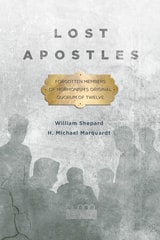
Lost Apostles
Forgotten Members of Mormonism's Original Quorum of the TwelveWilliam Shepard
Signature Books, 2013
Of the twelve men selected, nine would eventually be pruned from the vineyard themselves, to varying degrees. Seven were excommunicated, one of whom was reinstated to his position in the Twelve. Of the other six, the subjects of this book, none returned to the apostleship and four never came back to the Church at all. Those who left faded into obscurity except for when they are occasionally still mentioned in sermons as cautionary tales. But two of them made their marks in other areas of society, John Boynton becoming a successful dentist, a popular lecturer, geologist, and inventor with dozens of important patents to his name, while Lyman Johnson became a prominent attorney and business owner. Even though Luke Johnson, Thomas B. Marsh, William McLellin, and William Smith became religious wanderers and tried unsuccessfully to adjust to life outside of the Church, their experiences were interesting and comprise valuable case studies in belief and disaffection.
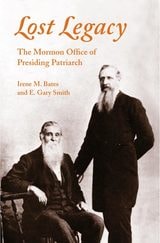
Lost Legacy
THE MORMON OFFICE OF PRESIDING PATRIARCHIrene Bates and E. Gary Smith
University of Illinois Press, 1996
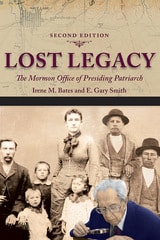
Lost Legacy
The Mormon Office of Presiding PatriarchIrene M. Bates
University of Illinois Press, 2018
Love Between Women
Early Christian Responses to Female HomoeroticismBernadette J. Brooten
University of Chicago Press, 1996
"An extraordinary accomplishment. . . . A definitive source for all future discussion of homoeroticism and the Bible."—Mary Rose D'Angelo, Harvard Gay & Lesbian Review
"[Brooten's] convincing analysis . . . not only profoundly reshapes our understanding of the past, but it should also shape the way in which that past, particularly the early Christian texts with their immense normative weight, will be used for the future."—Anne L. Clark, Journal of Lesbian Studies
"Love Between Women gives contemporary debates on sexuality a carefully delineated past. It boldly insists upon a different future, one informed by history but not tyrannized by it."—Susan Ackerman, Lambda Book Report
"Fascinating, provocative and lucid. . . . Brooten has made a fundamental contribution to women's and gender studies, gay and lesbian studies, and classics."—Elizabeth A. Castelli, Women's Review of Books
Winner of the Lambda Literary Award for Best Lesbian Studies Book, 1997
Love Seeking Understanding
Aquinas, Balthasar, and the Renewal of Sapiential TheologyMichael Altenburger
Catholic University of America Press, 2024
Love and Saint Augustine
Hannah Arendt
University of Chicago Press, 1995
In Love and Saint Augustine, Joanna Vecchiarelli Scott and Judith Chelius Stark make this important early work accessible for the first time. Here is a completely corrected and revised English translation that incorporates Arendt's own substantial revisions and provides additional notes based on letters, contracts, and other documents as well as the recollections of Arendt's friends and colleagues during her later years.
Love in Time
An Ethical InquiryFannie Bialek
University of Chicago Press, 2025
We live in time, and so we love in time. Our beloveds change, and we change beside them. Sometimes we change apart, but it is this very changeableness, the braving of an unknown future together, that endears us to our lovers. Far from an ideal of constancy and commitment, then, love is an endeavor fraught with uncertainty.
In this book, Fannie Bialek sketches a view of love that does not ignore the vagaries of life but embraces them. In contrast to philosophical and religious attempts to secure love against finitude, Bialek’s love embraces its susceptibility to change and accepts the ethical challenges such change introduces. Attentive to our deepest vulnerabilities, Bialek develops a fresh ethics of love grounded by our humility before time.
Loving God's Wildness
The Christian Roots of Ecological Ethics in American LiteratureJeffrey Bilbro
University of Alabama Press, 2015
Loving God’s Wildness rediscovers the environmental roots of America’s Puritan heritage. In tracing this history, Jeffrey Bilbro demonstrates how the dualistic Christianity that the Puritans brought to America led them to see the land as an empty wilderness that God would turn into a productive source of marketable commodities. Bilbro carefully explores the effect of this dichotomy in the nature writings of Henry David Thoreau, John Muir, Willa Cather, and Wendell Berry.
Thoreau, Muir, Cather, and Berry imaginatively developed the Puritan theological tradition to propose practical, physical means by which humans should live and worship within the natural temple of God’s creation. They reshaped Puritan dualism, each according to the particular needs of his or her own ecological and cultural contexts, into a theology that demands care for the entire created community. While differing in their approaches and respective ecological ethics, the four authors Bilbro examines all share the conviction that God remains active in creation and that humans ought to relinquish their selfish ends to participate in his wild ecology.
Loving God’s Wildness fills a critical gap in literary criticism and environmental studies by offering a sustained, detailed argument regarding how Christian theology has had a profound and enduring legacy in shaping the contours of the American ecological imagination. Literary critics, scholars of religion and environmental studies, and thoughtful Christians who are concerned about environmental issues will profit from this engaging new book.
Lowell L. Bennion
A Mormon EducatorGeorge B. Handley
University of Illinois Press, 2023
Known in his lifetime for a tireless dedication to humanitarian causes, Lowell L. Bennion was also one of the most important theologians and ethicists to emerge in the Church of Jesus Christ of Latter-day Saints in the twentieth century.
George B. Handley’s intellectual biography delves into Bennion’s thought and extraordinary intellectual life. Rejecting the idea that individual LDS practice might be at odds with lived experience, Bennion insisted the gospel favored the growth of individuals acting and living in the present. He also focused on the need for ongoing secular learning alongside religious practice and advocated for an idea of social morality that encouraged Latter-day Saints to seek out meaningful transformations of character and put their ethical commitments into practice. Handley examines Bennion’s work against the background of a changing institution that once welcomed his common-sense articulation of LDS ideas and values but became discomfited by how his thought cast doubt on the Church’s beliefs about race and other issues.
Lucretia Mott Speaks
The Essential Speeches and SermonsLucretia Mott. Edited by Christopher Densmore, Carol Faulkner, Nancy Hewitt, and Beverly Wilson Palmer
University of Illinois Press, 2017
Drawing on widely scattered archives, newspaper accounts, and other sources, Lucretia Mott Speaks unearths the essential speeches and remarks from Mott's remarkable career. The editors have chosen selections representing important themes and events in her public life. Extensive annotations provide vibrant context and show Mott's engagement with allies and opponents. The speeches illuminate her passionate belief that her many causes were all intertwined. The result is an authoritative resource, one that enriches our understanding of Mott's views, rhetorical strategies, and still-powerful influence on American society.