Results by title
138 books match the query 'Civil War' and 7 start with l
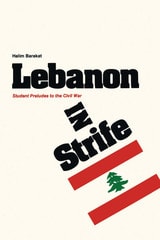
Lebanon in Strife
Student Preludes to the Civil WarBy Halim Barakat
University of Texas Press, 1977
In this study, an eminent sociologist of the Arab world analyzes student politics in Lebanon and their relationship to the civil war. This focus is part of a larger concern with upheaval in Arab society and with political and social integration in mosaic societies in general. Professor Barakat provides a clear, thorough, and comprehensive analysis of late twentieth century Lebanese society and the dominant ideological veins within it.
Lebanon in Strife is a comparative study of Lebanese youth with special emphasis on their alienation from society and politics and their place at the vanguard of social change. The study is set in the context of the continual confrontation between forces for change and the established order in Lebanon, viewed from both a local and an international perspective. The author argues that vertical loyalties (based on religious, ethnic, or regional ties) are more significant than horizontal loyalties (based on socioeconomic class) in determining Lebanese student political behavior and attitudes. However, vertical loyalties are explained in socioeconomic terms, for the two forms of cleavages coincide; and the whole society is composed of religious communities arranged in a hierarchy of power and status. The author shows that these ties conflict with and undermine orderly social change and national unity and that they could account for conditions that have led to civil war in Lebanon.
In an epilogue, Professor Barakat relates his analysis of student politics to political developments in Lebanon during the civil war of 1975–1976, including an assessment of the role of Syria and the prospects for a negotiated end to armed struggle in the country.
This is the first empirical study of Lebanese political life viewed from the standpoint of its central force for change, the students. It is an invaluable resource for students of the modem Middle East as well as for specialists in sociology, politics, and history. Lebanon in Strife has special relevance to problems of political change and development in the Third World countries, providing a sociopolitical model for the analysis of student politics in traditional and transitional societies.
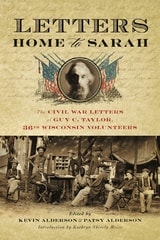
Letters Home to Sarah
The Civil War Letters of Guy C. Taylor, Thirty-Sixth Wisconsin VolunteersGuy C. Taylor; Edited by Kevin L. Alderson and Patsy Alderson; Introduction by Kathryn Shively Meier
University of Wisconsin Press, 2012
From the initial mustering and training of his regiment at Camp Randall in Wisconsin, through the siege of Petersburg in Virginia, General Lee’s surrender at Appomattox, and the postwar Grand Review of the Armies parade in Washington, D.C., Taylor conveys in vivid detail his own experiences and emotions and shows himself a keen observer of all that is passing around him. While at war, he contracts measles, pneumonia, and malaria, and he writes about the hospitals, treatments, and sanitary conditions that he and his comrades endured during the war. Amidst the descriptions of soldiering, Taylor’s letters to Sarah are threaded with the concerns of a young married couple separated by war but still coping together with childrearing and financial matters. The letters show, too, Taylor’s transformation from a lonely and somewhat disgruntled infantryman to a thoughtful commentator on the greater ideals of the war.
This remarkable trove of letters, which had been left in the attic of Taylor’s former home in Cashton, Wisconsin, was discovered by local historian Kevin Alderson at a household auction. Recognizing them for the treasure they are, Alderson bought the letters and, aided by his wife Patsy, painstakingly transcribed the letters and researched Taylor’s story in Wisconsin and at historical sites of the Civil War. The Aldersons’ preface and notes are augmented by an introduction by Civil War historian Kathryn Shively Meier, and the book includes photographs, maps, and illustrations related to Guy Taylor’s life and letters.
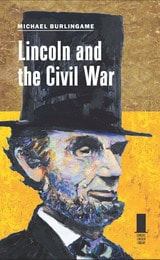
Lincoln and the Civil War
Michael Burlingame
Southern Illinois University Press, 2011
When war erupted in 1861, the North—despite its superior economic resources and manpower—was considered the underdog of the conflict. The need to invade the South brought no advantage to the inefficient, poorly led Union Army. In contrast, Southerners’ knowledge of their home terrain, access to railroads, familiarity with firearms, and outdoor lifestyles, along with the presumed support of foreign nations, made victory over the North seem a likely outcome. In the face of such daunting obstacles, only one person could unite disparate Northerners and rally them to victory in the darkest moments of the war: Abraham Lincoln.
While Lincoln is often remembered today as one of America’s wisest presidents, he was not always considered so sage. Burlingame demonstrates how, long before the rigors of his presidency and the Civil War began to affect him, Lincoln wrestled with the demons of midlife to ultimately emerge as arguably the most self-aware, humble, and confident leader in American history. This metamorphosis from sarcastic young politician to profound statesman uniquely prepared him for the selfless dedication the war years would demand. Whereas his counterpart, Jefferson Davis, became mired in personal power plays, perceived slights, and dramas, Lincoln rose above personal concerns to always place the preservation of the Union first. Lincoln’s ability, along with his eloquence, political savvy, and grasp of military strategy made him a formidable leader whose honesty and wisdom inspired undying loyalty.
In addition to offering fresh perspectives on Lincoln’s complex personality and on the other luminaries of his administration, Lincoln and the Civil War takes readers on a brief but thorough tour of the war itself, from the motivations and events leading to Southern secession and the first shots at Fort Sumter to plans for Reconstruction and Lincoln’s tragic assassination. Throughout the journey, Burlingame demonstrates how Lincoln’s steady hand at the helm navigated the Union through the most perilous events of the war and held together the pieces of an unraveling nation.
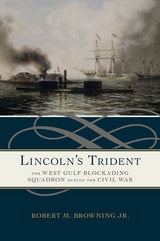
Lincoln's Trident
The West Gulf Blockading Squadron during the Civil WarRobert M. Browning Jr.
University of Alabama Press, 2014
Lincoln’s Trident is the definitive account of the US Navy’s West Gulf Blockading Squadron’s quarantine of the Confederacy in the central and western Gulf of Mexico and adjacent river systems.
In Lincoln’s Trident, Coast Guard historian Robert M. Browning Jr. continues his magisterial series about the Union’s naval blockade of the Confederacy during the American Civil War. Established by the Navy Department in 1862, the West Gulf Blockading Squadron operated from St. Andrews Bay (Panama City), Florida to the Rio Grande River. As with the Navy’s blockade squadrons operating in the Atlantic, the mission of the West Gulf Blockading Squadron was to cripple the South’s economy by halting imports and disrupting cotton exports, the South’s main source of hard currency. The blockade also limited transportation within the South and participated in combined operations with Union land forces.
The history of the squadron comprises myriad parts and players, deployed in a variety of missions across the thousand-mile-wide Western Theater. From disorganized beginnings, the squadron’s leaders and sailors had to overcome setbacks, unfulfilled expectations, and lost opportunities. Browning masterfully captures the many variables that influenced the strategic choices of Navy commanders as they both doggedly pursued unchanging long-term goals as well as improvised and reacted to short-term opportunities.
Notable among its leaders was David Glasgow Farragut, believed by many to be America’s greatest naval hero, who led the squadron through most of the war and the climactic Battle of Mobile Bay. Under his legendary leadership, the squadron not only sealed Confederate sea ports, but also made feints and thrusts up the Mississippi River as far north as Vicksburg, Mississippi.
Knowing the Navy’s role in isolating the Confederate economy and preventing the movement of troops and supplies within the South is crucial to understanding of the outcomes of the Civil War, as well as the importance of naval power in military conflicts. With thirty-five maps and illustrations, Lincoln’s Trident expounds upon an essential part of the Civil War as well as naval and American history.
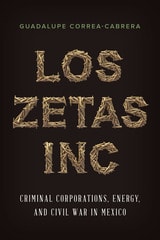
Los Zetas Inc.
Criminal Corporations, Energy, and Civil War in MexicoBy Guadalupe Correa-Cabrera
University of Texas Press, 2017
The rapid growth of organized crime in Mexico and the government’s response to it have driven an unprecedented rise in violence and impelled major structural economic changes, including the recent passage of energy reform. Los Zetas Inc. asserts that these phenomena are a direct and intended result of the emergence of the brutal Zetas criminal organization in the Mexican border state of Tamaulipas. Going beyond previous studies of the group as a drug trafficking organization, Guadalupe Correa-Cabrera builds a convincing case that the Zetas and similar organizations effectively constitute transnational corporations with business practices that include the trafficking of crude oil, natural gas, and gasoline; migrant and weapons smuggling; kidnapping for ransom; and video and music piracy.
Combining vivid interview commentary with in-depth analysis of organized crime as a transnational and corporate phenomenon, Los Zetas Inc. proposes a new theoretical framework for understanding the emerging face, new structure, and economic implications of organized crime in Mexico. Correa-Cabrera delineates the Zetas establishment, structure, and forms of operation, along with the reactions to this new model of criminality by the state and other lawbreaking, foreign, and corporate actors. Since the Zetas share some characteristics with legal transnational businesses that operate in the energy and private security industries, she also compares this criminal corporation with ExxonMobil, Halliburton, and Blackwater (renamed “Academi” and now a Constellis company). Asserting that the elevated level of violence between the Zetas and the Mexican state resembles a civil war, Correa-Cabrera identifies the beneficiaries of this war, including arms-producing companies, the international banking system, the US border economy, the US border security/military-industrial complex, and corporate capital, especially international oil and gas companies.
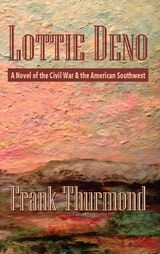
Lottie Deno
A Novel of the Civil War and the American SouthwestFrank Thurmond
Parkhurst Brothers, Inc., 2024
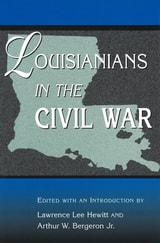
Louisianians in the Civil War
Edited & Intro by Lawrence Lee Hewitt & Arthur W. Bergeron, Jr.
University of Missouri Press, 2002