Results by title
808 books match the query 'Civilization' and 16 start with l
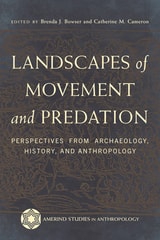
Landscapes of Movement and Predation
Perspectives from Archaeology, History, and AnthropologyBrenda J. Bowser and Catherine M. Cameron
University of Arizona Press, 2024
Landscapes of predation also developed in precolonial times in places where people were subjected to repeated ruthless attacks and dislocation. With contributions from archaeologists and a historian, the book provides a startling new perspective on an aspect of the past that is often overlooked: the role of violence in shaping where, how, and with whom people lived. Using ethnohistoric, ethnographic, historic, and archaeological data, the authors explore the actions of both predators and their targets and uncover the myriad responses people took to protect themselves.
Contributors
Fernando Almeida
Thomas John Biginagwa
Brenda J. Bowser
Catherine M. Cameron
Charles Cobb
Robbie Ethridge
Thiago Kater
Richard M. Leventhal
Lydia Wilson Marshall
Cliverson Pessoa
Neil Price
Ben Raffield
Andrés Reséndez
Samantha Seyler
Fabíola Andréa Silva
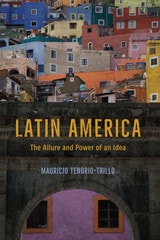
Latin America
The Allure and Power of an IdeaMauricio Tenorio-Trillo
University of Chicago Press, 2017
Tenorio-Trillo builds the book on three interlocking steps: first, an intellectual history of the concept of Latin America in its natural historical habitat—mid-nineteenth-century redefinitions of empire and the cultural, political, and economic intellectualism; second, a serious and uncompromising critique of the current “Latin Americanism”—which circulates in United States–based humanities and social sciences; and, third, accepting that we might actually be stuck with “Latin America,” Tenorio-Trillo charts a path forward for the writing and teaching of Latin American history. Accessible and forceful, rich in historical research and specificity, the book offers a distinctive, conceptual history of Latin America and its many connections and intersections of political and intellectual significance. Tenorio-Trillo’s book is a masterpiece of interdisciplinary scholarship.
Latin American Identity and Constructions of Difference
Amaryll Chanady
University of Minnesota Press, 1993
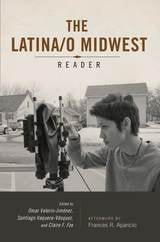
Latina/o Midwest Reader
Omar Valerio-Jimenez , Santiago Vaquera-Vasquez
University of Illinois Press, 2017
Eye-opening and provocative, The Latina/o Midwest Reader rewrites the conventional wisdom on today's Latina/o community and how it faces challenges—and thrives—in the heartland.
Contributors: Aidé Acosta, Frances R. Aparicio, Jay Arduser, Jane Blocker, Carolyn Colvin, María Eugenia Cotera, Theresa Delgadillo, Lilia Fernández, Claire F. Fox, Felipe Hinojosa, Michael D. Innis-Jiménez, José E. Limón, Marta María Maldonado, Louis G. Mendoza, Amelia María de la Luz Montes, Kim Potowski, Ramón H. Rivera-Servera, Rebecca M. Schreiber, Omar Valerio-Jiménez, Santiago Vaquera-Vásquez, Darrel Wanzer-Serrano, Janet Weaver, and Elizabeth Willmore
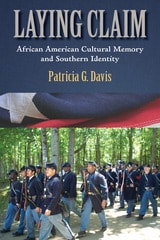
Laying Claim
African American Cultural Memory and Southern IdentityPatricia G. Davis
University of Alabama Press, 2016
Reclaiming Southern history through the voices, memories, and experiences of African Americans.
In Laying Claim: African American Cultural Memory and Southern Identity, Patricia Davis identifies the Civil War as the central narrative around which official depictions of southern culture have been defined. Because that narrative largely excluded African American points of view, the resulting southern identity was monolithically white. Davis traces how the increasing participation of black public voices in the realms of Civil War memory—battlefields, museums, online communities—has dispelled the mirage of “southernness” as a stolid cairn of white culture and has begun to create a more fluid sense of southernness that welcomes contributions by all of the region’s peoples.
Laying Claim offers insightful and penetrating examinations of African American participation in Civil War reenactments; the role of black history museums in enriching representations of the Civil War era with more varied interpretations; and the internet as a forum within which participants exchange and create historical narratives that offer alternatives to unquestioned and dominant public memories. From this evolving cultural landscape, Davis demonstrates how simplistic caricatures of African American experiences are giving way to more authentic, expansive, and inclusive interpretations of southernness.
As a case-study and example of change, Davis cites the evolution of depictions of life at Thomas Jefferson’s Monticello. Where visitors to the site once encountered narratives that repeated the stylized myth of Monticello as a genteel idyll, modern accounts of Jefferson’s day offer a holistic, inclusive, and increasingly honest view of Monticello as the residents on every rung of the social ladder experienced it.
Contemporary violence and attacks about or inspired by the causes, outcomes, and symbols of the Civil War, even one hundred and fifty years after its end, add urgency to Davis’s argument that the control and creation of public memories of that war is an issue of concern not only to scholars but all Americans. Her hopeful examination of African American participation in public memory illuminates paths by which this enduring ideological impasse may find resolutions.
Learning To Divide The World
Education at Empire’s EndJohn Willinsky
University of Minnesota Press, 2000
Lexikon of the Hispanic Baroque
Transatlantic Exchange and TransformationEdited by Evonne Levy and Kenneth Mills
University of Texas Press, 2014
Over the course of some two centuries following the conquests and consolidations of Spanish rule in the Americas during the late fifteenth and early sixteenth centuries—the period designated as the Baroque—new cultural forms sprang from the cross-fertilization of Spanish, Amerindian, and African traditions. This dynamism of motion, relocation, and mutation changed things not only in Spanish America, but also in Spain, creating a transatlantic Hispanic world with new understandings of personhood, place, foodstuffs, music, animals, ownership, money and objects of value, beauty, human nature, divinity and the sacred, cultural proclivities—a whole lexikon of things in motion, variation, and relation to one another.
Featuring the most creative thinking by the foremost scholars across a number of disciplines, the Lexikon of the Hispanic Baroque is a uniquely wide-ranging and sustained exploration of the profound cultural transfers and transformations that define the transatlantic Spanish world in the Baroque era. Pairs of authors—one treating the peninsular Spanish kingdoms, the other those of the Americas—provocatively investigate over forty key concepts, ranging from material objects to metaphysical notions. Illuminating difference as much as complementarity, departure as much as continuity, the book captures a dynamic universe of meanings in the various midst of its own re-creations. The Lexikon of the Hispanic Baroque joins leading work in a number of intersecting fields and will fire new research—it is the indispensible starting point for all serious scholars of the early modern Spanish world.
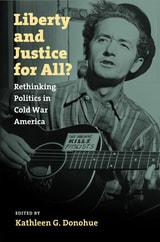
Liberty and Justice for All?
Rethinking Politics in Cold War AmericaKathleen G. Donohue
University of Massachusetts Press, 2012
From the congressional debate over the “fall of China” to the drama of the Army–McCarthy hearings to the kitchen faceoff between Richard Nixon and Nikita Khrushchev, the political history of the early Cold War was long dominated by studies of presidential administrations, anticommunism, and foreign policy. In Liberty and Justice for All? a group of distinguished historians representing a variety of disciplinary perspectives—social history, cultural history, intellectual history, labor history, urban history, women's history, African American studies, and media studies—expand on the political history of the early Cold War by rethinking the relationship between politics and culture. How, for example, did folk music help to keep movement culture alive throughout the 1950s? How did the new medium of television change fundamental assumptions about politics and the electorate? How did American experiences with religion in the 1950s strengthen the separation of church and state? How did race, class, and gender influence the relationship between citizens and the state? These are just some of the questions addressed in this wide-ranging set of essays.
In addition to volume editor Kathleen G. Donohue, contributors include Howard Brick, Kari Frederickson, Andrea Friedman, David Greenberg, Grace Elizabeth Hale, Jennifer Klein, Laura McEnaney, Kevin M. Schultz, Jason Scott Smith, Landon R. Y. Storrs, and Jessica Weiss.
Life Within Limits
Well-being in a World of WantMichael Jackson
Duke University Press, 2011
Life and Thought in the Ancient Near East
Louis L. Orlin
University of Michigan Press, 2010
Intended for readers seeking insight into the day-to-day life of some of the world's most ancient peoples, Life and Thought in the Ancient Near East presents brief, fascinating explorations of key aspects of the civilizations of Egypt, Mesopotamia, Palestine, Asia Minor, and Iran. With vignettes on agriculture, architecture, crafts and industries, literature, religion, topography, and history, Orlin has created something refreshingly unique: a modern guidebook to an ancient world. The book also reaches out to students of the Ancient Near Eastern World with essays on decipherments, comparative cultural developments between Egypt and Mesopotamia, and language and literature.
In addition to general readers, the book will be useful in the classroom as a text supplementing a more conventional introduction to Near Eastern Studies.
"Well-written and accessible, Life and Thought in the Ancient Near East deftly connects the past with present experience by drawing out the differences between, for instance, modern churches and ancient temples, and frequently employing biblical references. This simplicity together with connecting contemporary to ancient experience makes the text ideal for freshmen and general readers."
---Marc Cooper, Professor of History, Missouri State University
Now Professor Emeritus, Louis L. Orlin taught in the department of Ancient Near Eastern History and Literature at the University of Michigan for more than thirty years. He is the author and editor of several books, including Assyrian Colonies in Cappadocia and Ancient Near Eastern Literature: A Bibliography of One Thousand Items on the Cuneiform Literatures of the Ancient World.
Life between Two Deaths, 1989-2001
U.S. Culture in the Long NinetiesPhillip E. Wegner
Duke University Press, 2009
Wegner shows how phenomena including the debate on globalization, neoliberal notions of the end of history, the explosive growth of the Internet, the efflorescence of new architectural and urban planning projects, developments in literary and cultural production, new turns in theory and philosophy, and the rapid growth of the antiglobalization movement came to characterize the long nineties. He offers readings of some of the most interesting cultural texts of the era: Don DeLillo’s White Noise; Joe Haldeman’s Forever trilogy; Octavia Butler’s Parable novels; the Terminator films; the movies Fight Club, Independence Day, Cape Fear, and Ghost Dog; and the television series Buffy the Vampire Slayer. In so doing, he illuminates fundamental issues concerning narrative, such as how beginnings and endings are recognized and how relationships between events are constructed.
Life, Death, and Entertainment in the Roman Empire
D. S. Potter and D. J. Mattingly, Editors
University of Michigan Press, 1999
D. J. Mattingly is Professor of Roman Archaeology, University of Leicester.
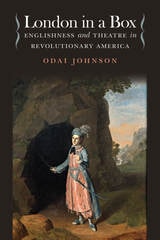
London in a Box
Englishness and Theatre in Revolutionary AmericaOdai Johnson
University of Iowa Press, 2017
If one went looking for the tipping point in the prelude to the American Revolution, it would not be the destruction of the tea in Boston Harbor, or the blockade of Boston by British warships, or even the gathering of the first Continental Congress; rather, it was the Congress’s decision in late October of 1774 to close the theatres. In this remarkable feat of historical research, Odai Johnson pieces together the surviving fragments of the story of the first professional theatre troupe based in the British North American colonies. In doing so, he tells the story of how colonial elites came to decide they would no longer style themselves British gentlemen, but instead American citizens.
London in a Box chronicles the enterprise of David Douglass, founder and manager of the American Theatre, from the 1750s to the climactic 1770s. The ambitious Scotsman’s business was teaching provincial colonials to dress and behave as genteel British subjects. Through the plays he staged, the scenery and costumes, and the bearing of his actors, he displayed London fashion and London manners. He counted among his patrons the most influential men in America, from British generals and governors to local leaders, including the avid theatre-goers George Washington and Thomas Jefferson. By 1774, Douglass operated a monopoly of theatres in six colonies and the Anglophone Caribbean, from Jamaica to Charleston and northward to New York City. (Boston remained an impregnable redoubt against theatre.)
How he built this network of patrons and theatres and how it all went up in flames as the revolution began is the subject of this witty history. A treat for anyone interested in the world of the American Revolution and an important study for historians of the period.
Looking North
Writings from Spanish America on the US, 1800 to the PresentEdited by John J. Hassett and Braulio Muñoz
University of Arizona Press, 2012
Given recent changes in politics and demographics, Latin America and the United States are becoming increasingly important to one another. Recognition of the two regions' differences and similarities may facilitate a more fruitful relationship, with increased respect and understanding.
It is with this in mind that editors John J. Hassett and Braulio Muñoz present a collection of writings that provides a look into the ways in which Spanish America has viewed its northern neighbor over the past two centuries. Gathered here are pieces by well-known figures from the worlds of Spanish American politics, history, philosophy, creative writing, and culture—names like Mario Vargas Llosa, Gabriel Garcia Marquez and Pablo Neruda.
Divided into three sections, Looking North begins by underscoring the cultural and political differences between the two Americas. It opens with a speech by Simón Bolívar to the Venezuelan Congress in 1819 and closes with an essay by Mario Vargas Llosa from 2006 on the controversial wall being constructed between the United States and Mexico. The second section explores the experiences of Spanish American travelers in the US, beginning with an account of former Argentine president Domingo Sarmiento's fascination with the United States during his travels in 1847 and ending with a 2008 essay by Vargas Llosa on the city of New York. The final section encompasses creative writing and commentaries by some of Spanish America's most gifted poets and novelists. It opens with Rubén Darío's "To Roosevelt" from 1905 and ends with Christine Granados's humorous and profound short story "Inner View," first published in 2006.
Touching on history, sociology, politics, and religion, the writings assembled here will be of interest to humanists, social scientists, and anyone intrigued by the ever-growing connection between the United Sates and Spanish America at all levels.
Louis I. Kahn
The Nordic LatitudesPer Olaf Fjeld
University of Arkansas Press, 2019
Kahn’s Nordic and European ties are emphasized in this study that also covers his early childhood in Estonia, his travels, and his relationships with other architects, including the Norwegian architect Arne Korsmo.
The authors have gathered personal reflections, archival material, and other student work to offer insight into the wisdom that Kahn imparted to his students in his famous masterclass. Louis I. Kahn: The Nordic Latitudes addresses Kahn’s legacy both personally and in terms of the profession, documents a research trip the University of Pennsylvania’s Louis I. Kahn Collection, and confronts the affiliation of Kahn’s work with postmodernism.
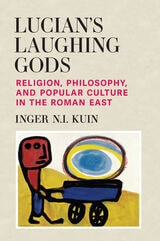
Lucian’s Laughing Gods
Religion, Philosophy, and Popular Culture in the Roman EastInger N.I. Kuin
University of Michigan Press, 2023
In Lucian's Laughing Gods, author Inger N. I. Kuin argues that in ancient Greek thought, comedic depictions of divinities were not necessarily desacralizing. In religion, laughter was accommodated to such an extent as to actually be constituent of some ritual practices, and the gods were imagined either to reciprocate or push back against human laughter—they were never deflated by it. Lucian uses the gods as comic characters, but in doing so, he does not automatically negate their power. Instead, with his depiction of the gods and of how they relate to humans—frivolous, insecure, callous—Lucian challenges the dominant theologies of his day as he refuses to interpret the gods as ethical models. This book contextualizes Lucian’s comedic performances in the intellectual life of the second century CE Roman East broadly, including philosophy, early Christian thought, and popular culture (dance, fables, standard jokes, etc.). His texts are analyzed as providing a window onto non-elite attitudes and experiences, and methodologies from religious studies and the sociology of religion are used to conceptualize Lucian’s engagement with the religiosity of his contemporaries.